

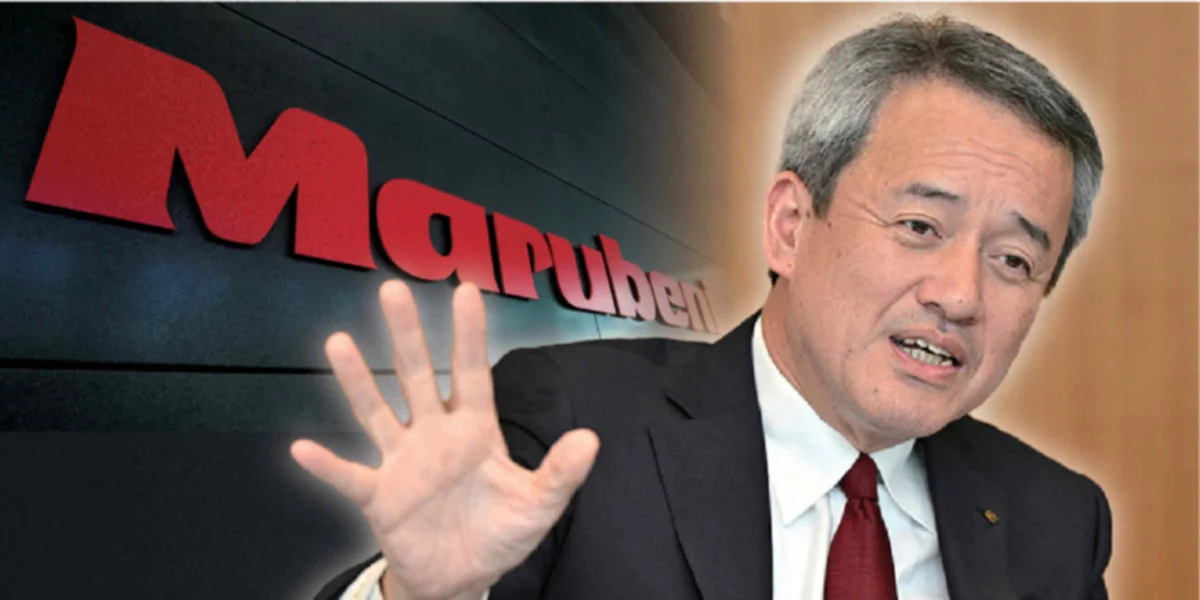
NEW DELHI – Japanese trading house Marubeni is setting an ambitious target for its Indian operations, aiming to scale its business tenfold within the next decade. President and Chief Executive Officer Masayuki Omoto articulated this vision, emphasizing that such expansion is crucial to fully leverage the South Asian nation’s burgeoning economic potential. Omoto, speaking from New Delhi, drew a compelling parallel between India’s current trajectory and the significant growth Marubeni experienced in the North American market, positioning India as the next frontier for the conglomerate’s strategic development.
The ambitious goal, which implies a substantial increase from Marubeni’s current Indian revenue, is underpinned by a belief in India’s sustained economic expansion. While specific current revenue figures for Marubeni’s India operations were not disclosed in the immediate context of Omoto’s statement, a tenfold increase over ten years would necessitate reaching an annual revenue in the vicinity of $100 billion, assuming a hypothetical starting point of $10 billion. This projection reflects a broader trend of Japanese corporations increasingly looking to India as a key market for investment and growth, driven by factors such as a large and young demographic, a rapidly expanding middle class, and government initiatives aimed at boosting manufacturing and infrastructure development.
Marubeni, a diversified trading and investment conglomerate with a history spanning over 160 years, operates across a vast spectrum of industries, including energy, metals, machinery, food, and chemicals. Its business model, rooted in the Japanese "sogo shosha" tradition, involves not only trading but also investing in and managing businesses across global supply chains. The company’s strategic pivot towards India is a testament to the country’s evolving economic landscape and its growing importance in global trade dynamics.
Strategic Rationale: India as the "Next North America"
The comparison of India to North America is not merely hyperbole; it reflects Marubeni’s historical successes and its assessment of India’s long-term growth trajectory. North America, particularly the United States, has been a cornerstone of Marubeni’s global business, contributing significantly to its revenue and profit. This region offers a mature, diverse, and dynamic market with robust infrastructure, a strong consumer base, and ample opportunities for investment in key sectors. Omoto’s assertion suggests that India, despite its developmental stage, possesses comparable, if not exceeding, long-term potential for Marubeni’s diversified business portfolio.
India’s demographic dividend, with a large and youthful population, translates into a growing workforce and an expanding consumer market. The nation’s gross domestic product (GDP) has been consistently among the fastest-growing major economies globally, projected to continue its upward trend in the coming years. This sustained growth is fueled by increasing domestic consumption, a burgeoning manufacturing sector, and significant government investments in infrastructure projects such as highways, railways, ports, and renewable energy.
Marubeni’s strategy in India is likely to mirror its successful approach in North America, which often involves identifying underserved markets, investing in infrastructure and technology, fostering local partnerships, and building integrated value chains. The company’s extensive experience in managing complex global supply chains and its financial strength position it well to undertake large-scale investments and long-term projects in India.
Key Sectors and Investment Focus
While the specifics of Marubeni’s expansion plan are still unfolding, its existing business lines provide a strong indication of the sectors it is likely to prioritize in India. These could include:
- Infrastructure Development: India’s massive infrastructure needs present a significant opportunity. Marubeni could leverage its expertise in areas like power generation and transmission, transportation, and urban development. Japanese companies have a strong reputation for quality and technological advancement in these fields, making them attractive partners for India’s ambitious infrastructure goals. The Indian government’s "Gati Shakti" master plan, aimed at integrated infrastructure development, provides a conducive environment for such investments.
- Energy and Renewables: As India seeks to meet its growing energy demands while transitioning towards cleaner sources, Marubeni’s involvement in the energy sector, particularly in renewable energy like solar and wind power, is a logical extension. The company could also play a role in traditional energy sources, including natural gas, and in the development of energy storage solutions. India’s commitment to increasing its renewable energy capacity by 2030 presents a substantial market for foreign investment.
- Agribusiness and Food Security: With a large population and a significant agricultural base, India is a crucial market for food products and agricultural commodities. Marubeni’s established presence in the global food supply chain could be further strengthened by investing in agricultural production, processing, and distribution networks within India. This aligns with India’s focus on enhancing agricultural productivity and ensuring food security for its growing population.
- Automotive and Manufacturing: The automotive sector in India is a major contributor to its economy, and the government’s "Make in India" initiative aims to boost domestic manufacturing across various industries. Marubeni could deepen its involvement by supplying components, investing in manufacturing facilities, or facilitating the export of Indian-made goods. The increasing demand for electric vehicles (EVs) also presents new avenues for investment and partnership.
- Digital Transformation and Technology: As India embraces digital technologies and the startup ecosystem flourishes, Marubeni may explore opportunities in the technology sector, including IT services, software development, and emerging technologies like artificial intelligence and the Internet of Things (IoT).
Historical Context and Marubeni’s India Journey
Marubeni’s engagement with India is not new. The company has had a presence in the country for decades, gradually building its business through trading activities and strategic investments. The establishment of Marubeni India Pvt. Ltd. marked a significant step in formalizing and expanding its operations. Over the years, Marubeni has been involved in various projects, including supplying industrial machinery, trading commodities, and participating in infrastructure development.
The current announcement signifies a more aggressive and strategic push, moving beyond incremental growth to a transformative expansion. This shift reflects a broader reassessment of global economic powerhouses by Japanese conglomerates. The economic slowdowns and demographic challenges in some mature economies have led companies like Marubeni to seek out high-growth markets, with India consistently emerging as a prime candidate.
The timeline for this ambitious goal is set for the next ten years, implying a concentrated effort from approximately 2026 to 2036. During this period, Marubeni will likely be engaged in a multi-pronged strategy, involving both organic growth through expanding existing businesses and inorganic growth through mergers, acquisitions, and joint ventures.
Supporting Data and Market Trends
Several key data points underscore the rationale behind Marubeni’s bold projection:
- GDP Growth: India’s GDP growth rate has consistently outpaced global averages. Projections from institutions like the International Monetary Fund (IMF) and the World Bank indicate that India will remain one of the fastest-growing major economies in the world over the next decade, with growth rates often projected between 6% and 7%. This sustained economic expansion creates a larger pie for all businesses operating in the country.
- Demographics: India’s young population, with a median age significantly lower than many developed nations, represents a substantial consumer base and a future workforce. The UN estimates that India will have the world’s largest working-age population by 2030. This demographic dividend is a powerful engine for consumption and economic activity.
- Foreign Direct Investment (FDI): India has been a significant recipient of FDI, attracted by its market size, growing economy, and improving ease of doing business. While FDI inflows can fluctuate, the overall trend indicates sustained international investor confidence. Japanese FDI in India has also seen a steady increase in recent years, reflecting growing bilateral economic ties.
- Digital Adoption: India has witnessed a digital revolution, with widespread internet penetration and a rapidly growing digital economy. This presents opportunities for businesses leveraging technology and digital platforms, a space where Marubeni can undoubtedly innovate.
Potential Challenges and Risk Mitigation
While the potential is immense, Marubeni’s expansion in India will not be without its challenges. These could include:
- Regulatory Landscape: Navigating India’s complex regulatory environment, which can sometimes be bureaucratic and prone to change, requires careful planning and local expertise.
- Infrastructure Gaps: Despite significant investments, certain infrastructure gaps, particularly in rural areas, may still pose logistical challenges.
- Competition: The Indian market is highly competitive, with both domestic and international players vying for market share.
- Talent Acquisition and Development: Securing and retaining skilled talent will be crucial for Marubeni’s growth, especially in specialized technical and managerial roles.
Marubeni’s long-standing presence and experience in India, coupled with its established risk management framework, will be vital in navigating these potential hurdles. The company’s strategy is likely to involve forming strong local partnerships, investing in employee training and development, and working closely with government bodies to ensure smooth operations.
Broader Impact and Implications
The ambitious goal set by Marubeni President and CEO Masayuki Omoto has significant implications beyond the company itself.
- For India: A tenfold increase in Marubeni’s business would translate into substantial foreign direct investment, job creation, technology transfer, and the development of key industries. It would further solidify India’s position as a preferred investment destination for major global corporations. The focus on infrastructure and manufacturing aligns directly with the Indian government’s economic development agenda.
- For Japan: This expansion signifies a successful diversification strategy for a major Japanese trading house, demonstrating the global reach and adaptability of Japanese businesses. It also highlights the growing economic interdependence between Japan and India.
- For Global Trade: Marubeni’s expanded presence in India could reshape supply chains and trade flows within Asia and globally, particularly in the sectors it targets. It underscores the continuing shift of economic gravity towards emerging markets.
As Marubeni embarks on this ambitious decade-long journey, the success of its India strategy will be closely watched by the global business community, serving as a bellwether for the potential of the Indian market and the evolving landscape of international trade and investment. The company’s commitment to scaling its operations tenfold signifies a profound belief in India’s economic future and its capacity to absorb and drive significant growth.
