

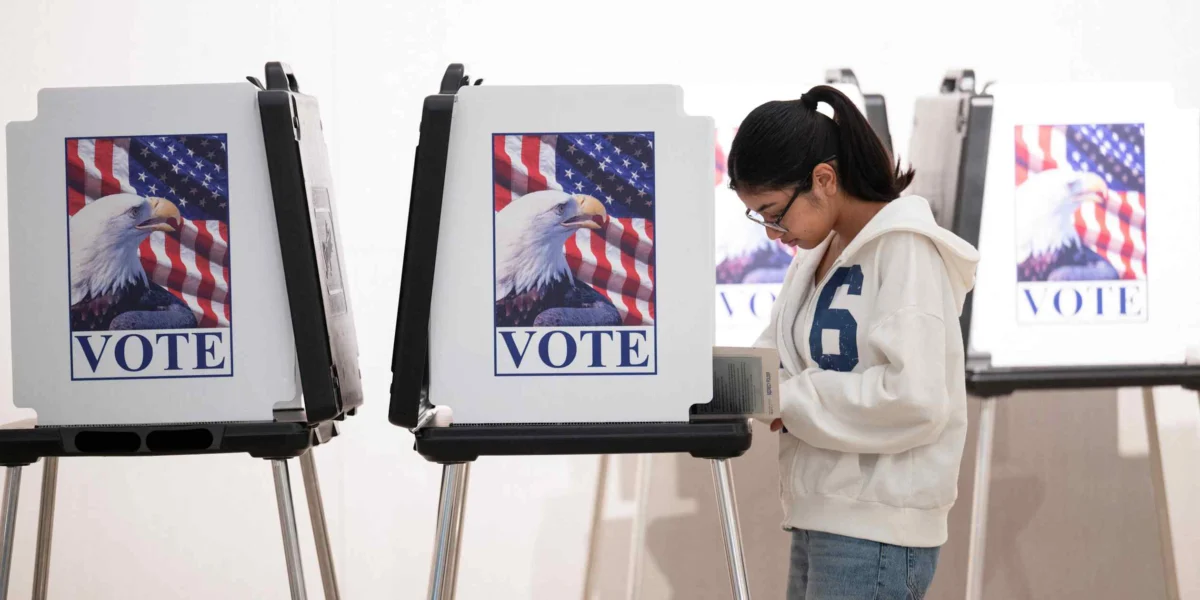
Voting is underway across the United States in the pivotal 2026 midterm elections, with the balance of power in both the House of Representatives and the Senate at stake. Projections leading up to Election Day have consistently indicated a strong likelihood of the opposition Democratic Party reclaiming the House from President Donald Trump’s Republican Party. However, the contest for control of the Senate is proving to be a far more intricate and closely watched affair, with the final outcomes potentially hinging on a handful of razor-thin races. The possibility of recounts or protracted legal challenges over disputed results looms, suggesting that a definitive understanding of Congress’s composition may not be immediately apparent after polls close.
Nikkei Asia is providing comprehensive live coverage and in-depth analysis of these crucial elections, accessible at asia.nikkei.com.
Key Developments and Timeline of Election Day
November 4, 2026, 08:01 JST (Updated Time)
As the day progresses, attention is focused on various key states and demographic groups that could sway the final results.
6:00 p.m. Washington Time: Polling stations in select areas of Indiana and Kentucky have concluded their operations, marking the initial closures nationwide. Given that both states span both the Eastern and Central time zones, polls in some of their precincts will remain open for another hour. Crucially, the election integrity principle of allowing individuals in line by the official closing time to cast their ballots will be upheld. In Kentucky, a state that demonstrated significant support for President Trump in the 2024 presidential election, the Cook Political Report’s analysis suggests that the incumbent Republican senator is likely to retain their seat. This outcome, if confirmed, would represent a significant, albeit anticipated, hold for the Republican Party in a key Senate race.
4:30 p.m. Washington Time: The U.S. stock markets exhibited a mixed performance throughout Tuesday, a reflection of investor caution as they await the definitive outcomes of the midterm elections. Trades were largely characterized by adjustments in existing positions rather than bold new investments. Sectors associated with artificial intelligence demonstrated resilience, with shares experiencing a rebound. Conversely, stocks in cyclical and defensive industries faced some downward pressure. The S&P 500 saw a modest increase of 0.4%, while the technology-heavy Nasdaq Composite climbed by 0.8%. In contrast, the Dow Jones Industrial Average registered a decline of 0.4%.
Adding a layer of complexity to market sentiment were reports of lower oil prices, which offered some degree of comfort amidst hopes for progress toward de-escalating the U.S.-Iran conflict. President Donald Trump, in a televised interview with Fox News, indicated that U.S. financial support for Israel, which has been instrumental in actions against Iran, would be terminated by the close of the current year. This statement has amplified expectations that Washington might be charting a course toward diplomatic engagement with Tehran, a development that could have significant geopolitical and economic ramifications.
3:50 p.m. Washington Time: Across Asia, governments and businesses are preparing for a potential resurgence of trade-related initiatives from the United States following the midterm elections. Analysts anticipate that the Trump administration, regardless of which party ultimately controls Congress, may leverage executive authority to implement new tariffs. Economists at Nomura, including Ruchir Sharma, have forecast "more aggressive trade-related headlines" in the post-election period. These could include tariffs stemming from investigations into overcapacity, a long-standing concern for U.S. trade policy.
Nikkei Asia had previously reported that President Trump had postponed the announcement of certain tariffs, including a proposed 7.5% levy on Chinese imports, citing concerns about inflationary pressures ahead of the election. These potential new duties would be in addition to existing tariffs, which range from 10% to 12.5%, imposed on approximately 60 economies due to alleged forced labor practices. Collectively, these measures could effectively restore tariff rates for several major trading partners to levels seen prior to the Supreme Court’s February ruling that invalidated Trump’s broader tariffs under the International Emergency Economic Powers Act.
Hui Shan, Chief China Economist at Goldman Sachs, believes that the imposition of such duties would reignite tensions between Beijing and Washington over the next two years. She further suggests that a Congress with a more substantial Democratic majority might introduce additional hawkish measures targeting China, adding another layer of uncertainty to bilateral economic relations.
2:45 p.m. Washington Time: Asian Americans and Pacific Islanders (AAPI), a demographic group characterized by its rapid growth as U.S. voters, have historically demonstrated a tendency to support the Democratic Party. However, this trend saw a notable shift towards the Republican Party during the 2024 presidential election. New survey data released in October by AAPI Data indicates a decline in trust towards Republican policies since President Trump’s return to the White House. AAPI adults, who were previously divided in their trust levels regarding economic and immigration policies between the two major parties, now demonstrably favor Democrats on both these critical issues.
Karthick Ramakrishnan, the founder of AAPI Data, attributed President Trump’s 2024 campaign focus to the economy and immigration. "On both of those things, he hasn’t delivered," Ramakrishnan stated. He elaborated that in early 2025, Democrats and Republicans were essentially tied in terms of trust on economic and immigration issues, but a significant shift away from the Republican Party has been observed since then.
Furthermore, disapproval of President Trump’s handling of the economy and foreign policy has escalated among AAPI adults since January of this year. This trend is particularly pronounced among AAPI Republicans, with approximately 40% expressing disapproval of his performance on both fronts, a substantial increase from roughly 20% in earlier surveys. David Chan, a 42-year-old consultant based in New York City, shared that his vote was cast for the Democrats, influenced by economic policies and the party’s perceived contributions to the Asian American community. He expressed a generally low expectation for significant policy support for the community moving forward, irrespective of the election outcome.
1:10 p.m. Washington Time: In an unprecedented effort to safeguard the electoral process, the U.S. Justice Department announced it is deploying approximately 1,000 election monitors and observers across all 50 states. This initiative represents the largest such deployment in the department’s history and is the first to encompass every state. The Civil Rights Division of the Justice Department is orchestrating this deployment, with monitors tasked with verifying compliance with federal voting rights statutes. Election officials will maintain continuous communication with state and local election authorities throughout Election Day. The Justice Department has been deploying election monitors since the enactment of the Voting Rights Act in 1965, a landmark piece of legislation aimed at combating discriminatory voting practices.
However, the substantial increase in the number of monitors has prompted concerns among some state election officials and civil rights organizations regarding the potential for voter intimidation or other forms of interference, according to local media reports. President Trump has repeatedly voiced accusations of voting "fraud" in connection with his 2020 presidential election loss and has advocated for enhanced federal oversight of elections, which are primarily administered at the state and local levels. These efforts to increase federal involvement have faced significant legal challenges and have been largely unsuccessful in overcoming judicial opposition.
11:55 a.m. Washington Time: Pre-election day voting has seen a remarkable surge, with the University of Florida’s Election Lab reporting that 59.1 million in-person and mail-in ballots have already been cast nationwide. This figure represents more than half of the total ballots cast in the entirety of the 2022 midterm elections, underscoring a significant shift in voting patterns. In several states, including Colorado, Florida, Georgia, Montana, Nevada, North Carolina, Oregon, and Tennessee, the volume of early ballots cast is equivalent to over 70% of each state’s total turnout in the 2022 midterms.
Analyzing the party registration data for these early ballots, Democrats account for 43% of those cast, while Republicans represent 31.4%. It is important to note that party registration does not definitively determine how an individual will vote. While these numbers might appear to favor Democrats, historical data from Pew Research suggests that Republicans have a greater propensity to vote on Election Day and express less confidence than Democrats in the accurate counting of mail-in ballots. This could indicate that a significant portion of Republican votes are yet to be cast.
11:00 a.m. Washington Time: Severe weather conditions, including heavy rainfall and widespread flooding, have necessitated the relocation of several polling centers in Florida. Eight counties have been directly affected by these disruptions. In response, Governor Ron DeSantis issued an executive order on Monday authorizing the establishment of temporary voting centers. This measure aims to ensure that residents in the affected areas retain their ability to exercise their right to vote. Similar weather-related challenges are being observed in other parts of the country. Flash flooding in the Western United States has impacted polling operations in Arizona, Utah, and Colorado. In Utah, the lieutenant governor issued a "declaration of emergency election accommodation" on Monday, empowering affected voters to request electronic ballots. Additionally, rain and strong winds in parts of the Midwest, coupled with severe storm warnings in eastern Texas, are raising concerns about voter access to polling stations on Tuesday morning. Historically, adverse weather conditions have been known to suppress voter turnout on Election Day, potentially influencing the final margins in close contests.
10:45 a.m. Washington Time: Oil prices experienced an early rebound on Tuesday following reports of a new U.S. strike on Iran’s Qeshm Island in the Strait of Hormuz. This development has reignited concerns about potential disruptions to global oil supplies on Election Day. January Brent crude futures saw an increase of 1.8%, reaching $106.63 per barrel, while U.S. West Texas Intermediate crude gained 2.4%, trading at $97.08 per barrel. These gains reversed some of the sharp losses observed on Monday. The reported strikes have tempered optimism regarding a diplomatic breakthrough between the U.S. and Iran, although President Donald Trump reiterated his belief that a peace agreement with Tehran "could still happen."
The impact of elevated energy costs is being felt unevenly across Asian economies. Countries like China and India have been partially shielded by robust domestic coal reserves. In contrast, nations such as Thailand, the Philippines, and South Korea remain more vulnerable due to their significant reliance on imported energy, according to analysts at ING. Japan is reportedly preparing to begin phasing out gasoline subsidies in December, following their reinstatement in the spring. The U.S. Energy Information Administration forecasts that Brent crude will average $105 per barrel in the fourth quarter of 2026, before a projected decline to $84 per barrel in 2027, as regional logistics adjust to evolving market dynamics.
10:05 a.m. Washington Time: Artificial intelligence (AI) has emerged as an unexpected and significant flashpoint in the current election cycle. Widespread local opposition to the development of digital infrastructure, particularly data centers, is actively shaping campaign strategies for candidates in both the Democratic and Republican parties. In some instances, allegations have surfaced suggesting that China may be contributing to the fueling of anti-data center sentiment.
Voters across the political spectrum are voicing concerns about data centers, citing their substantial energy demands, the potential for increased electricity rates, and the aggressive development strategies employed by hyperscale companies. The issue has gained sufficient prominence to result in moratoriums being placed on local ballots. Ohio is a state to watch closely, where data center development has accelerated significantly, and plans are underway for the construction of what is projected to be the world’s largest AI data center. Senate candidates in both parties are campaigning on platforms that either oppose this infrastructure development or seek to link their opponents to its potential negative consequences. Regardless of the election’s outcome, the growing resistance to data centers could have substantial implications for suppliers, a significant portion of whom are based in Asia.
9:00 a.m. Washington Time: Polls have officially opened for the 2026 U.S. midterm elections, widely perceived as a critical referendum on President Donald Trump’s policy agenda and his tenure in office. Polling station hours are subject to variation by state, and in some cases, even within a single state, meaning that election results will be reported in a staggered manner throughout the evening.
This election cycle has witnessed an unprecedented surge in early voting, particularly in states with closely contested Senate races. The Associated Press reports that in South Carolina, early voting numbers have increased by more than 80% compared to the previous midterm elections in 2022. Similar trends have been observed in Texas, with a 50% increase, and in Maine, with a 44% rise in early ballot cast.
Key issues dominating the concerns of voters include persistent inflation and rising energy costs, which are intrinsically linked to the ongoing conflict in Iran. Trade tariffs, a hallmark of the Trump administration’s economic policy, and a notable backlash against the proliferation of artificial intelligence data center projects are also significant drivers of voter sentiment. Conversely, issues directly related to China appear to have receded from the forefront of campaign rhetoric, as voters prioritize more immediate domestic economic and environmental concerns.
Broader Implications and Analysis
The outcome of the 2026 midterm elections carries profound implications for the remainder of President Trump’s term and the future direction of U.S. domestic and foreign policy. A Democratic takeover of the House of Representatives would significantly empower the opposition party to shape legislative agendas, conduct oversight investigations, and potentially impede the administration’s policy initiatives. Conversely, a Republican hold on both chambers, or a narrower Democratic victory, would allow the administration to maintain greater legislative momentum.
The Senate races are particularly critical, given their role in confirming presidential appointments, including cabinet secretaries, federal judges, and Supreme Court justices. The composition of the Senate will determine the administration’s ability to shape the judiciary and implement its executive agenda. The closeness of many Senate contests underscores the polarized nature of the American electorate and the importance of a relatively small number of swing voters in determining national outcomes.
The economic landscape is also deeply intertwined with the election results. Market reactions, as observed in the mixed performance of U.S. stocks, reflect investor uncertainty about the post-election policy environment. Potential shifts in trade policy, particularly concerning tariffs and international trade agreements, could have far-reaching consequences for global supply chains and economic growth. The ongoing geopolitical tensions, particularly concerning Iran and China, add another layer of complexity, with the election outcome potentially influencing U.S. foreign policy approaches and international relations.
The demographic shifts and voting patterns of key groups, such as Asian Americans and Pacific Islanders, highlight the evolving nature of political coalitions and the challenges faced by both parties in mobilizing diverse constituencies. The increased reliance on early and mail-in voting signifies a transformation in electoral practices, with implications for campaign strategies and the administration of elections. The Justice Department’s unprecedented deployment of election monitors underscores the heightened concerns surrounding election integrity and the potential for partisan disputes.
Ultimately, the 2026 U.S. midterm elections are more than just a mid-term check on the incumbent president; they represent a pivotal moment that will shape the legislative and policy landscape for years to come, with ripple effects extending far beyond American borders. The intricate interplay of economic anxieties, geopolitical developments, and domestic political currents has created an electoral environment of unprecedented consequence.
