

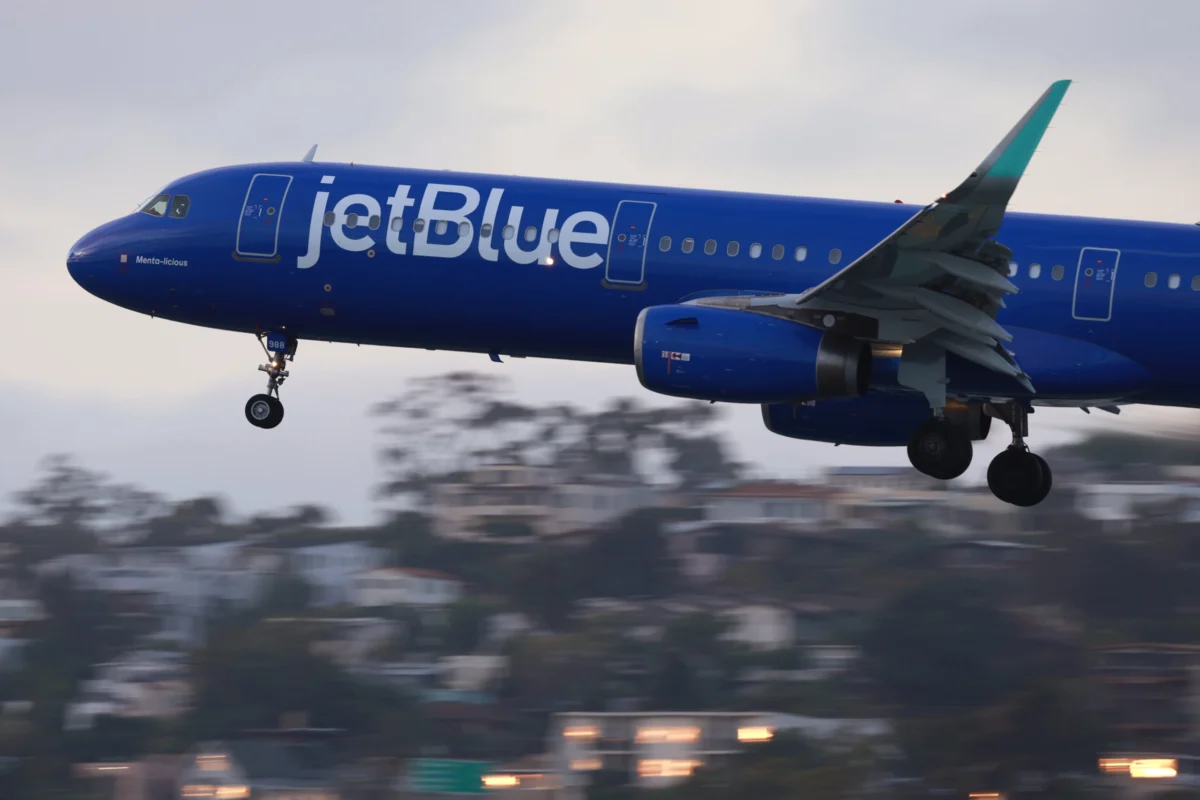
San Diego, CA — JetBlue Airways has once again adjusted its checked baggage fees, ushering in an era where a single checked bag for economy travelers during peak periods and last-minute purchases could cost as much as $70. This marks the third such increase by the carrier in less than a year, a decisive move the airline attributes directly to the escalating price of jet fuel and broader operating expenses that continue to erode industry profits. The announcement, initially reported by the Thrifty Traveler blog, sends ripples across the competitive U.S. airline landscape, raising expectations that other major carriers may soon follow suit, as has been a consistent pattern in the past.
The new fee structure, which came into effect recently, targets travelers booked in economy class. For those planning ahead and purchasing their first checked bag more than 24 hours before departure during a non-peak travel period, the fee has risen to $50, a $5 increase from the previous $45. However, the costs escalate significantly for less prepared or time-sensitive passengers. If the first bag is paid for within 24 hours of departure during a non-peak period, the charge jumps to $60. The most substantial increases are observed during peak travel windows, such as holidays or the bustling summer months. During these high-demand periods, the fee for a first checked bag, if purchased more than 24 hours in advance, is now $55, up from $49. The pinnacle of this new pricing strategy is reached when a traveler pays for their first checked bag within 24 hours of departure during a peak period, at which point the fee hits an unprecedented $70.
This aggressive pricing adjustment is not without its strategic exceptions. Passengers who hold a co-branded JetBlue credit card, a common loyalty tool in the airline industry, or those who have attained elite frequent flyer status are typically exempt from these checked bag fees, a standard practice designed to reward and retain high-value customers. These loyalty incentives often provide a buffer for frequent travelers, shifting the financial burden primarily onto leisure travelers or those with less engagement with the airline’s loyalty ecosystem.
Airlines Grapple with Soaring Fuel Prices: The Geopolitical Undercurrent
The primary catalyst for JetBlue’s decision, as articulated by the airline, is the dramatic surge in jet fuel prices, which represents the second-largest operational expense for airlines, trailing only labor costs. JetBlue’s official statement underscored this financial pressure, noting, "We’re adjusting checked bag fees to help offset rising fuel and operating costs. This helps us keep our base fares competitive while giving customers the choice to pay for a checked bag only if they need one." This rhetoric reflects a broader industry narrative, positioning ancillary fees as a necessary mechanism to sustain profitability while outwardly maintaining the appeal of competitive base fares.
The geopolitical landscape has played a significant role in this economic predicament. The price of jet fuel has roughly doubled this year since the onset of the Iran war in February, creating a seismic shockwave through the global energy markets. The conflict, escalating tensions, and subsequent disruptions to oil production and supply routes in the Middle East have driven crude oil prices to historic highs, directly impacting refined products like jet fuel. On a recent Tuesday, the U.S. Energy Information Administration reported jet fuel going for $4.44 a gallon for the U.S. Gulf of Mexico, a stark indicator of the financial strain placed on carriers. For an industry that consumes billions of gallons of fuel annually, such a rapid and substantial increase translates into billions of dollars in additional operating costs, severely compressing already tight profit margins. Analysts estimate that every dollar increase in the price of a barrel of crude oil can add hundreds of millions to an airline’s annual fuel bill, demonstrating the profound impact of current market conditions.
A History of Ancillary Revenue: The Unbundling Strategy Evolves
The introduction and escalation of checked baggage fees are not novel phenomena but rather an evolution of a strategic shift initiated over a decade and a half ago. Airlines, facing intense competition, rising operational costs, and the economic downturn of the late 2000s, began to unbundle their fare offerings. This model, pioneered by ultra-low-cost carriers like Spirit Airlines and Allegiant Air, moved away from an all-inclusive ticket price, instead breaking down services like checked bags, seat assignments, and even carry-on bags into separate, purchasable options. The rationale was to offer seemingly lower base fares, thereby attracting price-sensitive customers, while generating substantial ancillary revenue from optional services.
American Airlines was among the first major U.S. legacy carriers to introduce a fee for the first checked bag in 2008, initially setting it at $15 per bag. This move was quickly replicated by other major airlines, establishing a new industry standard. Over the years, these fees have steadily climbed, often in increments of $5 or $10, responding to market conditions, competitor actions, and the continuous pressure to bolster revenue streams. What began as a $15-$25 charge has, through successive increases, reached the $30-$40 range for many carriers, and now, with JetBlue’s latest adjustment, has pierced the $50-$70 threshold, especially under specific conditions.
This strategy has proven immensely profitable. Global ancillary revenues, encompassing baggage fees, seat selection, on-board sales, and loyalty program sales, have grown exponentially, becoming a critical component of airline balance sheets. Reports from IdeaWorksCompany and CarTrawler consistently show that ancillary revenue can account for 10-20% of an airline’s total revenue, and for some low-cost carriers, it can exceed 40%. For JetBlue, a carrier that historically prided itself on a more inclusive service model compared to its ultra-low-cost counterparts, the increasing reliance on ancillary fees signifies a strategic adaptation to current economic realities and the competitive pressures of the broader market.
JetBlue’s Rationale and Industry Context: A Delicate Balance
JetBlue’s justification for the fee hike—offsetting rising costs while maintaining competitive base fares—highlights the delicate tightrope airlines walk. In a highly commoditized market, the initial ticket price often dictates consumer choice, making it challenging for carriers to directly pass on all cost increases through higher base fares without risking a significant drop in demand. Ancillary fees offer a more palatable alternative for airlines, allowing them to segment their pricing and target specific services for revenue generation.
However, this approach often draws criticism from consumer advocacy groups and passengers who perceive it as a form of "nickel-and-diming." The transparency of airfare pricing becomes a contentious issue, as the advertised base fare rarely reflects the total cost of travel once essential services like baggage are added. For a family of four traveling with one checked bag each, a $70 fee per bag could add an additional $280 to their travel expenses for a round trip, a significant sum that can make or break a vacation budget.
The Domino Effect: Industry-Wide Implications and Competitive Response
A consistent pattern in the airline industry is the "domino effect" where fee increases by one major carrier often trigger similar adjustments across the board. The article explicitly notes, "Other airlines often follow when one carrier raises fees. Major U.S. airlines did so earlier this year after JetBlue raised its bag fees." This historical precedent suggests that Delta Air Lines, United Airlines, American Airlines, and Southwest Airlines (which uniquely still offers two free checked bags) will be closely monitoring JetBlue’s move and evaluating their own pricing structures.
The competitive landscape of the U.S. airline industry is characterized by fierce price competition, but also by a tendency towards parallel pricing for non-core services. When one airline successfully implements a fee increase without significant erosion of its customer base, others are incentivized to follow to maintain revenue parity and prevent competitive disadvantages in profitability. This collective action often leads to a new industry standard, effectively raising the floor for travel costs across the board. Should other airlines adopt similar increases, the $70 checked bag fee could become a more widespread reality, further solidifying the trend of unbundled air travel.
Impact on the Traveler: Budgeting for the Journey
For the average traveler, particularly those on leisure trips or families, these escalating baggage fees represent a tangible increase in the overall cost of their journey. The shift encourages a more strategic approach to packing, pushing travelers towards carry-on only solutions to avoid fees. However, carry-on space is finite and often subject to its own set of restrictions and potential gate-check fees if overhead bins are full. This creates a dilemma for passengers: pay the high checked bag fee, risk a carry-on fee, or dramatically reduce their luggage, which may not always be feasible, especially for longer trips or those with specific equipment.
Consumer advocates argue that these fees disproportionately affect budget-conscious travelers and families, transforming what was once a standard inclusion into a significant additional expense. The lack of predictability in pricing, particularly with the fluctuating peak/non-peak and advance purchase thresholds, adds another layer of complexity to travel planning and budgeting. This trend could potentially influence travel frequency, with some consumers opting to reduce their air travel due to the compounding costs.
Financial Imperatives: A Closer Look at Airline Economics
From an airline’s perspective, these fee adjustments are not arbitrary but a critical component of their financial strategy in a volatile economic environment. The billions of dollars in additional fuel costs incurred by the industry due to the Iran war are not simply absorbed; they must be offset through a combination of increased fares, operational efficiencies, and ancillary revenue generation.
While the exact revenue impact for JetBlue from this latest increase is not publicly disclosed, industry estimates suggest that even a $5-$10 increase per checked bag across millions of passengers annually can generate tens of millions, if not hundreds of millions, in additional revenue. This revenue is vital for covering the surging operational expenses, investing in fleet modernization, enhancing customer experience in other areas, and ultimately, ensuring the airline’s financial viability and shareholder returns. Without such mechanisms, airlines would likely be forced to raise base fares across the board more aggressively, potentially dampening overall travel demand.
The Role of Loyalty Programs and Credit Cards: A Strategic Imperative
The exemptions offered to co-branded credit cardholders and elite frequent flyers are a key element of the airline’s customer retention strategy. These partnerships with financial institutions generate significant revenue for airlines through card fees, transaction processing, and loyalty point sales. Offering free checked bags as a perk incentivizes customers to sign up for and use these credit cards, deepening their loyalty to the airline and ensuring a consistent stream of revenue beyond ticket sales. Similarly, elite status, earned through extensive travel with a single carrier, is designed to reward and retain the most profitable segment of an airline’s customer base. These exceptions underscore the nuanced approach airlines take to fee structures, aiming to extract maximum revenue while preserving loyalty among their most valuable customers.
Consumer Advocacy and Industry Reactions: The Ongoing Debate
The repeated escalation of ancillary fees inevitably fuels the ongoing debate between airlines’ need for profitability and passengers’ desire for affordable and transparent pricing. Consumer advocacy groups consistently call for greater transparency in airline pricing, advocating for "all-in" pricing that includes all mandatory fees upfront. They argue that the current model can be misleading and makes direct price comparisons difficult for consumers.
From the industry’s side, executives often defend ancillary fees as a fair method of allowing customers to customize their travel experience and pay only for the services they use, thus keeping base fares lower for those who travel light. This philosophical divide remains a central tension in the air travel ecosystem, with each fee hike intensifying the discussion.
Looking Ahead: The Future of Air Travel Pricing
As JetBlue pushes the boundary of checked bag fees to $70, it signals a potentially transformative moment for air travel pricing. The current geopolitical and economic climate suggests that high fuel prices and inflationary pressures may persist, compelling airlines to continue exploring all available revenue streams. This could lead to further increases in existing fees, the introduction of new charges, or a more aggressive differentiation of fare classes where even basic amenities become optional add-ons.
The ongoing challenge for airlines will be to balance the imperative of cost recovery and profitability with the need to maintain customer satisfaction and avoid alienating travelers. The market will ultimately determine the elasticity of demand in the face of these rising costs. As the industry navigates this complex landscape, travelers must increasingly factor in a comprehensive view of total travel costs, moving beyond the advertised base fare to truly understand the expense of their journey in this new era of airline pricing.
