

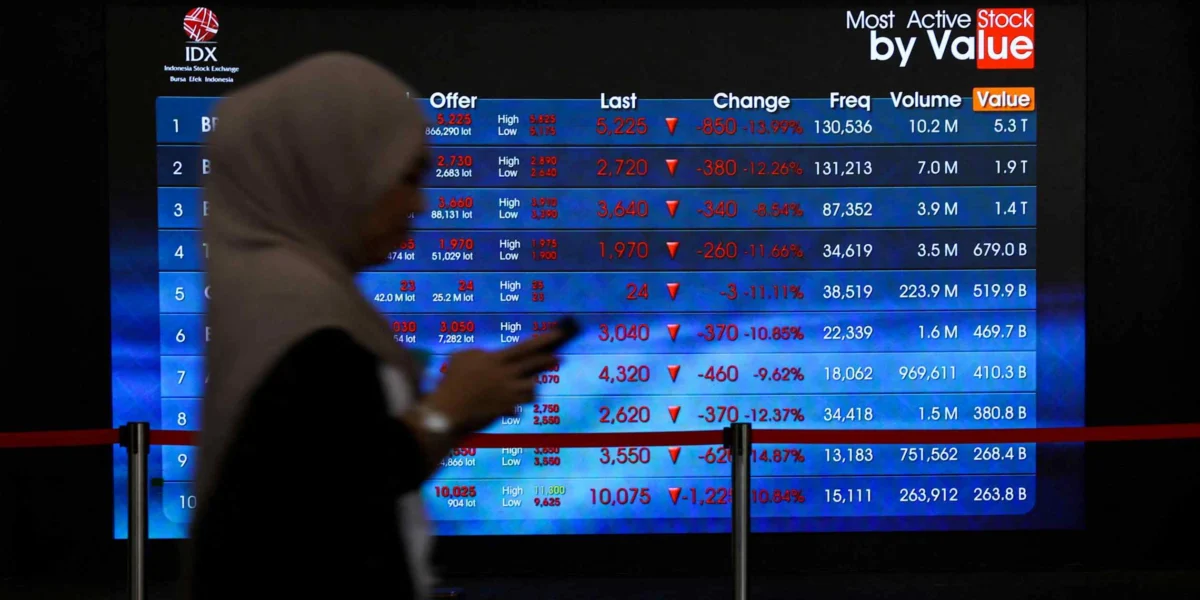
The Indonesian stock market finds itself at a critical juncture, with its classification by global index provider Morgan Stanley Capital International (MSCI) under review. The potential reclassification from a standalone emerging market to a frontier market, or even a standalone market, has prompted a flurry of reform initiatives from Indonesian authorities aimed at bolstering investor confidence. However, persistent concerns regarding the transparency and efficiency of market operations continue to cast a shadow, creating a complex environment for both domestic and international investors.
The MSCI Review: A Catalyst for Change
In October 2026, MSCI formally announced its intention to launch a consultation process regarding the reclassification of Indonesia. This move followed earlier warnings issued by the index provider early in the year, signaling a potential downgrade in the market’s status. MSCI’s classifications are highly influential, as they dictate the investment mandates of numerous global funds. A downgrade could lead to significant capital outflows from Indonesia, impacting its currency, equity valuations, and overall economic stability. Conversely, a decision to maintain or even upgrade Indonesia’s status would be a strong endorsement of the country’s market infrastructure and regulatory environment.
The MSCI Emerging Markets Index currently includes Indonesia, a status it has held for many years. However, the index provider periodically reviews its constituent markets based on a range of criteria, including market accessibility, the ease of foreign participation, and the overall efficiency and transparency of trading and settlement systems. The specific concerns raised by MSCI have not been exhaustively detailed publicly, but industry observers and market participants widely point to issues surrounding the liquidity of certain securities, the speed and certainty of transaction settlements, and the perceived opacity of some trading mechanisms.
A Timeline of Reforms and Reactions
The Indonesian government and the Indonesia Stock Exchange (IDX) have not been passive observers of this impending review. Recognizing the potential ramifications, a concerted effort to address the concerns has been underway.
Early 2026: MSCI issues its initial warnings to Indonesian authorities and market participants, highlighting areas requiring improvement to maintain its emerging market status. This serves as an early alarm bell, prompting discussions and initial planning for reform.
Mid-2026: The Financial Services Authority (OJK) and the IDX begin to articulate and implement a series of policy changes. These include efforts to streamline listing requirements, enhance corporate governance standards, and improve the regulatory framework for foreign investors. Discussions around increasing market liquidity and facilitating easier entry and exit for foreign capital become more prominent.
Late 2026 (October): MSCI officially launches its consultation period, confirming the seriousness of the review. This announcement intensifies the pressure on Indonesian authorities to demonstrate tangible progress. The OJK and IDX respond by accelerating their reform agendas, holding investor forums, and engaging in direct dialogue with MSCI and other stakeholders.
November 2026 (Current): The article’s publication date falls within this crucial consultation period. The Indonesian market is keenly awaiting further developments, with ongoing efforts to implement reforms and a palpable sense of anticipation regarding MSCI’s final decision, expected in the coming months.
Addressing the Opaque Transactions Concern
The subhead of the article specifically points to "strong concerns on opaque transactions." This is a critical area of focus for MSCI and investors alike. Opaque transactions can manifest in several ways, including:
- Limited Price Discovery: When a significant portion of trading occurs off-exchange or through negotiated deals that are not immediately or fully disclosed, it can hinder efficient price discovery. Investors may not have access to the full picture of supply and demand, leading to uncertainty and potential mispricing.
- Information Asymmetry: Opaque practices can create an uneven playing field, where certain market participants have access to information that is not readily available to others. This can deter foreign investors who prioritize fairness and transparency.
- Settlement Risks: Delays or uncertainties in the settlement of trades, often exacerbated by complex or opaque transaction processes, can introduce counterparty risk and increase the cost of doing business.
In response, Indonesian authorities have been exploring various avenues to enhance transparency. This includes initiatives to:
- Strengthen Real-Time Reporting: Mandating more robust and immediate reporting of all trades, regardless of the venue, to a central repository.
- Improve Exchange Functionality: Investing in and upgrading the IDX’s trading platforms to ensure they are sophisticated enough to handle complex orders and provide clear visibility into market depth.
- Enhance Corporate Disclosure: Requiring listed companies to provide more detailed and timely information about their financial performance, ownership structures, and significant corporate actions.
- Facilitate Direct Market Access (DMA): Allowing qualified foreign institutional investors to access the IDX directly, bypassing some of the traditional intermediaries that could contribute to opacity.
Supporting Data and Market Dynamics
To understand the context of MSCI’s review, it’s essential to consider some relevant data points. As of late 2026, Indonesia’s stock market capitalization stands as one of the largest in Southeast Asia, exceeding hundreds of billions of US dollars. The IDX has a substantial number of listed companies, offering a diverse investment landscape. However, the foreign investor participation rate, while significant, has seen fluctuations.
Data from the IDX often reveals trends in foreign net buys and sells, which can be indicative of investor sentiment and their perception of market conditions. For example, if foreign investors have been net sellers over extended periods, it could signal a lack of confidence in the market’s current structure or future prospects. Conversely, sustained net buying would suggest a more positive outlook.
Furthermore, the liquidity of Indonesian equities is a crucial factor. While large-cap stocks generally exhibit good liquidity, the secondary market for smaller companies or certain types of debt instruments might face challenges. MSCI’s assessment often hinges on the ease with which large blocks of shares can be bought or sold without significantly impacting prices.
The performance of the Indonesian Rupiah (IDR) is also intrinsically linked to foreign investment flows. A stable or appreciating Rupiah generally accompanies strong foreign inflows, while capital outflows can put downward pressure on the currency. MSCI’s decision could therefore have ripple effects on the broader Indonesian economy.
Official Responses and Stakeholder Reactions
The Indonesian government, led by its economic ministries and the OJK, has been vocal in its commitment to improving the market. Statements from officials have consistently emphasized a proactive approach to addressing MSCI’s concerns.
"We are fully committed to ensuring that the Indonesian capital market meets international standards," stated a spokesperson for the Ministry of Finance in a recent press briefing. "We are working closely with the IDX and the OJK to implement necessary reforms that will not only satisfy MSCI’s requirements but also enhance the attractiveness and competitiveness of our market for all investors."
The IDX itself has been actively engaged in dialogue with MSCI. Its management has outlined specific action plans, including technological upgrades to its trading and clearing systems, and the introduction of new financial instruments designed to improve liquidity.
Market participants, including domestic fund managers and investment banks, have largely welcomed the reform efforts. Many acknowledge that while the process of change can be challenging, the long-term benefits of a more robust and transparent market outweigh the short-term adjustments.
"The MSCI review is a wake-up call, but also an opportunity," commented a senior analyst at a Jakarta-based investment firm. "If Indonesia can successfully navigate this, it will emerge with a stronger, more credible capital market that can attract even greater long-term investment. The key will be consistent implementation and a genuine commitment to transparency beyond just meeting the MSCI criteria."
However, some foreign investors have expressed cautious optimism, emphasizing the need for sustained action rather than short-term fixes. "We are watching the developments closely," said a representative from a global asset management firm. "The reforms being discussed are positive, but we need to see them fully implemented and consistently applied over time. The true test will be in the operational efficiency and the degree of transparency in daily market activities."
Broader Impact and Implications
The outcome of MSCI’s review carries significant implications for Indonesia’s economic trajectory:
- Capital Flows: A positive outcome, maintaining or upgrading Indonesia’s status, would likely lead to sustained or increased foreign investment. Conversely, a downgrade could trigger immediate outflows, impacting foreign exchange reserves and potentially leading to currency depreciation.
- Cost of Capital: A more liquid and transparent market generally leads to a lower cost of capital for Indonesian companies, making it easier and cheaper for them to raise funds for expansion and investment. This can boost economic growth.
- Investor Perception: The MSCI classification serves as a global stamp of approval. A favorable decision would enhance Indonesia’s reputation as an investment destination, attracting a wider range of investors and potentially leading to greater market depth and stability.
- Economic Development: Ultimately, a well-functioning and attractive capital market is a cornerstone of a developed economy. Successful reforms could accelerate Indonesia’s journey towards becoming a more mature and sophisticated financial center.
The ongoing efforts by Indonesian authorities to address the concerns raised by MSCI represent a critical moment for the nation’s capital markets. The success of these reforms will not only determine Indonesia’s classification in global indices but will also shape its attractiveness as an investment destination for years to come. The market watches with bated breath as the crucial consultation period unfolds, with the hope that tangible improvements will secure Indonesia’s position as a vital emerging market.
