

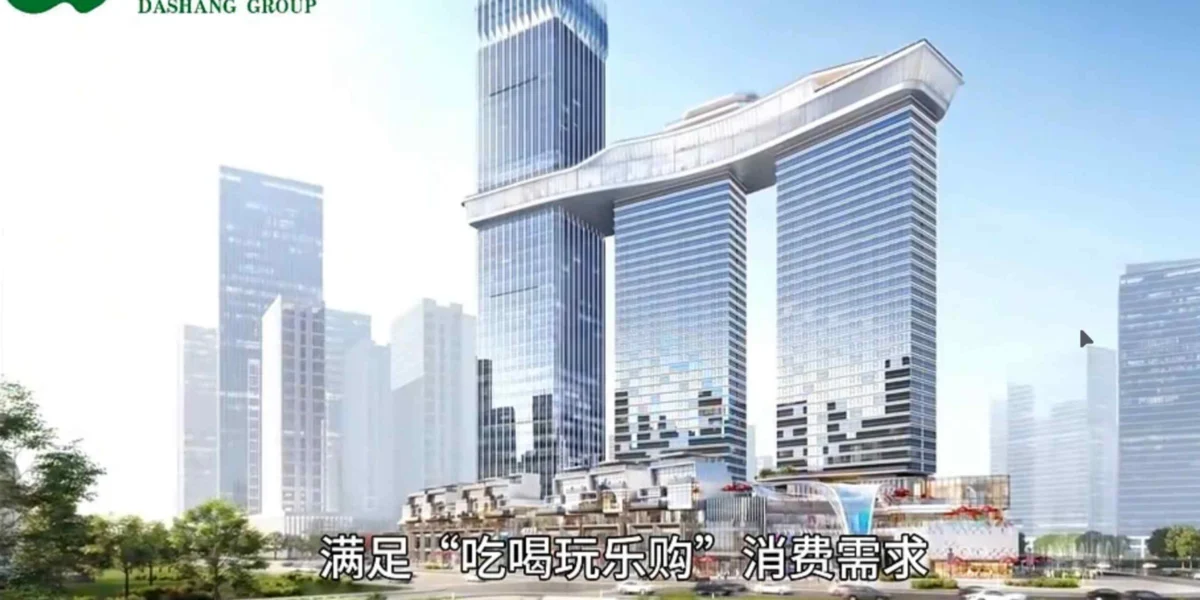
Construction has officially commenced on a sprawling commercial complex in the bustling Chinese port city of Dalian, signaling a significant investment in the region’s retail and entertainment landscape. Promotional materials released in conjunction with the groundbreaking ceremony boldly assert that the development will "meet all consumer needs from eating and drinking to entertainment and shopping," a testament to the project’s ambitious scope and its aspiration to become a comprehensive destination for residents and tourists alike. The initiative, helmed by an undisclosed developer, represents a substantial undertaking in a rapidly evolving Chinese consumer market, aiming to capture a significant share of discretionary spending by offering a diverse and integrated array of amenities.
Project Genesis and Scope
The Dalian commercial complex, details of which are still emerging, is slated to occupy a prime location within the city, benefiting from Dalian’s strategic position as a major economic hub in Northeast China. The project’s promotional imagery, featuring a vibrant, modern design, depicts a multifaceted environment intended to cater to a wide spectrum of consumer preferences. While specific figures regarding the total investment, construction timeline, and square footage remain under wraps, the scale of the undertaking, as suggested by the extensive promotional efforts, points towards a multi-billion dollar development. This endeavor is poised to reshape the local retail and leisure scene, potentially drawing consumers away from existing shopping districts and entertainment venues.
The underlying strategy appears to be a shift towards experiential retail, a trend that has gained considerable traction globally and within China. Modern consumers are increasingly seeking more than just transactional shopping experiences; they desire environments that offer entertainment, dining, and social interaction. This Dalian complex appears designed to fulfill precisely that demand, integrating various commercial elements under one roof. The inclusion of "eating and drinking" alongside "entertainment and shopping" suggests a food and beverage component that is not merely an afterthought but a core pillar of the development, likely featuring a diverse range of culinary options from casual eateries to upscale dining establishments.
Economic Context and Market Dynamics
Dalian, a city with a rich industrial heritage and a significant port, has been actively seeking to diversify its economy and enhance its appeal as a tourist and business destination. The development of large-scale commercial infrastructure aligns with this broader economic strategy, aiming to stimulate local employment, attract investment, and boost consumption. China’s retail market, despite recent global economic headwinds, remains one of the world’s largest and fastest-growing. However, it is also characterized by intense competition and a discerning consumer base that is increasingly sophisticated and attuned to global trends.
Recent data from China’s National Bureau of Statistics indicates a steady, albeit moderated, growth in retail sales. For instance, in the first ten months of 2023, retail sales of consumer goods nationwide saw a year-on-year increase of 7.0%, reaching ¥36.40 trillion (approximately $5.1 trillion USD). While this represents a robust figure, it also highlights the need for new developments to offer compelling value propositions to stand out. The Dalian complex, by promising a comprehensive consumer experience, is attempting to differentiate itself in this competitive arena. The inclusion of entertainment and dining alongside traditional retail is a strategic move to create a "destination" rather than just a shopping mall, encouraging longer dwell times and repeat visits.
Furthermore, the development is occurring against a backdrop of evolving consumer behavior in China. The rise of e-commerce, while still a dominant force, has also led to a renewed appreciation for brick-and-mortar retail, provided it offers unique experiences that online platforms cannot replicate. This has fueled the trend of "experiential retail," where physical spaces are designed to be immersive and engaging, incorporating elements like themed environments, interactive displays, and curated events. The Dalian project appears to be a direct response to this evolving consumer preference.
Background and Precedents
The development of large-scale commercial and entertainment complexes is not new to China. Major cities across the country have seen the emergence of mega-malls and integrated lifestyle centers, often developed by both domestic and international real estate firms. These projects typically aim to create a critical mass of attractions that draw visitors from a wide geographical radius. Examples include Shanghai’s Xintiandi, a popular entertainment and dining hub, and Beijing’s Sanlitun Village, a high-end retail and lifestyle destination.
Dalian itself has a history of urban development and modernization. The city has undergone significant transformations in recent decades, with a focus on improving its infrastructure and urban amenities. The construction of this new complex can be seen as a continuation of these efforts, aiming to elevate Dalian’s status as a modern, vibrant city. The project’s timing, commencing construction in late 2026, suggests a long-term vision, with significant development phases likely planned over the next few years.
The specific developer behind the Dalian project remains unnamed in the initial announcements, which is not uncommon for large-scale real estate ventures in their early stages. Such projects often involve complex financing structures and partnerships. The involvement of major players in the real estate or retail sectors would be a significant indicator of the project’s potential success and its impact on the market.
Timeline and Phased Development
While a precise completion date has not been disclosed, the commencement of construction marks the beginning of a multi-year development cycle. Typically, projects of this magnitude involve several phases, including site preparation, foundational work, structural construction, interior fit-outs, and finally, tenant leasing and grand opening. Given the ambitious scope promised by the promotional materials, it is reasonable to infer that the Dalian complex will likely take at least three to five years to fully materialize, potentially opening in stages.
The initial phase, now underway, will involve extensive groundwork and the erection of the core structures. This period is critical for establishing the project’s foundation and ensuring structural integrity. Subsequent phases will focus on the intricate details of retail spaces, entertainment venues, and dining establishments, as well as landscaping and public areas. The success of such a phased approach often depends on effective project management and the ability to secure anchor tenants early in the development process to generate buzz and secure pre-leasing commitments.
The development timeline will also be influenced by external factors, including regulatory approvals, supply chain dynamics, and the broader economic climate. Chinese authorities often have stringent regulations regarding large-scale construction projects, and obtaining all necessary permits can be a time-consuming process. Furthermore, the global construction industry, while recovering, can still be subject to fluctuations in material costs and labor availability, which could impact the project’s schedule and budget.
Potential Impact and Implications
The construction of such a substantial commercial complex in Dalian carries significant implications for various stakeholders.
Economic Impact
Job Creation: The project will undoubtedly generate a substantial number of jobs, both during the construction phase and once the complex is operational. This includes roles for construction workers, engineers, architects, retail staff, hospitality professionals, and management personnel. This influx of employment opportunities can provide a significant boost to the local economy.
Investment Attraction: The development itself represents a considerable capital investment, likely drawing funds from both domestic and international sources. Its success could pave the way for further investment in Dalian’s commercial and tourism sectors.
Consumer Spending: By offering a wide array of attractions, the complex is expected to capture a significant portion of regional consumer spending. This could lead to increased retail sales, dining revenue, and entertainment ticket purchases, benefiting the businesses operating within the complex and potentially drawing consumers from neighboring cities.
Urban Development: The project is likely to stimulate further urban development in its vicinity, potentially leading to improvements in local infrastructure, transportation networks, and public amenities. It could also influence property values in the surrounding areas.
Market Competition
The introduction of a major new player in Dalian’s retail and entertainment market will inevitably intensify competition. Existing shopping malls, entertainment venues, and restaurant districts may face increased pressure to innovate and adapt their offerings to remain competitive. This could lead to a more dynamic and consumer-friendly market overall, with businesses striving to offer superior experiences and value.
The "meet all consumer needs" promise suggests an intent to consolidate various consumer activities that might otherwise be spread across different locations. This integrated approach could prove highly effective in capturing consumer attention and loyalty. However, it also raises questions about the viability of smaller, independent businesses that may struggle to compete with the scale and breadth of offerings at the new complex.
Consumer Experience
For consumers, the complex promises a convenient and potentially exciting new destination. The ability to shop, dine, and be entertained in a single location offers significant advantages in terms of time-saving and convenience. The emphasis on a holistic experience suggests that the development will likely incorporate modern design principles, comfortable public spaces, and a diverse range of amenities to cater to various demographics and preferences.
The success of the complex will ultimately hinge on its ability to deliver on its promises. Factors such as the quality of retail offerings, the diversity and appeal of dining options, the caliber of entertainment venues, and the overall ambiance and customer service will be crucial in determining its long-term success and its impact on Dalian’s consumer landscape.
Official and Stakeholder Reactions (Inferred)
While direct statements from Dalian city officials or the developer have not been released in conjunction with this initial news, it is highly probable that the project has received, or is in the process of receiving, significant governmental support. Such large-scale developments are typically aligned with municipal economic development plans and often benefit from streamlined approval processes and potential incentives.
Local business chambers and industry associations are likely to view the project with cautious optimism. While acknowledging the potential for increased economic activity and job creation, they will also be observing the competitive implications for existing businesses. Industry analysts specializing in retail and real estate will be closely monitoring the project’s progress, the identity of the developer, and the specific tenants being secured, as these factors will provide crucial insights into its market strategy and potential for success.
The Dalian municipal government, in its pursuit of economic diversification and urban enhancement, will likely see this complex as a flagship project. Its successful execution could significantly bolster Dalian’s reputation as a modern, forward-thinking city and a desirable destination for both commerce and leisure. The city’s commitment to infrastructure development, such as improved transportation links to the new complex, will be a key determinant of its accessibility and overall appeal.
Looking Ahead
The commencement of construction for the Dalian commercial complex marks a significant development in Northeast China’s economic landscape. The project’s ambitious promise to cater to every consumer need from dining and drinking to entertainment and shopping positions it as a potentially transformative force in the regional market. As construction progresses, further details regarding the developer, specific tenants, and a definitive timeline are expected to emerge, offering a clearer picture of this monumental undertaking and its far-reaching implications for Dalian and beyond. The success of this endeavor will undoubtedly be a closely watched indicator of evolving consumer trends and the future of large-scale commercial development in China.
