

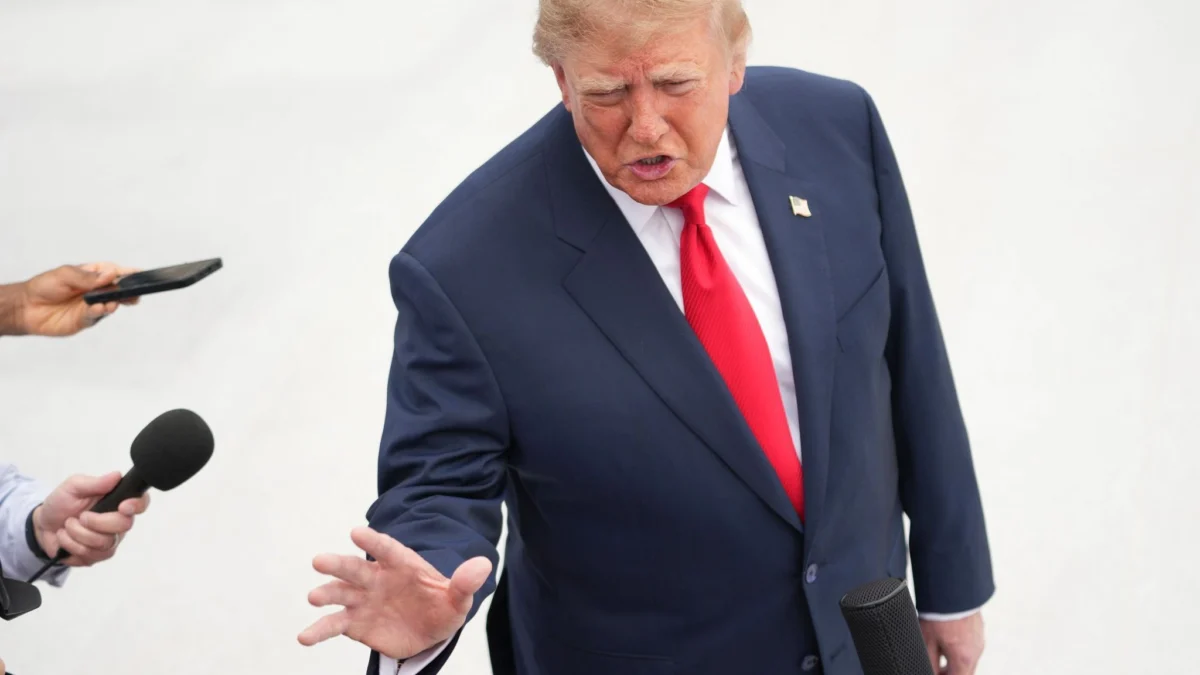
President Donald Trump has issued an executive order to suspend new sanctions and tariffs against Russia, just days before they were set to take effect. The White House released a statement on Friday, citing the "national interest of the United States" as the primary justification for this decision. This move marks a significant, albeit temporary, shift in the United States’ approach to its complex relationship with Russia, potentially signaling a desire for de-escalation or a re-evaluation of the strategic impact of the proposed punitive measures.
Background and Legislative Context
The sanctions in question were part of a broader legislative package that President Trump signed into law in mid-September. This legislation aimed to impose a range of penalties on Russia, stemming from a confluence of geopolitical concerns. Key provisions included potential tariffs on Russian goods and penalties for entities involved in the purchase of Russian oil and gas. The impetus for these sanctions was multifaceted, including allegations of Russian interference in foreign elections, its ongoing actions in Ukraine, and broader concerns about its global conduct.
The legislative framework provided President Trump with considerable discretion. It allowed for the suspension of sanctions if the President notified Congress of his decision. This mechanism underscores the executive branch’s significant leverage in shaping foreign policy, even within the confines of congressionally approved legislation. The President’s ability to suspend these measures suggests a strategic calculation that their immediate implementation might not serve the best interests of the United States at this particular juncture.

The President’s Rationale
In his executive order, President Trump articulated that the suspension would remain in effect until he or other high-ranking government officials determined that further action was appropriate. This open-ended timeframe allows for flexibility and further deliberation. The justification of "national interest" is broad and can encompass a variety of considerations, including economic stability, diplomatic relations, and national security priorities.
While the specific details of the administration’s internal deliberations remain confidential, several factors could have influenced this decision. The global oil market, already volatile, could have been a significant consideration. Imposing sanctions on Russian energy exports might have led to price surges, impacting American consumers and the broader economy, especially with midterm elections on the horizon. Furthermore, a re-assessment of the effectiveness of such sanctions in achieving their stated goals might have also played a role. Diplomatic channels may have also been a factor, with the administration potentially seeking to create space for dialogue or negotiation with Moscow.
Russia’s Reaction and International Implications
The Kremlin has responded positively to the suspension of the sanctions. Kirill Dmitriyev, the Kremlin’s envoy for international economic cooperation, described the move as an "important and truly historic moment" via Telegram. He further stated that the decision fosters dialogue and mutually beneficial cooperation between the two nations. This reaction suggests that Russia views the suspension as a de-escalatory step and an opportunity to potentially mend strained relations.
The international community is likely to view this development with keen interest. The United States’ relationship with Russia has been a focal point of global diplomacy for years, marked by periods of heightened tension and limited cooperation. Any shift in U.S. policy towards Russia, particularly concerning sanctions, can have ripple effects across the geopolitical landscape. Allies and adversaries alike will be closely watching for further signals from the Trump administration regarding its long-term strategy towards Moscow.

Potential Economic and Geopolitical Analysis
The implications of this decision are multifaceted. Economically, the suspension of sanctions could prevent potential disruptions to global energy markets. Russia is a major global energy producer, and any significant impact on its exports could lead to price volatility. By delaying these measures, the Trump administration may be seeking to avoid exacerbating existing economic pressures on American consumers, particularly in the lead-up to the midterm elections. Rising energy costs have been a point of concern for the Republican party, and any policy that could contribute to further price increases might be viewed as politically disadvantageous.
Geopolitically, the move could be interpreted in various ways. Some analysts suggest it might signal a desire by the Trump administration to forge a less adversarial relationship with Russia, potentially seeking cooperation on areas of mutual interest, such as counter-terrorism or arms control. Others may see it as a tactical maneuver, allowing for further negotiation or a more targeted approach to sanctions in the future. The broad justification of "national interest" leaves room for various interpretations, and the administration’s subsequent actions will provide greater clarity on its underlying motivations.

The decision also raises questions about the unity of U.S. foreign policy. While President Trump has often expressed a desire for better relations with Russia, members of his administration and Congress have generally advocated for a tougher stance, citing Russian aggression and interference. This executive order suggests that the President’s personal inclinations may be taking precedence over some of the more hawkish sentiments within the U.S. foreign policy establishment.
Broader Context of U.S.-Russia Relations
The history of U.S.-Russia relations in recent years has been fraught with tension. Key flashpoints include Russia’s annexation of Crimea in 2014, its alleged interference in the 2016 U.S. presidential election, and its involvement in the Syrian conflict. In response to these actions, the United States and its allies have imposed numerous sanctions aimed at isolating Russia economically and politically.

The legislative act signed in September was itself a response to these ongoing concerns. It aimed to provide Congress with a more direct role in overseeing and influencing U.S. policy towards Russia, particularly by limiting the President’s ability to unilaterally lift sanctions without congressional notification. The President’s use of an executive order to suspend these sanctions, while permissible under the law, highlights the ongoing tension between the executive and legislative branches on matters of foreign policy and national security.
Future Outlook and Potential Ramifications
The suspension of these sanctions is a temporary measure, and their eventual implementation, modification, or permanent removal will depend on future decisions by the Trump administration. The administration’s next steps will be closely scrutinized by both domestic and international actors. The specific criteria the President will use to determine when further action is "appropriate" remain to be seen, offering a degree of uncertainty regarding the future trajectory of U.S.-Russia sanctions policy.

This development could also influence broader diplomatic efforts. If the administration seeks to engage Russia on issues of shared concern, this suspension might be seen as a goodwill gesture. Conversely, if the underlying grievances that led to the imposition of sanctions remain unaddressed, the suspension could be viewed as a temporary reprieve rather than a fundamental shift in policy.
The decision also comes at a critical time for the Trump administration, with the midterm elections approaching. The administration may be seeking to present itself as actively managing complex international relationships and prioritizing American economic stability. How voters perceive this move, and its potential impact on their daily lives, will likely be a factor in the upcoming electoral landscape. The interplay between foreign policy decisions, economic considerations, and domestic political imperatives will continue to shape the evolving dynamics of U.S.-Russia relations.
