

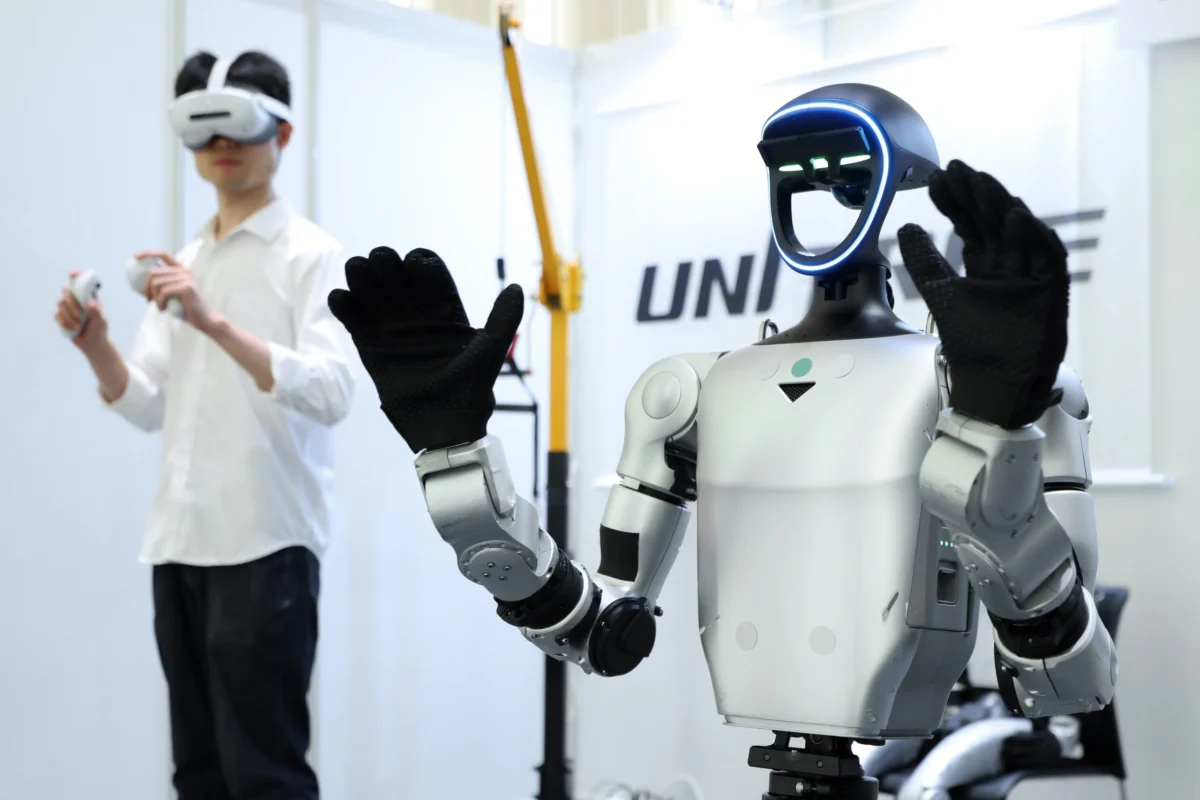
Amulya Vishwanath, a prominent figure who dedicated seven years to spearheading product marketing for NVIDIA’s advanced robotics platforms, asserts that the field of robotics is currently navigating its "Lego era." This perspective posits that fundamental building blocks, including actuators, robotic hands, sophisticated software, and crucial safety standards, are still undergoing significant reconstruction and refinement. This nuanced view stands in stark contrast to a growing sentiment within the tech community that robotics is on the cusp of its own "ChatGPT moment," an analogy to the late 2022 launch of OpenAI’s remarkably capable chatbot, which dramatically shifted perceptions of artificial intelligence.
The "Lego Era" of Robotics: Building Blocks Under Reconstruction
Vishwanath’s "Lego era" analogy is a powerful descriptor for the current state of robotics, suggesting that the industry is still assembling and perfecting its foundational components rather than deploying fully integrated, universally adaptable systems. This perspective is rooted in the complex realities of developing robots that can reliably interact with the physical world. Unlike software applications, which can often be scaled and deployed globally with minimal physical constraints, robots must contend with an unpredictable environment, requiring robust, precise, and safe hardware and software interactions.
At the core of this "Lego era" are several critical areas where fundamental progress is still needed. Actuators, the motors and mechanisms that enable movement, often lack the power-to-weight ratio, compliance, or cost-effectiveness required for widespread, agile deployment. Imagine a robot hand designed to manipulate delicate objects; it requires not just strength but also incredibly fine motor control and tactile feedback, areas where current technology, while advanced, is far from human-level performance. Similarly, robotic hands themselves, often seen as the interface between robot and world, remain a significant engineering challenge. Developing dexterous, multi-functional grippers that can handle a diverse range of objects with varying shapes, textures, and weights is an ongoing quest. While specialized grippers exist for specific tasks, a truly general-purpose robotic hand remains elusive, often requiring bespoke solutions for each application, increasing costs and limiting versatility.
Beyond hardware, software platforms for robotics, while evolving rapidly, still present significant integration hurdles. The ecosystem of operating systems, programming languages, simulation tools, and AI frameworks is fragmented. Achieving seamless communication between different robotic components, ensuring real-time decision-making, and developing intuitive programming interfaces are complex tasks. Furthermore, safety standards in robotics are continuously being rebuilt and updated, reflecting the increasing interaction of robots with humans in various environments, from factories to public spaces. The ethical implications and the need for fail-safe mechanisms, robust collision avoidance, and predictable behavior are paramount, demanding rigorous testing and standardization efforts that are inherently iterative and time-consuming. These elements, Vishwanath argues, are not yet mature enough to support a sudden, broad-based revolution akin to what large language models have achieved in the digital realm.
The "ChatGPT Moment" Hypothesis: A Leap Towards General Robotics
The counter-narrative, championed by proponents like Pim de Witte, CEO of General Intuition, envisions a transformative leap for robotics driven by a singular, powerful general foundation model. De Witte articulated this view earlier this year on TechCrunch’s Equity podcast, suggesting that such a model would render much of today’s specialized robotics work redundant, ushering in an era of unprecedented capability and accessibility. This "ChatGPT moment" for robotics would imply that a universal AI system, trained on vast datasets of physical interactions, sensory information, and potentially simulated experiences, could enable robots to understand, plan, and execute complex tasks in diverse environments without explicit programming for each scenario.
The allure of this vision is undeniable. A general foundation model for robotics would theoretically empower robots with capabilities similar to how LLMs have democratized natural language processing. Imagine a robot that could, given a high-level command like "prepare dinner," autonomously navigate a kitchen, identify ingredients, operate appliances, and serve a meal, adapting to variations in kitchen layout or ingredient availability. This would require an unparalleled level of perception, reasoning, motor control, and adaptability. Proponents argue that just as LLMs learned grammar, semantics, and world knowledge from massive text corpora, a "robotics foundation model" could learn the physics of the world, object properties, manipulation strategies, and interaction protocols from vast amounts of embodied data – perhaps even simulated data from virtual environments or video games, as de Witte has suggested as a valuable training resource.
However, the leap from a digital foundation model like ChatGPT to an embodied one for robotics presents unique challenges. The real world is infinitely more complex and unpredictable than any digital dataset. Data collection for embodied AI is inherently more difficult and expensive than for text or images. Sim-to-real transfer, the process of taking knowledge learned in simulation and applying it effectively to physical robots, remains a significant hurdle. Furthermore, the consequences of errors in the physical world (e.g., a robot dropping a valuable item or causing an injury) are far more severe than those in a digital conversation, placing immense demands on safety, reliability, and explainability for any general robotics model.
NVIDIA’s Legacy and Vishwanath’s Pivot to Venture Capital
Amulya Vishwanath’s insights are particularly weighty given her extensive background at NVIDIA, a company that has become synonymous with accelerated computing and, increasingly, with the future of robotics and AI. During her seven-year tenure, Vishwanath was at the forefront of product marketing for NVIDIA’s robotics platforms. This role would have involved deep engagement with the entire robotics ecosystem, from developers and researchers to industrial partners and emerging startups. She would have been instrumental in shaping NVIDIA’s strategy for its Isaac Robotics Platform, a comprehensive suite of tools for robotics development, simulation, and deployment, powered by NVIDIA’s formidable GPU technology. Her experience would have provided her with an intimate understanding of both the cutting edge of robotics research and the practical challenges of bringing these technologies to market.
NVIDIA’s contributions to robotics are significant. Their GPUs provide the computational horsepower necessary for complex AI algorithms, including deep learning for perception and control. The Isaac Sim platform offers a realistic simulation environment crucial for training and testing robots without the cost and risk associated with physical prototypes. Vishwanath’s time at NVIDIA would have given her a panoramic view of the incremental progress being made in areas like computer vision, sensor fusion, and reinforcement learning for robotic control, reinforcing her perspective on the need for foundational improvements.
Her transition from a leading executive role at a tech giant to the founder and managing partner of an early-stage venture capital firm, Techable VC, marks a significant career pivot. This move reflects a broader trend of seasoned industry veterans leveraging their expertise and networks to identify and nurture the next generation of disruptive technologies. It also highlights the increasing importance of strategic capital in areas like robotics, where development cycles can be long and capital-intensive.
Techable VC: Investing in the Physical AI Frontier
As the founder and managing partner of Techable VC, Amulya Vishwanath is now actively shaping the future of technology by deploying capital into nascent companies. Her firm’s investment thesis is sharply focused on "physical AI" across three interconnected domains: robotics, materials science, and life sciences. This strategic focus is deeply informed by her "Lego era" perspective. Instead of waiting for a hypothetical "ChatGPT moment," Techable VC is likely seeking out innovations that address the fundamental building blocks of physical AI.
In robotics, this could mean investing in companies developing next-generation actuators that are more efficient and powerful, novel sensor technologies that provide richer environmental data, advanced robotic hands with greater dexterity, or modular software architectures that simplify integration. It might also include startups focusing on specialized robotic applications where the foundational components are mature enough for viable deployment, or companies developing better simulation tools or data generation techniques for embodied AI.
In materials science, the connection to physical AI is profound. New materials can enable lighter, stronger, more flexible, and more energy-efficient robots. Innovations in material science can lead to better batteries for extended robot operation, self-healing components for increased durability, or advanced composites for lighter robotic structures. These are critical enablers for pushing the boundaries of what robots can physically achieve.
Finally, life sciences represents another frontier where physical AI, particularly robotics, is poised for massive impact. This includes everything from automated lab systems for drug discovery and genetic sequencing to robotic surgical assistants and exoskeletons for rehabilitation. The precision, repeatability, and tireless nature of robots offer transformative potential in areas requiring high throughput, microscopic accuracy, or assistance with delicate procedures. Techable VC’s holistic approach to physical AI across these sectors demonstrates a recognition that true breakthroughs often occur at the intersection of disciplines, where advancements in one area can unlock potential in others.
Vishwanath’s journey also makes her one of the first women executives to spin out of NVIDIA to launch her own early-stage firm, a notable achievement in a venture capital landscape that is still working towards greater diversity. Her experience navigating the executive ranks of a major tech company, coupled with her deep technical and market knowledge, positions her uniquely to identify and support promising founders in these complex, capital-intensive fields.
The Broader Investment Landscape: Divergent Strategies
The debate between the "Lego era" and the "ChatGPT moment" is not merely academic; it has profound implications for investment strategies in robotics. Investors aligned with the "Lego era" perspective tend to favor companies working on incremental, yet critical, improvements to foundational hardware and software components. This might include investments in specialized sensor companies, advanced motor manufacturers, modular robotics platforms, or companies developing highly specific, high-value robotic applications (e.g., in logistics, agriculture, or specialized manufacturing) where the return on investment is clear despite the current limitations. This approach often involves a longer investment horizon but potentially lower risk due to tangible, incremental progress.
Conversely, investors captivated by the "ChatGPT moment" narrative might seek out startups attempting to develop general-purpose robotics AI models, comprehensive simulation platforms designed for massive data generation, or companies building humanoid robots with the explicit aim of achieving broad, adaptable intelligence. These investments are often higher risk, higher reward, betting on a paradigm shift that could unlock immense value if successful. The promise of a universal robot that can learn and adapt across countless tasks is incredibly attractive, potentially leading to venture rounds with valuations reflecting this speculative future.
Recent trends in venture capital show a significant increase in funding for robotics and automation. According to various industry reports, global robotics funding has been steadily growing, reaching tens of billions of dollars annually. While much of this funding still goes to established players or companies with proven, specialized solutions, there’s an undeniable surge of interest in AI-driven robotics. However, the exact allocation between foundational component development versus general AI platforms remains a subject of ongoing strategic debate among VCs. Some firms, like Techable VC, are deliberately focusing on the enabling technologies, recognizing that a "ChatGPT moment" cannot occur without robust "Lego blocks" in place.
Key Challenges and Opportunities in Robotics Development
Regardless of which paradigm ultimately prevails, the robotics industry faces a multitude of challenges and opportunities.
Challenges:
- Hardware Limitations: Cost, power consumption, size, weight, and durability of robotic components remain significant hurdles for widespread adoption.
- Software Complexity: Integrating diverse sensors, actuators, and AI algorithms into a cohesive, reliable system is incredibly difficult.
- Data Scarcity for Embodied AI: Generating real-world interaction data for training general robotics models is expensive, time-consuming, and often safety-constrained.
- Sim-to-Real Gap: Bridging the gap between behaviors learned in simulation and their effective execution in the physical world is a persistent problem.
- Safety and Ethics: Ensuring the safe and ethical operation of autonomous robots, particularly in human environments, requires robust regulatory frameworks and technological safeguards.
- Lack of Standardization: The absence of universal standards for hardware interfaces, software protocols, and data formats can hinder interoperability and scalability.
- Cost of Deployment: The initial investment and ongoing maintenance costs for advanced robotic systems can be prohibitive for many potential users.
Opportunities:
- Automation in New Sectors: Robotics is expanding beyond traditional manufacturing into logistics, healthcare, retail, agriculture, and construction, addressing labor shortages and improving efficiency.
- Human-Robot Collaboration: The development of cobots (collaborative robots) is creating new paradigms for human workers to augment their capabilities with robotic assistance.
- AI-Driven Adaptive Robots: Advances in AI and machine learning are enabling robots to perceive, learn, and adapt to unstructured environments, opening up new applications.
- Specialized Applications: High-value, niche applications where robots can solve critical problems (e.g., hazardous environment inspection, precision surgery) continue to drive innovation.
- Democratization of Robotics: Lowering the cost and complexity of robotics through modular design, intuitive programming tools, and cloud-based services could expand access to a wider range of users.
The Road Ahead: Navigating the Future of Embodied AI
The discourse surrounding robotics’ "Lego era" versus its "ChatGPT moment" underscores a fundamental tension in technological progress: the interplay between incremental, foundational development and disruptive, paradigm-shifting breakthroughs. While the vision of a general foundation model for robotics is captivating, Amulya Vishwanath’s perspective, informed by years at the sharp end of robotics product development, serves as a crucial reminder of the painstaking work required to build the underlying infrastructure.
The future of robotics will likely not be an either/or scenario but rather a dynamic interplay of both. Continuous refinement of actuators, sensors, grippers, and software architectures (the "Lego blocks") will be essential. Simultaneously, research into generalizable AI models and sophisticated simulation environments will push the boundaries of what robots can learn and achieve. It is conceivable that the "ChatGPT moment" for robotics, if it arrives, will be built upon the sturdy foundation laid during the "Lego era."
As investors like Vishwanath at Techable VC strategically deploy capital, they are placing bets on the specific innovations they believe will accelerate this journey. By focusing on physical AI across robotics, materials science, and life sciences, they are acknowledging the complex, interdisciplinary nature of bringing intelligent machines into the real world. The ongoing dialogue, exemplified by the Equity podcast, is vital for guiding investment, research, and development, ensuring that the industry progresses thoughtfully towards a future where robots seamlessly augment human capabilities and improve the quality of life. The path to truly autonomous and adaptable robots is a marathon, not a sprint, paved with countless individual innovations that, when assembled, will eventually construct a new era of intelligent machines.
