

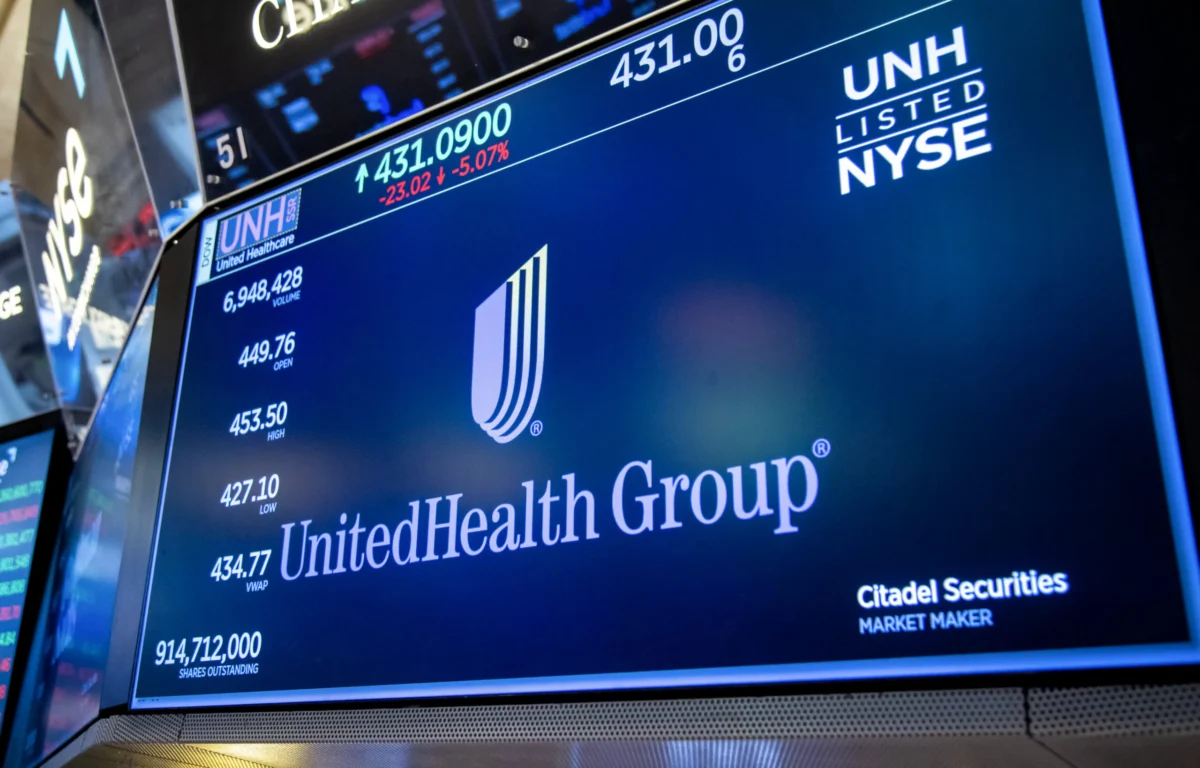
UnitedHealth Group, the nation’s largest private health insurer, on Tuesday announced third-quarter 2026 earnings that significantly surpassed Wall Street estimates, concurrently raising its full-year profit outlook. This robust financial performance underscores the company’s accelerating momentum in managing persistent high medical costs through strategic investments in value-based care models and advanced artificial intelligence technologies. The positive results mark the culmination of a proactive turnaround strategy, demonstrating resilience and adaptability in a dynamic healthcare landscape.
The healthcare behemoth now projects fiscal 2026 adjusted earnings of at least $20.50 per share, an upward revision from its prior guidance of $19.50 to $20 per share. This elevated forecast reflects growing confidence in its operational efficiencies and the effectiveness of its strategic initiatives, particularly as the company navigates an environment characterized by inflationary pressures on medical services and evolving regulatory frameworks. This improved outlook builds upon a strong foundation established over the preceding two quarters, signaling a consistent upward trajectory for the diversified healthcare provider.
UnitedHealth’s strategic pivot has centered on stabilizing profit margins by carefully re-evaluating its membership base, exiting less profitable contracts, and significantly bolstering its commitment to innovative healthcare delivery and administrative solutions. A cornerstone of this strategy is the intensified investment in value-based care, a paradigm shift that ties compensation for healthcare providers and facilities directly to patient health outcomes, overall quality of care, and cost-effectiveness, rather than the traditional fee-for-service model based solely on the volume of services rendered. Complementing this is a substantial push into artificial intelligence, aimed at streamlining operations, enhancing predictive analytics, and ultimately improving both patient and provider experiences.
Wayne DeVeydt, UnitedHealth’s Chief Financial Officer, emphasized the holistic nature of the company’s performance in a recent interview. "You’ll see in the quarter that we continue to execute not only on the financial aspects of our business, but really doing them with a simpler approach and an approach that’s really focused on investing heavily in value-based care," DeVeydt stated, highlighting the dual focus on financial prudence and patient-centric innovation. This philosophical alignment between fiscal health and care quality is seen by industry analysts as a critical differentiator for UnitedHealth in a competitive market.
Detailed Financial Performance and Analyst Expectations
For the third quarter, UnitedHealth Group reported net income of $4.11 billion, or $4.56 per share, a significant increase compared to $2.35 billion, or $2.59 per share, reported in the same period a year ago. Excluding specific items such as business divestitures, restructuring charges, and the anticipated reduction of reserves allocated for unprofitable contracts, the company’s adjusted earnings reached $4.69 per share. This figure comfortably exceeded the consensus analyst estimate of $4.25 per share, as compiled by LSEG, demonstrating robust operational outperformance.
Despite the strong earnings per share, revenue for the quarter saw a slight dip, falling to $112.69 billion from $113.16 billion a year earlier. This modest revenue decline, however, was largely anticipated as a consequence of the company’s strategic decision to shed less profitable contracts and optimize its membership portfolio, prioritizing long-term margin stability over sheer volume. Importantly, both of UnitedHealth’s primary segments – UnitedHealthcare, its health insurance arm, and Optum, its healthcare services unit – outperformed analysts’ operating earnings estimates for the quarter, according to data from StreetAccount. This synchronized strength across both core business divisions underscores the integrated model’s effectiveness and its capacity to drive profitability even amidst strategic adjustments to its top-line.
Managing High Medical Costs: A Persistent Industry Challenge
A key metric scrutinized by investors and analysts is the medical cost ratio (MCR), which measures the total medical expenses paid out relative to the premiums collected. For the third quarter, UnitedHealth’s MCR came in at a favorable 88.4%, significantly better than the 89.9% ratio anticipated by StreetAccount analysts. A lower MCR typically indicates a healthier profit margin, as the company retains a larger portion of premiums after paying out benefits. This improvement signals UnitedHealth’s enhanced ability to manage healthcare expenditures, a critical factor for insurer profitability.
Despite this positive MCR, CFO Wayne DeVeydt cautioned that medical costs in the quarter "continue to be elevated versus historical norms." This persistent trend of higher-than-average healthcare spending has been a major concern for insurers across the industry for over two years, particularly affecting those operating privately run Medicare Advantage plans. DeVeydt acknowledged, "I think it’s something we should keep an eye on. I think you’ll see that our medical care ratio has improved quite a bit, but I don’t want that to be misleading in terms of [medical cost trends]." This highlights the ongoing tension between effective cost management strategies and the broader inflationary pressures within the healthcare system.
One significant contributor to these elevated costs, as pointed out by DeVeydt, is the independent dispute resolution (IDR) process established under the No Surprises Act. This federal law, which came into effect in January 2022, was designed to shield consumers from unexpected medical bills resulting from out-of-network care. While laudable in its intent, the IDR process, which allows providers and insurers to resolve payment disputes, is adding at least 100 basis points, or 1 percentage point, to UnitedHealth’s total medical costs. DeVeydt explained that these administrative complexities and payment disputes are driving up claims costs, a burden that can ultimately translate into higher premiums for consumers. The mechanism, while safeguarding patients, has inadvertently created new financial pressures for insurers, requiring them to adapt their pricing and operational strategies.
Beyond regulatory impacts, DeVeydt noted that costs for inpatient services and pharmacy expenses remain notably high. A major driver in the pharmacy sector is the escalating cost of specialty drugs, particularly those used in the treatment of complex conditions such as cancer and rare diseases. These cutting-edge therapies, while often life-changing, come with substantial price tags, posing a continuous challenge for cost containment across the healthcare ecosystem. Industry data from sources like IQVIA has consistently shown double-digit growth in specialty drug spending over recent years, placing immense pressure on pharmacy benefit managers and insurers alike.
Strategic Pillars: Value-Based Care and Artificial Intelligence
In response to these pervasive cost pressures, UnitedHealth Group has intensified its focus on its value-based care initiatives. DeVeydt underscored how these programs are actively helping to control medical costs by strategically guiding patients toward appropriate providers and emphasizing preventive care, thereby mitigating the need for more expensive interventions down the line. The approach prioritizes proactive health management and integrated care coordination, shifting the focus from treating illness to maintaining wellness.
Tangible results from these efforts are already emerging. DeVeydt reported that acute hospital admissions among UnitedHealth members experienced a notable 15% year-over-year decrease through the third quarter. Concurrently, home health admissions rose by 10% over the same period. This trend signifies a successful redirection of care to lower-cost, often more patient-preferred, settings. "You’re finding more members are actually getting into a lower-cost care environment, but more importantly, they’re getting into the care environment they actually want to be in," DeVeydt articulated, emphasizing the dual benefit of cost efficiency and improved patient satisfaction. This strategic shift aligns with broader industry trends advocating for de-hospitalization where clinically appropriate, leveraging technological advancements and community-based services.
Artificial intelligence also plays a pivotal role in UnitedHealth’s cost management and efficiency drive. The company is actively deploying AI-powered ambient listening tools, designed to alleviate the significant administrative burden placed on physicians. These tools can automatically transcribe patient-physician conversations, extract relevant clinical information, and populate electronic health records, thereby freeing up valuable time that physicians can then dedicate to direct patient care rather than documentation. The impact is already visible: appointment scheduling initiated by patients, rather than requiring provider assistance, increased by 27% year-over-year, according to DeVeydt. This automation not only improves operational efficiency but also enhances patient autonomy and access.
DeVeydt expressed optimism that these interconnected initiatives – value-based care and AI integration – will have a compounding effect on medical cost management, with benefits expected to accrue further through the fourth quarter of 2026 and significantly into 2027 as these programs continue to scale and mature.
Broader Industry Context and Competitive Landscape
UnitedHealth Group’s robust performance in Q3 2026 comes at a time when many of its peers in the health insurance sector are grappling with similar, if not more pronounced, challenges related to elevated medical costs, workforce shortages, and the complexities introduced by new regulations. While other major insurers like Elevance Health (formerly Anthem), CVS Health (Aetna), and Humana have also been working to optimize their portfolios and invest in care delivery, UnitedHealth’s scale and its diversified Optum segment provide a unique advantage.
Optum, which includes Optum Health, Optum Insight, and Optum Rx, serves as a critical engine for growth and innovation. Optum Health, for instance, operates one of the largest networks of employed and affiliated physicians in the U.S., directly facilitating the implementation of value-based care models. Optum Rx, a leading pharmacy benefit manager, helps UnitedHealth negotiate drug prices and manage pharmaceutical spending, offering a degree of vertical integration that can mitigate some of the specialty drug cost pressures. The synergy between UnitedHealthcare and Optum allows for a more integrated approach to healthcare delivery and financing, differentiating UnitedHealth from more traditionally structured insurers.
The company’s strategic decision to shrink membership by exiting unprofitable contracts, while potentially impacting top-line revenue in the short term, is viewed by market analysts as a prudent long-term move. This strategy allows the company to focus its resources on higher-margin business lines and populations where its value-based care models can have the greatest impact, ultimately strengthening its financial foundation and enhancing shareholder value.
Outlook and Future Trajectory
Looking ahead, UnitedHealth Group’s raised full-year outlook signals a confident trajectory into 2027. The continued expansion of its value-based care networks, coupled with the deeper integration of AI across its operations, is expected to yield further efficiencies and improved patient outcomes. The company’s proactive stance on medical cost management, including its nuanced approach to the No Surprises Act’s IDR process and its efforts to shift care to lower-cost settings, positions it favorably to navigate ongoing industry headwinds.
The focus on preventative care and chronic disease management, enabled by technology and integrated care models, is not just a cost-saving measure but also aligns with the broader societal push for healthier populations. As the U.S. healthcare system continues its slow but inexorable shift from fee-for-service to value-based models, UnitedHealth Group, with its substantial investments and demonstrated results, appears well-positioned to lead this transformation. The company’s ability to consistently exceed earnings expectations and raise its guidance, even in a challenging environment, reinforces its leadership position and underscores the effectiveness of its strategic vision and operational execution. Investors and industry observers will be closely watching how these initiatives further unfold and translate into sustained growth and innovation in the years to come.
