

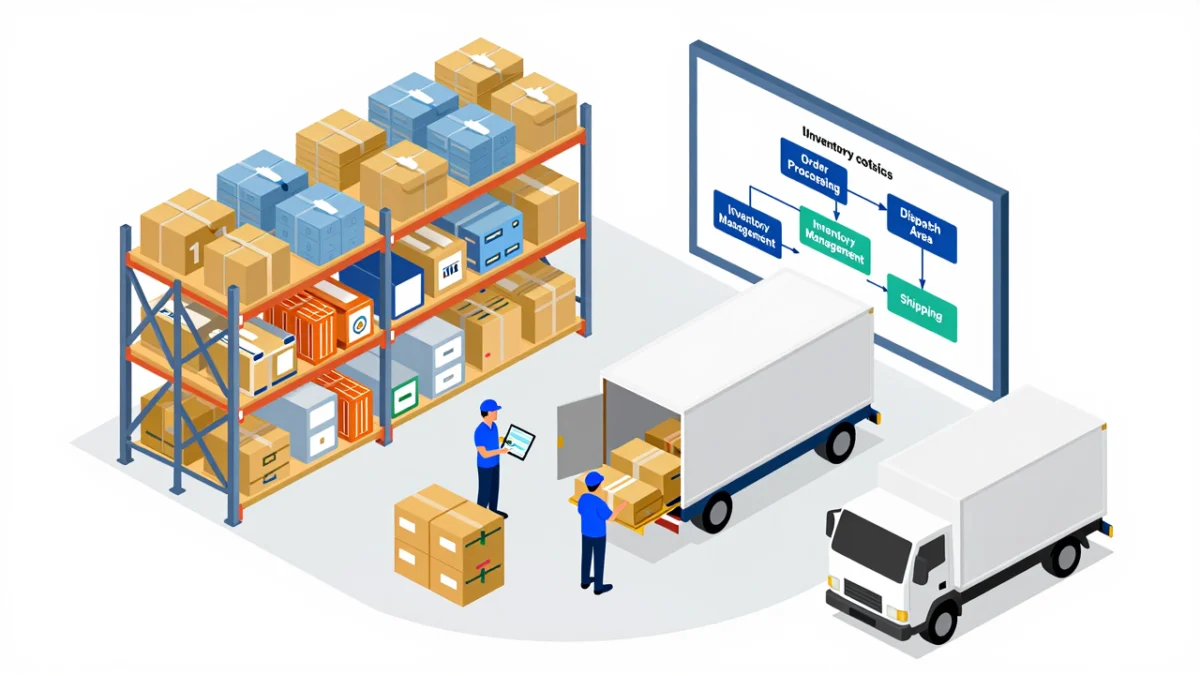
In the modern global economy, the discipline of inventory logistics has evolved from a back-office administrative function into a primary driver of competitive advantage and financial stability. As businesses navigate an era defined by volatile consumer demand, fluctuating raw material costs, and increasingly complex global supply chains, the ability to manage the flow of goods with precision is no longer optional. Inventory logistics encompasses the entire lifecycle of a product, from the initial procurement of raw materials to the final delivery at the customer’s doorstep. By integrating advanced technology with rigorous analytical frameworks, organizations are now able to transform their supply chains into lean, responsive engines of growth.

The Strategic Framework of Modern Inventory Logistics
The fundamental objective of inventory logistics is to ensure that the right products are in the right place at the right time, while minimizing the capital tied up in stock. This requires a delicate balance between two opposing forces: the need for high service levels to satisfy customers and the necessity of maintaining low carrying costs to protect margins.
Industry data suggests that inventory carrying costs—which include warehousing, insurance, taxes, and depreciation—can account for 20% to 30% of the total value of inventory on hand annually. Consequently, even minor improvements in logistics efficiency can yield significant improvements in a company’s bottom line. The framework for achieving this efficiency is built upon five core pillars: sourcing and procurement, inventory control, storage optimization, order fulfillment, and transportation management.

The Evolution of Inventory Management: A Historical Perspective
To understand the current state of inventory logistics, one must look at the chronological evolution of the field. In the mid-20th century, inventory management was largely reactive. The 1950s and 60s saw the rise of the "Just-in-Case" model, where businesses maintained massive stockpiles to buffer against supply disruptions.
The 1970s and 80s marked a paradigm shift with the introduction of the Toyota Production System and the concept of Just-in-Time (JIT) manufacturing. This philosophy aimed to eliminate waste by receiving goods only as they were needed in the production process. The 1990s brought the advent of Enterprise Resource Planning (ERP) systems, allowing for the first wave of digital integration across departments.

The 21st century, particularly the decade following the 2008 financial crisis, saw the integration of Lean and Six Sigma methodologies into logistics. However, it was the 2020 global pandemic that served as the ultimate stress test. The crisis exposed the vulnerabilities of hyper-lean supply chains, leading to the current "Just-in-Case" 2.0 era, where technology is used to build "resilient" rather than just "efficient" systems. Today, the focus has shifted toward predictive logistics, powered by artificial intelligence and real-time data.
Demand Forecasting: The Engine of Accuracy
At the heart of effective inventory logistics lies demand forecasting. Without accurate predictions of future sales, all other logistical efforts are built on a foundation of guesswork. Modern forecasting has moved beyond simple historical averages. Analysts now utilize quantitative methods—such as time-series analysis and causal modeling—alongside qualitative insights from sales teams and market researchers.

The impact of forecasting accuracy on inventory performance is profound. According to industry benchmarks, companies that leverage advanced analytics for demand planning can see a 10% to 20% increase in inventory turnover rates. Furthermore, accurate forecasting mitigates the "Bullwhip Effect," a phenomenon where small fluctuations in demand at the retail level cause progressively larger fluctuations at the wholesale, distributor, and manufacturer levels. By stabilizing these waves, businesses can reduce emergency shipping costs and prevent the accumulation of obsolete stock.
Strategic Sourcing and Procurement
Sourcing and procurement represent the first stage of the inventory lifecycle. In a professional journalistic context, procurement is viewed not merely as a transaction but as a strategic partnership. Modern organizations are moving away from adversarial, price-only negotiations with suppliers toward collaborative models.

Strategic supplier partnerships allow for initiatives such as Vendor Managed Inventory (VMI), where the supplier takes responsibility for maintaining the buyer’s stock levels. This reduces the administrative burden on the buyer and ensures a more consistent flow of goods. Additionally, procurement strategies now heavily weigh "supply chain mapping" to identify geographical risks. For instance, a firm sourcing 100% of a critical component from a single region is now seen as high-risk, regardless of the price point. Diversification of the supply base has become a cornerstone of modern procurement logistics.
Inventory Control and the Science of Stock Levels
Once goods are procured, inventory control mechanisms dictate how they are tracked and managed. This involves several sophisticated methodologies:

- ABC Analysis: This technique categorizes inventory into three groups based on importance and value. ‘A’ items are high-value with low frequency of sale, ‘B’ items are moderate, and ‘C’ items are low-value with high frequency. This allows managers to focus their most rigorous tracking efforts on the items that represent the greatest financial risk.
- Economic Order Quantity (EOQ): This mathematical formula determines the ideal order size that minimizes the total costs of ordering and holding inventory. It balances the cost of placing an order against the cost of storing the items.
- Safety Stock and Reorder Points: In an era of unpredictable lead times, calculating safety stock—the "buffer" inventory kept on hand—has become a vital science. Automated systems now adjust reorder points in real-time based on supplier performance and current shipping delays.
Optimizing Storage and Warehouse Dynamics
The physical environment where inventory is held—the warehouse—has undergone a digital transformation. Warehouse Management Systems (WMS) now coordinate the movement of every pallet and parcel. Optimization of the warehouse layout can increase space utilization by up to 30%, a critical factor as industrial real estate costs continue to rise globally.
The integration of robotics and automated guided vehicles (AGVs) has further revolutionized storage. Automation can improve order picking accuracy to over 99% and increase fulfillment speed by 20% to 30%. By reducing the "travel time" of human workers within the warehouse, companies can significantly lower labor costs while increasing the volume of orders processed daily.

The Last Mile: Distribution and Shipping
The final stage of inventory logistics is the distribution and shipping of finished goods. This is often the most expensive and complex part of the chain, frequently referred to as the "last-mile" challenge. Efficient route planning is no longer just about the shortest distance; it involves real-time traffic data, fuel consumption analytics, and delivery window optimization.
The adoption of shipment tracking technologies, such as Radio Frequency Identification (RFID) and Global Positioning Systems (GPS), has provided unprecedented transparency. Customers now expect real-time updates on their orders, and providing this visibility is a key driver of customer satisfaction. Moreover, the rise of "green logistics" is pushing firms to optimize load capacities and reduce the carbon footprint of their shipping operations, reflecting a broader corporate shift toward sustainability.

Technological Integration and the Future of Logistics
The future of inventory logistics is inextricably linked to the "Fourth Industrial Revolution." Several emerging technologies are poised to redefine the field:
- Artificial Intelligence (AI): AI algorithms can process vast amounts of data—from weather patterns to social media trends—to predict demand spikes with far greater accuracy than traditional methods.
- Internet of Things (IoT): Smart sensors on shelves and in shipping containers provide real-time data on temperature, humidity, and location, which is vital for perishable goods and high-value electronics.
- Blockchain: This decentralized ledger technology offers a "single version of truth" for all parties in a supply chain, drastically reducing fraud and improving the traceability of goods.
Measuring Success: Key Performance Indicators (KPIs)
To maintain a high-performing logistics operation, firms must rigorously track specific metrics. The most critical include:

- Inventory Turnover Ratio: Measures how many times a company has sold and replaced its inventory during a specific period. A higher ratio generally indicates efficient management.
- Order Accuracy Rate: The percentage of orders that are processed, picked, and shipped without error.
- Days Sales of Inventory (DSI): The average time it takes to turn inventory into sales.
- Carrying Cost of Inventory: The total cost of holding stock, expressed as a percentage of the total inventory value.
Addressing Contemporary Challenges
Despite the advancements in technology, several challenges persist. Inaccurate data remains the primary hurdle for many retailers; if the system believes there are ten units in stock but the shelf is empty, the entire logistics chain fails. Regular physical audits and cycle counting are essential to maintain data integrity.
Additionally, labor shortages in the warehousing and trucking sectors have forced many companies to accelerate their investment in automation. Macroeconomic factors, such as inflation and fluctuating currency values, also complicate long-term procurement strategies, requiring logistics managers to be more agile than ever before.

Conclusion: The Path Forward
In conclusion, the mastery of inventory logistics is a continuous process of refinement. It requires a holistic approach that integrates strategic sourcing, precise inventory control, and cutting-edge technology. As supply chains become more global and consumer expectations for speed and transparency increase, the businesses that succeed will be those that view logistics not as a cost center, but as a vital strategic asset. By focusing on data-driven decision-making and operational flexibility, organizations can navigate the complexities of the modern market and deliver consistent value to their customers.
