

The landscape of American entrepreneurship is undergoing a significant shift as investors increasingly pivot away from high-overhead retail and food service ventures toward service-based franchise models. Driven by a combination of economic volatility, shifting consumer habits, and a renewed focus on essential home maintenance, service-oriented franchises—ranging from plumbing and HVAC to power washing and junk removal—have emerged as some of the most resilient and profitable segments of the modern economy. Unlike traditional "brick-and-mortar" establishments that require significant real estate investment and are subject to the whims of discretionary spending, service-based businesses often operate with lower startup costs and cater to non-negotiable consumer needs. This transition is backed by a robust home services market, which is currently valued at over $600 billion in the United States alone and is projected to maintain a steady compound annual growth rate (CAGR) of nearly 5% through the end of the decade.

The appeal of these franchises lies in their fundamental resistance to recession. While consumers may delay purchasing a new vehicle or dining at luxury restaurants during an economic downturn, they cannot ignore a burst pipe, a failing furnace, or a clogged gutter system that threatens the structural integrity of their primary asset: their home. This "needs-based" demand creates a reliable revenue floor for franchisees. Furthermore, the rise of the "do-it-for-me" (DIFM) generation—comprising both aging Baby Boomers who can no longer perform heavy maintenance and time-strapped Millennials who prefer to outsource domestic tasks—has created a permanent tailwind for the industry.
The Evolution and Chronology of the Service Franchise Sector
The professionalization of the home services sector has its roots in the late 20th century, but the current "gold rush" is a more recent phenomenon. Traditionally, home services were the domain of "man-and-a-van" independent operators. However, the early 2000s saw the rise of consolidated franchise networks that brought corporate standards, centralized booking, and sophisticated marketing to fragmented local markets.

The 2008 financial crisis served as a pivotal moment for the industry. While many retail-heavy franchises collapsed, service providers focused on repair and maintenance thrived as homeowners opted to renovate and maintain existing properties rather than sell or upgrade. By 2015, the sector began integrating advanced technology, such as GPS tracking, automated scheduling software, and digital payment systems, which further widened the gap between franchised professionals and unorganized independent contractors.
Following the COVID-19 pandemic, the sector experienced an unprecedented surge. As people spent more time at home, the "wear and tear" on residential systems increased, and the demand for sanitation and exterior cleaning services, like power washing and junk removal, skyrocketed. This period solidified the service-based model as a premier investment vehicle for those seeking stability in an uncertain global market.

Strategic Analysis of High-Potential Franchise Segments
When evaluating the current market, several specific sectors stand out for their growth potential and operational efficiency. Each offers a unique entry point for entrepreneurs with varying levels of capital and technical expertise.
1. Power Washing and Exterior Maintenance: The Rolling Suds Model
Power washing has evolved from a niche hobbyist service into a multi-billion dollar industry. Franchises like Rolling Suds have pioneered a high-volume, "Professional Wash Method" that allows franchisees to service both residential and commercial clients with high efficiency. The startup process for such franchises is often streamlined, allowing for a quicker path to profitability compared to ventures requiring physical storefronts. The commercial segment of power washing is particularly lucrative, offering recurring contracts for parking garages, office buildings, and shopping centers.

2. Essential Trades: Plumbing and HVAC
Plumbing and HVAC (Heating, Ventilation, and Air Conditioning) remain the "blue-chip" stocks of the service world. Brands like Mr. Rooter have built massive networks by standardizing a trade that is historically difficult for consumers to navigate. With over 300 locations, Mr. Rooter demonstrates the scalability of the plumbing model. Similarly, Residential Heating and Air Conditioning has secured a top-five ranking among home service franchises due to its high average ticket price and the critical nature of its services. These trades require more significant initial investments—often between $100,000 and $250,000—but offer some of the highest profit margins in the service sector.
3. Specialty Maintenance: Gutter Cleaning and Junk Removal
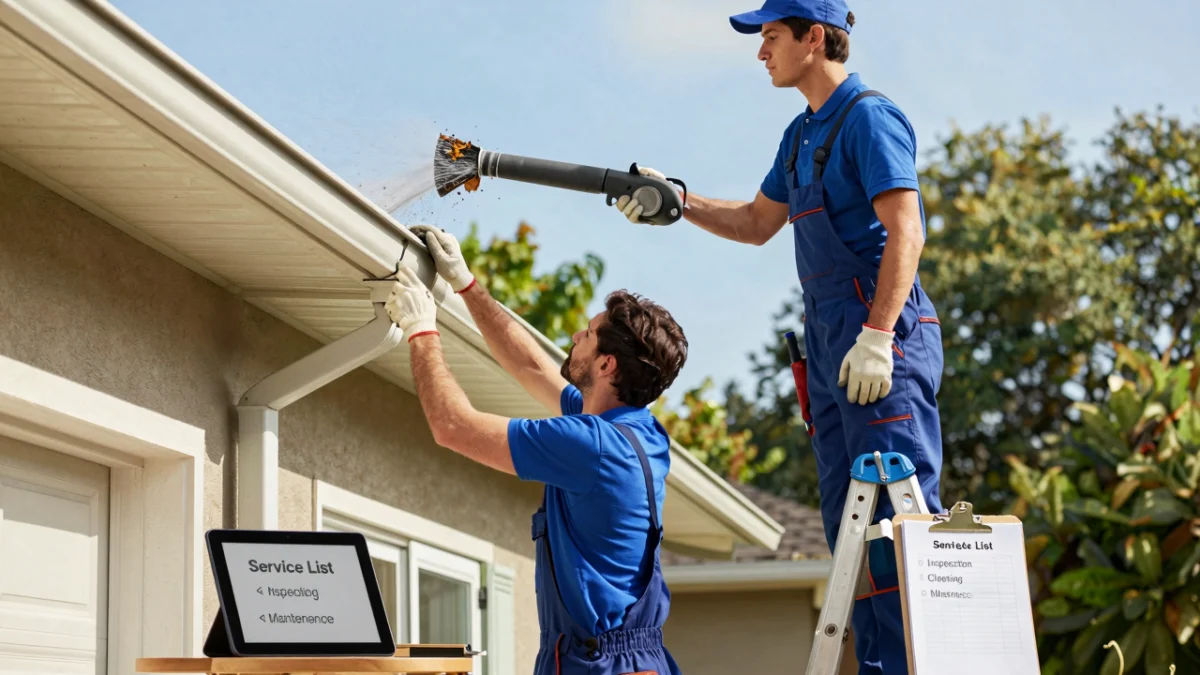
Preventive maintenance services, such as gutter cleaning, represent a low-barrier-to-entry opportunity. These services are essential for preventing water damage and pest infestations, making them an easy "sell" to homeowners. Conversely, the junk removal sector has capitalized on the growing consumer focus on decluttering and sustainable waste management. The modern junk removal franchise does more than haul trash; it sorts, recycles, and donates items, appealing to the eco-conscious values of today’s consumers. With investment levels often under $100,000, junk removal is a popular choice for first-time franchisees.

Supporting Data and Financial Implications
The financial logic of service-based franchising is supported by data from the Franchise Disclosure Documents (FDD) of leading brands. A critical component for any prospective investor is "Item 19" of the FDD, which provides a snapshot of the financial performance of existing units. Recent industry reports indicate that top-performing service franchises can see a return on investment (ROI) within 24 to 36 months, significantly faster than the 5-to-7-year average for restaurant franchises.
Furthermore, the "asset-light" nature of these businesses means that a higher percentage of gross revenue flows directly to the bottom line. Without the burden of high rent and utility costs associated with retail space, service franchisees can pivot their budgets toward marketing and skilled labor—the two primary drivers of growth in this sector.

The Role of Franchisor Support and Training
A primary reason investors choose the franchise route over starting an independent business is the mitigation of risk through training. Modern franchisors provide "business-in-a-box" solutions that include:
- Technical Training: Ensuring that even those without a background in trades can manage a plumbing or HVAC crew.
- Marketing Systems: Utilizing national brand recognition and sophisticated digital marketing funnels to generate leads from day one.
- Operational Support: Providing proprietary software for dispatching, invoicing, and customer relationship management (CRM).
Industry experts suggest that the failure rate for franchised service businesses is significantly lower than that of independent startups. The International Franchise Association (IFA) notes that the structured mentorship provided by franchisors acts as a "safety net," particularly during the first two years of operation, which are traditionally the most volatile for any new business.

Official Responses and Expert Perspectives
Economists and industry analysts have noted the "Silver Tsunami"—the aging of the U.S. population—as a key driver for future demand. "As Baby Boomers age, their ability to perform DIY home maintenance decreases, but their desire to remain in their homes increases," says one market analyst specializing in franchise trends. "This creates a permanent, non-discretionary demand for professional home services."
Furthermore, trade organizations have responded to the national labor shortage by advocating for the "reskilling" of the American workforce. Many service-based franchises have taken an active role in this, establishing their own internal academies to train technicians, thereby solving the labor problem while simultaneously expanding their footprint.

Broader Impact and Future Implications
The continued growth of service-based franchises has broader implications for the American economy. These businesses are major drivers of local employment and provide a pathway to the middle class for individuals who may not have a four-year college degree but possess strong management or technical skills.
Looking forward, the integration of "Green Tech" and Artificial Intelligence is expected to be the next frontier. We are already seeing the emergence of franchises that specialize in solar panel cleaning, EV charger installation, and smart-home integration. AI-driven scheduling is also making these businesses more efficient, reducing "windshield time" for technicians and increasing the number of service calls completed per day.

In conclusion, the shift toward service-based franchising represents a maturation of the franchise industry. By focusing on essential, recession-proof needs and leveraging the power of established brands, entrepreneurs are finding a sustainable path to wealth creation. Whether it is through the high-pressure water of a power washing rig or the technical precision of an HVAC technician, the service sector is proving that the most reliable investments are often found in the most fundamental tasks of daily life. For the prospective investor, the message is clear: the future of franchising is not just about what people want to buy, but what they cannot live without.
