


Munich – BMW is poised to achieve significant cost savings, potentially in the billions, by transforming into an "AI-orchestrated enterprise" by 2028. This ambitious undertaking, spearheaded by Purchasing Director Nicolai Martin, signifies a fundamental shift in the automotive giant’s operational strategy, with the procurement division serving as a crucial testing ground for the integration of advanced artificial intelligence. The initiative, internally referred to as "Operating Model 3.0" (OM 3.0), represents the culmination of a comprehensive restructuring effort aimed at leveraging AI to redefine BMW’s competitive landscape.

The strategic pivot towards an AI-centric operational framework underscores BMW’s commitment to innovation and efficiency in an increasingly complex and dynamic automotive market. This move is not merely about technological adoption; it represents a paradigm shift in how the company will conduct its business, from research and development to manufacturing and customer engagement. The core of this transformation lies in the deployment of autonomous agents within its procurement processes, a move that promises to revolutionize how the company sources components, negotiates with suppliers, and manages its vast supply chain.
The Genesis of Operating Model 3.0
The development of Operating Model 3.0 has been a multi-year endeavor, rooted in BMW’s ongoing efforts to adapt to evolving industry trends and technological advancements. The automotive sector is undergoing a profound transformation, driven by electrification, autonomous driving, and the increasing digitalization of all aspects of vehicle production and ownership. In this context, AI has emerged as a critical enabler for companies seeking to maintain a competitive edge.
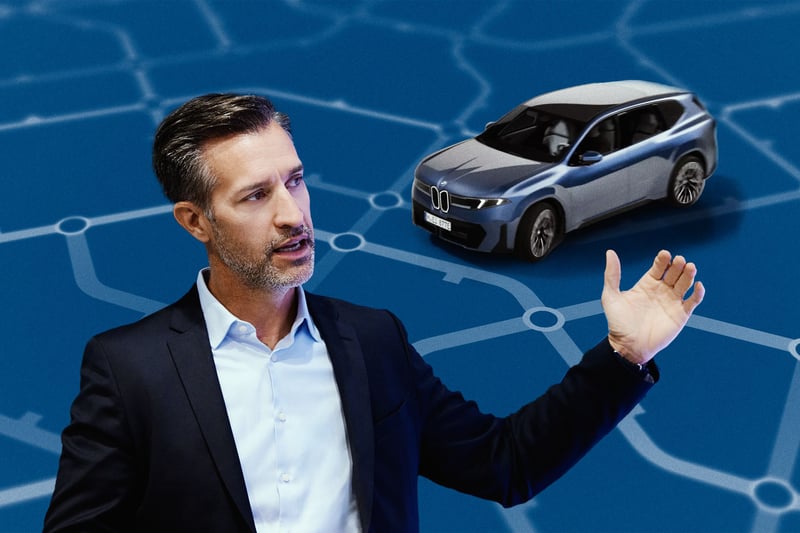
BMW’s leadership recognized early on the potential of AI to optimize complex business processes, reduce operational costs, and enhance decision-making. The FIZ (Forschungs- und Innovationszentrum), BMW’s research and innovation hub, has been at the forefront of exploring and integrating these cutting-edge technologies. OM 3.0 is the embodiment of this foresight, aiming to create a more agile, efficient, and data-driven organization.
The timeline for this transformation is aggressive, with the goal of becoming an "AI-orchestrated enterprise" set for 2028. This implies a rapid and systematic integration of AI capabilities across various departments. The procurement division, with its inherent complexity and substantial financial impact, has been identified as a prime area for initial implementation. This strategic choice reflects the belief that AI can unlock significant efficiencies and cost reductions in this critical function.
AI in Procurement: Autonomous Agents and Their Impact
The integration of autonomous AI agents into BMW’s procurement operations is a cornerstone of OM 3.0. These agents are designed to perform a range of tasks that were previously handled by human procurement specialists, including identifying potential suppliers, analyzing market trends, negotiating contracts, and optimizing inventory levels. The potential benefits are manifold:
- Enhanced Efficiency: Autonomous agents can operate 24/7, process vast amounts of data at speeds far exceeding human capabilities, and execute transactions with remarkable precision. This can lead to faster procurement cycles and reduced lead times for critical components.
- Cost Optimization: By continuously analyzing market prices, supplier performance, and demand forecasts, AI agents can identify opportunities for cost savings that might be missed by traditional procurement methods. This includes identifying bulk purchasing opportunities, negotiating better terms with suppliers, and minimizing waste.
- Risk Mitigation: AI can be employed to assess supplier reliability, predict potential supply chain disruptions, and flag compliance issues, thereby enhancing the overall resilience of BMW’s supply chain.
- Strategic Focus: By automating routine tasks, procurement professionals can dedicate more time to strategic initiatives, such as developing long-term supplier relationships, fostering innovation, and exploring new sourcing strategies.
The introduction of autonomous agents is expected to generate substantial savings, with initial projections suggesting billions of Euros. These savings will likely stem from a combination of reduced purchasing costs, improved inventory management, and streamlined administrative processes. For instance, AI can analyze historical purchasing data and market fluctuations to predict optimal times to place orders, securing more favorable pricing and avoiding costly rush orders. Furthermore, AI can identify redundancies and inefficiencies in the supply chain, leading to optimized logistics and reduced transportation costs.

Broader Implications for BMW’s Business Model
The transformation into an "AI-orchestrated enterprise" extends beyond the procurement department and has far-reaching implications for BMW’s entire business model. The insights and efficiencies gained from AI integration in procurement can be leveraged across other functional areas, including:
- Research and Development: AI can accelerate the design and development of new vehicles by optimizing simulations, analyzing vast datasets from testing, and identifying novel material properties.
- Manufacturing and Production: AI-powered robotics and predictive maintenance systems can enhance factory efficiency, reduce downtime, and improve product quality.
- Sales and Marketing: AI can analyze customer preferences and market trends to personalize marketing campaigns, optimize pricing strategies, and improve customer service.
- Financial Management: AI can be used for advanced financial forecasting, risk assessment, and fraud detection, leading to more robust financial planning and management.
This comprehensive integration of AI is expected to foster a more data-driven culture within BMW, where decisions are increasingly informed by real-time analytics and predictive insights. This agility will be crucial for navigating the rapid technological shifts and competitive pressures in the automotive industry.

Industry Context and Competitive Landscape
BMW’s aggressive push into AI-driven operations is not an isolated development but reflects a broader trend within the automotive industry. Major competitors are also investing heavily in AI and digital transformation to enhance their operational efficiency and product development capabilities.
- Mercedes-Benz: Has been actively exploring AI applications in areas such as predictive maintenance, customer service chatbots, and autonomous driving development.
- Volkswagen Group: Is investing in its own software division, CARIAD, to develop in-house AI capabilities for vehicle software and autonomous driving systems, aiming to reduce reliance on external suppliers and gain greater control over its technological future.
- Tesla: Has long been a pioneer in leveraging AI, particularly in its autonomous driving systems (Autopilot and Full Self-Driving) and its highly automated manufacturing processes. Their success has set a benchmark for the industry.
BMW’s proactive approach with OM 3.0 positions it to remain competitive in this evolving landscape. The company’s focus on integrating AI across its core operations, rather than solely in isolated applications, suggests a strategic intent to build a foundational advantage. The projected cost savings of billions of Euros can then be reinvested into further innovation, research, and development, creating a virtuous cycle of growth and technological advancement.

Challenges and Future Outlook
While the potential benefits of OM 3.0 are substantial, the implementation of such a far-reaching AI strategy is not without its challenges.
- Data Quality and Integration: The success of AI heavily relies on the quality and availability of data. BMW will need to ensure its data infrastructure is robust and that data from various sources can be effectively integrated and analyzed.
- Talent Acquisition and Development: The company will require a skilled workforce capable of developing, deploying, and managing AI systems. This may involve significant investment in training existing employees and attracting new talent with specialized AI expertise.
- Ethical Considerations and Governance: The use of autonomous agents and AI in decision-making raises important ethical questions, particularly regarding transparency, accountability, and potential biases. BMW will need to establish clear governance frameworks to address these concerns.
- Change Management: A transformation of this magnitude requires effective change management to ensure employee buy-in and minimize disruption to existing operations. Communication, training, and stakeholder engagement will be critical.
Despite these challenges, BMW’s commitment to OM 3.0 signals a bold vision for the future. The company’s ability to successfully navigate these hurdles will determine its capacity to fully realize the projected cost savings and solidify its position as a leader in the AI-driven automotive era. The next few years will be critical in observing how BMW’s AI strategy unfolds and whether it can indeed achieve its ambitious targets for efficiency and innovation. The automotive industry is on the cusp of a new era, and BMW’s strategic embrace of AI places it at the vanguard of this profound transformation.
