

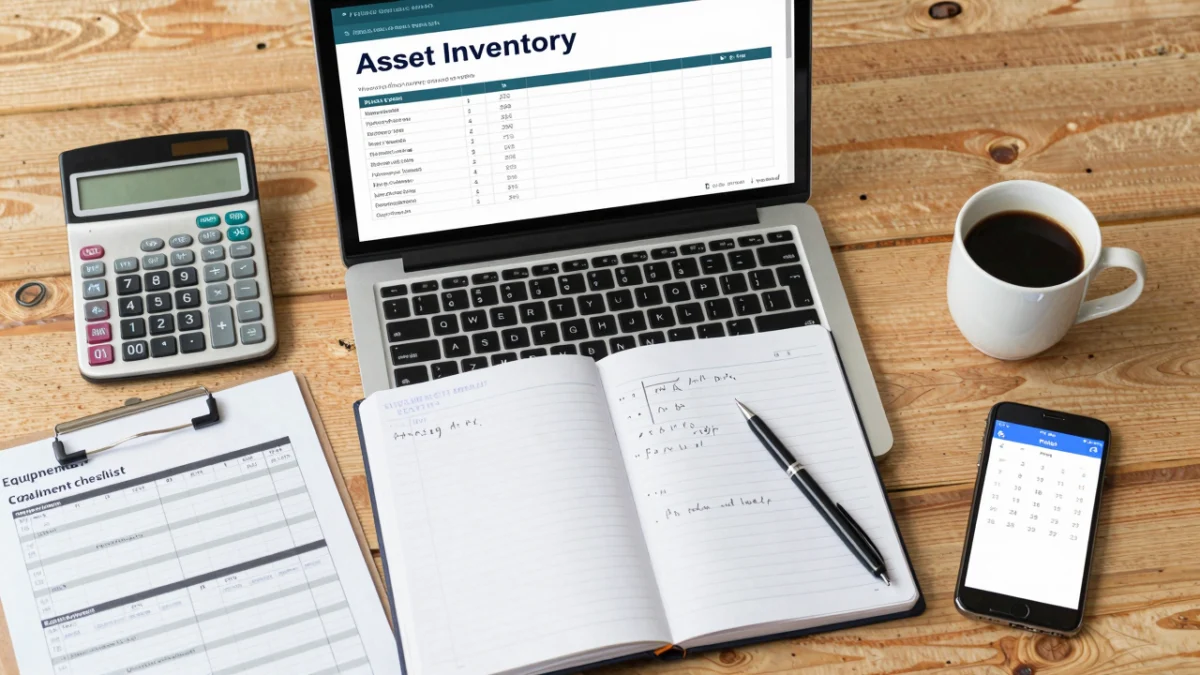
Strategic Management of Equipment Assets: A Comprehensive Guide to Enhancing Operational Efficiency and Financial Stability serves as a critical blueprint for organizations seeking to optimize their tangible resources to drive long-term revenue and maintain a competitive market position. In the contemporary economic landscape, equipment assets—comprising machinery, vehicles, specialized tools, and hardware—represent more than just functional necessities; they are foundational pillars of a company’s balance sheet and operational capacity. These resources, classified as non-current or fixed assets, are intended for use over multiple accounting periods, typically spanning a useful life of 10 to 20 years. Effective management of these assets requires a sophisticated understanding of valuation, depreciation, and lifecycle maintenance to ensure that the initial capital expenditure translates into sustained productivity and financial health.

The Fundamental Nature of Equipment Assets
An equipment asset is defined as a physical resource utilized in the production of goods or the delivery of services. Unlike current assets, such as cash or inventory, which are expected to be converted into value within a single year, equipment assets are long-term investments. They are recorded under Property, Plant, and Equipment (PP&E) on the balance sheet. For most enterprises, a capitalization threshold is established—often at $1,000 or higher—to distinguish between minor expenses and significant assets that must be depreciated over time.
The role of these assets extends beyond simple utility. They are primary drivers of operational efficiency. By automating processes through machinery or expanding reach through a fleet of vehicles, businesses can scale their output without a linear increase in labor costs. Furthermore, the strategic acquisition of state-of-the-art equipment can provide a technological edge, allowing firms to produce higher-quality goods at a lower unit cost.

The Lifecycle Chronology of an Equipment Asset
The management of an equipment asset is not a singular event but a continuous process that follows a specific chronological progression. Understanding this timeline is essential for accurate financial reporting and operational planning.
- Acquisition and Capitalization: The process begins with the identification of a need and the subsequent purchase. The total cost of acquisition includes not only the purchase price but also shipping, installation, and testing costs. These are "capitalized" on the balance sheet rather than expensed immediately.
- Integration and Deployment: Once installed, the asset enters its productive phase. During this stage, the primary focus is on maximizing utilization to ensure a high Fixed Asset Turnover Ratio.
- Maintenance and Optimization: Throughout its useful life, the asset requires regular maintenance. This is divided into "routine maintenance" (expensed immediately) and "capital improvements" (added to the asset’s value if they extend its life or increase its capacity).
- Depreciation and Valuation Review: Periodically, the business must account for the wear and tear of the asset. This is done through depreciation, which systematically reduces the asset’s book value on the financial statements.
- Obsolescence or Disposal: Eventually, an asset reaches the end of its useful life due to physical wear or technological obsolescence. At this point, the asset is retired, sold for salvage value, or replaced.
Methodologies for Asset Valuation and Assessment
Valuing equipment assets accurately is vital for insurance purposes, tax reporting, and potential mergers or acquisitions. Financial analysts typically employ three primary methods to assess the worth of these resources.

The Cost Approach is the most common in accounting. It starts with the original purchase price and subtracts accumulated depreciation. While straightforward, it may not reflect the actual market value if the equipment has held its value better than expected or if technology has shifted rapidly.
The Market Approach involves comparing the asset to similar items recently sold on the open market. This is particularly relevant for assets with high resale value, such as construction machinery or commercial vehicles. It provides a "fair market value" that is often more realistic than the book value for external stakeholders.

The Income Approach is more complex, as it calculates the present value of the future economic benefits the asset is expected to generate. This method is frequently used for specialized, high-capacity industrial machinery where the output can be directly linked to revenue streams.
The Mechanics of Depreciation and Tax Implications
Depreciation is the accounting process of allocating the cost of a tangible asset over its useful life. It is not a cash expense but a non-cash charge that reduces taxable income, providing a significant financial shield for businesses.

- Straight-Line Depreciation: This is the simplest method, where the cost of the asset (minus salvage value) is divided equally by the number of years in its useful life. It provides a consistent, predictable expense each year.
- Double Declining Balance: An accelerated method that records higher depreciation expenses in the early years of an asset’s life. This is often used for technology or vehicles that lose value rapidly upon purchase.
- Units of Production: This method links depreciation to the actual usage of the equipment, such as the number of hours a machine runs or the number of units it produces. It is the most accurate reflection of physical wear and tear.
From a tax perspective, depreciation is a powerful tool. In the United States, provisions such as Section 179 and Bonus Depreciation allow businesses to deduct a significant portion—or even the entire cost—of qualifying equipment in the year of purchase. This incentivizes capital investment and can dramatically improve short-term cash flow.
Comparative Analysis: Equipment vs. Other Asset Classes
To fully appreciate the importance of equipment assets, they must be viewed in contrast to other categories on the balance sheet.

Equipment vs. Intangible Assets: While equipment is tangible and suffers from physical wear, intangible assets like patents, trademarks, and brand equity do not physically degrade. However, equipment is often easier to use as collateral for financing because it has a verifiable physical presence and resale market.
Equipment vs. Current Assets: Current assets, such as inventory, are meant to be sold quickly. Equipment, however, is a "sticky" investment. It represents a long-term commitment to a specific operational path. While inventory fluctuates with sales cycles, equipment provides the stable capacity to meet those cycles.

Challenges in Modern Equipment Management
Despite their benefits, managing equipment assets involves significant hurdles. One of the primary challenges is tracking and documentation. Large organizations may own thousands of individual tools and machines spread across multiple locations. Without a centralized Asset Management System (AMS), assets can be lost, underutilized, or neglected.
Regulatory compliance also presents a challenge. Industries such as healthcare, aviation, and energy are subject to strict safety and maintenance regulations. Failure to document regular inspections and repairs can lead to heavy fines or legal liability. Furthermore, Asset Retirement Obligations (ARO) require companies to account for the eventual costs of safely disposing of equipment, particularly if it involves hazardous materials or environmental remediation.

Future Trends: The Digital Transformation of Physical Assets
The field of equipment asset management is undergoing a paradigm shift driven by the Industrial Internet of Things (IIoT) and Artificial Intelligence (AI).
Predictive Maintenance: Instead of following a rigid calendar for repairs, sensors attached to equipment can now monitor vibrations, temperature, and output in real-time. AI algorithms analyze this data to predict when a component is likely to fail, allowing for "just-in-time" maintenance that prevents costly downtime.

Asset-as-a-Service (AaaS): A growing trend in the industrial sector is the shift from ownership to usage. Companies are increasingly "leasing" equipment capability rather than buying the machines outright. In this model, the manufacturer remains responsible for maintenance and upgrades, while the business pays based on output or time used. This shifts equipment from a capital expenditure (CapEx) to an operating expense (OpEx), providing greater financial flexibility.
Sustainability and Circularity: As ESG (Environmental, Social, and Governance) criteria become more prominent, businesses are focusing on the "circularity" of their equipment. This involves designing assets for easier repair, refurbishing older machinery to extend its life, and ensuring that disposal methods at the end of the lifecycle minimize environmental impact.

Conclusion and Strategic Impact
The strategic management of equipment assets is a multi-disciplinary effort that intersects accounting, operations, and long-term strategy. By maintaining a rigorous inventory, applying accurate valuation methods, and embracing technological advancements like predictive maintenance, businesses can ensure their physical resources remain a source of strength rather than a liability.
Industry analysts suggest that companies with high-performing asset management strategies see a 15-20% increase in production capacity and a significant reduction in maintenance-related costs. In an era where margins are thin and competition is global, the ability to squeeze maximum value out of every machine, vehicle, and tool is often the deciding factor in a company’s long-term survival and success. As the landscape continues to evolve, the integration of digital tracking and sustainable practices will define the next generation of asset management excellence.
