

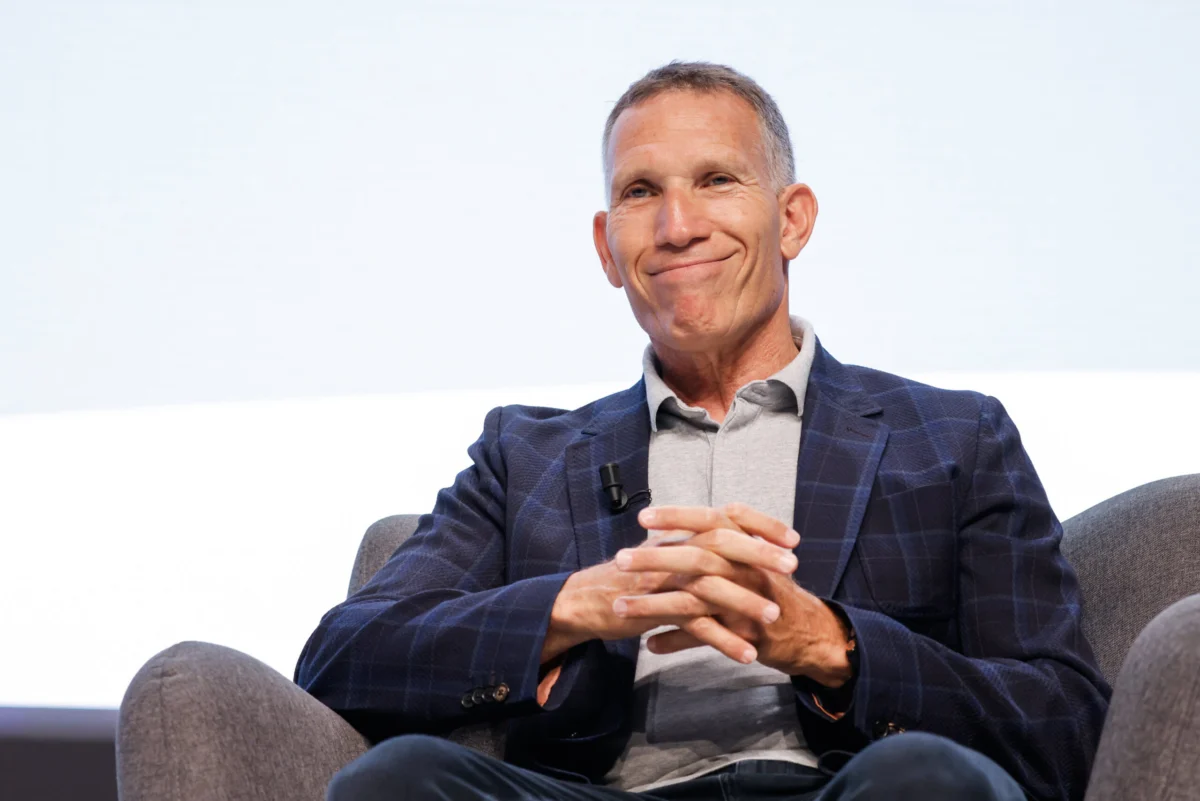
In a strategic move poised to redefine the media landscape, David Ellison, the visionary behind Skydance, has tapped Ynon Kreiz, the highly regarded outgoing Chairman and CEO of Mattel, to serve as co-CEO of the colossal new entity, simply named Skydance. This groundbreaking appointment, announced ahead of the merger’s formal closure on Tuesday, June 25, 2024, signals Ellison’s intent to bring seasoned operational leadership to his rapidly expanding media empire, which will unite Paramount Skydance and Warner Bros. Discovery under a single, formidable roof.
Kreiz, who was officially recognized as the Entertainment Person of the Year at the Cannes Lions International Festival Of Creativity 2024, joins Skydance on Monday, June 24, 2024, stepping into his co-CEO role the following day as the merger legally concludes. This leadership tandem is tasked with steering an unprecedented conglomerate that will encompass the legendary film studios of Paramount and Warner Bros.; the venerable CBS broadcast network; an expansive portfolio of iconic pay-TV networks including CNN, TNT, MTV, and BET; and leading streaming services Paramount+ and HBO Max. The sheer scale of this integration, valued at approximately $110 billion on an enterprise basis, has sparked widespread discussion across Wall Street and Hollywood, with many observers questioning the governance structure and the executive experience required to manage such a complex amalgamation.
The Genesis of a Media Behemoth: Ellison’s Ambitious Pursuit
David Ellison, the ambitious tech executive and scion of billionaire Larry Ellison, has spent the better part of two years meticulously constructing this media powerhouse. His journey began with Skydance, his film production company, which, prior to this expansion, boasted a focused yet impactful portfolio of hits, most notably the Tom Cruise-led Mission: Impossible franchise and the critically acclaimed Top Gun: Maverick. While Skydance demonstrated a clear knack for blockbuster content, its operational footprint was relatively lean compared to the legacy media giants Ellison sought to acquire.
The first major leap in this audacious expansion came in August 2025, when Ellison successfully closed an acquisition of Paramount, a deal valued at approximately $8 billion. This move brought the storied Paramount Pictures studio, the CBS network, and a host of cable channels and the Paramount+ streaming service under Skydance’s nascent control. Barely a month later, in September 2025, Ellison launched his campaign for Warner Bros. Discovery (WBD), initiating a fervent bidding war that stretched into early 2026. This aggressive pursuit culminated in a definitive deal in April 2026, setting the stage for the creation of one of the world’s largest entertainment companies.
This rapid, high-stakes expansion naturally raised questions regarding Ellison’s capacity to lead such a vast and intricate enterprise. While his strategic vision and financial acumen were undeniable, the operational demands of integrating multiple legacy media assets, each with its own culture, infrastructure, and challenges, necessitated a leader with a proven track record in navigating complex corporate transformations. It is into this void that Ynon Kreiz steps, bringing decades of diverse media experience and a reputation as a turnaround specialist.
Ynon Kreiz: A Profile in Media and Turnarounds
Ynon Kreiz arrives at Skydance with a 30-year career steeped in media and entertainment, despite his most recent and high-profile role being in consumer goods. Before taking the helm at Mattel in 2018, Kreiz’s professional journey charted a clear path through various facets of the entertainment industry.
His earlier career highlights include co-founding Fox Kids Group Europe, a prominent children’s entertainment company that was eventually acquired by The Walt Disney Co. in 2002. This early venture provided him with invaluable insights into content creation and brand building for a global audience. Following this, he served as Chairman and CEO of Endemol Group, one of the world’s largest independent television production companies, where he oversaw a vast portfolio of unscripted and scripted content. His tenure at Endemol solidified his expertise in managing large-scale content operations and international distribution. Subsequently, Kreiz was the chief executive and chairman of Maker Studios, a leading multi-channel network focused on digital video content, which was also acquired by The Walt Disney Co. in 2014. These experiences provided him with a comprehensive understanding of traditional and emerging media platforms, making him a unique blend of old and new media expertise.
It was his eight-year stint as CEO of Mattel, however, that cemented his reputation as a "turnaround man." When Kreiz joined Mattel in 2018, the toy company was in disarray, having cycled through four CEOs in as many years. Iconic brands like Fisher-Price, Barbie, and American Girl were struggling to resonate with evolving consumer tastes, and the company was reeling from the recent bankruptcy of Toys R Us, a critical retail partner.
The Mattel Transformation: Successes and Scrutiny
Upon assuming leadership at Mattel, Kreiz immediately embarked on an aggressive restructuring program. The company had endured a four-year revenue downturn and transitioned from profitability to significant losses. Kreiz’s strategy focused on stabilizing the business, cutting costs, and revitalizing its core intellectual property.
One of his initial and most impactful initiatives was a comprehensive cost-cutting drive. According to analysts, Mattel quickly eliminated approximately $1 billion in costs, streamlined its business lines by rationalizing the number of Stock Keeping Units (SKUs) it produced, and restructured its global supply chain to become more agile and responsive to market demands. These measures included closing several manufacturing facilities and reducing the overall workforce by 2,200 employees. His emphasis was firmly on generating free cash flow and deleveraging Mattel’s balance sheet, a blueprint he might well apply to the debt-laden Skydance merger. Gerrick Johnson, an equity research analyst at Seaport Research Partners, lauded Kreiz’s early actions, noting, "He got off to a really great start [at Mattel] because he did some structural improvements…They did a great job of cutting like $1 billion worth of cost right out of the gate, becoming more flexible, quicker to market."
Beyond operational efficiencies, Kreiz spearheaded a bold film strategy, launching an in-house film division in 2018. The vision was clear: leverage Mattel’s vast catalog of intellectual property to create cinematic content that would, in turn, serve as a powerful catalyst for toy sales. This strategy famously culminated in the partnership with Warner Bros. to bring Barbie to the big screen in 2023. Directed by Greta Gerwig and starring Margot Robbie and Ryan Gosling, the film was a phenomenal success, grossing over $1.4 billion at the global box office and undeniably revitalizing the Barbie brand, sparking a cultural phenomenon.
However, a closer look at the financial impact of Barbie on Mattel reveals a more nuanced picture, drawing some criticism. While the film was a massive hit, most of the revenue flowed to Warner Bros. and theatrical partners. Mattel reported receiving a relatively modest $150 million revenue boost in fiscal 2023 directly attributable to the film, and an incremental $90 million in operating profit, representing about 13% growth on a consolidated basis for the year. Critics, including Gerrick Johnson, pointed out that while the film’s success was undeniable, "for Mattel, it didn’t translate to the bottom line…Barbie revenue was up 3% that year, but Barbie revenue since is down 22%." This led some Wall Street analysts to suggest that Kreiz might have become overly focused on the entertainment side of Mattel’s business, potentially leading to stagnation in toy innovation and slower sales in the core business. Jaime Katz, a senior analyst at Morningstar, noted that Mattel’s stock "done a round trip under Kreiz’s tenure," doubling to the mid-$20 range before falling back to around $15 apiece, concluding that "Kreiz’s strategy to establish Mattel as an IP-driven, high-performing toy company has largely fallen flat."
Wall Street Weighs In: Mixed Reactions and Defined Roles
Despite some of the later criticisms regarding Mattel’s performance, the consensus among many analysts regarding Kreiz’s appointment at Skydance is largely positive, particularly concerning his operational acumen and experience in large-scale integrations. Matthew Condon, an analyst at Citizens Bank, articulated this sentiment in a research note: "We view the appointment of Ynon Kreiz positively, as his operating experience and brand/IP focus uniquely position him to help lead the integration of Paramount Skydance and WBD and build the combined business into a best-in-class content and IP platform." Eric Handler, managing director and senior media and entertainment analyst at Roth Capital Partners, simply stated, "It’s an excellent choice for Paramount."
Others, while acknowledging his strengths, offered a more tempered perspective. Matthew Dolgin, senior equity analyst at Morningstar, recognized Kreiz as an "experienced hand who fills a void that had been present, leaving the firm better positioned with him, in our view, than it was without him." However, Dolgin also questioned if he was "the best conceivable choice to handle this task," suggesting that despite his co-CEO title, Kreiz might function more as a "chief operating officer."
The company itself has clearly delineated the responsibilities between the two co-CEOs to address potential governance concerns and leverage their distinct strengths. David Ellison’s focus will be on the company’s long-term strategy, creative vision, technology innovation, and capital allocation. This aligns with his entrepreneurial drive and his track record in identifying and financing compelling content. Kreiz, on the other hand, will be responsible for the company’s day-to-day management and, critically, the complex integration of the combined businesses. This division of labor aims to pair Ellison’s strategic foresight with Kreiz’s proven operational execution, a partnership designed to navigate the monumental challenges ahead.
Navigating the Integration Labyrinth: Herculean Tasks Ahead
The formation of the new Skydance entity represents one of the largest media mergers in recent history, and its integration is projected to be a multi-year undertaking, potentially spanning two to three years in total, as noted by Laura Martin, an analyst at Needham. The immediate financial landscape is daunting, with the combined company facing approximately $79 billion in debt once the transaction is complete. To address this, Paramount Skydance has set an ambitious target of realizing $6 billion in cost savings through the merger within three years of closing. While executives have indicated that the majority of these savings will come from non-labor costs, the exact sources remain under scrutiny. Martin, for one, anticipates that "Over time, we expect cost synergies to be higher than the $6 billion promised."
A critical component of the integration strategy involves the company’s streaming services. Ellison has publicly stated his intention to combine Paramount+ and HBO Max into a single, unified platform for consumers. This move, while potentially simplifying the user experience and consolidating content libraries, will naturally entail significant infrastructure changes, technological integration, and likely a reduction in redundant operational overhead across the two services.
The film division, now home to the iconic Warner Bros. and Paramount studios, in addition to Skydance’s existing DC studio operations, faces significant production mandates. To settle a lawsuit brought by a group of state attorneys general who sought to block the deal over antitrust concerns, Paramount Skydance agreed to release at least 30 films per year into theaters in 2027 and 2028, increasing to at least 32 films annually from 2029 through 2031. This commitment to theatrical releases presents a delicate balance: how much cost-cutting can the studios absorb while simultaneously meeting these ambitious production quotas, maintaining creative quality, and navigating a rapidly evolving theatrical market?
The human capital aspect of such a massive merger is also a significant concern. While Skydance has agreed to prohibit writer layoffs on the CBS broadcast team for at least five years, a report from the Department of Economic Opportunity in Los Angeles County paints a starker picture, suggesting that up to 4,500 film and TV jobs in the county could be at risk over a three-year period as the companies combine operations. This potential impact on the workforce underscores the immense responsibility weighing on the new leadership team.
Broader Industry Implications and the Road Ahead
The Skydance mega-merger reflects a broader trend of consolidation within the media industry, driven by the intense competition for subscriber eyeballs in the streaming wars and the imperative to achieve scale. Companies are seeking to amass vast libraries of intellectual property, streamline distribution, and unlock synergistic efficiencies to compete with tech giants and other consolidated media players.
The success of the new Skydance will hinge on several factors: the seamless integration of disparate corporate cultures, the effective management of a colossal debt load, the ability to deliver on ambitious cost synergy targets without compromising creative output, and the successful navigation of a dynamic and competitive global entertainment market. Ynon Kreiz’s appointment as co-CEO alongside David Ellison is a clear signal that Skydance is prioritizing operational rigor and integration expertise from day one. As Eric Handler concluded, "[Kreiz has] got a big task ahead of him…there’s a huge amount of debt, a massive integration situation that he’s facing. But I think he’ll do a great job with it." The coming years will reveal whether this formidable leadership duo can truly build a "best-in-class content and IP platform" and deliver on the promise of this historic media convergence.
