

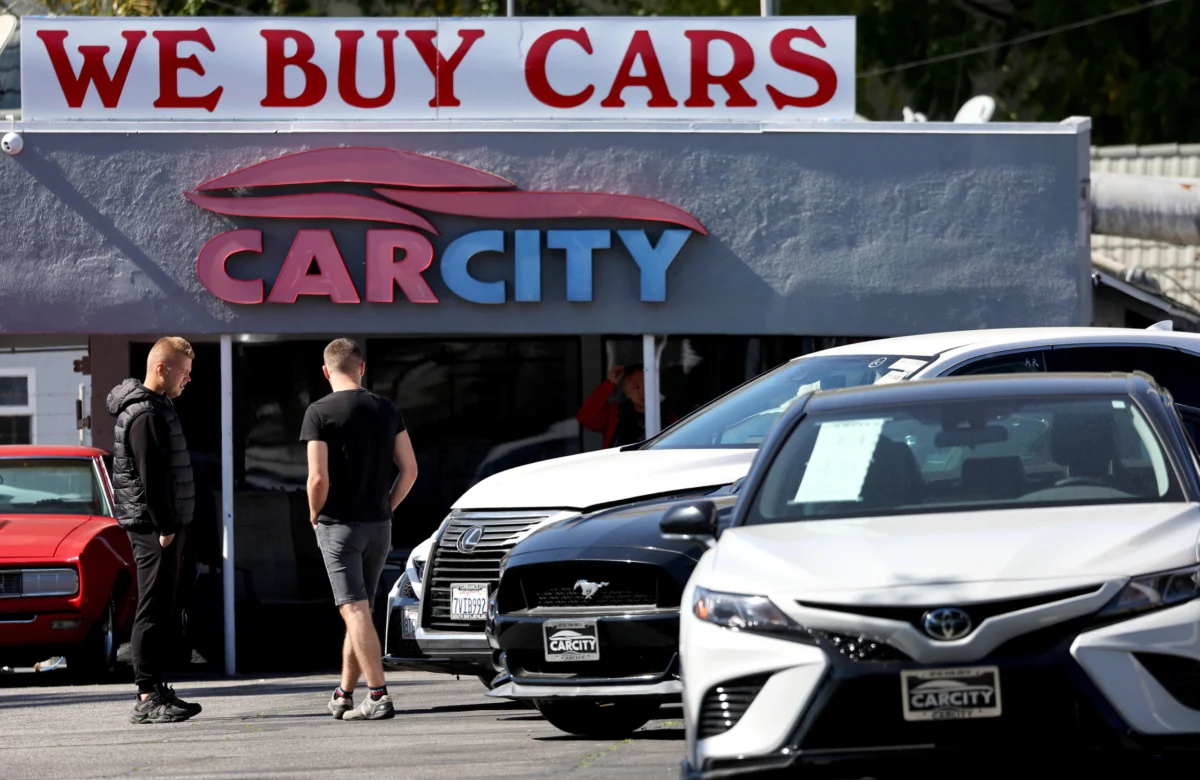
DETROIT — The trajectory of the U.S. used vehicle market is undergoing a significant recalibration, with prices now projected to fall more substantially than previously anticipated for the year. This revised outlook, stemming from a comprehensive analysis by Cox Automotive, reflects a confluence of persistent economic pressures, including stubbornly high gasoline prices, broader inflationary costs impacting household budgets, and an environment of elevated interest rates. These factors are collectively eroding consumer purchasing power and reshaping demand dynamics across the automotive sector.
Cox Automotive, a leading authority in the automotive industry, significantly downgraded its forecast for the closely watched Manheim Used Vehicle Value Index. The company initially predicted a modest 2% increase for the year but has since revised this to a marginal rise of only 0.2%. Should this updated projection materialize, it would mark the third consecutive year of relatively flat pricing within the used vehicle market, following a period of unprecedented volatility characterized by dramatic price surges and subsequent corrections during and immediately after the global pandemic. This stabilization, albeit at a lower growth rate, signals a potential return to more traditional market depreciation patterns, albeit on a "bumpy" road.
A Deeper Dive into the Forecast Revision and Market Indicators
The downward revision by Cox Automotive is a direct consequence of recent market performance. The Manheim Used Vehicle Value Index experienced a notable 1.95% decline from July to September, indicating a rapid acceleration of depreciation in the third quarter. More specifically, September witnessed a 0.6% drop in the index compared with the same month a year earlier. This marked a critical turning point, as it was the first time since early 2022 that the monthly index had not recorded a year-over-year increase, underscoring a palpable shift in market momentum.
The Manheim Used Vehicle Value Index serves as a vital barometer for the health of the used vehicle market, tracking the pricing of used vehicles sold at Manheim U.S. wholesale auctions. Given that retail prices for consumers traditionally mirror these wholesale cost fluctuations, the index’s movements offer a forward-looking insight into what buyers can expect at dealerships. Historically, the index has averaged an approximate 2.3% year-over-year gain, a figure that starkly contrasts with the current near-flat projection, highlighting the extraordinary pressures currently at play.
Beyond the index, other indicators affirm the accelerating depreciation. Non-adjusted wholesale used vehicle prices, a more direct measure of dealer acquisition costs, fell 1.2% year over year in September and declined 1.3% from August. This continuous downward trend suggests that dealers are facing reduced acquisition costs, a factor that will inevitably translate to lower retail prices for consumers in the coming months, even if slowly.
Economist’s Insights and the Macroeconomic Landscape
Jeremy Robb, Cox Automotive’s chief economist, articulated the complex interplay of forces shaping the current market. In a recent release, he noted, "As we enter Q4, interest rates are rising, consumer sentiment is falling, and yet a wealth effect from strong and sustained financial-asset growth is providing some offsetting cushion. Many metrics we watch are converging back toward pre-pandemic norms, but the road to get there has been anything but smooth." Robb’s assessment underscores the delicate balance of economic indicators influencing consumer behavior and purchasing decisions for big-ticket items like vehicles.
The "rising interest rates" component is a significant headwind. The Federal Reserve, in its ongoing battle against inflation, has embarked on an aggressive campaign of interest rate hikes since early 2022. These increases have directly impacted auto loan rates, pushing the average interest rate for a used car loan to levels not seen in over a decade, often exceeding 7% for well-qualified buyers and significantly higher for those with less robust credit. This translates into higher monthly payments, effectively increasing the total cost of ownership even as vehicle prices show signs of decline, thereby dampening demand.
Concurrently, "falling consumer sentiment" reflects broader anxieties among American households. Indices such as the University of Michigan Consumer Sentiment Index and the Conference Board Consumer Confidence Index have shown fluctuating but generally subdued levels throughout 2023. Concerns about persistent inflation, potential recessionary pressures, and job market uncertainties are making consumers more cautious about making large discretionary purchases. While a "wealth effect" from robust financial markets might offer some insulation for a segment of the population, its reach is limited, and the overall economic outlook remains challenging for the average car buyer. The journey back to "pre-pandemic norms" in the auto market implies a return to more predictable depreciation schedules, increased inventory, and less frenzied buying behavior, but the path is proving arduous due to lingering economic volatility.
The Pandemic’s Echo: A Chronology of Unprecedented Volatility
To fully grasp the current market correction, it is essential to contextualize it within the extraordinary events of the past few years. The used vehicle market, typically characterized by gradual depreciation, underwent an unprecedented boom-and-bust cycle:

- Early Pandemic Shock (Spring 2020): Initially, vehicle sales plummeted as lockdowns took effect. However, a rapid rebound ensued, fueled by government stimulus checks, a reluctance to use public transportation, and a sudden shift in consumer spending from services to goods.
- The Semiconductor Crisis (Late 2020 – 2022): The most significant catalyst for the price surge was a severe global shortage of semiconductor chips. Automakers, who had initially cut chip orders in anticipation of prolonged weak demand, found themselves unable to produce new vehicles at pre-pandemic rates when demand surged. This created an acute scarcity of new cars, diverting an enormous wave of demand to the used car market.
- Unprecedented Price Surges (2021 – Early 2022): With new car inventory at historic lows, used vehicle prices soared to unimaginable levels. The Manheim Index recorded year-over-year increases often exceeding 30-40% at its peak. Used cars became assets that appreciated rather than depreciated, a phenomenon virtually unheard of in the automotive industry. Consumers faced bidding wars and paid above sticker prices, driven by urgent need and limited options.
- Peak and Initial Cooling (Mid-2022): As the Federal Reserve began its interest rate hikes and some improvements in the supply chain started to trickle through, the frenetic pace began to slow. Inflationary pressures began to weigh on household budgets, and consumer resistance to sky-high prices grew. While still elevated, the rate of increase in used vehicle prices started to decelerate.
- Correction and Stabilization Efforts (Late 2022 – 2023): The market entered a more definitive correction phase. Inventory levels, while not fully normalized, improved significantly for both new and used vehicles. Sustained interest rate increases, combined with easing demand, led to more consistent month-over-month price declines, bringing the market closer to its current state of projected flatness or slight decline. This chronology underscores the extreme conditions that drove prices to unsustainable levels, making the current pullback a necessary market adjustment.
Shifting Market Dynamics: EVs, Fuel Efficiency, and Geopolitical Impacts
Beyond the overarching economic climate, specific shifts within the automotive market are also influencing used vehicle values. Cox Automotive observed continued growth in electric vehicle (EV) sales and off-lease volumes. This trend is actively reshaping used vehicle market dynamics, particularly evident in the recent quarter where EVs and smaller, more fuel-efficient internal combustion engine (ICE) vehicles experienced value increases. This performance stands in stark contrast to the poor showings of large trucks and SUVs.
The primary driver behind this divergence is the elevated cost of fuel. September’s national average for gasoline stood at $4.33 per gallon, a significant increase that surpassed the previous September record of $3.83 set in 2022. Such high fuel costs make the operating expenses of larger, less fuel-efficient vehicles considerably more burdensome for consumers, thereby diminishing their appeal in the used market. Conversely, the economic benefits of EVs (lower "fuel" costs) and smaller, efficient ICE vehicles become more attractive, supporting their value.
Robb elaborated on this, stating, "The first half of the year actually showed more appreciation than usual, even in the face of higher fuel prices. But with the conflict in the Middle East ongoing, diesel prices at record highs, and interest rates climbing rapidly, increasingly worrying both businesses and consumers, wholesale prices have felt the sting." The ongoing geopolitical conflicts in the Middle East have introduced additional volatility and uncertainty into global energy markets, contributing to the sustained high prices for both gasoline and diesel. Diesel, in particular, has seen record highs, directly impacting the operational costs for businesses and heavy-duty vehicle owners, further contributing to the subdued demand for larger, diesel-powered trucks and SUVs in the used market.
Impact on Retail Market, Consumers, and Dealers
Despite the forecast for falling prices, Cox Automotive indicates that retail demand for used vehicles remains "relatively healthy." This suggests that while consumers are more price-sensitive, the underlying need for affordable transportation persists. However, the observed pricing changes are a clear signal that dealers have likely hit a ceiling on what they can realistically charge consumers. The market is pushing back, demanding more competitive pricing.
As of August, the average listed price of a used vehicle was $27,239, according to Cox data. This figure highlights the persistent affordability gap when compared to new vehicles, which commanded an average price exceeding $50,000 during the same period. The vast majority of U.S. consumers continue to opt for used vehicles primarily because they represent a more accessible and affordable option than their new counterparts. Even with falling used vehicle prices, the dual challenge of high prices (relative to historical norms) and elevated interest rates means that many consumers are still grappling with an affordability crisis in the auto market. A $27,000 used car financed at 8% over 60 months results in a significantly higher monthly payment than the same car financed at 3% just a few years ago. This "payment shock" often keeps potential buyers on the sidelines or forces them to downgrade their vehicle choices.
For dealerships, this evolving market presents both challenges and opportunities. While falling wholesale prices mean lower acquisition costs for inventory, it also implies a reduction in potential profit margins on individual sales. Dealers must carefully manage their inventory, potentially increasing incentives or offering more competitive financing options to move vehicles. The shift in demand towards fuel-efficient and electric vehicles also requires dealers to adapt their inventory mix to align with consumer preferences, particularly as off-lease EVs begin to enter the secondary market in greater volumes.
Broader Economic Implications and Future Outlook
The trajectory of used vehicle prices holds significant implications for the broader economy. Used car prices have been a notable contributor to inflationary pressures in the Consumer Price Index (CPI) over the past few years. As these prices stabilize or decline, their moderating effect on the overall inflation rate could be a welcome development for the Federal Reserve. A more stable and predictable used car market could help ease some of the inflationary burdens on American households, freeing up discretionary spending for other goods and services.
For the wider automotive industry, the softening used market could have mixed effects. While it might encourage some consumers who were priced out of the new car market to consider a used vehicle, the overall affordability crunch (due to interest rates) could dampen demand across the board. The ongoing recovery of the new vehicle supply chain, which is gradually increasing inventory levels, will also play a crucial role. As new car availability improves, it naturally reduces the upward pressure on used car prices, pushing the market further towards normalization.
Looking ahead, the used vehicle market is likely to continue its journey towards a more traditional depreciation curve. However, the path will not be linear. Economic indicators such as unemployment rates, GDP growth, and future actions by the Federal Reserve will all exert influence. The sustained push towards electric vehicles, bolstered by government incentives and growing consumer awareness, will also be a defining trend, potentially leading to increased availability and eventual price moderation for used EVs as new models proliferate and battery technology advances. Ultimately, the market appears poised for a period of adjustment, where affordability, fuel efficiency, and evolving technology will dictate consumer choices and shape the values of vehicles for years to come.
