

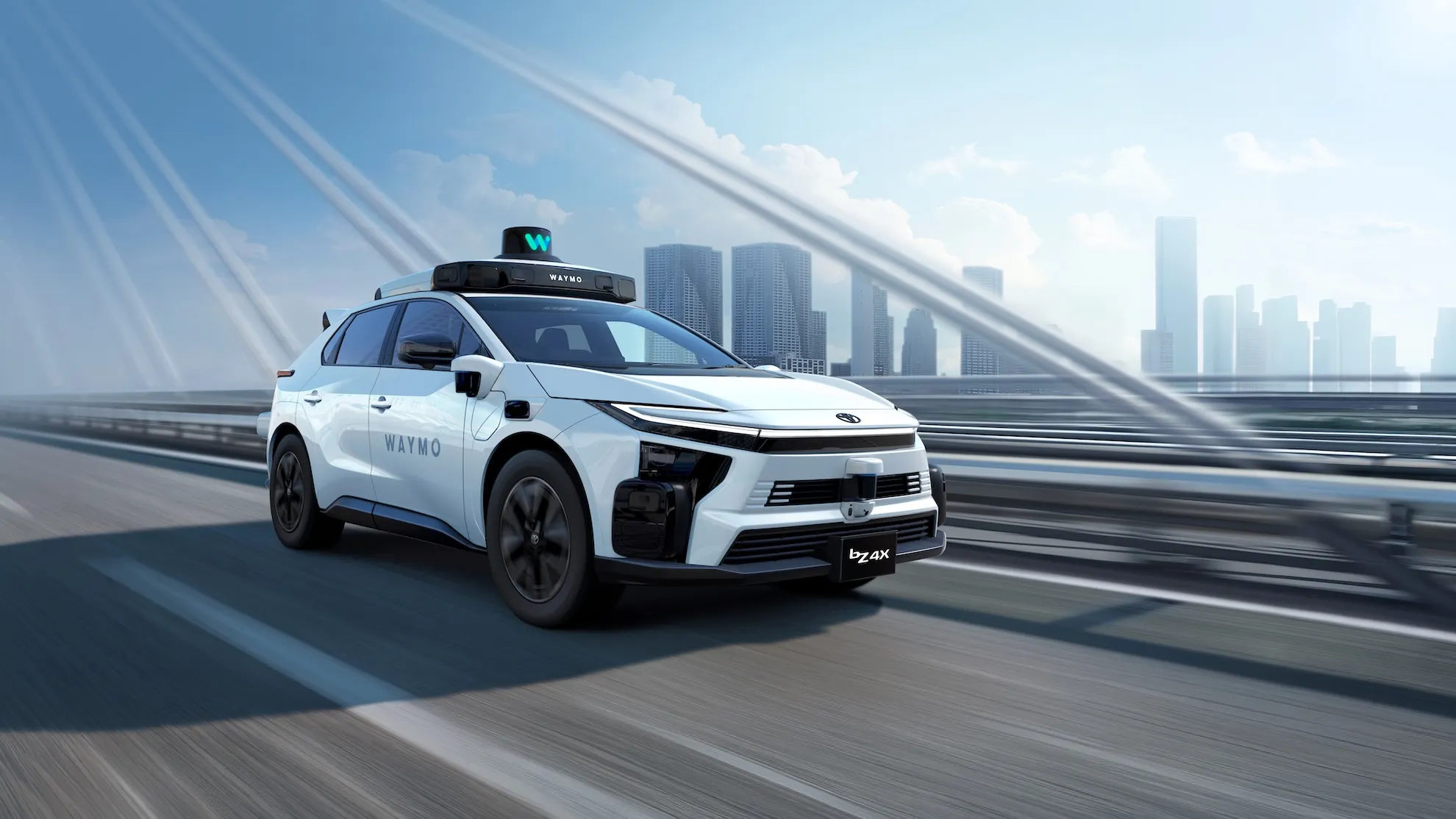
Waymo, Alphabet’s autonomous driving technology company, is set to commence testing of its self-driving system integrated into Toyota bZ4X electric vehicles in Japan starting next year. This significant development marks a deepening of the strategic partnership between Waymo and the Japanese automotive giant, Toyota, with a clear objective to deploy these autonomous electric vehicles for robotaxi operations across key international markets, including the United Kingdom. The collaboration signifies a pivotal step in Waymo’s global expansion strategy and Toyota’s commitment to advanced mobility solutions.
A New Chapter in Autonomous Mobility: The Japan and UK Initiative
The comprehensive agreement, publicly announced on Friday, October 30, 2026, details that Toyota will be responsible for manufacturing the 2027 model year bZ4X vehicles. These vehicles will then undergo the integration of Waymo’s sophisticated self-driving system directly at Toyota’s Takaoka factory in Japan. This integrated manufacturing approach is crucial for ensuring seamless functionality and scaling production efficiently. The bZ4X, known as the BZ in the North American market, represents a modern, all-electric platform well-suited for autonomous urban mobility. Its electric powertrain aligns with the growing global emphasis on sustainable transportation, a critical factor for future robotaxi fleets.
Initial deployments of these autonomous bZ4X vehicles are slated for testing within Japan, a strategic move given Toyota’s home market advantage and the country’s progressive stance on autonomous vehicle development. Waymo’s ultimate ambition in Japan extends beyond mere testing, aiming to establish and operate a full-fledged robotaxi service, mirroring its successful operations in select U.S. cities. However, the scope of this partnership reaches beyond Japan’s borders. The intention is to deploy these right-hand drive compatible vehicles in other key right-hand drive markets, with the United Kingdom specifically highlighted as a primary target. This dual-market focus underscores the global ambitions of both Waymo and Toyota in reshaping urban transportation.
Waymo has already laid groundwork in the UK, having conducted extensive testing of its autonomous Jaguar I-Pace vehicles in London for several months. The company has publicly articulated its plans to launch a commercial robotaxi service in the British capital once it secures the necessary operational permits and regulatory approvals from local authorities. The introduction of the Toyota bZ4X into this fleet signifies an expansion of Waymo’s vehicle portfolio and an enhanced capability to address diverse market needs and preferences, leveraging Toyota’s reputation for reliability and manufacturing scale.
Strategic Alignment: Deepening the Waymo-Toyota Partnership
This latest announcement represents the culmination of an 18-month exploratory period following an initial preliminary agreement signed by Toyota and Waymo in April 2025. That earlier agreement was framed with broad language, indicating an intent to "explore the development and deployment of an autonomous vehicle platform," leaving ample room for interpretation regarding the depth and nature of the eventual collaboration. At the time, industry observers categorized it as a "let’s see what happens" scenario, a cautious approach typical of major players navigating the complex and rapidly evolving autonomous vehicle landscape.
Fast forward to the present, the partnership has evolved significantly beyond a mere exploratory phase. It has solidified into what appears to be a more conventional, yet strategically vital, vehicle supplier agreement. Under this arrangement, Toyota provides the foundational electric vehicle platform, which is then specifically adapted and integrated with Waymo’s autonomous driving technology. This model allows Waymo to efficiently expand its robotaxi portfolio with a new, purpose-built electric model, while simultaneously addressing specific regional requirements, particularly for right-hand drive markets. For Toyota, it represents a significant validation of its EV platform and manufacturing capabilities, positioning it as a key enabler for leading autonomous technology providers.
The decision to manufacture and integrate Waymo’s system at Toyota’s Takaoka factory in Japan is a testament to the trust and commitment between the two companies. Toyota’s Takaoka plant, renowned for its advanced manufacturing processes and stringent quality control, provides a robust foundation for producing autonomous vehicles at scale. This integration at the factory level streamlines the production process, ensures consistent quality, and reduces the complexities often associated with retrofitting autonomous hardware onto existing vehicle platforms. Such a deep level of collaboration is critical for commercializing autonomous technology efficiently and safely.
Navigating New Territories: Japan’s Robotaxi Frontier
Japan presents a compelling, albeit challenging, market for autonomous vehicle deployment. The nation is grappling with an aging population, a declining workforce, and an increasing demand for efficient, accessible transportation solutions, particularly in rural areas. Robotaxi services could offer a transformative solution to these demographic shifts, providing mobility independence for seniors and addressing driver shortages in logistics and public transport.
The Japanese government has actively supported the development and deployment of autonomous vehicles. The country’s Ministry of Land, Infrastructure, Transport and Tourism (MLIT) has established clear guidelines and regulatory frameworks for testing and commercial operation of self-driving cars, including conditional Level 3 autonomy on public roads since 2020. Furthermore, there’s a strong public interest in technological innovation, which could translate into higher acceptance rates for autonomous services, especially if they demonstrate superior safety and convenience. Toyota’s deep roots and strong brand presence in Japan provide a crucial advantage, potentially easing regulatory navigation and fostering consumer trust for Waymo’s services.
Waymo’s plan to eventually operate a robotaxi service in Japan aligns with the country’s vision for a "Society 5.0," where advanced technology is integrated into all aspects of life to solve societal challenges. The initial testing phase will be critical for Waymo to adapt its autonomous driving stack to Japan’s unique road infrastructure, traffic patterns, and diverse weather conditions. This includes navigating narrow streets, complex intersections, and dense urban environments, all while adhering to local driving customs and pedestrian behaviors. The insights gained from these tests will be invaluable for optimizing the Waymo Driver for Japanese operational domains.
Expanding European Footprint: The London Precedent
Beyond Asia, the UK, and specifically London, represents another crucial right-hand drive market for Waymo’s global ambitions. London is a megacity with immense demand for efficient transportation, but also presents significant operational complexities due to its intricate road network, varying speed limits, and a mix of historic and modern infrastructure. Waymo’s ongoing testing with Jaguar I-Pace vehicles in London signifies its methodical approach to market entry. These tests are not just about technical validation but also about understanding the regulatory landscape, engaging with local authorities, and building a public perception of safety and reliability.
The UK government has also been proactive in supporting autonomous vehicle technology. The Law Commission of England and Wales has proposed a comprehensive legal framework for autonomous vehicles, aimed at clarifying liability and enabling widespread deployment. This supportive regulatory environment, coupled with London’s status as a global financial and technological hub, makes it an attractive market for robotaxi services.
However, challenges remain. Public acceptance, particularly in dense urban areas, will be paramount. Concerns around safety, data privacy, and job displacement need to be addressed through transparent communication and a demonstrable track record. Furthermore, Waymo will face competition from other autonomous vehicle developers eyeing the European market. Companies like Cruise (General Motors’ AV unit) and various European startups are also making inroads, highlighting the competitive nature of the global robotaxi race. Waymo’s partnership with Toyota for the bZ4X fleet could provide a significant advantage in scaling operations efficiently and offering a diverse, all-electric fleet.
The Broader Vision: Beyond Ride-Hailing
While the immediate focus of this expanded partnership is on robotaxi services, both Waymo and Toyota have hinted at a much broader, long-term vision. The companies explicitly stated that they would continue to explore bringing Waymo’s autonomous technology to personally owned Toyota vehicles. This potential extension beyond ride-hailing into the consumer market could be a game-changer, transforming the way individuals own and interact with their cars. Imagine a future where Toyota vehicles come equipped with Waymo’s advanced self-driving capabilities, offering enhanced safety, convenience, and potentially even new forms of vehicle utilization.
Furthermore, the companies announced plans to investigate "other future initiatives" that would leverage "insights from Waymo’s real-world operations" to improve safety for all road users. While the specifics of these initiatives remain somewhat ambiguous, Hiroki Nakajima, Executive Vice President of Toyota and a board member, provided some illuminating clues. In his statement, Nakajima emphasized, "This collaboration will help scale that technology and bring it to customers in Japan and beyond through Waymo’s ride-hailing service, and in parallel, Toyota will continue to explore how integrating vehicles with traffic infrastructure can make those roads safer still."
This statement suggests a strong inclination towards Vehicle-to-Everything (V2X) communication technologies and smart city infrastructure. Waymo’s extensive data collected from millions of autonomous driving miles could be invaluable in developing predictive safety systems, optimizing traffic flow, and enhancing overall road safety for both human-driven and autonomous vehicles. This could involve sharing anonymized data on near-miss incidents, unexpected maneuvers, or hazardous road conditions to inform traffic management systems, develop smarter pedestrian crossings, or even improve the design of future vehicles. Such initiatives align perfectly with Toyota’s long-standing commitment to safety and its broader vision for "Mobility as a Service" (MaaS) and the development of future smart cities, such as the Woven City project.
Industry Landscape and Competitive Dynamics
The global autonomous vehicle market is projected to grow substantially in the coming decade, with analysts estimating its value could reach hundreds of billions of dollars. Waymo is widely recognized as a frontrunner in this space, having accumulated over 20 million autonomous miles on public roads and operating fully driverless services in Phoenix, Arizona, and parts of Los Angeles and San Francisco, California. Its deep technological expertise, backed by Alphabet’s vast resources, positions it as a formidable player.
Toyota, on the other hand, has adopted a multi-faceted approach to autonomous driving. While investing heavily in its own research and development (e.g., through the Toyota Research Institute – TRI), it has also strategically partnered with external leaders like Waymo. This hybrid strategy allows Toyota to hedge its bets, access cutting-edge technology without bearing the full R&D burden, and ensure it remains competitive in a rapidly evolving sector. The partnership with Waymo contrasts with other automakers who are developing their autonomous systems entirely in-house or through acquisitions (e.g., GM’s Cruise, Amazon’s Zoox).
The collaboration also highlights the increasing trend of traditional automotive manufacturers partnering with tech companies to accelerate AV development. Automakers bring manufacturing scale, supply chain expertise, and deep understanding of vehicle engineering, while tech companies provide the complex software, AI algorithms, and sensor suites required for autonomous operation. This symbiotic relationship is crucial for overcoming the immense technical and financial challenges of bringing autonomous vehicles to market.
Challenges and Future Outlook
Despite the promising trajectory, the path to widespread autonomous vehicle adoption is fraught with challenges. Regulatory harmonization across different jurisdictions remains a significant hurdle. Each country, and often each city, has its own unique set of rules and requirements for testing and deploying autonomous vehicles, necessitating substantial localization efforts. Public trust and acceptance are also paramount; high-profile incidents, even if rare, can significantly set back public perception. Waymo and Toyota will need to meticulously demonstrate the safety and reliability of their combined solution.
Scaling operations globally presents its own set of logistical and financial complexities, from establishing charging infrastructure for electric robotaxi fleets to recruiting and training support staff. The financial investment required to launch and expand robotaxi services is enormous, making strategic partnerships like this one essential for sharing the burden and leveraging complementary strengths.
Looking ahead, this partnership between Waymo and Toyota could significantly accelerate the global deployment of autonomous ride-hailing services. By combining Waymo’s leading autonomous technology with Toyota’s unparalleled manufacturing capabilities and global market presence, the alliance is well-positioned to address the complex demands of international markets. The potential expansion into personally owned vehicles and broader road safety initiatives underscores a long-term vision that could redefine urban mobility, reduce traffic congestion, enhance safety, and contribute to a more sustainable transportation ecosystem for decades to come. The initial testing in Japan next year will be a closely watched milestone, offering the first glimpse into the future of this powerful collaboration.
