

The recently released documentary, "You Can See Everything," which chronicles the final weeks of disgraced Theranos founder Elizabeth Holmes before her incarceration, has rapidly become one of the highest-grossing documentaries of all time, igniting a fervent national conversation. Directed by Nathan Fielder and Lance Oppenheim, the film adopts a nuanced approach, intentionally eschewing the conventional portrayal of Holmes as either a singular master manipulator or a hapless victim. Instead, it subtly underscores her remarkable, almost hypnotic ability to evoke sympathy, even among those acutely aware of the grave nature of her crimes and the devastating impact of her fraudulent enterprise. This cinematic exploration of Holmes’s persona has brought renewed attention to a saga that continues to captivate the public imagination, prompting a critical re-examination of charisma, deception, and accountability in the high-stakes world of technological innovation.
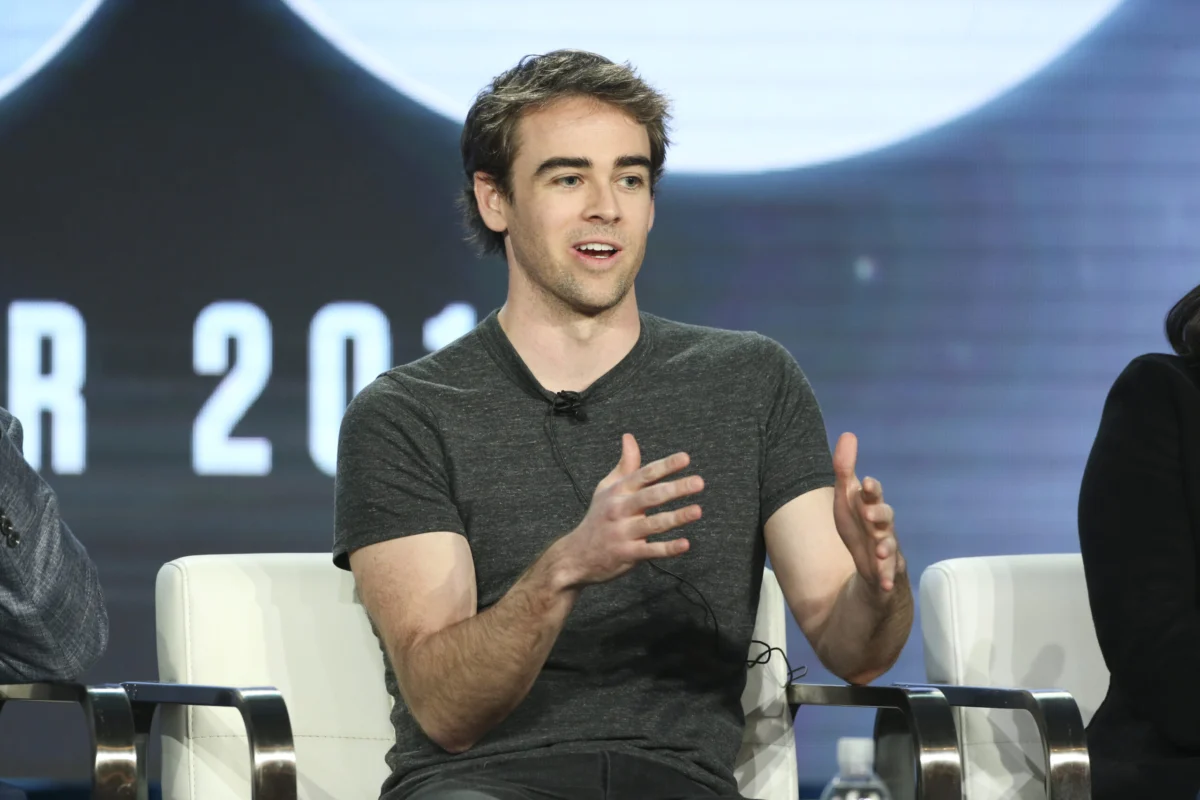
However, for Tyler Shultz, a pivotal whistleblower whose courageous actions were instrumental in exposing Theranos’s systemic fraud, the documentary offers no new revelations or shifts in perspective. Shultz, whose initial post-college employment was with Theranos, found himself at the epicenter of a corporate deception that ultimately jeopardized public health. He was among the first to sound the alarm about the company’s dangerously inaccurate blood-testing devices, which were deployed in Walgreens pharmacies and delivered faulty diagnostic results to unsuspecting patients. Despite Theranos achieving a staggering peak valuation of approximately $10 billion, its core technology never functioned as advertised. The company notoriously relied on its proprietary machines for only a minuscule fraction of its tests, discreetly outsourcing the vast majority to conventional third-party equipment, a critical detail deliberately concealed from investors and the public.
While Elizabeth Holmes’s legal case is definitively closed, with her currently serving an eleven-year federal prison sentence, the enduring fascination with her con-artistry persists within media circles and the general populace. This continued focus, Shultz contends, is precisely what Holmes desires. In a candid interview with The San Francisco Standard, Shultz articulated his belief: "The only reason we’re talking about Elizabeth Holmes right now is because she wants us to be talking about Elizabeth Holmes right now." This statement hints at a calculated media strategy on Holmes’s part, even from behind prison walls, to maintain relevance and potentially shape her public narrative.
The Rise and Fall of Theranos: A Chronology of Deception
To fully appreciate the contemporary implications of the Theranos scandal, it is essential to revisit its dramatic trajectory. Elizabeth Holmes founded Theranos in 2003, at the tender age of 19, after dropping out of Stanford University. Her vision was audacious: to revolutionize healthcare by developing a proprietary technology capable of performing a comprehensive range of blood tests using only a few drops of blood, a stark contrast to conventional venous draws. This innovation, she promised, would make diagnostic testing cheaper, faster, and more accessible, particularly to those in remote areas or with a fear of needles.
2003-2010: The Formative Years and Early Secrecy
During its nascent years, Theranos operated largely in stealth mode, cultivating an aura of extreme secrecy around its technology, which it dubbed "Edison." Holmes skillfully attracted prominent figures to her board of directors, including former U.S. Secretaries of State George Shultz (Tyler Shultz’s grandfather) and Henry Kissinger, and former U.S. Secretary of Defense William Perry. This high-profile endorsement lent significant credibility to the nascent company, despite a conspicuous lack of peer-reviewed scientific data supporting its claims.
2011-2014: Media Darling and Exponential Growth
Theranos entered its period of explosive growth and public acclaim. Elizabeth Holmes, with her distinctive baritone voice, black turtlenecks (evoking Steve Jobs), and compelling narrative, became a media darling. She was featured on the covers of Forbes and Fortune, hailed as a visionary entrepreneur, and touted as the "next Steve Jobs." Investors, swayed by her charisma and the promise of a transformative medical breakthrough, poured hundreds of millions into the company. By 2014, Theranos reached its peak valuation of approximately $9-10 billion, a remarkable figure for a privately held biotechnology company without a fully validated product on the market. Partnerships with major retailers like Walgreens and Safeway further cemented its perceived legitimacy, with Theranos Wellness Centers opening in Walgreens stores across Arizona and California.
2015-2016: Whistleblowers and Journalistic Exposure
Cracks in the Theranos facade began to appear. Internally, employees like Tyler Shultz and Erika Cheung grew increasingly alarmed by the consistent failures of the Edison device to produce accurate results and the company’s deceptive practices. They witnessed the deliberate manipulation of quality control data and the surreptitious use of commercial third-party machines for tests that Theranos claimed were performed in-house. Their attempts to raise concerns internally were met with intimidation and threats.
In October 2015, investigative journalist John Carreyrou of The Wall Street Journal published a groundbreaking series of articles, meticulously detailing the widespread inaccuracies of Theranos’s technology and its fraudulent claims. Carreyrou’s reporting, based on interviews with former employees including Shultz and Cheung, exposed the systemic deception at the heart of the company.
2016-2018: Regulatory Scrutiny and Collapse
Following The Wall Street Journal’s exposé, Theranos faced intense scrutiny from regulatory bodies. The Centers for Medicare & Medicaid Services (CMS) found severe deficiencies in Theranos’s Newark, California, laboratory, eventually revoking its clinical laboratory license and sanctioning Holmes. The FDA also raised concerns about the company’s unapproved devices. Walgreens terminated its partnership with Theranos in 2016, leading to the closure of all Theranos Wellness Centers. Faced with mounting legal challenges, regulatory actions, and a rapidly eroding investor confidence, Theranos formally ceased operations in September 2018.
2018-2023: Indictment, Trial, and Imprisonment
In June 2018, Elizabeth Holmes and her former COO Ramesh "Sunny" Balwani were indicted on multiple counts of wire fraud and conspiracy to commit wire fraud. Holmes’s high-profile trial began in September 2021 and concluded in January 2022, resulting in her conviction on four counts of defrauding investors. She was acquitted on charges related to defrauding patients. In November 2022, Holmes was sentenced to 11 years and 3 months in federal prison, along with an order to pay $452 million in restitution to victims. After numerous appeals were denied, she surrendered to federal prison in May 2023 to begin her sentence.
"You Can See Everything": A Controversial Glimpse
The documentary "You Can See Everything," directed by Nathan Fielder (known for his distinctive comedic and reality-bending style) and Lance Oppenheim, has stirred considerable debate regarding its approach to Elizabeth Holmes. The film’s premise — documenting Holmes’s final days of freedom with her family before imprisonment — offers a deeply personal, albeit carefully curated, perspective. Critics and viewers alike have noted the film’s deliberate ambiguity, refusing to paint Holmes as a clear-cut villain or an innocent victim. Instead, it highlights her perceived ability to elicit empathy, a quality that many found unsettling given the scale of her deception and the harm inflicted.
The core question posed by the film’s very existence, and indeed by its narrative, is "Why?" Why would a convicted felon, a mother of two young children, choose to invite a film crew into her private life during such a vulnerable period? The documentary itself implicitly suggests an answer that resonates with Tyler Shultz’s earlier assessment: Holmes seeks to cultivate pity. This pity, the film implies, could serve as a valuable currency for her future endeavors, potentially fostering public goodwill that might prove more advantageous than widespread condemnation or mockery.
However, this narrative choice has not been without its detractors. Many argue that by focusing on Holmes’s personal life and presenting her in a sympathetic light, the documentary inadvertently "glosses over" the more egregious aspects of the Theranos fraud. These include the quantifiable harm caused by dangerously faulty medical information delivered to real patients, the severe emotional and financial distress experienced by those who relied on Theranos’s false promises, and the targeted harassment and intimidation campaigns waged against whistleblowers like Tyler Shultz who attempted to expose the truth. For some, the film risks contributing to a cultural zeitgeist where Holmes remains more a subject of morbid curiosity or even a "joke" than a truly persona non grata, potentially diluting the gravity of her crimes.
Tyler Shultz’s Prescient Warnings for the AI Era
Beyond the immediate discourse surrounding the documentary, Tyler Shultz’s perspective carries a profound and urgent warning for the contemporary technological landscape, particularly as the world enters what many describe as the "peak of the AI era." Shultz sees disconcerting parallels between the unchecked exuberance that fueled Theranos’s rise and the current investment climate surrounding artificial intelligence.
The Echoes of Hype and Untested Valuations:
The current technology sector is witnessing an unprecedented influx of capital into AI companies, many of which, like OpenAI, are raising funds at multi-trillion-dollar valuations despite having yet to achieve consistent profitability or fully demonstrate long-term sustainable business models. This mirrors Theranos’s trajectory, which attracted billions based on a compelling narrative and charismatic leadership, rather than proven technology or transparent scientific validation.
Shultz observes that the days of casual, high-stakes investments, where "a thirty-minute coffee with someone and sending them $100,000" was commonplace, should have ended with Theranos. He pointedly remarked to SF Standard, "Elizabeth took that model and scaled it to $100 million." This highlights a fundamental flaw in the venture capital ecosystem: the potential for vast sums of money to be deployed based on superficial impressions and persuasive pitches, rather than rigorous due diligence. His own grandfather, former U.S. Secretary of State George Shultz, a highly respected figure, was a notable investor and board member, underscoring how even the most astute individuals can be swayed by compelling narratives and perceived credibility.
The Challenge of Due Diligence in AI:
Shultz’s most pressing concern lies in the inherent difficulty of conducting thorough due diligence on cutting-edge AI technologies. "A huge danger with AI is that I think it is really hard to do due diligence on it," he stated. He elaborates on the challenge of discerning truly innovative and unique AI solutions from what he terms a "ChatGPT wrapper"—essentially, superficial applications built upon existing foundational models without significant proprietary advancement. This opacity creates fertile ground for deception. "If you want to deceive people, I think this is a great opportunity to go deceive people," Shultz cautioned, highlighting the potential for bad actors to exploit the complexity and rapid evolution of AI to mislead investors.
Investor Responsibility and the Power of Capital:
Shultz emphasizes the immense power that investors bestow upon entrepreneurs when they inject substantial capital. "I believe that what [Holmes] did was raise the biggest angel round of funding of all time," he reflected. "But even at the smaller levels, I think investors need to recognize that when they put that type of money in someone’s hands, they are giving them tremendous power." Theranos’s funding model was atypical, largely drawing from individual, often high-net-worth, investors like the DeVos and Walton families, rather than established venture capital firms. This was partly due to Theranos’s steadfast refusal to share scientific data or evidence of its machines’ functionality, citing "trade secret" concerns—a red flag that successfully deterred many top-tier Silicon Valley VCs. Shultz’s warning serves as a stark reminder that the responsibility for robust scrutiny ultimately rests with those who provide the capital.
Broader Implications and the "Second Act" Concern
The Theranos saga, amplified by the "You Can See Everything" documentary and Tyler Shultz’s warnings, extends beyond a simple cautionary tale of fraud. It raises critical questions about investor behavior, media narratives, and the very nature of accountability in the innovation economy.
The Persistence of Narrative Over Substance:
One of the most enduring lessons from Theranos, which appears to be at risk of being forgotten in the AI boom, is the danger of prioritizing a compelling narrative and charismatic leadership over verifiable scientific evidence and transparent operational integrity. In a world increasingly driven by intangible assets and complex technologies, the ability to spin a captivating story can overshadow the need for rigorous technical validation.
Public Perception and the Cult of Personality:
The continued public fascination with Elizabeth Holmes, often bordering on a perverse admiration or morbid curiosity, underscores a troubling aspect of modern celebrity culture. The media’s role in shaping these narratives, even inadvertently, can influence how the public perceives fraudsters and their potential for rehabilitation. The documentary, by focusing on Holmes’s personal plight, inadvertently contributes to this complex dynamic, leaving many to wonder if justice is truly served when the perpetrator of such a large-scale fraud can still garner empathy.
The Looming "Second Act":
Tyler Shultz voiced a profound sense of unease about what lies ahead for Holmes. "I have this feeling of unease about what might come next," he admitted. "She’s certainly preparing and beginning her second act, and I don’t know exactly where it’s going to go." This apprehension is not unfounded. The film itself reveals that Holmes and her partner, hotel heir Billy Evans, are reportedly working on a new diagnostics company called Haemanthus, which they refer to as "Theranos 2.0." This venture has reportedly already secured approximately $20 million in funding. The mere existence of such an endeavor, spearheaded by a convicted fraudster, raises significant ethical dilemmas for investors, regulators, and the public. It forces a confrontation with the question of whether an individual convicted of massive financial and medical fraud should be permitted to re-enter the very industry they so profoundly compromised.
Regulatory Challenges and Ethical Responsibilities:
The rapid pace of AI development presents significant challenges for regulators attempting to safeguard against fraud. The complexity of these technologies, coupled with the immense financial incentives, necessitates an adaptive and proactive regulatory framework. Furthermore, the media, including documentary filmmakers, bears an ethical responsibility in how it portrays figures like Holmes, ensuring that the human element does not overshadow the profound societal impact of their actions.
In conclusion, the success of "You Can See Everything" and the renewed focus on Elizabeth Holmes serve as a potent reminder of the Theranos scandal’s enduring relevance. Tyler Shultz’s urgent warnings about the parallels between Theranos and the current AI investment landscape underscore a critical need for heightened vigilance, rigorous due diligence, and unwavering ethical standards. As technology continues its relentless march forward, the lessons from Theranos must not be forgotten, lest history repeat itself, with potentially even greater consequences in an increasingly complex and interconnected world. The challenge for investors, innovators, and the public alike is to distinguish genuine progress from persuasive illusion, ensuring that the pursuit of groundbreaking technology is always anchored in truth and accountability.
