

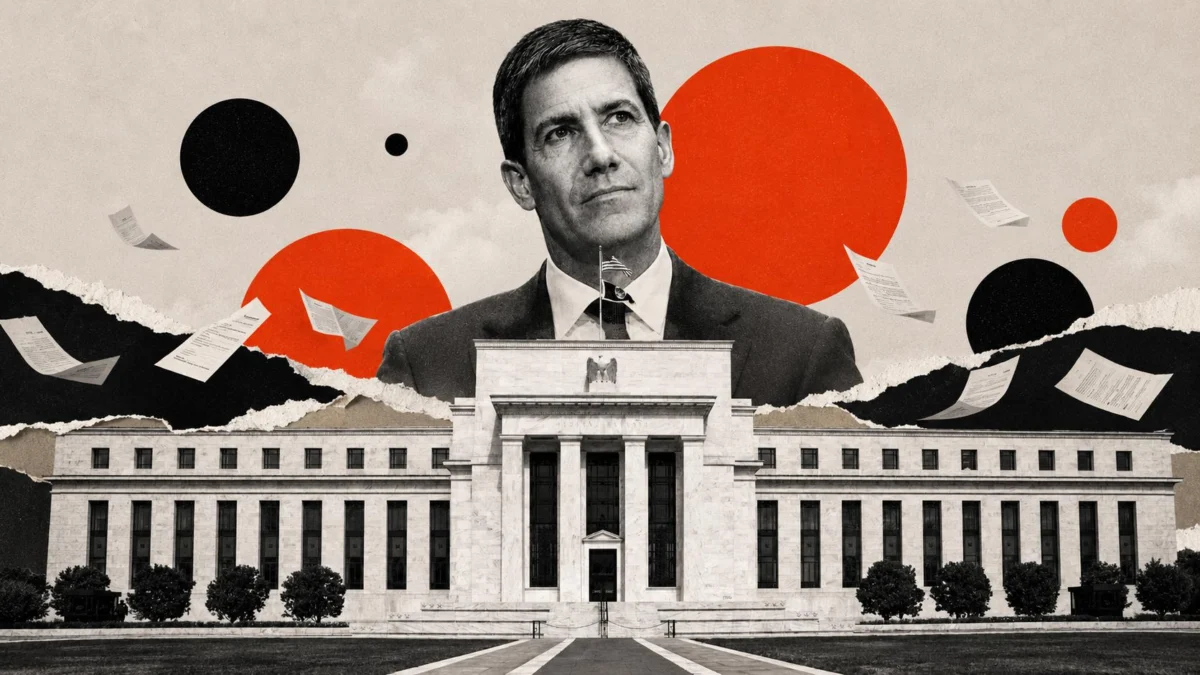
Rabobank’s Head of Macro Strategy, Elwin de Groot, has provided an incisive analysis following Fed Chair Kevin Warsh’s recent Jackson Hole speech, highlighting a significant pivot in the central bank’s communication strategy and its immediate ramifications for U.S. interest rates. Warsh’s remarks signaled a clear dissatisfaction with the prevailing inflation trajectory and an unexpected openness to further rate hikes, which subsequently lifted near-term rate expectations. Paradoxically, this hawkish turn also contributed to a reduction in longer-term policy uncertainty, leading to a decline in longer-term premia. While de Groot maintains his expectation for the Federal Open Market Committee (FOMC) to hold steady throughout 2026, he acknowledges that Warsh’s assertive stance has introduced renewed upside risks to their existing forecasts.
Warsh’s Jackson Hole Address: A Pivotal Shift
The annual Jackson Hole Economic Symposium, hosted by the Federal Reserve Bank of Kansas City, has historically served as a critical platform for central bankers to articulate significant policy shifts and economic perspectives. Fed Chair Warsh’s inaugural address at this prestigious event was keenly anticipated, and it did not disappoint in its impact. His speech marked a notable departure from his previous communication approach since assuming the chairmanship, with a pronounced emphasis on the Federal Reserve’s unwavering commitment to its price stability mandate.
Warsh underscored that the Fed still has "work to do" to guide inflation back to its symmetrical 2% target. This declaration was particularly significant given the backdrop of persistent inflationary pressures that have challenged the central bank’s narrative over recent months. For the first time since taking office, Warsh explicitly voiced dissatisfaction with recent inflation developments, a statement that resonated powerfully through financial markets. This candid acknowledgment signaled a crucial shift, indicating a willingness to consider additional rate hikes unless there was convincing evidence of an improvement in underlying inflation trends.
The context for this shift is vital. Over the preceding months, Warsh had faced implicit, and at times explicit, criticism for what some market observers and commentators perceived as a more accommodative or hesitant stance on inflation. Phrases like "all talk, no action" had begun to circulate after July’s FOMC meeting, where a perceived lack of decisive action to rein in inflation had eroded some of his nascent credibility as an inflation fighter. His Jackson Hole address, therefore, was meticulously crafted not only to convey a firmer policy stance but also to actively rebuild and reassert his credentials as a vigilant guardian of price stability.
The Fed’s Inflation Battle: A Recent History
To fully appreciate the weight of Warsh’s remarks, it’s essential to recall the journey of inflation and the Federal Reserve’s response leading up to this moment. The Fed operates under a dual mandate from Congress: to achieve maximum employment and maintain price stability. For years, the latter has been operationalized as a 2% average inflation target.
The post-pandemic economic recovery saw an unprecedented surge in inflation, driven by a confluence of factors including supply chain disruptions, robust consumer demand fueled by fiscal stimulus, and shifts in spending patterns. Initially, the Fed, under previous leadership, characterized these inflationary pressures as "transitory." However, as inflation proved more persistent and broad-based, reaching multi-decade highs, the central bank was compelled to embark on an aggressive tightening cycle. This involved a series of rapid and substantial interest rate hikes, beginning in early 2022, aimed at cooling demand and bringing inflation back towards target.
Despite these efforts, inflation, particularly core inflation (which excludes volatile food and energy prices and is often seen as a better indicator of underlying trends), remained stubbornly elevated. Wage growth, while beneficial for workers, also contributed to inflationary pressures, especially in the services sector. This resilience in inflation metrics, coupled with a remarkably robust labor market that continued to add jobs at a healthy pace, presented a complex challenge for policymakers. The "last mile" of disinflation – bringing inflation down from, say, 3-4% to 2% – was proving to be particularly difficult, leading to the dissatisfaction Warsh articulated.
Market Repercussions: Near-Term Hawkishness, Long-Term Clarity
The financial markets responded swiftly and definitively to Warsh’s Jackson Hole speech. The most immediate impact was a repricing of expectations for future interest rate movements. Markets, specifically through federal funds futures contracts, began to price in a greater probability of additional rate increases in the near term, particularly for the upcoming FOMC meetings. This reflected the consensus view that Warsh’s statements had successfully rebalanced the September debate towards the hawkish members of the committee, making a further hike or at least a stronger "hold" message with a hawkish tilt more likely.
However, a fascinating counter-trend emerged in the longer end of the Treasury market. Longer-dated Treasury yields, which typically rise in anticipation of higher rates and inflation, surprisingly fell. This seemingly contradictory reaction suggests a nuanced interpretation by investors. While acknowledging the increased likelihood of near-term tightening, the market also perceived Warsh’s remarks as significantly reducing policy uncertainty. By unequivocally signaling the Fed’s commitment to restoring price stability, even at the cost of further tightening, Warsh instilled greater confidence that inflation would indeed be brought under control over the longer horizon. This reduced the "policy risk premium" and the "inflation risk premium" embedded in long-term yields. In essence, investors believed that a more determined Fed in the short term meant a more stable and predictable inflation environment in the long term, thereby lowering the compensation they demanded for holding longer-dated assets.
This dynamic created a unique market posture: a slightly more hawkish near-term policy outlook combined with lower longer-term inflation and policy-risk premia. It signaled that Warsh had, at least temporarily, succeeded in aligning market expectations with the Fed’s long-term objective, even if it meant a bumpier ride in the immediate future. The U.S. dollar also saw an appreciation against major currencies, reflecting the increased probability of higher U.S. interest rates relative to other developed economies, attracting capital flows.
Navigating the Political Landscape: Midterms and Independence
Warsh’s assertive stance, while lauded by inflation hawks and many market participants, also introduced a delicate political balancing act. The timing of his speech, relatively close to November’s midterm elections, raised the specter of potential opposition from the White House. Administrations typically prefer a stable or growing economy leading into elections, and further interest rate hikes carry the risk of slowing economic activity, potentially impacting employment and consumer sentiment – factors that can sway voters.
The Federal Reserve’s independence from political influence is a cornerstone of its effectiveness. This independence allows the central bank to make difficult, sometimes unpopular, decisions necessary to achieve its statutory mandates, free from short-term political pressures. However, this independence is often tested during periods of economic stress or when policy decisions intersect with the political calendar. While White House officials typically refrain from commenting directly on Fed policy, preferring to reiterate their respect for the central bank’s autonomy, there is always an underlying tension when Fed actions could have electoral consequences.
Any perceived pressure, direct or indirect, from the executive branch could undermine the Fed’s credibility and market confidence in its independence. Warsh’s remarks, therefore, were not just an economic statement but also a political one, asserting the Fed’s prerogative to act decisively based on its economic assessment, irrespective of external political considerations. This reinforced the signal that the Fed is not merely relying on tighter financial conditions – which arise from market reactions to expected policy – but remains willing to actively tighten monetary policy further if underlying inflation stalls or fails to improve convincingly.
Rabobank’s Outlook: Upside Risks Emerge for 2026
Elwin de Groot’s assessment from Rabobank provides a crucial analytical layer to Warsh’s speech. Despite the immediate hawkish shift, de Groot still projects that the FOMC will likely remain on hold throughout 2026. This long-term view is likely predicated on the expectation that the cumulative effect of past and potentially future rate hikes will eventually bring inflation sustainably back to target, allowing the Fed to pause its tightening cycle. The lag effects of monetary policy are considerable, meaning that the full impact of current actions may not be felt for several quarters.
However, de Groot’s crucial caveat is the acknowledgment of "renewed upside risks" to their forecasts. This implies that while their baseline remains a hold in 2026, the probability of further hikes extending beyond the immediate horizon, or of rates remaining higher for longer than previously anticipated, has increased. These upside risks could stem from various factors: persistent supply-side issues, stronger-than-expected economic resilience, or unforeseen geopolitical events that could reignite inflationary pressures. Warsh’s speech, by underscoring the Fed’s vigilance, means that the threshold for further action has been lowered, making the central bank more sensitive to any signs of re-accelerating inflation. The market’s perception of "longer-term premia" now reflects a stronger belief in the Fed’s ability to anchor long-term inflation expectations, but de Groot’s analysis suggests that the path to that stability might involve more near-term policy adjustments than initially forecasted.
Key Economic Indicators: The Road Ahead for Policy Decisions
Warsh’s speech clearly indicated that the Fed’s future actions would remain data-dependent. He explicitly highlighted the upcoming economic reports as "crucial for the Committee’s swing voters." The two most prominent data releases cited were the September 4 employment report and the September 11 Consumer Price Index (CPI).
The employment report is a comprehensive gauge of the labor market’s health. Key metrics include non-farm payrolls (the number of jobs added), the unemployment rate, and average hourly earnings (a measure of wage growth). A strong jobs report, particularly one showing robust wage growth, could signal continued inflationary pressures stemming from a tight labor market, potentially bolstering the case for further rate hikes. Conversely, a weakening labor market could provide the Fed with more flexibility to pause.
The Consumer Price Index (CPI) is the most widely followed measure of inflation. The September 11 release would be critical, providing updated figures on both headline inflation (which includes food and energy) and, more importantly for the Fed, core inflation. Components such as shelter costs and services inflation are closely watched, as they tend to be stickier and less responsive to short-term fluctuations. If these indicators show persistent stickiness or an unexpected uptick, it would lend significant weight to the hawkish arguments within the FOMC.
The "swing voters" on the FOMC are those members whose positions are not firmly entrenched in either the hawkish (favoring higher rates to fight inflation) or dovish (favoring lower rates to support employment) camps. These members often determine the direction of policy, and their decisions are heavily influenced by incoming economic data. Warsh’s direct reference to these reports underscores the committee’s reliance on empirical evidence to guide its policy trajectory, implying that the upcoming data could significantly sway the outcome of the next FOMC meeting.
Broader Economic Implications and Analyst Perspectives
The implications of Warsh’s hawkish shift extend beyond just financial markets. For businesses, particularly those reliant on borrowing, the prospect of higher-for-longer interest rates could mean increased financing costs, potentially dampening investment and expansion plans. Consumers might face higher mortgage rates, auto loan rates, and credit card interest, impacting purchasing power and discretionary spending. Sectors sensitive to interest rates, such as housing and durable goods, could experience further slowdowns.
Economists and analysts across the spectrum have offered varied reactions. Many have praised Warsh for reasserting the Fed’s commitment to price stability, viewing it as a necessary step to anchor inflation expectations and prevent a more severe economic downturn in the future. They argue that a credible central bank is essential for long-term economic health. Others express concern that an overly aggressive Fed might risk tipping the economy into a recession, especially if underlying inflationary pressures are already starting to abate naturally. They caution against overtightening, fearing the potential for job losses and widespread economic hardship.
Some analysts, for instance, from major investment banks, noted that while the short-term market reaction reflected increased hike probabilities, the decline in long-term yields indicated a belief that the "terminal rate" (the peak rate in the hiking cycle) might not necessarily be higher, but rather that the Fed is more determined to reach it and hold it there for longer. This nuance suggests a complex interplay of expectations regarding the pace, peak, and duration of the tightening cycle.
Looking Forward: The Fed’s Balancing Act Continues
In conclusion, Fed Chair Kevin Warsh’s Jackson Hole speech marked a watershed moment in the central bank’s communication strategy and policy outlook. By explicitly acknowledging dissatisfaction with inflation and signaling an openness to further rate hikes, he effectively reasserted his credibility as an inflation fighter and recalibrated market expectations. While near-term rate probabilities increased, the accompanying fall in longer-dated Treasury yields highlighted a newfound confidence in the Fed’s long-term commitment to price stability.
However, the path ahead remains fraught with challenges. The Fed must navigate the delicate balance between taming inflation without unduly stifling economic growth, all while contending with potential political pressures and the inherent uncertainties of economic forecasting. The upcoming employment and CPI reports will be pivotal in shaping the FOMC’s next decisions, providing critical data points for the committee’s swing voters. As Elwin de Groot from Rabobank aptly notes, while a hold in 2026 remains a baseline, the renewed upside risks mean the journey to 2% inflation might require more vigilance and potentially more decisive action than previously envisioned. The Fed’s commitment to its dual mandate will be rigorously tested in the months to come, with global economic stability hanging in the balance.
