

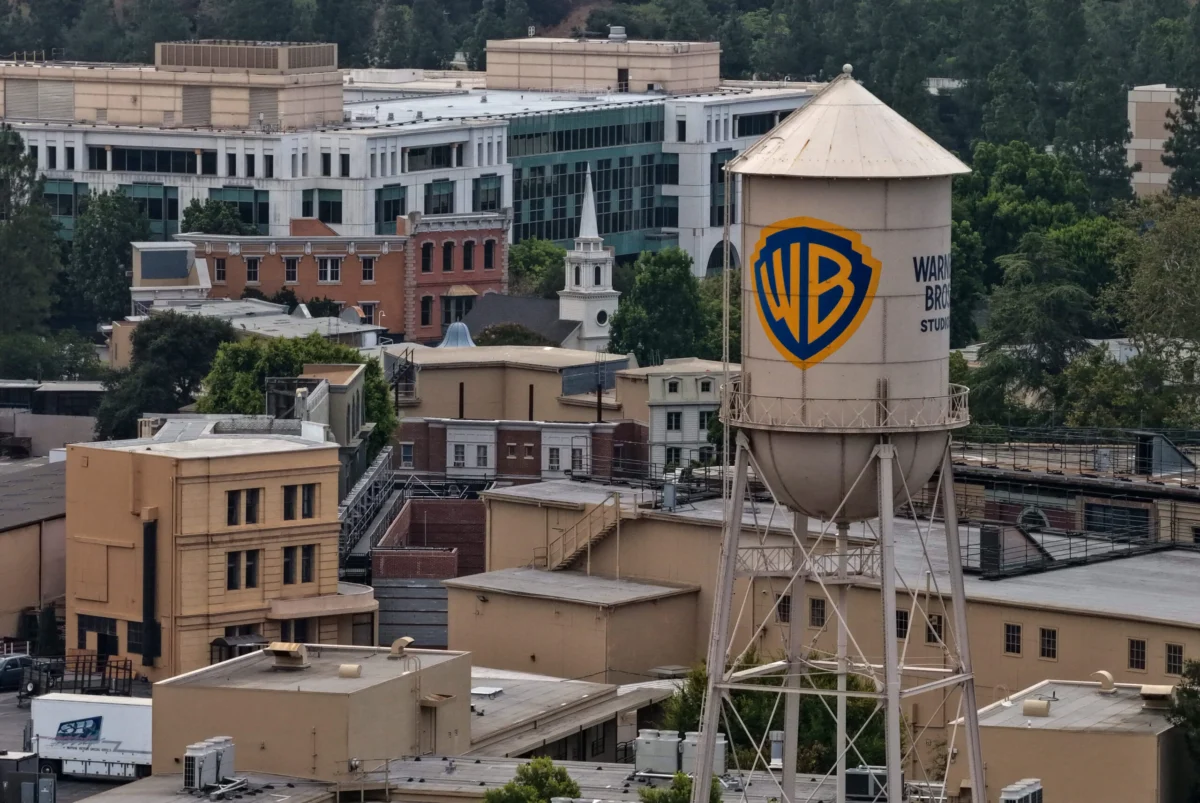
Warner Bros. Discovery (WBD), a global media and entertainment conglomerate, finds itself caught in a vortex of strategic uncertainty, its ambitious plans for future growth and market positioning abruptly halted by the unexpected delay of its proposed $110 billion merger with David Ellison’s Paramount Skydance. The company, which just a year ago was charting a course for a radical structural overhaul, is now grappling with operational constraints and a limited array of strategic options, forcing it into a posture of cautious waiting rather than aggressive innovation. This unprecedented pause has been largely triggered by a significant antitrust challenge from a coalition of states led by California Attorney General Rob Bonta, casting a long shadow over the future of WBD, Paramount Skydance, and potentially, the broader landscape of media consolidation.
A Tumultuous Path: WBD’s Recent Strategic Volatility
The current predicament is particularly jarring given WBD’s recent history of aggressive strategic maneuvers. Only last summer, in 2025, the company announced its intention to split into two distinct, publicly traded entities: "Warner Bros.," which would encompass its formidable streaming and film units, and "Discovery Global," dedicated to its global linear television networks. This proposed de-merger was a bold move, intended to unlock shareholder value by allowing each segment to pursue tailored strategies in a rapidly evolving media ecosystem. The rationale was clear: to create more agile, focused businesses better equipped to navigate the divergent trajectories of a declining linear TV market and a fiercely competitive streaming landscape.
At the time of this proposed split, WBD was moving with palpable momentum. Its flagship streaming platform, HBO Max, was undergoing an aggressive global expansion, pushing into new international markets and intensely focused on driving subscriber growth and achieving profitability targets. The venerable Warner Bros. film studio, after a period of recalibration, was beginning to show promising signs of resurgence, buoyed by critical and commercial successes. Internally, executives were actively preparing for this future. CFO Gunnar Wiedenfels, a key architect of WBD’s financial strategy, had already begun intensive strategizing with his teams on how to efficiently manage a business solely comprised of traditional TV networks in an era of accelerating cord-cutting and digital migration. The company was poised for a transformative period, aiming to redefine its structure to thrive in a fragmented media world.
The Pivot to Sale: The Paramount Skydance Deal Emerges
However, the ambitious de-merger plans were unexpectedly shelved as WBD pivoted towards a different, equally transformative path: a full sale. While the precise reasons for this shift from internal restructuring to external acquisition remain a subject of industry speculation, the allure of a significant financial windfall likely played a pivotal role. After a brief but intense sale process that reportedly saw preliminary discussions with streaming giant Netflix, David Ellison’s Paramount Skydance emerged as the leading suitor.
The proposed merger, valued at a substantial $110 billion, was designed to be a game-changer for both companies. Under the terms of the agreement, Paramount Skydance committed to acquiring WBD for $31 per share, a figure that represented a significant premium. A crucial clause in the deal stipulated that if regulatory approval for the merger was delayed beyond September 2026, Paramount would begin owing a "ticking fee," incrementally increasing the overall value of the transaction for WBD. This mechanism underscored the financial incentive for WBD’s leadership, including CEO David Zaslav, to see the deal through, promising a lucrative return for shareholders and providing a clear path forward in an industry hungry for scale.
Regulatory Roadblocks and the California Attorney General’s Intervention
Just as the merger seemed to be progressing, a formidable hurdle emerged in the form of robust antitrust scrutiny. On July 13, 2026, a coalition of states, spearheaded by California Attorney General Rob Bonta, filed a lawsuit seeking to block the merger on significant antitrust grounds. The core of their argument centered on concerns that the combination of two such powerful entities would lead to reduced competition in key segments of the entertainment industry, specifically citing potential harm in the pay TV and film studio businesses. This intervention marked a critical escalation, signaling a new era where state attorneys general are increasingly willing to independently challenge major corporate mergers, potentially setting a precedent that could impact future consolidation across various sectors.
The legal challenge immediately cast a pall over the deal. Subsequent attempts to find common ground proved fleeting. Preliminary settlement talks between the California AG’s office and Paramount, which began in earnest, appeared to collapse abruptly earlier this week, on August 24, 2026. This breakdown in negotiations means the legal battle is set to continue, further prolonging the uncertainty surrounding the merger. Attorney General Bonta had previously told CNBC last week, on August 20, 2026, that any settlement would require "robust structural remedies," particularly in the pay TV and film studio businesses, indicating a high bar for regulatory satisfaction that Paramount Skydance may have found difficult to meet without significant concessions.

Operational Limbo: Warner Bros. Discovery’s Restricted Agility
The start-and-stop nature of these strategic shifts and the prolonged merger process have left Warner Bros. Discovery in an unenviable state of operational limbo. The company, once lauded for its agility and aggressive pursuit of new market opportunities, is now compelled into a cautious, holding pattern. WBD CEO David Zaslav, addressing investors during an earnings call earlier this month on August 6, 2026, acknowledged the situation, stating that executives have "been trying to drive the value of the company" in order to ensure WBD is in the best possible shape for when the merger would eventually close. This statement, while reassuring, also underscores the inherent limitations currently facing the company.
Despite the current paralysis on major strategic shifts, WBD is not entirely stagnant. Interim operating covenants, carefully laid out within the merger agreement, grant WBD the flexibility to largely run itself as an independent entity while the deal moves towards closing. This provision was a critical point of emphasis for WBD executives during the negotiation phase, ensuring that the company could maintain a degree of autonomy. The agreement also stipulates that in situations requiring Paramount’s blessing for certain actions, such permissions cannot be "unreasonably withheld." This built-in cushion was designed to account for a potentially lengthy merger closing process, estimated at 12 months or more.
While WBD is explicitly restricted from engaging in major mergers and acquisitions, it retains the ability to ink crucial licensing deals and pursue other types of agreements or partnerships with its media peers. From a creative standpoint, this has meant that the flow of content development and acquisition has largely remained unhindered. Sources familiar with the matter, speaking on condition of anonymity due to not being authorized to speak publicly, confirm that film and TV content creators are still actively pitching projects to WBD, signaling a continued belief in the company’s creative output and distribution capabilities.
Indeed, licensing out its vast and highly coveted content library has proven to be a lucrative business model for WBD, a strategy also embraced by many of its industry peers. Since the 2022 merger between Warner Bros. and Discovery, the company has successfully licensed premium content from the iconic HBO library, including critically acclaimed series like "Sex and the City," "Insecure," and the award-winning "Band of Brothers," to rival platforms such as Netflix. Similarly, series like "Westworld" have found new audiences on free ad-supported streaming television (FAST) services, demonstrating the enduring value of WBD’s intellectual property. During the company’s August earnings call, CFO Wiedenfels specifically highlighted the "very healthy demand" for WBD content, underscoring this segment as a crucial revenue stream during the current period of strategic stasis.
The Evolving Streaming Landscape and HBO Max’s Uncertain Future
The protracted merger process is taking place against a backdrop of rapid evolution within the streaming industry, particularly concerning business models. The appetite for innovative streaming partnerships and bundles is growing, with companies exploring various configurations, from offering multiple platforms under a single subscription fee to integrating content directly from one platform into another. A notable example is NBCUniversal’s Peacock, which recently agreed to embed its content into YouTube Premium, a deal that many industry observers believe could set a new precedent for future collaborations. Both NBCUniversal and Fox Corp. leadership have openly expressed their companies’ receptiveness to future combinations or bundles with other platforms, signaling a broad industry trend towards aggregation and enhanced consumer value.
HBO Max is no stranger to such partnerships, already being offered as part of a bundle with Disney’s diverse suite of streaming services. Moreover, recent media reports have suggested that Netflix, traditionally a standalone giant, is now actively considering teaming up with some of its peers, further validating the shift towards bundled offerings. WBD CEO David Zaslav himself has long been a vocal advocate for the bundling model, a strategy he championed successfully in the traditional pay TV world and believes holds significant promise for the streaming era.
Yet, despite these industry trends and WBD’s own inclinations, HBO Max finds itself in a precarious position. As more streamers actively seek and find their "dancing partners," it becomes increasingly challenging to imagine which, if any, major companies would be willing to strike new, significant agreements with HBO Max while its ultimate future remains shrouded in uncertainty. Paramount’s David Ellison has clearly stated that, upon the completion of the WBD merger, Paramount+ and HBO Max would eventually become a single, combined service. This explicit declaration means that any potential partner for HBO Max would be entering into a temporary arrangement, knowing that the platform is slated for integration into a different, larger entity. This uncertainty likely leaves HBO Max on the sidelines, potentially missing out on lucrative bundling opportunities while other, perhaps smaller, players make new inroads and solidify strategic alliances.
The longer WBD and Paramount wait to combine their respective streaming services, the more lead time their competitors may gain, allowing them to outpace both individually. Robert Fishman, an analyst at MoffetNathanson, highlighted this critical vulnerability in an August 5th note following Paramount’s earnings report. He stated, "Currently, both Paramount Skydance and Warner Bros. Discovery own and operate subscale streaming services; combined, we believe they have a better chance competing with the bigger DTC players (namely Disney and Amazon, with Netflix and YouTube still in a league of their own)." Fishman delivered a stark warning: "If the deal falls through, then both streamers are going to find themselves saddled with standalone platforms that are unlikely to be able to compete longer term."
WBD’s recent earnings report earlier this month did showcase record-breaking revenue growth for its streaming segment, a beacon of positive performance amidst challenges. However, this momentum could soon slow. Much of HBO Max’s recent growth has been driven by its aggressive international expansion, and this past quarter marked the completion of its push into major international markets. While smaller markets remain to be tapped, executives have reportedly been advised not to expect streaming growth as significant as WBD has reported recently, according to a third person familiar with the matter who requested anonymity. WBD anticipates hitting its goal of surpassing 150 million global streaming subscribers by the end of 2026, with future growth expected to stem from its ad-supported tier and incremental additions in various international territories.

Potential Divestitures and the Future of WBD Assets
With the Paramount Skydance deal caught in regulatory gridlock, speculation has inevitably begun to mount regarding what assets, if any, David Ellison’s company might be willing to shed in order to appease antitrust concerns and salvage the merger. Even with a question mark hanging over its corporate future, WBD’s vast portfolio of assets remains undeniably attractive to other potential buyers, underscoring the intrinsic value of its content and brands.
California Attorney General Rob Bonta’s insistence on "robust structural remedies" particularly in the pay TV and film studios businesses, suggests that significant divestitures might be a prerequisite for regulatory approval. While the preliminary settlement discussions quickly stalled after media reports outlined potential stipulations, bankers and industry insiders have already begun to consider which WBD assets could realistically be most appetizing if they were to hit the chopping block.
One frequently cited potential divestiture is WBD subsidiary New Line Cinema. CNBC reported on Tuesday that this nearly 60-year-old film and TV production company is likely to attract eager bidders. New Line Cinema boasts an impressive legacy, having been responsible for iconic franchises such as "The Lord of the Rings" and "Final Destination," and more recently, successful installments in the "Mortal Kombat" universe. Its established brand, proven production capabilities, and valuable intellectual property make it a desirable acquisition.
Furthermore, some of WBD’s extensive portfolio of pay TV networks may also become attractive targets for would-be buyers if Paramount needs to trim the portfolio to satisfy regulators. The Turner channels, including powerhouses like TNT and TBS, which host popular sports programming and original content, could draw interest. Additionally, WBD’s highly successful lifestyle networks, such as HGTV, known for their strong audience engagement and consistent programming, could also be considered for divestiture.
The dark cloud hanging over all of this dealmaking, whether real or hypothetical, is the fresh threat that states, emboldened by California’s initiative, could increasingly take up the regulatory mantle from federal authorities and challenge more major media deals on antitrust grounds. This potential shift in regulatory oversight adds another layer of complexity and risk to future consolidation efforts across the entertainment industry, suggesting a more cautious approach to large-scale M&A in the years to come.
Conclusion: A Crossroads for Warner Bros. Discovery and the Media Industry
In essence, Warner Bros. Discovery finds itself at a critical crossroads. The ambitious vision of a streamlined, agile media giant, first through a de-merger and then through a transformative acquisition, has been waylaid by unforeseen regulatory challenges. The company, a steward of storied film studios, a vast array of television networks, and a prestigious streaming business, now faces the unenviable task of navigating a dynamic industry with limited strategic flexibility.
As media veteran Tom Rogers, senior advisor to Versant Media Group and executive chairman of Fountain 0, aptly put it, "This is as good a deal as Warner Bros. Discovery’s going to get, and they are going to have a difficult time totally walking away here with no more than a breakup fee." This sentiment underscores WBD’s strong incentive to find a path forward for the Paramount Skydance merger, even if it entails significant concessions. The alternative, as analyst Robert Fishman warned, could leave both WBD and Paramount+ with "subscale streaming services" unable to compete effectively in the long term.
The outcome of this protracted saga will not only determine the future trajectory of Warner Bros. Discovery and Paramount Skydance but will also send ripples across the entire media industry. It will serve as a crucial test case for the boundaries of antitrust enforcement, particularly at the state level, and will undoubtedly influence the appetite for, and structure of, future media consolidation. Until a resolution emerges, WBD remains in a holding pattern, its once-agile course now dictated by external forces, awaiting clarity in a rapidly evolving and increasingly scrutinized landscape. Julia Boorstin of CNBC contributed to this article.
