

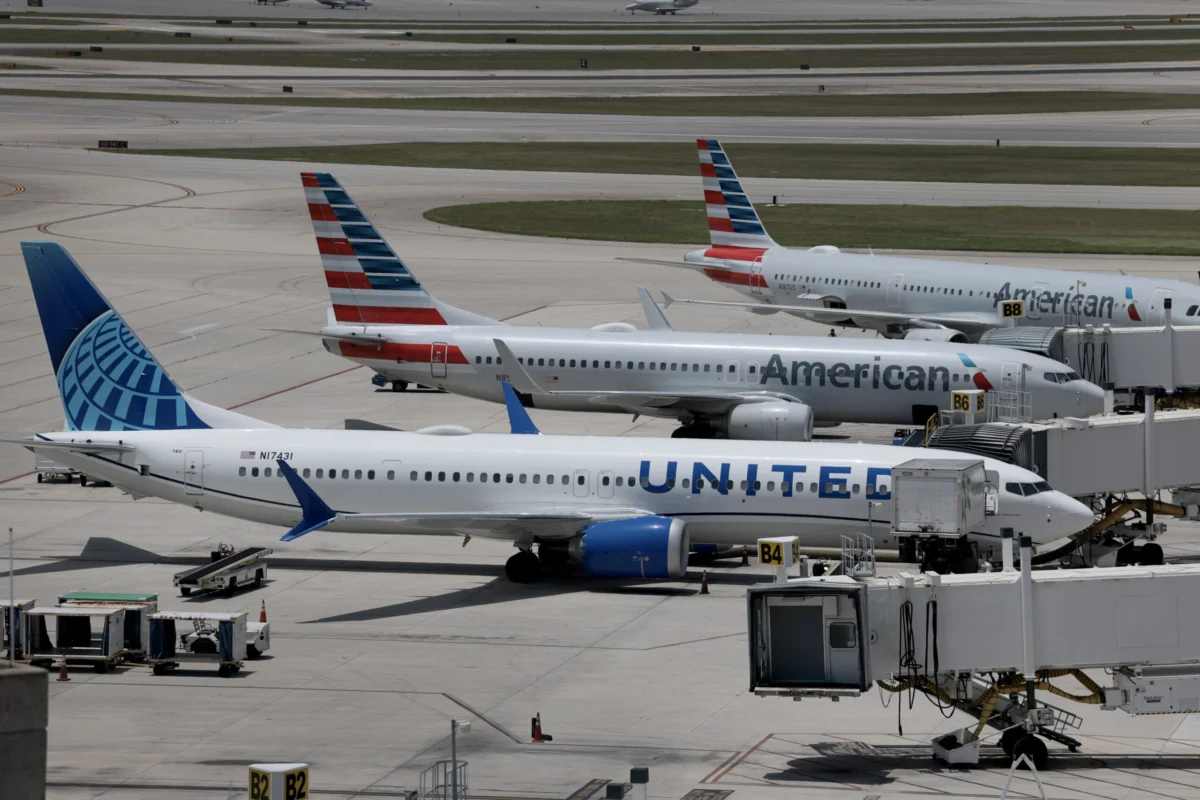
United Airlines has launched an unusually direct and aggressive status-match campaign, openly challenging Delta Air Lines and American Airlines for their most lucrative frequent flyers. This strategic maneuver, unfolding in mid-2026, represents a significant escalation in the ongoing competition for high-spending travelers, leveraging enhanced in-flight connectivity, particularly SpaceX’s Starlink Wi-Fi, as a key differentiator. The carrier’s blunt call-out of its primary rivals, coupled with a targeted social media push, signals a no-holds-barred approach in securing a larger share of the premium travel market, a segment crucial for airline profitability and long-term growth.
The Mechanics of United’s Defection Strategy
At the heart of United’s audacious campaign is a clear, tiered offer designed to entice elite members from Delta’s SkyMiles and American’s AAdvantage programs. Under the terms of the promotion, travelers holding any level of elite status with either Delta or American are immediately granted a corresponding tier of United’s MileagePlus status for an initial 90-day period. This temporary status provides immediate access to benefits such as complimentary upgrades, priority boarding, preferred seating, and increased baggage allowances, aiming to give prospective defectors a taste of the United experience without immediate commitment.
To convert this temporary status into a full, year-long elite membership — valid through January 31, 2028 — participants must meet specific spending thresholds on United mainline or regional flights within the 90-day trial window. For instance, a traveler with Delta’s lowest Medallion status (Silver) or American’s equivalent (Gold) would need to spend $1,500 on United flights within three months to retain a comparable status. The requirements scale upwards significantly for higher tiers, culminating in a substantial $7,000 spending target for individuals aiming to match United’s prestigious 1K status – the highest publicly available tier before the invitation-only Global Services level. These figures underscore the airline’s focus on attracting genuinely high-value customers who consistently contribute significant revenue.
The deliberate targeting of direct competitors, rather than a broader range of airlines, highlights the intensity of this particular market segment. Historically, status match programs have often been more generalized, offering opportunities for travelers from a wider array of carriers to switch. United’s direct challenge, however, suggests a belief that a substantial portion of the most valuable, high-frequency flyers are concentrated within these two rival programs, making them prime targets for conversion.
The High-Stakes Game for Elite Travelers
The aggressive nature of this campaign is a direct reflection of the immense value that elite frequent flyers represent to major airlines. These individuals, often business travelers or affluent leisure passengers, typically book higher-fare classes, fly more frequently, and are less price-sensitive than the average traveler. Industry analyses consistently show that while elite members constitute a relatively small percentage of an airline’s total passenger base, they contribute a disproportionately large share of its revenue and, critically, its profit margins. Some estimates suggest that premium passengers, including those with elite status, can account for as much as 20-30% of an airline’s revenue despite representing only 5-10% of total passengers.
In the post-pandemic recovery period, airlines have increasingly prioritized premium revenue streams as a more stable and lucrative path to profitability. The global aviation industry, having faced unprecedented disruptions, has seen a robust return in leisure travel, but the sustained recovery of business travel, particularly international routes, remains a key focus. Attracting and retaining corporate accounts and individual high-spenders is paramount in this environment. This has led to a significant investment arms race, with carriers pouring resources into enhancing the travel experience for their most valued customers. This includes the proliferation of luxurious new airport lounges, the expansion of premium cabin seating (such as lie-flat business class and enhanced first-class products), and the launch of new international routes designed to cater to global business and upscale leisure travelers. These investments are costly, and airlines need a consistent stream of high-revenue passengers to justify them.
Henry Harteveldt, founder of the travel consulting firm Atmosphere Research Group, succinctly described the current climate: "This is war, airline style." He added, "It’s very rare for an airline to be as blatant as United is being" in specifically calling out Delta and American. This observation underscores the departure from traditional, more subtle competitive tactics, indicating a heightened sense of urgency and rivalry within the industry’s top echelons.
The Digital Frontier: In-Flight Connectivity as a Deciding Factor
A significant hook in United’s current push is its rapidly expanding integration of SpaceX’s Starlink Wi-Fi across its fleet. Recognizing that reliable, high-speed internet is no longer a luxury but an expectation for many high-value travelers, airlines are competing fiercely on connectivity. United is positioning its Starlink Wi-Fi as a game-changer, offering speeds and reliability far exceeding traditional in-flight systems. For MileagePlus frequent flyer program members, this cutting-edge Wi-Fi is offered free of charge, a compelling incentive for those accustomed to paying at least $8 per flight with older providers, or for those whose current airline’s "free" Wi-Fi is often slow or unreliable. While the Starlink rollout is still ongoing and not yet available across United’s entire fleet, the promise of consistent, high-bandwidth connectivity is a powerful draw for business travelers who need to stay productive in the air and for leisure travelers seeking seamless entertainment.
American Airlines, not to be outmaneuvered, has also entered the Starlink arena. The carrier signed on with SpaceX for hundreds of its narrow-body planes, with deployment expected to commence in the coming year. American has proactively launched its own status-match campaign, strategically tying it to the anticipation of its upcoming Starlink Wi-Fi. A spokeswoman for American reported a significant surge in interest, with status match registrations tripling from their normal rate on a recent Thursday, illustrating the immediate impact of this competitive Wi-Fi narrative. American currently offers free in-flight Wi-Fi on hundreds of its aircraft, though it still charges for internet service on many of its wide-body planes, creating a mixed experience for its passengers.
Delta Air Lines, while not adopting Starlink, has taken a different approach to next-generation connectivity. It is planning to transition its free, in-flight Wi-Fi service to Amazon’s Project Kuiper (branded as Amazon Leo for in-flight applications), a low-Earth orbit (LEO) satellite internet service similar in concept to Starlink. Delta emphasized its "long-term strategic partnership with Amazon Leo" will "provide high-bandwidth connectivity while creating opportunities to bring their broad ecosystem of entertainment and digital services to the skies." This move highlights a broader industry trend towards LEO satellite technology for aviation, promising a future where in-flight internet is not just fast, but seamlessly integrated with a range of digital services, transforming the passenger experience. Delta has been a pioneer in offering free Wi-Fi to all passengers, a benefit that has long been a cornerstone of its premium service offering and a significant point of differentiation.
Industry Reactions and Competitive Maneuvers
The aggressive nature of United’s campaign has not gone unnoticed. American Airlines, under the leadership of CEO Robert Isom, has consistently engaged in its own loyalty battles. Interestingly, United’s CEO Scott Kirby previously worked at American for a decade before moving to United, bringing an intimate knowledge of American’s operations and competitive strategies. American’s spokeswoman confirmed that the airline "consistently offer[s] status pass promotions," pointing to a current offer that allows status holders on Southwest Airlines, JetBlue Airways, Delta, and even United itself to be matched on American’s AAdvantage tiered system. This specific promotion grants temporary status for four months, with the possibility of extension if certain spending goals are met. This demonstrates that while United’s campaign is notably blunt, the underlying competitive behavior of using status matches to poach customers is a well-established practice across the industry.
Delta, known for its strong customer loyalty and premium brand positioning, has largely focused on enhancing its existing SkyMiles program and on-board experience rather than overtly targeting competitors with aggressive status matches. Its investment in Amazon Leo and its commitment to fleet modernization and premium service offerings are designed to reinforce its "Delta Difference" – a strategy centered on providing a superior product that naturally attracts and retains high-value customers. Delta’s consistent high rankings in customer satisfaction and operational reliability surveys speak to the effectiveness of this approach.
Historical Precedent and Escalation
Status matching is not a new phenomenon in the airline industry. It has been a standard tool in the competitive arsenal for decades, particularly during periods of airline consolidation, new route launches, or when a carrier seeks to boost its market share in a specific region. Airlines regularly offer these programs to travelers who can demonstrate elite status on another carrier, often requiring proof of status and sometimes a minimal qualifying flight or spend to convert temporary status into a long-term benefit.
However, the current intensity and overt targeting by United mark a significant escalation. Previous campaigns, while competitive, often maintained a veneer of broad appeal, inviting members from "other airlines" rather than explicitly naming rivals. United’s direct challenge to Delta and American, combined with the strategic timing amidst a major Wi-Fi upgrade, suggests a calculated move to disrupt the existing loyalty landscape. This "war, airline style" reflects a market where the top three legacy carriers are fiercely battling for a finite pool of the most profitable travelers. The stakes are higher than ever, given the substantial investments in premium products and services, and the need to ensure a strong return on these investments.
Economic Implications and ROI
From an economic perspective, these status match campaigns represent a significant investment for airlines. While the initial granting of temporary status incurs minimal direct cost, the long-term commitment to providing elite benefits to newly acquired members can be substantial. These benefits include free upgrades, which displace paying customers from premium seats; priority services, which require additional staffing and operational resources; and lounge access, which represents a cost in terms of real estate, food, and beverage. The goal, however, is that the increased spending from these converted elite members will far outweigh these costs.
A successful status match campaign can lead to a substantial increase in revenue per available seat mile (RASM) by attracting passengers who consistently choose higher-fare options. It also strengthens brand loyalty, reducing the likelihood of future defection and ensuring a steady stream of profitable business. The return on investment (ROI) for these campaigns is often measured not just in immediate revenue gains but also in the long-term customer lifetime value (CLV) of the acquired elites. Airlines analyze data meticulously to determine the "break-even" point for an elite member – how much they need to spend to justify the benefits provided – and structure their loyalty programs and status match requirements accordingly. The $1,500 to $7,000 spending thresholds in United’s campaign are carefully calibrated to ensure that only genuinely high-value individuals are granted permanent elite status, minimizing the risk of "status shoppers" who exploit the system without generating significant revenue.
Passenger Experience and Future Outlook
For the frequent flyer, this intense competition is largely a positive development. It means airlines are working harder to earn their business, offering enhanced benefits, improved services, and more compelling reasons to choose one carrier over another. The proliferation of high-speed, free in-flight Wi-Fi, luxurious lounges, and comfortable premium cabins are direct outcomes of this battle for loyalty. Travelers with elite status on one airline now have unprecedented opportunities to experience the benefits of another carrier’s program without starting from scratch, potentially leading to better service and more choices.
Looking ahead, this competitive landscape is likely to intensify further. As LEO satellite internet becomes more ubiquitous, and as airlines continue to invest in personalized digital experiences, the battleground for loyalty will evolve. Future innovations might include even deeper integration of in-flight entertainment with personal devices, advanced biometric recognition for seamless airport experiences, and highly customized travel offerings based on individual preferences and past behaviors. The focus will remain on differentiating the product and experience for the most profitable customers. The "war" for elite travelers, ignited anew by United’s bold move, promises a dynamic and evolving future for airline loyalty programs, ultimately shaping the way premium passengers experience air travel for years to come.
