

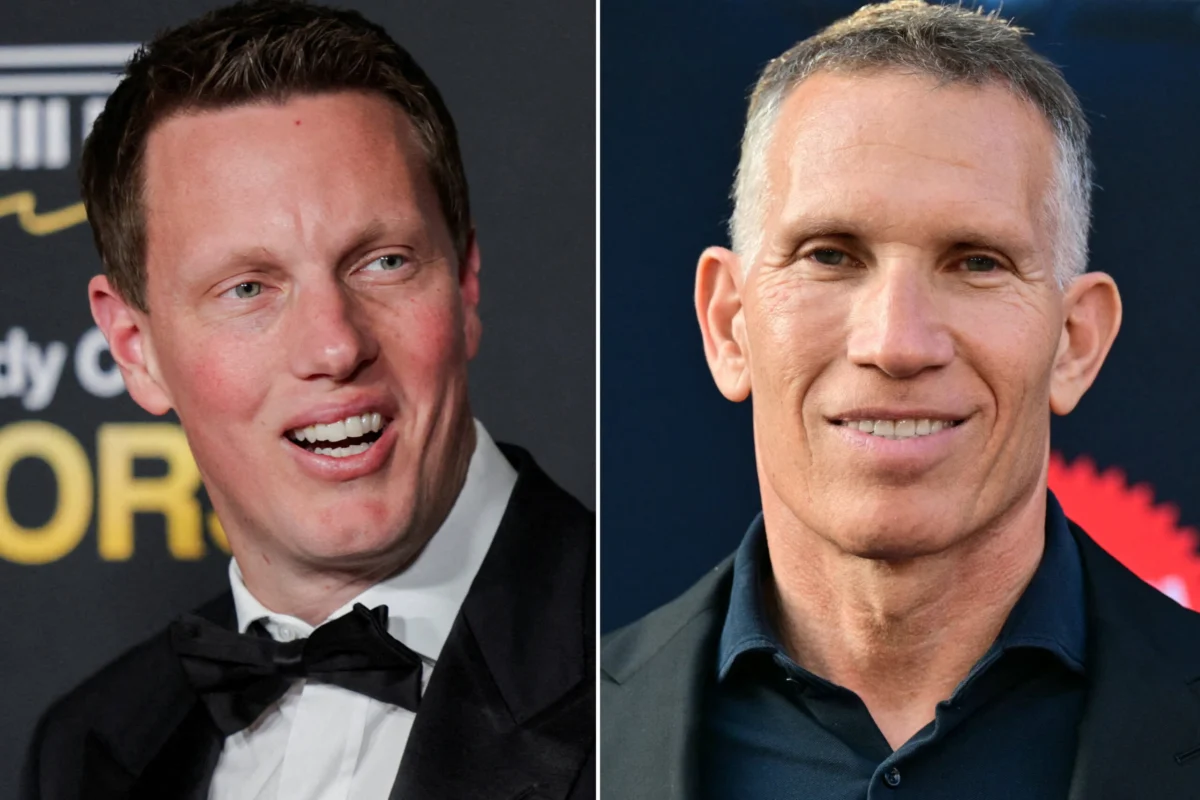
David Ellison, CEO of Skydance, and Ynon Kreiz, the incoming co-CEO, on Monday unveiled the comprehensive executive leadership team poised to steer the newly formed media and entertainment behemoth, Skydance, following the anticipated closure of its transformative merger with Warner Bros. Discovery. This strategic announcement, made just a day before the colossal $110 billion deal is set to finalize, signals a crucial step in integrating two of the industry’s most prominent players into a single, formidable entity. The new leadership structure, drawing talent from both Paramount Skydance and Warner Bros. Discovery, aims to leverage combined strengths across content creation, distribution, and global reach.
A New Era in Media: Unifying Two Giants
The merger, one of the largest in recent media history, represents a significant consolidation in an increasingly competitive global entertainment landscape. With the deal expected to close on Tuesday, October 3rd, 2026, the newly constituted Skydance will emerge as a diversified powerhouse, encompassing vast film and television studios, an extensive portfolio of linear networks, and two major direct-to-consumer (DTC) streaming platforms: HBO Max and Paramount+. This integration is not merely a financial transaction but a strategic realignment designed to achieve greater scale, enhance content pipelines, and drive profitability in a market dominated by intense competition and evolving consumer habits. The combined entity will immediately command a substantial share of the global audience, offering an unparalleled breadth of content from iconic franchises to critically acclaimed series and live sports.
The Architects of Tomorrow: Skydance’s Inaugural Leadership Team
The newly announced leadership team, reporting directly to Ellison and Kreiz, is a carefully curated blend of experienced executives from both legacy companies. This approach underscores a commitment to harness existing talent and ensure a smooth transition and operational continuity across diverse business units.
Leading the charge in the critical news divisions will be Bari Weiss, editor-in-chief of CBS News, and Mark Thompson, chairman and editor-in-chief of CNN Worldwide. Both executives will retain their current roles, providing stability and continued journalistic integrity to the company’s news operations. Weiss, who joined Paramount Skydance in October 2025 following the acquisition of her digital news outlet, The Free Press, brings a unique perspective on evolving media consumption and digital journalism. Thompson, with his extensive experience in traditional and digital news, will be instrumental in guiding CNN’s global strategy within the new structure. Their combined leadership will oversee a vast news apparatus, critical for informing and engaging audiences worldwide.
The direct-to-consumer sector, arguably the most strategically vital area given the industry’s shift towards streaming, will be co-chaired by Casey Bloys. Currently serving as chairman and CEO of HBO and Max content for Warner Bros. Discovery, Bloys will assume the expanded role of co-chair and chief content officer of Skydance’s direct-to-consumer division. In this capacity, he will oversee the strategic direction and content slate for both HBO Max and Paramount+, a monumental task involving the harmonization of two distinct streaming libraries and brand identities. His proven track record with HBO’s prestige content will be crucial in differentiating the combined streaming offering.
Joining Bloys in a co-chair role, but focusing on the company’s television production and global sports group, will be George Cheeks. Formerly a co-CEO of Paramount, Cheeks will now serve as co-chair and chief content officer of Skydance TV. This division will consolidate the extensive television production capabilities of both former companies, alongside the highly valuable global sports rights, presenting significant opportunities for cross-platform content development and monetization. The integration of sports, a key differentiator in the streaming wars, under Cheeks’ leadership is expected to be a major strategic pillar.
Adding another layer of executive oversight and synergy across these critical divisions is JB Perrette, who most recently served as CEO and President of global streaming and games for Warner Bros. Discovery. Perrette will co-chair both the direct-to-consumer and Skydance TV divisions alongside Bloys and Cheeks, respectively. His expertise in global streaming and gaming operations will be invaluable in optimizing the combined digital footprint and exploring new revenue streams.
At the corporate level, Andy Gordon, Paramount’s Chief Strategy Officer and Chief Operating Officer, will transition into the role of President of Skydance. His strategic acumen will be vital in integrating disparate operations and driving overall corporate efficiency. Dennis Cinelli will maintain his position as Chief Financial Officer, providing continuity and expertise in managing the substantial financial aspects of the newly merged entity, including its considerable debt profile.
David Ellison articulated the vision behind these appointments, stating in the news release, "The leaders joining me have built some of the most beloved franchises and businesses in the industry, and they share a deep respect for the creative process and a belief that great stories have the power to entertain, unite and inspire audiences around the world." This statement underscores a strategic focus on creative excellence and global audience engagement as foundational tenets of the new company.
The Road to Consolidation: A Timeline of the Historic Merger
The journey to this mega-merger has been a complex and protracted one, reflecting the immense financial and regulatory hurdles involved in combining two publicly traded media conglomerates.
- February 2026: Paramount Skydance and Warner Bros. Discovery officially announced their intention to merge in an agreement valued at approximately $110 billion. This announcement sent ripples across the industry, signaling a new phase of consolidation driven by the imperative for scale and diversified revenue streams. Initial reports suggested that the combined entity would possess a formidable market capitalization, rivaling some of the largest players in the tech and entertainment sectors.
- March – August 2026: The proposed merger entered a rigorous period of regulatory scrutiny. Antitrust bodies in the United States, including the Department of Justice (DOJ) and the Federal Trade Commission (FTC), alongside international regulatory authorities in Europe and other key markets, initiated extensive reviews to assess the potential impact on competition. Analysts noted that given the size and market power of the two companies, regulatory approval would not be a straightforward process.
- September 21, 2026: A significant hurdle was cleared when Paramount Skydance reached a settlement in a lawsuit filed by a group of state attorneys general. The lawsuit had raised concerns about potential monopolistic practices and consumer impact in certain markets. The details of the settlement, while not fully disclosed, reportedly addressed these concerns, paving the way for the merger to proceed. This resolution was a critical turning point, removing a major legal impediment.
- Late September 2026: Following the settlement, the companies officially announced that the deal would close on Tuesday, October 3rd, 2026. This definitive timeline allowed for the final preparations, including the crucial leadership team announcements.
- October 2, 2026: David Ellison and Ynon Kreiz publicly revealed the full executive leadership team for the new Skydance, integrating key talent from both legacy organizations.
- October 3, 2026: The anticipated closing date of the merger, marking the formal creation of the new Skydance and the commencement of its integrated operations.
Navigating the Streaming Wars: Context and Rationale for the Megadeal
The impetus behind this monumental merger is deeply rooted in the evolving dynamics of the global media and entertainment industry, particularly the intense competition in the direct-to-consumer streaming sector. Both Paramount Global (the parent of Paramount Skydance) and Warner Bros. Discovery faced significant challenges individually.
Paramount Global, despite its iconic brands like CBS, Paramount Pictures, MTV, and Nickelodeon, and its streaming service Paramount+, had struggled to achieve consistent profitability in streaming while managing a heavy debt load. Its market capitalization prior to the merger discussions hovered around tens of billions, often seen as undervalued compared to its vast content library. Paramount+ had been aggressively expanding its subscriber base, reaching tens of millions globally, but profitability remained elusive amidst escalating content costs and marketing expenditures.
Warner Bros. Discovery, itself a product of a recent merger between WarnerMedia and Discovery Inc., also grappled with substantial debt (reportedly over $40 billion at its peak) and the complexities of integrating disparate corporate cultures and content strategies. While HBO Max boasted premium content and a loyal subscriber base, and Discovery+ offered a strong niche in unscripted programming, the combined entity faced pressure to accelerate subscriber growth, reduce churn, and find a sustainable path to profitability. The market capitalization of Warner Bros. Discovery was also in the tens of billions, reflecting investor concerns about debt and the competitive landscape.
The combined entity, Skydance, aims to address these challenges through:
- Scale and Synergies: The $110 billion valuation implies a combined enterprise value that significantly enhances market presence. The merger is expected to generate substantial cost synergies, estimated in the billions of dollars annually, through rationalizing redundant operations, consolidating technology infrastructure, and optimizing content spending.
- Content Powerhouse: The combined content library will be unparalleled, encompassing everything from HBO’s prestige dramas and Warner Bros.’s cinematic blockbusters (DC Universe, Harry Potter) to Paramount’s film franchises (Mission: Impossible, Star Trek), CBS’s broadcast hits, and Discovery’s unscripted content. This vast library is intended to attract and retain a broader global audience, offering something for every demographic.
- Global Reach: Both companies had significant international footprints. The merger will consolidate these operations, providing a stronger platform for global expansion of streaming services and content distribution.
- Advertising Muscle: A larger, more diversified audience across linear and digital platforms will present a more attractive proposition for advertisers, potentially boosting ad revenue streams.
- Competitive Stance: The creation of Skydance positions it as a more formidable competitor against industry giants like Netflix, Disney (with Disney+ and Hulu), Amazon Prime Video, and Apple TV+.
Financial Outlook and Market Implications: A New Contender
The financial implications of this merger are profound. The $110 billion valuation reflects the ambitious scale of the undertaking and the perceived value of the combined assets. While precise post-merger revenue and profitability forecasts will emerge, analysts anticipate that the sheer scale of the new entity will allow for more efficient content investment and greater leverage in negotiations with talent, distributors, and advertisers.
However, the new Skydance will also inherit a significant debt burden from both predecessor companies. Managing this debt while simultaneously investing in content, technology, and global expansion will be a critical challenge for Cinelli and the finance team. The market will closely watch the company’s ability to realize projected synergies and demonstrate a clear path to sustainable streaming profitability. Initial investor reactions have been mixed, with some applauding the strategic rationale for scale, while others express caution regarding integration complexities and the long-term debt strategy.
Content Synergy and Creative Vision: What to Expect from the Combined Library
The unification of HBO Max and Paramount+ under Casey Bloys’ leadership opens up exciting possibilities for content strategy. While it’s unlikely the two brands will immediately merge into a single service, cross-promotional opportunities, bundled subscriptions, and potentially shared content windows could emerge. The combined intellectual property (IP) library is staggering, creating fertile ground for new series, films, and franchises that leverage existing fan bases. Imagine potential crossovers between DC characters and Star Trek, or new iterations of classic franchises drawing from both studios’ archives. The focus will likely be on tentpole productions that can drive global subscriptions and theatrical box office, while also maintaining a diverse slate to appeal to niche audiences. The integration of global sports under George Cheeks’ purview is particularly significant. Live sports are a crucial subscriber driver and a powerful hedge against churn in the streaming world, offering exclusive content not readily available elsewhere.
Challenges and Opportunities: Charting a Course in a Dynamic Landscape
While the merger presents immense opportunities, it also comes with significant challenges.
- Integration Complexity: Merging two large, complex organizations with distinct corporate cultures, technological infrastructures, and operational procedures is a monumental task. The risk of cultural clashes, talent attrition, and operational inefficiencies during the transition period is substantial.
- Debt Management: As noted, the combined entity will carry a considerable debt load. Aggressive debt reduction strategies will be necessary, potentially impacting future investment capacity.
- Regulatory Scrutiny: Despite the settlement, the new Skydance will remain under the watchful eye of antitrust regulators, particularly concerning its market power in content distribution and advertising.
- Talent Retention: Retaining key creative and executive talent from both legacy companies will be crucial to maintaining the quality and volume of content.
- Consumer Experience: Harmonizing the user experience across HBO Max and Paramount+, managing pricing strategies, and ensuring content accessibility will be vital for subscriber satisfaction and growth.
- Evolving Market: The streaming market continues to evolve rapidly with new entrants and changing consumer preferences. Skydance will need to remain agile and innovative to stay ahead.
Ultimately, the formation of Skydance represents a bold bet on the future of media, emphasizing scale, diversified content, and global reach as essential ingredients for success. With a formidable leadership team now in place, the industry will keenly watch as David Ellison, Ynon Kreiz, and their executives embark on the challenging yet potentially rewarding journey of forging a new media titan. The success of this integration will undoubtedly reshape the competitive landscape for years to come, offering a powerful case study in the ongoing evolution of global entertainment.
