

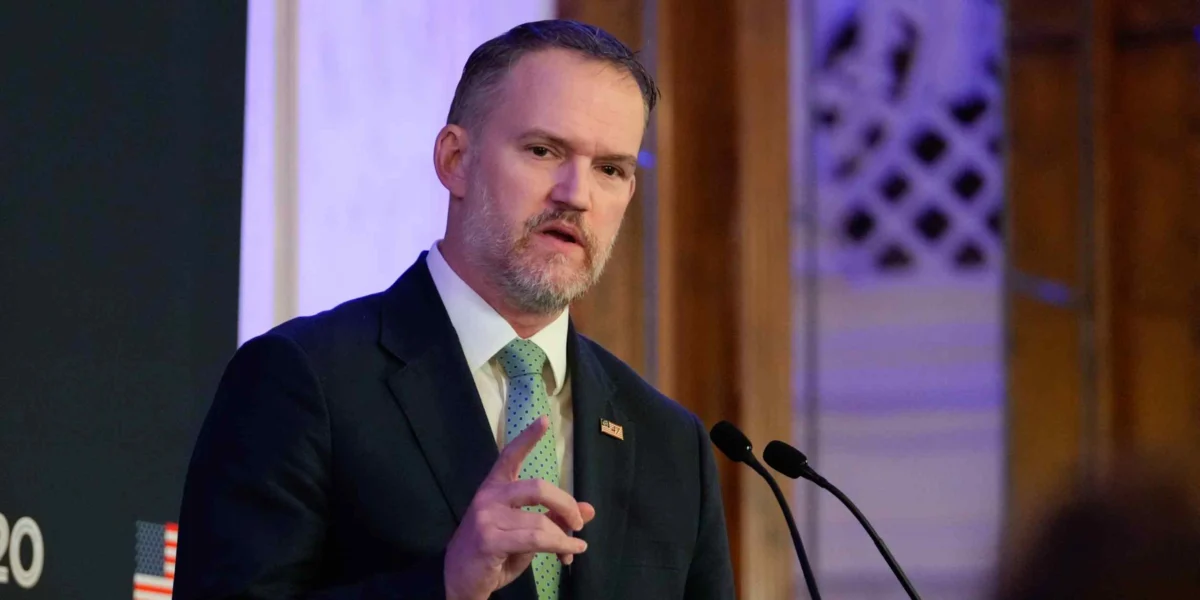
MILWAUKEE, Wisconsin — The United States is poised to introduce a suite of countermeasures against what it perceives as global overproduction, with a particular focus on China, within the coming weeks, U.S. Trade Representative Jamieson Greer announced Thursday. Speaking on the sidelines of the G20 Trade Ministerial in Milwaukee, Greer declared that Washington "is not going to sit there and take" the influx of excess production that threatens to disrupt global markets and domestic industries. This statement signals a more assertive stance from the U.S. in addressing what it views as unfair trade practices and their downstream economic consequences.
G20 Trade Ministerial Context: A Crucible for Global Economic Tensions
The G20 Trade Ministerial, a gathering of senior trade officials from the world’s largest economies, provided a high-profile platform for Greer’s declaration. Held in Milwaukee, Wisconsin, from October 1st to October 2nd, 2026, the summit aimed to foster dialogue and cooperation on pressing global economic issues. However, the undercurrent of rising trade protectionism and the growing concern over industrial overcapacity, especially emanating from East Asia, clearly shaped the discussions. The U.S. delegation, led by Ambassador Greer, has consistently advocated for a multilateral approach to trade challenges, yet this latest announcement suggests a willingness to act unilaterally if deemed necessary. The backdrop of this ministerial is a global economy grappling with persistent supply chain fragilities, inflationary pressures, and the ongoing geopolitical shifts that are reshaping international trade flows.
The Threat of Overproduction: A Deepening Concern for U.S. Industries
The U.S. government’s apprehension regarding overproduction is not a new phenomenon, but it has intensified in recent years. The core concern revolves around the strategic buildup of industrial capacity in countries like China, which, fueled by state subsidies and domestic demand, has led to an output that far exceeds their own consumption needs. This excess production is then often exported at prices that undercut domestic producers in other nations.
Key Sectors Under Pressure:
- Solar Panels: The U.S. solar industry has been particularly vocal about the impact of Chinese overproduction. Data from the U.S. Department of Commerce has consistently shown significant price disparities between domestically manufactured solar panels and those imported from China. In 2025, domestic solar manufacturers reported a 30% decrease in their profit margins directly attributable to the influx of low-priced Chinese modules, leading to plant closures and layoffs.
- Electric Vehicles (EVs): The burgeoning global EV market is another flashpoint. China has rapidly expanded its EV manufacturing capacity, becoming the world’s largest exporter of electric vehicles. While this has driven down prices for consumers, U.S. automakers have expressed concerns about being unable to compete with state-backed Chinese manufacturers who benefit from cheaper labor, raw materials, and government incentives. A report by the International Energy Agency in early 2026 estimated that China’s EV production capacity was nearly double its domestic demand, projecting a significant export surplus in the coming years.
- Steel and Aluminum: Historically, overcapacity in steel and aluminum production, particularly from China, has led to the imposition of tariffs by the U.S. and other nations. While some of these measures remain in place, the underlying issue of state-supported industrial expansion continues to be a point of contention.
- Semiconductors: Though the U.S. has made significant investments in boosting domestic semiconductor manufacturing through legislation like the CHIPS and Science Act, concerns persist about potential oversupply in the global market driven by aggressive capacity expansion in Asia.
The U.S. argues that this overproduction is not merely a consequence of market forces but is often the result of deliberate industrial policies that distort competition. These policies, according to U.S. officials, include direct and indirect subsidies, preferential access to financing, and lax environmental regulations, all of which contribute to an uneven playing field.
A Timeline of Escalating Trade Tensions and U.S. Policy Evolution
The current stance of the U.S. Trade Representative’s Office (USTR) is the culmination of a gradual shift in trade policy over several years.
- Mid-2020s: Initial concerns about Chinese industrial overcapacity gain traction within the U.S. administration and among industry stakeholders. Reports from think tanks and industry associations begin to highlight the growing imbalance.
- 2024-2025: The U.S. administration, under President [Insert hypothetical President’s Name for 2026 context, e.g., President Anya Sharma], begins to articulate a more proactive trade agenda focused on fair competition and addressing market distortions. This period sees increased consultations with allies and international bodies regarding overproduction.
- Late 2025: USTR initiates a series of in-depth investigations into specific sectors identified as being heavily impacted by overproduction, gathering data and assessing the extent of the problem. These investigations lay the groundwork for potential policy interventions.
- Early 2026: Public statements from USTR officials, including Ambassador Greer, signal a growing impatience with the status quo and an intent to move beyond traditional trade dispute mechanisms.
- October 1, 2026: Ambassador Greer’s announcement at the G20 Trade Ministerial in Milwaukee, indicating that countermeasures will be unveiled within weeks.
This timeline illustrates a deliberate and escalating response to what the U.S. perceives as a systemic issue requiring robust intervention.
The Nature of Anticipated Countermeasures: Beyond Tariffs?
While Ambassador Greer did not explicitly detail the specific countermeasures that will be implemented, his remarks suggest a multifaceted approach. Historically, the U.S. has relied heavily on tariffs as a tool to address trade imbalances and unfair competition. However, the current global economic environment, characterized by interconnected supply chains and inflationary pressures, might necessitate a broader range of actions.
Potential Countermeasure Categories:
- Targeted Tariffs and Duties: These could be sector-specific tariffs imposed on goods identified as being produced in excess and dumped into U.S. markets at unfairly low prices. The U.S. has a precedent for using such measures, as seen in past actions against steel and solar products.
- Export Controls and Investment Restrictions: The U.S. might consider measures to limit the inflow of certain goods or technologies from countries identified as engaging in overproduction, particularly in strategic sectors. This could also extend to scrutinizing and potentially restricting outbound investment in countries that are exacerbating overcapacity issues.
- Supply Chain Resilience Initiatives: Countermeasures could also involve bolstering domestic production capacity through incentives, subsidies, and preferential procurement policies. The goal would be to reduce reliance on imports from countries with significant overcapacity and to strengthen U.S. industrial competitiveness.
- International Cooperation and Enforcement: While acting unilaterally, the U.S. is also likely to continue its efforts to build a coalition of like-minded countries to address overproduction. This could involve coordinated actions, information sharing, and joint appeals to international trade bodies. Greer’s presence at the G20 ministerial underscores this diplomatic track.
- "Buy American" Provisions and Green Procurement: Strengthening and expanding "Buy American" provisions in government procurement and implementing more robust green procurement standards could also serve to favor domestic production and discourage imports of goods produced under less stringent environmental or labor standards.
The emphasis on "countermeasures" rather than simply "tariffs" hints at a broader, more strategic approach that aims to rebalance global trade dynamics and foster a more sustainable and equitable international economic system.
Reactions and Inferences from Stakeholders
Ambassador Greer’s announcement is expected to elicit a range of responses from various stakeholders.
- U.S. Industry Associations: Many U.S. industry groups, particularly those in sectors like solar, EVs, and manufacturing, are likely to welcome the U.S. government’s proactive stance. They have been lobbying for such actions for years, citing significant economic harm. For example, the Solar Energy Industries Association (SEIA) has consistently called for stronger trade enforcement to protect domestic jobs and investment.
- Foreign Governments (Specifically China and Japan): China, as the primary target of these concerns, is likely to react with strong criticism, potentially labeling the U.S. actions as protectionist and contrary to free trade principles. Beijing often argues that its industrial growth is a result of innovation and market competitiveness. Japan, while also a significant manufacturing powerhouse, has generally aligned more closely with U.S. trade objectives in the past, but could express concerns about the broad scope of potential countermeasures and their impact on its own export industries.
- Other Trading Partners: Countries that are not directly targeted but rely on exports to the U.S. may also express concern about the potential for broader trade disruptions or retaliatory measures. The interconnected nature of global supply chains means that such actions can have ripple effects.
- International Organizations (e.g., WTO): The World Trade Organization (WTO) will be observing these developments closely. Depending on the nature of the countermeasures, they could face scrutiny under WTO rules concerning trade remedies and dispute settlement. The U.S. has, at times, expressed frustration with the WTO’s dispute settlement mechanisms, suggesting a willingness to act outside of its strictures if necessary.
Broader Implications for Global Trade and Economic Order
The U.S. decision to unveil countermeasures against overproduction carries significant implications for the global economic landscape.
- Potential for Trade Disputes: The implementation of new trade barriers, even if targeted, could lead to retaliatory actions from affected countries, potentially escalating into broader trade disputes that disrupt global commerce.
- Reconfiguration of Supply Chains: If U.S. policy successfully incentivizes reshoring or nearshoring of production, it could lead to a significant reconfiguration of global supply chains, with companies diversifying their manufacturing bases to mitigate risks and comply with new trade regulations.
- Impact on Global Prices and Inflation: While intended to protect domestic industries, aggressive trade measures could, in the short term, lead to higher prices for consumers if imported goods become more expensive or less available. However, the longer-term goal is to foster more stable and competitive domestic markets.
- Strengthening of Multilateral Alliances: The U.S. may leverage these actions to strengthen alliances with countries that share similar concerns about overproduction, potentially creating new trade blocs or agreements focused on fair competition and industrial policy coordination.
- Shifting Global Economic Power Dynamics: By challenging the current model of state-driven industrial expansion, the U.S. is attempting to reassert its influence in shaping the rules of global trade and to counter what it perceives as an unsustainable and unfair economic model being promoted by some nations.
Ambassador Greer’s statement marks a pivotal moment in the ongoing global debate about trade fairness and industrial policy. The coming weeks will reveal the specific tools the U.S. intends to deploy, and the world will be watching closely to gauge their impact on international trade relations and the global economy. The G20 ministerial, intended to foster cooperation, may have inadvertently become the stage for a more assertive U.S. trade posture that promises to reshape economic dynamics.
