

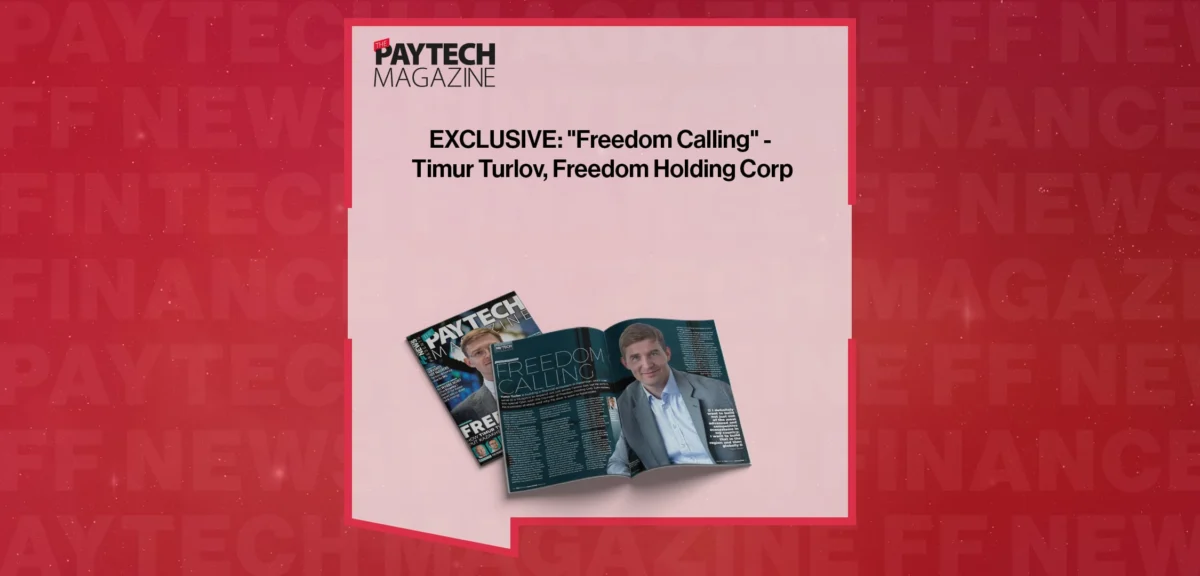
The financial landscape is undergoing a profound transformation, with visionary leaders like Timur Turlov at the helm of companies pushing the boundaries of integrated digital services. As the founder of Freedom Holding Corp, a US-based public company listed on NASDAQ, Turlov is not merely building a financial institution in Kazakhstan; he is architecting a comprehensive digital ecosystem that aims to serve as a blueprint for expansion across Central Asia, Europe, and potentially, the world. His strategy centers on a robust "superapp" model, integrating diverse services from brokerage and banking to telecommunications and entertainment, while simultaneously positioning Kazakhstan as a pivotal hub for next-generation artificial intelligence infrastructure.
The Genesis and Evolution of a Digital Powerhouse
Freedom Holding Corp’s journey began in late 2008, a period marked by global financial turmoil but also nascent opportunities in emerging markets. Timur Turlov identified a significant unmet demand: providing individuals in Eastern Europe and Central Asia with accessible pathways to the US stock market. This initial focus on brokerage services, leveraging technology to democratize investment, laid the groundwork for what would become a much broader enterprise. The company quickly recognized its inherent strength in technological development, a capability that would drive its subsequent diversification.
The strategic expansion commenced with adjacent financial services, notably insurance, an industry segment traditionally characterized by lower digitalization rates compared to brokerage. This move allowed Freedom to leverage its tech-centric approach to innovate in an underserved area. Concurrently, the rise of digital banks, increasingly encroaching upon traditional brokerage territory, presented both a challenge and an opportunity. To maintain its independence and growth trajectory, Freedom Holding Corp made a decisive pivot: it evolved into a digital bank itself. This led to the establishment of Freedom Bank in Kazakhstan, a critical milestone that would become the foundational pillar of its burgeoning ecosystem.
From this banking core, the expansion accelerated, integrating telecommunications, e-commerce, and a suite of other digital services. The guiding principle behind this diversification was seamless interoperability, ensuring that all services functioned cohesively within a single, integrated platform. This systematic evolution culminated in the 2024 launch of the Freedom Super App. More than just a financial application, the Super App represents a full-fledged digital ecosystem designed to simplify daily life, offering customers a unified interface to manage finances, invest, make payments, purchase event tickets, arrange travel, and even access entertainment content like movies. This transformation from a specialized brokerage firm to a multi-faceted NASDAQ-listed digital conglomerate underscores Turlov’s long-term vision for comprehensive digital integration.
The Super App Strategy: A Unified Customer Experience
The rapid ascent of the Freedom Super App into one of the region’s most advanced multi-vertical ecosystems is rooted in a sophisticated understanding of customer behavior and business economics. Timur Turlov articulates a clear strategic rationale: certain digital services, such as payment processing or entertainment booking, excel at low-cost customer acquisition but struggle with long-term retention. Conversely, services like insurance and investment, while harder and more expensive to acquire customers for, foster deeper, more enduring relationships. Banks, by their very nature, are among the most trusted institutions, making them ideal platforms for upselling customers to more complex, higher-value financial products.
The super app model ingeniously exploits these dynamics by creating synergistic relationships between diverse offerings. For instance, a customer holding an account with Freedom Bank experiences a significantly smoother payment process across the entire ecosystem. The convenience extends to non-financial services: with pre-existing customer information, purchasing an airline ticket through the platform becomes a matter of a few clicks within the familiar banking app, often proving faster, easier, and potentially more economical than using external providers. This integration not only streamlines user experience but also significantly reduces customer acquisition costs for higher-value financial products by leveraging the trust and frequency built through everyday services.
This integrated approach yields substantial benefits for both the company and its users. A robust loyalty program, offering cashback and unique experiences, drives day-to-day savings for customers, enhancing stickiness. Different components of the ecosystem contribute uniquely to its overall strength: frequently used services like payments or entertainment boost user engagement and frequency; high-value services like banking and investment foster retention; and the overall reliability and security of the platform cultivate confidence and trust. This holistic design ensures that each service benefits from its inclusion in the ecosystem, creating a powerful network effect that strengthens the entire platform and significantly enhances customer lifetime value by reducing churn and increasing engagement across multiple touchpoints.
Kazakhstan: A Crucible for Digital Innovation
Kazakhstan, while not traditionally recognized as a global fintech hub, has emerged as an unexpectedly fertile ground for building a digital platform of Freedom Holding Corp’s scale. Timur Turlov highlights several key factors contributing to this unique environment. Foremost is the country’s robust human capital: a large pool of well-educated professionals, with the majority of Freedom’s 10,000 employees proficient in English. This talent base is complemented by a young, tech-savvy population and a government that actively embraces technological advancement, fostering a climate of "tech-optimism." Official government initiatives, such as the "Digital Kazakhstan" program, have prioritized digital transformation across various sectors, creating a supportive regulatory and infrastructural backdrop for fintech innovation.
The nation’s rapid adoption of technology has created what Turlov describes as a "unique sandbox" within a relatively modest market of approximately 20 million people. This environment allows for agile development and testing of innovative solutions. Economically, Kazakhstan’s GDP per capita, which stood at approximately $11,500 in 2023, surpasses that of many neighboring markets, including the rest of Central Asia combined, indicating a consumer base with growing disposable income and a propensity for digital services. Internet penetration rates in Kazakhstan are notably high, exceeding 90%, providing a vast addressable market for digital platforms.
Crucially, the general cost of doing business and research and development (R&D) in Kazakhstan is significantly lower than in established global tech centers. This cost advantage minimizes the financial risk associated with experimentation, enabling Freedom to innovate and iterate rapidly without fear of prohibitive expenses from potential missteps. This culture of calculated risk-taking is pivotal, particularly as the company delves into advanced technologies. Currently, Freedom is heavily investing in training and deploying artificial intelligence (AI) across its ecosystem to develop a sophisticated "personal assistant." This AI aims to empower ordinary individuals with the kind of high-quality, personalized service previously exclusive to high-net-worth clients, assisting with financial management, tax guidance, food ordering, entertainment recommendations, and everyday queries. Turlov envisions this as a "blueprint" for not just a national, but a regional and ultimately global, competitive ecosystem.
This ambition is already manifesting in Freedom’s active expansion. Its brokerage services are extending into Europe, while its comprehensive digital offerings are planned for launch in neighboring countries like Kyrgyzstan, Georgia, and Tajikistan, with further strategic inroads into Turkey and a continued presence in the United States. This aggressive internationalization acknowledges the rapidly globalizing nature of digital competition and the necessity of establishing a multi-market presence.
Kazakhstan as a Global AI Infrastructure Hub
Beyond its indigenous digital ecosystem, Freedom Holding Corp is making significant strides in positioning Kazakhstan as a critical player in the global artificial intelligence infrastructure landscape. Recent announcements, including a partnership with OpenAI and a substantial $2 billion sovereign AI wealth hub initiative with Nvidia, underscore this strategic thrust. Turlov points out a glaring geographical void in high-capacity data centers: "If you take a look at the map to see where, for example, the hyperscalers’ data centers are in Eurasia, you will find almost nothing between Poland and South Korea." This absence necessitates the development of localized, robust corporate Clouds, a need Freedom is actively addressing.
The company’s vision extends beyond merely building its own national Cloud infrastructure. It aims to collaborate with global hyperscalers, inviting them to leverage Kazakhstan as a strategic location to serve the broader Eurasian macro-region. This initiative is particularly timely given the exponential growth in demand for AI training compute globally, which often outstrips supply. The global AI market is projected to grow from approximately $200 billion in 2023 to over $1.8 trillion by 2030, intensifying the need for distributed, high-capacity computing resources. Kazakhstan, Turlov argues, possesses a unique confluence of advantages that make it an attractive proposition for an international AI hub. The country benefits from a stable political environment, consistent growth in foreign direct investment (FDI), and an investment-grade credit rating, signaling reliability to international partners. Furthermore, the absence of capital movement restrictions, a favorable tax regime, and critically, a relatively inexpensive energy supply, combine to create an ideal environment for establishing energy-intensive data centers and AI training facilities. This confluence of factors positions Kazakhstan not just as a regional leader, but as a potential global nexus for AI development and compute power, capable of serving customers worldwide by offering competitive terms for AI training resources.
Redefining Competition in Financial Services
Freedom Holding Corp’s unified digital ecosystem presents a formidable challenge to traditional financial institutions, which largely operate within narrow, siloed verticals. While legacy banks possess immense power, trust, and longevity, Turlov contends that their sheer size and entrenched systems often render them inefficient and slow to adapt. "The bigger you become, the more trust you usually gain," he observes, "And the longer you exist, the easier it is to move forward. But while legacy is helping with that, it is killing you at the same time." This inherent dichotomy creates a significant opening for agile digital disruptors.
The core competitive advantage of digital banks like Freedom Bank lies in their ability to operate with vastly superior efficiency. They can execute transactions and deliver services "much cheaper, much faster." While building a scale comparable to established legacy banks may take time, the pace of digital transformation, particularly in markets like Kazakhstan, demonstrates that this can happen remarkably quickly. Turlov highlights a striking statistic: before 2020, approximately 80% of payments in Kazakhstan were cash-based; today, that figure has plummeted to around 12%. This rapid shift, fueled by widespread smartphone adoption and accessible digital payment solutions, underscores the profound impact that the right digital product, coupled with strong consumer adoption and government support, can have on an entire economy.
By consuming significantly fewer resources in redistributing money and facilitating transactions, digital ecosystems like Freedom’s unlock substantial opportunities. The reduced operational costs translate into much smaller fees for customers for financial services, allowing individuals to allocate more of their money towards productive or enriching activities. Ultimately, Turlov envisions a future where the financial sector, while crucial, will occupy a smaller proportion of the overall GDP, reflecting a more efficient and customer-centric allocation of capital throughout the economy. This paradigm shift benefits not just the digital innovators, but society at large by fostering greater economic efficiency and empowering consumers.
Global Aspirations and US Market Penetration
Freedom Holding Corp’s vision extends far beyond its Central Asian origins, with a clear strategic focus on global growth and, specifically, deeper penetration into the United States market. The company already operates a licensed broker-dealer in the US, providing essential market research and institutional investment services. This existing operational footprint offers a robust foundation for expanding its financial offerings across America. Turlov views Freedom as a conglomerate with "many dozens of potential unicorns as different subsidiaries," each specializing in critical technological components such as core banking systems, advanced card processing, payment solutions, and innovative buy-now-pay-later (BNPL) platforms.
The potential to export these proprietary technological solutions to other markets represents a significant growth vector. Turlov provides a compelling example of the efficiency gains achievable through Freedom’s tech-first approach: the cost of originating a mortgage loan in the US currently exceeds $10,500, whereas in Kazakhstan, Freedom achieves this for a mere $200. This staggering disparity highlights the immense potential for technological innovation to drive down costs and enhance efficiency in mature financial markets. The difference stems from the heavy reliance on legacy systems, complex regulatory compliance, and often manual processes prevalent in older financial infrastructures. By leveraging its highly automated and streamlined processes, Freedom could offer these solutions to financial institutions globally, or even enter new markets directly with a significantly more competitive cost structure, potentially disrupting established players.
Turlov emphasizes that while certain functions like accounting or credit decision-making might be outsourced, technology development remains an in-house core competency. A digital bank, and particularly a comprehensive digital ecosystem, is fundamentally a technology company. Its true assets are its proprietary technology and the highly skilled talent responsible for its creation and continuous evolution. This commitment to internal technological mastery is key to its sustained competitive advantage and its ability to innovate rapidly in an ever-changing technological landscape.
Timur Turlov’s Enduring Vision
Despite having built a highly successful, NASDAQ-listed company with a loyal customer base, Timur Turlov remains driven by a profound sense of purpose that transcends mere financial achievement. When questioned about his relentless drive, his response reveals a philosophy rooted in contribution and meaningful creation. "I really believe that a person can be happy only if he is contributing something; if he can finally create more than he will take from society," Turlov states. This ethos underpins his commitment to continue innovating and expanding, seeing his work as a means to "do something good for my customers, for my country, for other countries."
His motivation is not simply to sustain success but to actively shape the future of a rapidly evolving global industry. He expresses a desire to "compete as long as I can to survive in this fast-transforming global industry," dismissing the idea of concluding his career as "very boring." This intrinsic drive to create, to push boundaries, and to contribute meaningfully positions Timur Turlov and Freedom Holding Corp as not just market players, but as architects of a new digital financial paradigm, demonstrating how innovation, strategic vision, and a commitment to societal impact can emerge from unexpected corners of the world to reshape global industries.
