

Emilia Rybak simply wanted to register to vote. Last fall, as she transitioned her residency from New York to Florida, the initial step in the often-arduous process of updating official records was to navigate to the United States Postal Service’s Movers Guide website. Like millions of Americans annually, Rybak accessed the site, completed a straightforward form detailing her old and new addresses, paid the nominal $1.25 identity verification fee, and then selected an option to simultaneously update her voter registration. "I was like, this is definitely the kind of thing that I’m gonna put off or forget about until it’s voting time and I’m gonna be scrambling to do it," Rybak recalled. "This is a perfectly timed option. And why not just do it now through the USPS?"
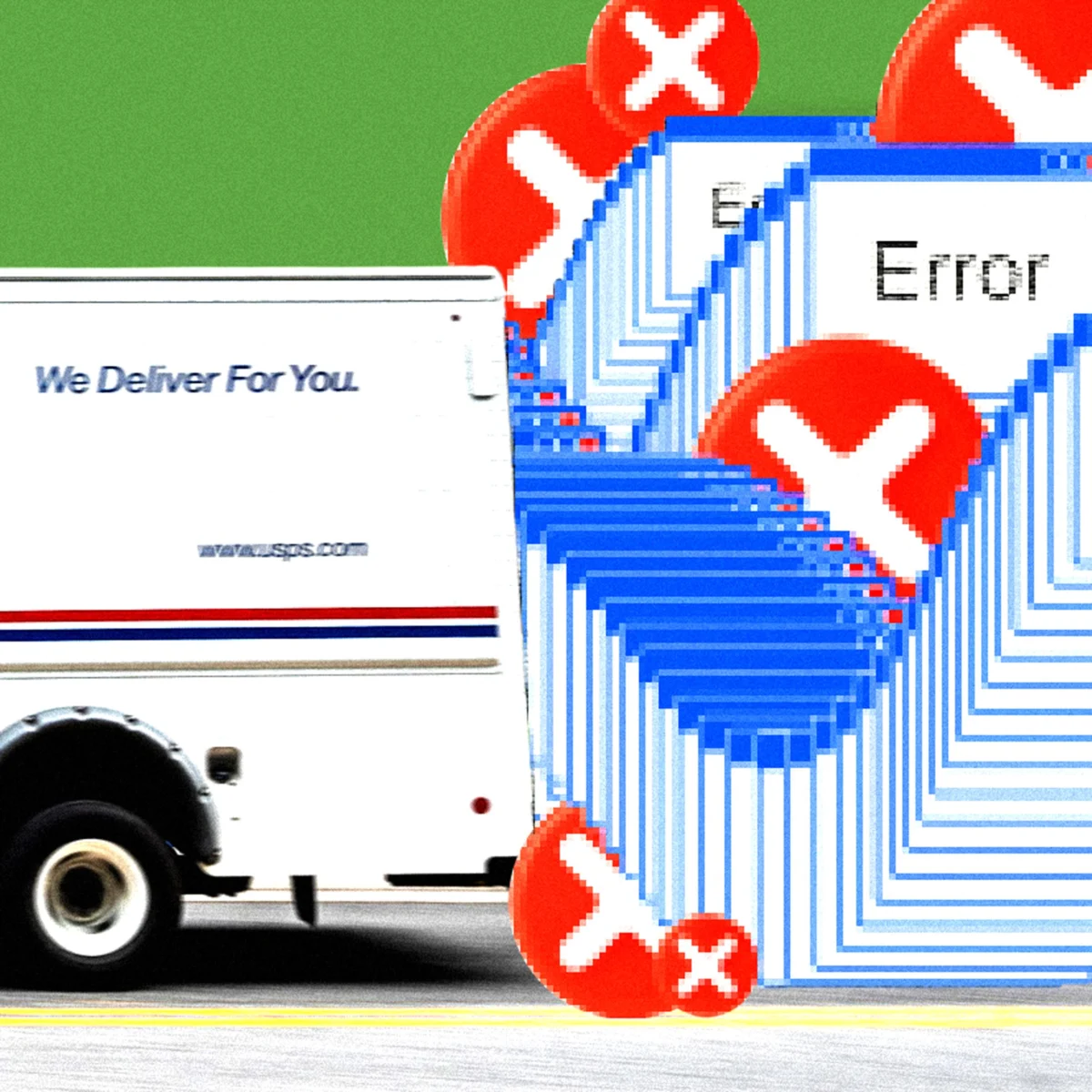
However, Rybak, who operates a user behavior research consultancy, discovered that upon clicking to proceed with her voter registration update, she was not directed to the expected civic process. Instead, she was rerouted to a different website, bearing the USPS logo, which presented her with a series of unskippable advertisements. "You don’t have to be a [user experience] professional to go through this flow and see that it’s highly unethical," Rybak stated, highlighting the jarring disconnect between her intended action and the website’s actual presentation.
For over three decades, a single entity, now operating as MyMove, has held an exclusive contract to manage the USPS’s change-of-address and voter registration services. This public-private partnership operates without direct taxpayer funding. Instead, MyMove generates revenue by selling advertising space, effectively channeling offers and promotions to individuals who are relocating. These advertisers compensate MyMove for access to the mover demographic, with profits subsequently shared with the USPS. This arrangement, conceived during the nascent stages of the internet, was once lauded as a model of government innovation. However, critics now contend it has evolved into a system fraught with deceptive and potentially illegal design practices, commonly referred to as "dark patterns." These tactics are engineered to obstruct users from achieving their intended goals, manipulate them into unintended actions, elicit personal information, and secure their agreement to terms they might not otherwise accept.
The persistence of this MyMove-USPS partnership is notable, particularly in light of MyMove and its parent company, Red Ventures, agreeing to a $2.75 million settlement in 2023 to resolve whistleblower allegations of defrauding the USPS. Although the settlement did not involve an admission of liability, the core issues persist. The most frustrating aspects of the voter registration interface have remained largely unchanged for years, despite a consistent stream of critical online reviews. Users have described MyMove as a "middle-man scam made to steal your info," an "useless enshitification of USPS," and "one of the worst experiences I have come across. It’s straight up predatory."
Rybak, having filed a complaint with the USPS Inspector General following her experience, meticulously documented her interaction with the website. WIRED’s independent review of a similar, though not identical, workflow for the MyMove voter registration process corroborated the presence of these user-reported issues.
"MyMove is employing a pretty egregious cocktail of dark patterns," commented Lior Strahilevitz, a professor at the University of Chicago Law School. His research indicates that aggressive dark patterns can significantly increase the rate at which consumers subscribe to unwanted services. "It’s not the worst I’ve ever seen, but an entity that’s partnering with the federal government shouldn’t be using so many manipulative sales tactics and compromising citizen privacy in that way."
A former high-ranking official at the Federal Trade Commission, who requested anonymity due to their current employer’s policies, characterized MyMove’s website as "deeply problematic." This individual also expressed concerns that the current user interface might expose the company to regulatory scrutiny. "It’s inherently confusing the way they’re presenting the choices—and it’s easily fixable, but there’s a lot of money at stake here," the former regulator observed.
In response to inquiries, USPS acknowledged the significant volume of change-of-address requests it processes annually, numbering approximately 24 million. The agency also noted that alternative methods exist for individuals to update their addresses and register to vote, beyond the MyMove website. "We are aware of some customer discontent with the MyMove website. We take customer feedback seriously, and we are actively working with MyMove to increase transparency and enhance the customer experience," a USPS statement read.
Navigating the Deceptive Digital Pathway
Immediately after completing her official change-of-address form on the USPS website, Rybak was presented with a screen that read, "Next, begin updating your Voter Registration." This page offered a checkbox that, when selected, would pre-populate the voter registration form with the information she had just provided. However, a small disclaimer in faint gray text warned that by clicking this box, Rybak would consent to the transfer of her personal contact information to MyMove. Further down the page, another small disclaimer indicated that upon redirection to MyMove, she would be subject to MyMove’s privacy policies and terms, rather than those of the USPS.
Upon clicking "continue" and arriving at the MyMove website, Rybak found no immediate reference to voter registration. The initial page presented an offer: "Next, set up your internet in minutes." The only interactive options available were "Keep my current service," "Set up new service," or "Get Deals."
Reluctant to engage with any of the promotional offers, Rybak selected what she perceived as the least intrusive option: "Keep my current service." This action led to a subsequent screen informing her about Xfinity’s availability in her new city and presenting three distinct Xfinity plans. Her choices were limited to selecting a plan, opting for a 1-year or 5-year term, choosing to "Compare Providers," or, if she already had internet service, selecting "Get Deals."
Rybak clicked "Compare Providers," which led her to another page filled with advertisements for various internet providers, including Spectrum and Verizon, services she had no interest in. She then opted for "Get Deals." A prominent header declared, "Emilia, reward yourself for moving!" This was followed by advertisements for home security systems, furniture retailers, and pizza establishments. Her only pathways forward were a large blue button labeled "GET ALL & CONTINUE" or a less conspicuous, lighter blue button reading "Get only selected." In minuscule gray text at the bottom of the page, the website disclosed that her contact information was being shared with the selected advertisers. Crucially, there was no option to bypass these selections or to opt out entirely.
At this juncture, Rybak expressed her frustration. She attempted to close the website, but before she could, a pop-up appeared with the message, "Don’t go yet! Moving is expensive, so why not save where you can?" This message was accompanied by two buttons: "GET ALL & CONTINUE" and "SELECT MY OFFERS." Rybak ultimately closed the page, temporarily abandoning her effort to register to vote.
Johanna Gunawan, a professor of computer science and law at Maastricht University, identifies the tactics employed by MyMove—presenting ads without a clear close option, obscuring less desirable buttons with subtle text, and redirecting users away from their intended goals—as textbook examples of dark patterns. However, she expressed particular concern about the context in which these patterns were used. "Users might be prepared for deceptive design on a shopping website, but not when registering to vote," Gunawan stated.
Following her departure from the MyMove site, Rybak checked her email inbox. It was inundated with messages from the advertisers she had attempted to avoid. She also received an email from MyMove stating that her voter registration was nearly complete, with the sole remaining step being to print a form, complete it manually, and mail it to an election office. This led Rybak to question the fundamental utility of the MyMove website for its stated purpose of facilitating voter registration.
MyMove, in its statement to WIRED, indicated that all individuals initiating the online voter registration process receive a "prompt" email with instructions for completing and mailing the required form, "independent of whether they choose to engage with any moving related promotional offers." The company added, "We understand that online experiences, particularly those connected to civic processes, demand particular care. We regularly review and refine our user experience and use customer feedback to update our products."
The Genesis of a "Secret" Contract
In the early 1990s, Brett Matthews, a seasoned entrepreneur, was exploring new business ventures. Having previously worked in a sector that produced informational booklets funded by pharmaceutical companies for medical professionals, Matthews found inspiration while completing a change-of-address postcard, the traditional method for movers to notify the USPS of their new residences.
Matthews and his wife, Virginia Salazar, established Targeted Marketing Solutions. Their proposal to the USPS involved a public-private partnership: they would manage the agency’s change-of-address process at no cost, and in return, the USPS would permit them to include coupons and offers from advertisers in a physical welcome kit mailed to each mover’s new address. Matthews recounted that their initial overtures to the USPS were met with persistent rejections, requiring approximately twenty attempts before gaining traction. Even after securing the attention of postal officials, the proposal faced considerable hurdles, including government review processes, privacy concerns, and debates over whether the welcome kits would imply a government endorsement of the advertised brands.
In 1992, the USPS agreed to pilot the program. By 1995, Targeted Marketing Solutions had secured an exclusive, nationwide contract. In 1997, Vice President Al Gore recognized the company’s initiative with an award for reinventing government, stating, "Our goal, broadly stated, is to reclaim the original meaning of that phrase ‘good enough for government work,’ so that not too many years from now that phrase will mean the very best, the highest level of quality."
Matthews indicated that during his tenure, Targeted Marketing Solutions operated a dedicated user interface lab focused on optimizing the customer experience. The objective was to "make sure they get their service, it’s clear for them front and center, and then they can go on and get some value" from the advertisements.
The Shadow of Secrecy Over the Contract
Matthews led Targeted Marketing Solutions, which later rebranded as Imagitas, through the launch of the first mover’s guide website in 2001. He remained with the company until shortly after its sale to shipping solutions firm Pitney Bowes for $230 million in 2005. In 2015, Pitney Bowes divested Imagitas to Red Ventures for $310 million, at which point it was renamed MyMove.
Crucially, the specific terms of the USPS’s contract with MyMove remain confidential. Unlike most government agencies, whose contracts are typically subject to public records requests, the USPS claims a statutory exemption under the federal Freedom of Information Act for its business contracts, citing its operation within a competitive private shipping market.
Consequently, the limited public information regarding the MyMove arrangement stems primarily from a whistleblower lawsuit initiated in 2020 by Marcos Arellano, a former director of operations. Arellano alleged that MyMove and Red Ventures executives intentionally misclassified expenses and revenues with the intent to defraud the USPS.
Arellano’s complaint asserts that MyMove is responsible for the maintenance, testing, and optimization of the Mover’s Guide website. The complaint further alleges that MyMove is only permitted to sell customer data to advertisers after the customer has navigated away from the official USPS change-of-address page and landed on MyMove’s site, where the voter registration workflow is embedded.
While partially sealed to protect proprietary details of the contract, the complaint indicates that the USPS is guaranteed a minimum annual revenue share. Beyond this baseline, the agency and MyMove purportedly split any additional revenue generated from "visitors or abandoners" of MyMove.com. Neither the USPS nor MyMove provided specific responses to WIRED’s inquiries regarding the contract’s specifics.
Regulatory Scrutiny and Reputational Risk
While the financial incentives offered by dark patterns can be substantial, they are increasingly attracting the attention of regulatory bodies. In the preceding year, the Federal Trade Commission secured a landmark $2.5 billion settlement with Amazon, citing allegations of employing manipulative design tactics to ensnare customers into unwanted subscriptions. Furthermore, in 2023, the FTC finalized a $245 million order against Epic Games, the creator of Fortnite, for allegedly utilizing dark patterns to deceive users into making unintended payments.
Beyond the threat of financial penalties, the web design industry is increasingly recognizing that the deployment of aggressive dark patterns can severely damage a brand’s reputation among consumers, according to Professor Gunawan. "It’s kind of like a betrayal," Gunawan remarked, particularly when such tactics emanate from a website perceived as an extension of governmental authority. "It messes with my perception of trust because I trust the public institution, and I trust that their contracts are made in the best interest of citizenry." The implications of these practices extend beyond individual user frustration, potentially eroding public trust in the integrity of digital interactions with government-affiliated services.
