

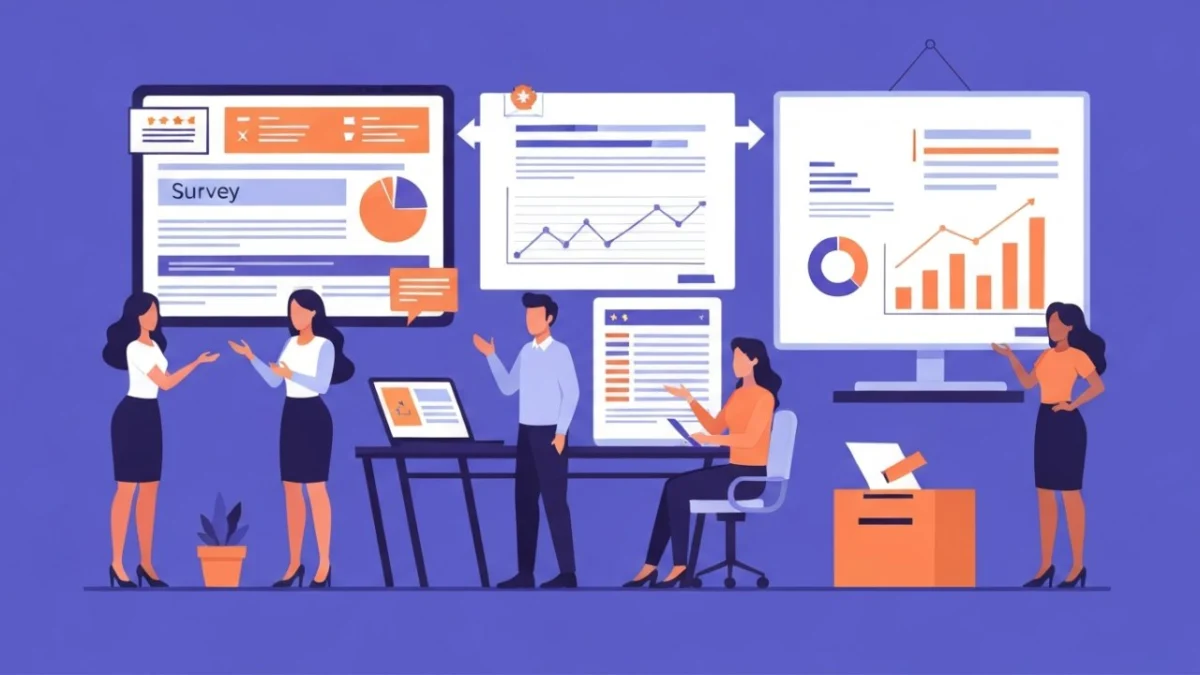
The implementation of a structured customer feedback loop has emerged as a primary driver of institutional growth, with recent market data indicating that organizations actively utilizing these systems expand at a rate 41% faster than their less responsive competitors. In an era defined by rapid digital transformation and shifting consumer expectations, the ability to gather, analyze, and act upon user insights is no longer a peripheral function of customer service but a core component of strategic operations. A customer feedback loop is defined as a continuous, four-stage process designed to align product development and service delivery with the actual needs and pain points of the end-user. By creating a systematic bridge between consumer sentiment and executive action, businesses can effectively mitigate churn, enhance brand loyalty, and secure a sustainable competitive advantage in increasingly saturated markets.

The Structural Framework of the Modern Feedback Loop
The architecture of an effective feedback loop relies on a circular logic that prevents information silos and ensures that data leads to tangible outcomes. This process is traditionally divided into four distinct phases: collection, analysis, implementation, and closing the loop. Each stage requires specific methodologies and tools to ensure the integrity of the data and the efficacy of the resulting business decisions.
In the initial collection phase, organizations deploy a variety of instruments to capture the voice of the customer. These include traditional methods such as long-form surveys and focus groups, alongside modern digital interventions like microsurveys, Net Promoter Score (NPS) prompts, and real-time live chat interactions. The objective is to gather a representative sample of user sentiment across various touchpoints in the customer journey.

Following collection, the analysis phase involves the use of sophisticated data processing techniques. Modern enterprises increasingly rely on sentiment analysis and thematic categorization, often powered by artificial intelligence, to sort through vast quantities of qualitative and quantitative data. This stage is critical for identifying recurring themes, such as specific product defects or systemic service delays, which might otherwise be obscured by the sheer volume of individual responses.
The implementation phase represents the transition from insight to action. During this stage, cross-functional teams—ranging from product engineering to marketing—utilize analyzed data to prioritize updates, fix bugs, or overhaul service protocols. The final and often most neglected stage is "closing the loop," which involves communicating back to the customer base regarding the changes made. This transparency reinforces the value of the customer’s input and fosters a sense of partnership between the brand and its audience.

Historical Context and the Evolution of Consumer Interaction
The concept of the feedback loop has evolved significantly over the past half-century. In the mid-20th century, market research was largely a static, one-way process involving periodic surveys and retrospective analysis. The feedback was often delayed, and the "loop" was frequently broken, as there were few mechanisms to report changes back to the individual consumer.
The advent of the internet in the 1990s and the rise of social media in the 2000s fundamentally altered this dynamic. The "Age of the Customer" shifted the balance of power, as public platforms provided consumers with a global megaphone for their grievances. In 2003, the introduction of the Net Promoter Score by Fred Reichheld revolutionized how companies measured loyalty, providing a simple yet powerful metric that could be tracked over time.

Today, the chronology of feedback has moved from monthly or quarterly reports to real-time data streams. The integration of Customer Relationship Management (CRM) systems with automated feedback tools allows businesses to respond to dissatisfaction within minutes rather than weeks. This shift toward "active listening" has become the baseline requirement for enterprise survival in the 2020s.
Quantitative Impact and Supporting Data
The financial and operational implications of maintaining a robust feedback loop are supported by significant industry data. Beyond the 41% growth advantage, research into consumer behavior reveals a "silent churn" phenomenon: approximately 56% of dissatisfied customers will discontinue their relationship with a brand without ever voicing a formal complaint. A proactive feedback loop is the only mechanism capable of identifying the latent issues that drive this silent exodus.

Furthermore, the cost of customer acquisition remains significantly higher—often five to seven times more expensive—than the cost of customer retention. By utilizing feedback loops to reduce churn, companies can drastically improve their Life-Time Value (LTV) to Customer Acquisition Cost (CAC) ratios. In the retail sector, data suggests that customers who feel their feedback is valued are not only more loyal but are often willing to pay a premium for services, viewing the brand as a trusted partner rather than a mere vendor.
Metrics such as the Customer Effort Score (CES) have also gained prominence. Data indicates that "ease of use" is often a higher predictor of loyalty than "customer delight." Feedback loops that specifically target friction points in the user experience allow companies to streamline operations, which directly correlates with higher retention rates and positive word-of-mouth marketing.

Managing the Negative Feedback Loop: Risks and Opportunities
While positive feedback validates existing strategies, it is the negative feedback loop that offers the most significant opportunities for structural improvement. Negative feedback acts as an early warning system for systemic failures. For example, if a software company receives a surge in reports regarding a specific interface complication, the feedback loop allows for an immediate pivot in the development roadmap to address the friction.
Failure to manage negative feedback can lead to a "downward spiral" where unresolved issues lead to public criticism, which in turn damages brand equity and accelerates churn. Conversely, "closing the loop" on a negative experience can result in the "service recovery paradox," where a customer becomes more loyal to a brand after a failure has been successfully resolved than they would have been had the failure never occurred.

Industry analysts point out that the most successful organizations treat negative feedback as "free consulting." By acknowledging the problem, implementing a fix, and directly informing the complaining party, the business demonstrates a level of accountability that is rare in the modern marketplace.
The Role of Technology and AI in Scaling Feedback Systems
The scale of modern business makes manual feedback processing impossible. Consequently, the rise of AI-driven sentiment analysis has become a cornerstone of effective feedback loops. Natural Language Processing (NLP) allows companies to scan thousands of social media mentions, review site entries, and support tickets to identify the emotional tone and specific subject matter of customer communications.

Tools such as Help Scout’s microsurveys or automated NPS triggers enable businesses to gather insights at the moment of interaction, reducing the cognitive load on the customer and increasing response rates. These technologies allow for the democratization of data within an organization; instead of feedback being trapped in the customer service department, it can be visualized on shared dashboards accessible to product managers, executives, and marketing teams simultaneously.
Broader Impact and Strategic Implications
The long-term impact of a well-executed customer feedback loop extends beyond immediate product fixes. It fosters an organizational culture of continuous improvement and humility. When a company commits to a feedback loop, it signals to its employees and stakeholders that the organization is data-driven rather than ego-driven.

In a competitive setting, this agility is a formidable barrier to entry for competitors. A company that has spent years refining its offerings based on deep-tissue customer insights possesses a product-market fit that is difficult to replicate through capital investment alone. Moreover, as markets move toward personalized experiences, the feedback loop provides the granular data necessary to tailor services to specific user segments, further deepening the brand-consumer bond.
Ultimately, the feedback loop is a manifestation of the social contract between a business and its clientele. In an era of declining institutional trust, companies that listen, act, and communicate with transparency are those most likely to thrive. The integration of these loops into the core business strategy is no longer an optional "best practice" but a fundamental requirement for any enterprise seeking to navigate the complexities of the modern global economy. By transforming raw data into actionable intelligence, the customer feedback loop serves as the ultimate compass for sustainable business success.
