

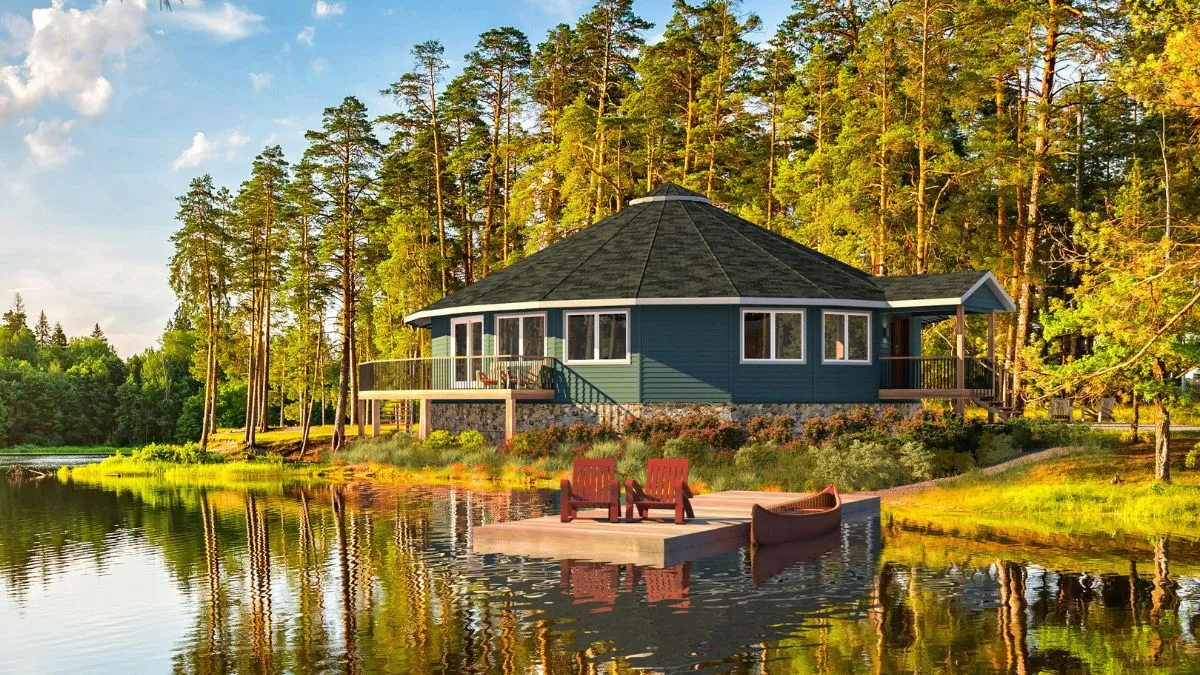
As the frequency and intensity of extreme weather events continue to escalate across the Atlantic basin, the residential construction industry is facing an unprecedented mandate to prioritize structural integrity over traditional aesthetics. At the center of this shift is Deltec Homes, an Asheville, North Carolina-based builder of prefabricated, round houses that has spent more than five decades refining a design philosophy centered on aerodynamic resilience. The company’s recent performance data and engineering specifications suggest that the solution to surviving Category 5 hurricanes may lie in a departure from the rectangular geometry that has dominated Western architecture for centuries.
CEO Meg Gore maintains that the company’s circular footprint and specialized roof systems are not merely stylistic choices but are calculated engineering responses to the physics of high-wind events. By utilizing a shape that works in harmony with natural forces rather than resisting them, Deltec aims to eliminate the vulnerabilities inherent in traditional "box" construction. This approach has gained significant traction as homeowners in coastal regions seek refuge from a changing climate and an increasingly volatile insurance market.
The Engineering of Aerodynamic Stability
The primary challenge in hurricane-resistant design is the management of wind pressure. When high-velocity winds encounter a flat wall, they create a massive build-up of pressure on the windward side and a corresponding low-pressure vacuum on the leeward side. This pressure differential can lead to structural failure, often starting with the windows or the roof. Deltec’s circular design addresses this by allowing wind to flow around the structure, significantly reducing the surface area subjected to direct pressure.
"Round really works with nature, instead of fighting against it," Gore told The Builder’s Daily. "The wind flows around the home, instead of building pressure on one flat wall. Also, we have a radial truss system that disperses energy evenly throughout the structure. It doesn’t rely on a single critical failure point."
The radial truss system functions much like the spokes of a bicycle wheel, distributing loads across the entire frame rather than concentrating stress on a few load-bearing walls. This interconnectedness ensures that if one portion of the home is stressed, the energy is transferred and absorbed by the rest of the structure. This "web of strength" is a departure from traditional framing, where the failure of one corner or wall can lead to a progressive collapse of the entire building.
Technical Specifications and the Continuous Load Path
Beyond the shape, Deltec’s resilience is rooted in the "continuous load path" methodology. This engineering principle ensures that from the roof shingles down to the concrete foundation, every component of the house is physically tied together. In a standard hurricane event, roofs are often the first to fail due to uplift forces. To counter this, Deltec utilizes continuous strapping that anchors the roof system directly to the foundation.
A critical component of this assembly is the use of larger inverted truss hangers on every truss. While traditional construction often relies on smaller hangers or simple nailing patterns, Gore notes that these larger, inverted hangers provide superior resistance to both uplift and lateral (sideways) forces. By reinforcing these key connections—specifically the roof-to-wall and wall-to-floor transitions—the building envelope remains intact even under extreme stress.
Deltec offers varying levels of protection based on the specific needs of the site. The company’s standard models are engineered to withstand winds of up to 130 mph, which covers the majority of inland and moderate coastal risks. However, for high-risk zones, the company provides upgraded structural packages. These packages include enhanced truss plates, high-strength structural members, and specialized glazing systems designed to withstand winds of up to 190 mph—surpassing the 157 mph threshold for a Category 5 hurricane.
A Legacy of Performance: The Mexico Beach Case Study
The theoretical benefits of circular construction have been validated by decades of real-world data. Deltec reports a 99.9% survival rate for its homes during major hurricanes over the past 30 years. This statistic is particularly notable given the company’s heavy footprint in high-impact areas like the Florida coast, the Outer Banks, and the Caribbean.
One of the most documented examples of this resilience occurred in 2018 during Hurricane Michael. The storm made landfall near Mexico Beach, Florida, as a Category 5 hurricane with sustained winds of approximately 160 mph and a devastating storm surge. In the aftermath, aerial footage showed entire neighborhoods leveled, with only the foundations of many homes remaining. Standing amidst the rubble was a Deltec home, which remained structurally sound with minimal damage.

The survival of the Mexico Beach home became a touchstone for the resilient building movement. It demonstrated that while no building is entirely "hurricane-proof," engineering for extreme conditions can mean the difference between a total loss and a home that can be repaired. This track record is becoming a vital selling point as the National Oceanic and Atmospheric Administration (NOAA) reports staggering economic tolls from tropical cyclones. From 2020 through 2024, hurricanes accounted for an average of nearly $150 billion in annual damages in the United States, driving a national conversation about the sustainability of coastal living.
The Factory-Built Model and Precision Manufacturing
The reliability of Deltec’s homes is also a product of its manufacturing environment. The company operates a 100,000-square-foot production facility in Asheville, capable of producing more than 100 homes per year. Unlike traditional "stick-built" homes constructed entirely on-site, Deltec uses a panelized model.
In a factory setting, components are built to exacting tolerances that are difficult to achieve in the field, where weather and varying labor skill levels can impact quality. The plant produces pre-assembled wall panels, floor systems, and the signature radial trusses, which are then shipped to the job site. This method not only ensures structural consistency but also reduces construction waste and shortens the timeline for the "dry-in" phase of building—the point at which the home is protected from rain and wind.
Founded in 1968, Deltec has expanded its reach far beyond its North Carolina roots. The company has shipped components to all 50 U.S. states and more than 30 countries. While demand remains highest in the hurricane-prone Southeast and the Caribbean, the company is seeing increased interest in other regions facing high-wind threats, such as the "Tornado Alley" of the Midwest.
Aesthetics and the Human Experience
While safety is the primary driver for many Deltec clients, the circular design offers unique architectural advantages that traditional homes cannot replicate. The geometry allows for a "panoramic" living experience, which Gore identifies as a major draw for homeowners on scenic lots.
"With the way our homes are constructed, we actually have a panoramic window wall," Gore said. "With all of our homes and the strength of them all at the top, you can have multiple windows. You definitely have that panoramic living that also brings in a lot of natural light. The curve geometry allows more light in, and it kind of brings that indoor-outdoor feeling."
The structural strength of the radial truss system also allows for expansive vaulted ceilings and open floor plans without the need for interior load-bearing walls. This flexibility has allowed Deltec to scale its designs from 300-square-foot accessory dwelling units (ADUs) to luxury estates exceeding 2,500 square feet. Gore noted that the round form factor is particularly effective for smaller units, as the organic shape and high ceilings make compact spaces feel significantly larger and more integrated with the surrounding landscape.
Broader Implications for the Housing Market
The rise of resilient builders like Deltec signals a shift in the priorities of the residential development sector. For builders and developers working in coastal markets, the focus is moving toward long-term performance and "insurability." As major insurance carriers pull out of high-risk markets or dramatically increase premiums, homes that exceed local building codes are becoming more attractive to both lenders and buyers.
The adoption of high-wind packages involves practical trade-offs that the industry must navigate. First, there is the matter of specialized labor; while the prefab components simplify assembly, the unique geometry requires a learning curve for local contractors. Second, the cost of materials for a 190-mph wind package is higher than standard construction, though proponents argue this is offset by lower long-term insurance costs and reduced risk of total loss. Finally, there is the aesthetic challenge; while many buyers embrace the unique look of a round home, it remains a niche product in a market dominated by traditional silhouettes.
However, the data suggests that the "resilience premium" is a price many are now willing to pay. For professional operators, the immediate question is whether these storm-resilient specifications can be translated into a repeatable scope of work. By reducing warranty exposure and enhancing the "survivability" of a development, builders can support higher pricing and provide a level of security that is becoming a rare commodity in coastal real estate.
As the 2024 hurricane season approaches and climate models predict a continuation of high-intensity storms, the circular designs of Deltec Homes serve as a case study in adaptive architecture. By looking back to the fundamental physics of the circle, the company is providing a blueprint for a future where the primary goal of a home is not just to house a family, but to protect them from the increasing volatility of the natural world.
