

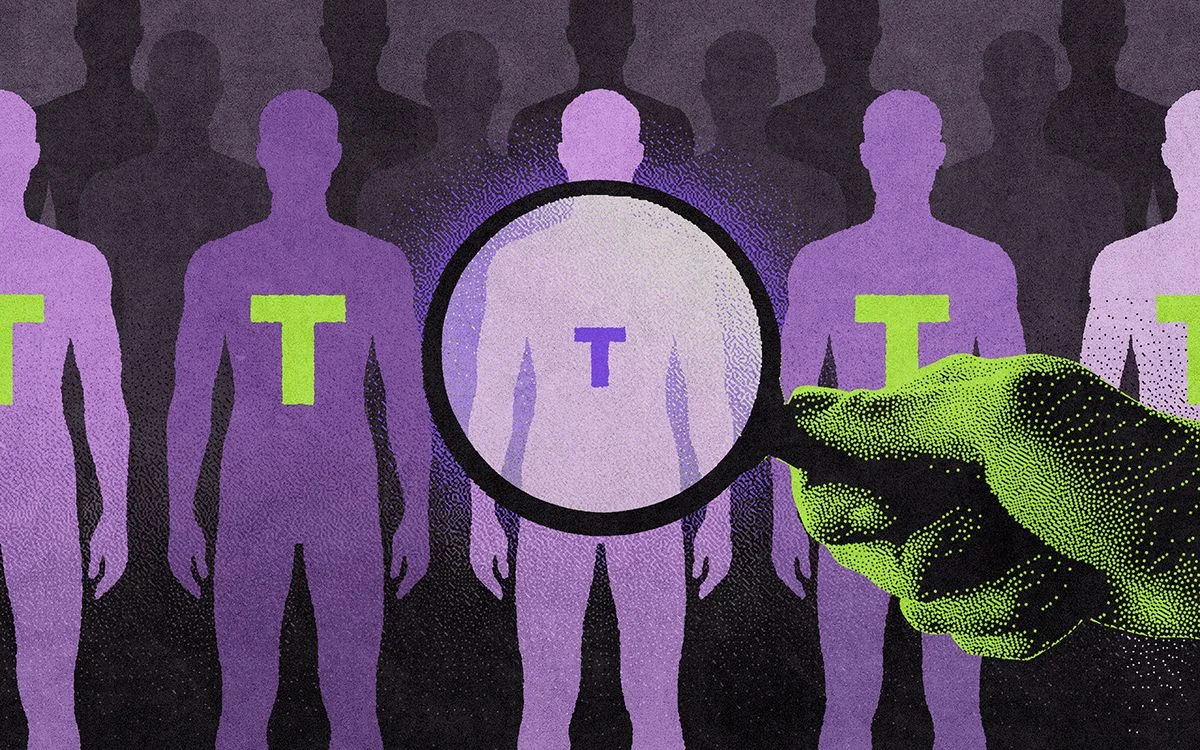
The conversation surrounding testosterone deficiency, often referred to as "low T," has become increasingly prominent in public discourse, fueled by media personalities and political figures alike. This heightened cultural awareness has naturally translated into a surge in demand for testosterone replacement therapy (TRT). In response to this growing market, telehealth giant Hims has launched a new service specifically for cisgender men seeking TRT, marking a significant expansion for the company and a notable development in the evolving landscape of men’s health.
Hims, known for its initial focus on erectile dysfunction medications and subsequent diversification into women’s health, is now venturing deeper into men’s healthcare with its TRT offerings. The service will provide patients with two forms of injectable testosterone treatments, alongside an oral pill option. Access to these treatments begins with an at-home capillary blood test, a step Hims senior vice president of men’s health, Peter Stahl, describes as a strategy to "cast as wide a net, and get as many people tested, as possible." This approach underscores Hims’ ambition to address what it perceives as an underdiagnosed and misunderstood medical condition.
A Maturing Market and Evolving Access to Care
Founded in 2017, Hims has rapidly grown from a startup to a publicly traded company serving 2.9 million customers. The introduction of TRT represents a new phase for the platform, signifying its maturation and increased capacity to handle more complex medical conditions. "When we first started, we didn’t have the capabilities to take care of a complex condition like testosterone deficiency," Stahl stated. "We’ve finally grown up."
This move places Hims in direct competition with a burgeoning number of online clinics that have emerged in recent years, many leveraging "turnkey telehealth services" to quickly establish their presence. These competitors often market testosterone therapy not solely as a medical intervention but also as a lifestyle enhancement or an anti-aging solution, a distinction that Hims aims to navigate carefully.
The Shifting Perceptions of Testosterone
Historically, testosterone has been a controlled substance in the United States since the Anabolic Steroids Control Act of 1990. For decades, its association has been predominantly with bodybuilders and those seeking to enhance athletic performance, creating a significant societal stigma. Dr. Stahl acknowledges this history, noting that "that created a lot of stigma." Furthermore, earlier research raised concerns about potential cardiovascular risks associated with testosterone therapy. However, more recent studies have begun to suggest that these initial concerns may have been overestimated, contributing to a re-evaluation of its therapeutic potential.
The cultural salience of testosterone has also seen a notable resurgence in political arenas. This past fall, Pentagon chief Pete Hegseth announced a mandatory testosterone deficiency screening for a significant portion of male troops in the U.S. armed services. Concurrently, in a hotly contested Texas Senate midterm race, Republican politicians have employed the term "low T" as a rhetorical tool, often framed as a masculinity-challenging insult against their opponent. These instances highlight the increasing politicization and public fascination with the hormone’s perceived impact on male vitality and societal roles.
Navigating the Regulatory Landscape and Stigma
Despite the growing openness, a survey of 2,000 American men commissioned by Hims this summer revealed that while men are increasingly willing to discuss testosterone treatment among themselves, a lingering stigma persists around seeking medical intervention for low testosterone levels.
The classification of testosterone as a controlled substance imposes specific regulatory requirements that differentiate it from other treatments commonly offered by digital health platforms. Unlike GLP-1 medications or estrogen-based hormone replacement therapies, which can often be prescribed after a patient completes a brief online questionnaire, TRT necessitates "synchronous" care. This means prospective users must engage in a video consultation with a clinician before receiving a prescription and for ongoing monitoring, a process designed to ensure appropriate medical oversight.
Expert Perspectives on Access and Safety
Urologist Dr. Mohit Khera, director of Baylor College of Medicine’s Laboratory for Andrology Research at McNair Medical Institute, views telehealth TRT services as a promising avenue for expanding access to medication. However, he emphasizes the critical importance of appropriate monitoring. "It’s important to remember that testosterone therapy can cause infertility, and you don’t give it to someone trying to conceive," Dr. Khera cautioned. His sentiment reflects a broader consensus among medical professionals that while telehealth can enhance accessibility, it must be coupled with robust clinical oversight to ensure patient safety and efficacy.
The diagnosis of hypogonadism, the technical term for testosterone deficiency, is not solely based on laboratory results. While blood tests can identify testosterone levels below established thresholds set by organizations like the American Urological Association, clinicians integrate these findings with patient-reported symptoms and their comprehensive medical history. Common symptoms of hypogonadism include sexual dysfunction, decreased libido, fatigue, and muscle loss. Dr. Stahl considers testosterone levels a "powerful biomarker" for assessing an individual’s overall health, noting that men with untreated low testosterone face a 35 percent increased risk of overall mortality.
Innovative Diagnostics and Hims’ Strategic Approach
Hims is employing a novel approach to blood collection, utilizing the Tasso blood collection device. This wearable, single-use device adheres to the upper arm and uses microneedles to collect a small blood sample. While this method might evoke comparisons to past controversies, Tasso devices have a documented track record and are recognized for their reliability. The collected sample is then sent to a laboratory for analysis of a comprehensive panel of 21 biomarkers, including triglycerides, thyroid hormones, and, of course, testosterone levels.
The results of this broad biomarker analysis will inform treatment decisions. Patients may be prescribed compounded injectable testosterone, a commercially available injectable form, an oral pill, or, if their testosterone levels are within the normal range, alternative treatment strategies. Dr. Stahl sees hormone testing, particularly for testosterone, as a strategic tool to encourage men who might otherwise be hesitant to seek medical attention. "Getting screened for testosterone deficiency is much more exciting to a young man who’s feeling good than getting tested for high cholesterol," he observed. "So we’re trying to leverage that opportunity as much as we possibly can."
Addressing Concerns of Over-treatment and Misinformation
The expansion of online testosterone sales has occurred within what many describe as a "Wild West" environment. A 2022 investigation by urology researchers who went undercover to assess the prescribing practices of digital clinics found that a significant majority of platforms offered TRT, even when participants reported normal testosterone levels. This raises concerns about the potential for over-treatment and the marketing of testosterone for non-medical purposes.
In contrast to some competitors that explicitly promote TRT as an anti-aging or lifestyle enhancement solution, Hims emphasizes a more conservative clinical philosophy. "If you’re asymptomatic, it doesn’t matter what your testosterone level is, you’re not going to get treated on our platform," Stahl asserted. This stance suggests Hims aims to align its services with evidence-based medical guidelines, focusing on treating diagnosed deficiencies rather than offering the therapy as a general wellness supplement.
The broader implications of Hims’ entry into the TRT market are significant. It signals a growing trend of telehealth providers expanding their scope of services to address a wider range of men’s health concerns. This expansion, coupled with increasing public awareness and evolving scientific understanding, is likely to further shape the accessibility and perception of testosterone replacement therapy in the coming years. However, the inherent complexities of a controlled substance, the need for careful patient selection, and the potential for regulatory challenges will continue to be critical factors in the development of this market. The ongoing dialogue between medical professionals, regulatory bodies, and the public will be crucial in ensuring that the growing demand for TRT is met with responsible, evidence-based, and safe healthcare practices.
