

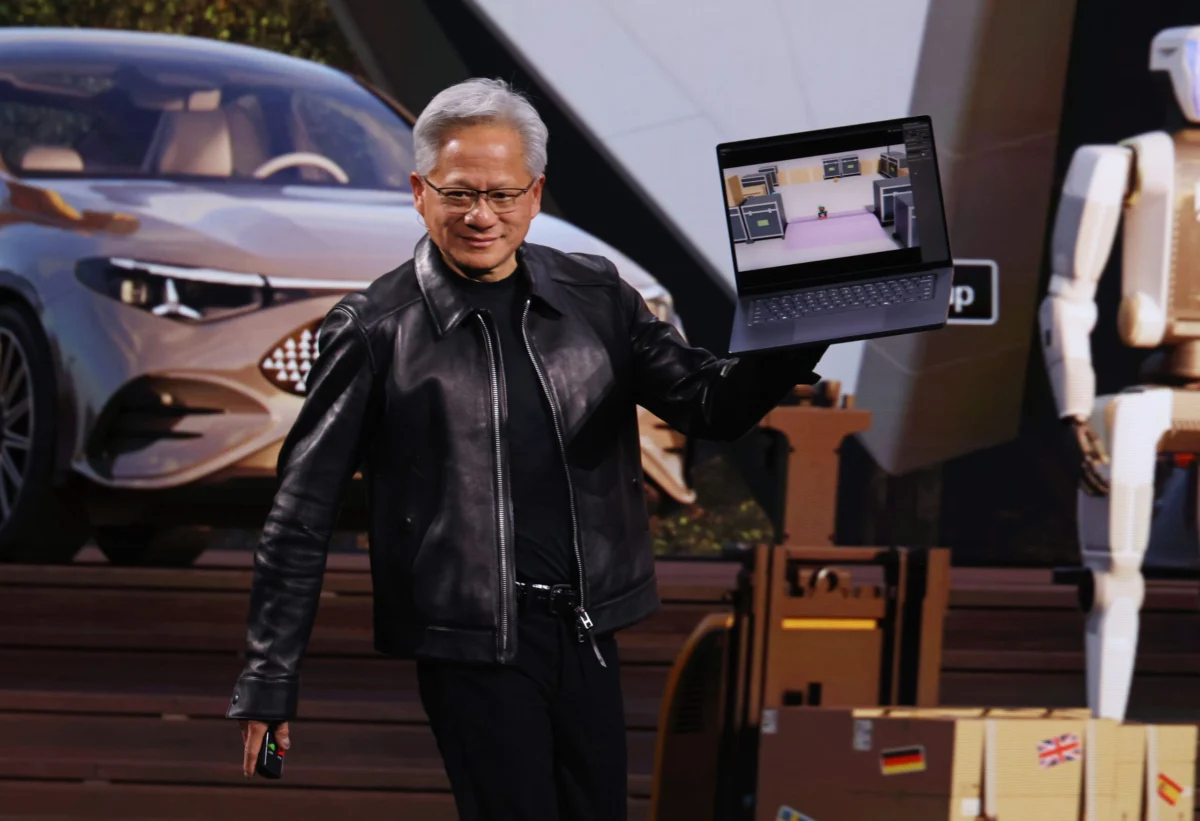
Nvidia CEO Jensen Huang unveiled a bold vision for Europe’s technological future at the company’s global conference in Berlin on Wednesday, charting a course towards an era dominated by advanced robotics, intelligent AI agents, and highly efficient, modular data centers. Throughout his nearly 90-minute keynote address at Nvidia’s GPU Technology Conference (GTC), Huang underscored that the computing power and infrastructure to realize this ambitious future would, unsurprisingly, be provided by Nvidia.
Addressing an audience of approximately 4,000 attendees at Berlin’s Tempelhof Studios, Huang emphasized a strategic imperative for European nations to transition from mere consumers of artificial intelligence to active producers. "To be part of this AI economy, you don’t want to just be consuming the AI. You want to be producing the AI," he declared. "We can do all of that here in Europe." This sentiment signals a significant shift in focus from previous Nvidia GTC events, such as the one held in San Jose, California, in March, which largely centered on AI inference and optimizing compute efficiency. The Berlin iteration marked a pivot towards the tangible applications of AI, focusing on power, intelligent agents, and the physical manifestation of artificial intelligence, exemplified by small Microduck robots developed by Hugging Face, a recent Nvidia acquisition, which performed tasks at Huang’s command.
The Rise of Modular AI Factories
A cornerstone of Huang’s vision is the introduction of the DSX Pod, a modular "AI factory" designed for rapid deployment of data center infrastructure. This "plug-and-play" solution promises to dramatically accelerate the timeline for establishing AI computing capabilities. Unlike traditional data center construction projects that can take months or even years, the DSX Pod arrives pre-assembled within large metal containers, equipped with Nvidia’s latest Vera Rubin compute racks. Huang asserted that these units can be brought online within a mere 14 days. This accelerated deployment capability is particularly pertinent for Europe, a region often characterized by the protracted timelines of large-scale infrastructure projects. The DSX Pod is also expected to minimize compute idle time, thereby enhancing operational efficiency. "This is a complete transformation," Huang stated, highlighting the system’s potential to revolutionize data center deployment and utilization.
The GTC event itself, held in a venue reminiscent of a circus tent with a distinctly modern, gamer-inspired lighting scheme, served as a platform for Huang to articulate Nvidia’s role as a foundational technology provider across a multitude of industries. His presentation spanned from the practical applications of AI in personal computing, such as enhanced laptops, to sweeping predictions about the future of technology. During his address, two Greenpeace protesters briefly interrupted the proceedings, displaying a banner that read "Clean up your dirty business." Huang responded calmly, instructing his security team to "Go easy" as the individuals were escorted out, a moment that underscored the environmental considerations increasingly associated with the energy demands of AI.
Humanoid Robotics: Europe’s Next Frontier
Huang identified humanoid robotics as "the next great industry," positing that Europe’s rich manufacturing heritage positions it advantageously to take a leading role in this burgeoning field. He expanded the concept of "physical AI" beyond traditional robotics, noting that even telecommunications companies are integrating Nvidia GPUs into their cell towers to enhance network capabilities. Furthermore, Huang announced strategic partnerships with European automotive giants Volkswagen and Mercedes-Benz, focusing on the development of autonomous vehicles (AVs).
Nvidia’s commitment to advancing the field of humanoid robotics is further evidenced by the launch of a comprehensive, full-stack robotics platform. This initiative aims to standardize the configuration and development of robotic systems, thereby simplifying the creation of sophisticated AI-powered machines. In the first quarter of next year, Nvidia plans to release Agile One, a preconfigured reference robot designed to empower developers in kickstarting their physical AI system development. "This is your great opportunity," Huang encouraged the audience, framing the advancements as a significant chance for innovation and growth.
The Evolving Landscape of AI Models and Agents
Huang also offered insights into the future of AI model utilization, predicting a hybrid approach where companies will leverage both proprietary closed models and customizable open-source alternatives. He highlighted Nvidia’s own open-source models, emphasizing their potential to achieve frontier performance when fine-tuned with an organization’s specific proprietary data. This approach acknowledges the dual need for cutting-edge capabilities and tailored solutions that address unique business requirements.
The proliferation of AI agents, Huang posited, will lead to an unprecedented expansion in the user base for software tools. He explained that the sophisticated reasoning, iterative capabilities, and tool-use functions of these agents are driving increased demand for computational resources, particularly for token consumption and, consequently, for Nvidia’s GPUs. This surge in demand underscores Nvidia’s central role in powering the next wave of AI-driven software and services.
To conclude his technical deep-dive, Huang presented an AI-generated Eurovision-style song that summarized the key announcements of his presentation, a lighthearted yet effective method to reinforce the complex technical information delivered during the 90-minute keynote. The novel approach to summarizing technical content was met with amusement and appreciation, making the overall message more accessible.
Supporting Data and Context
The GTC conference in Berlin comes at a critical juncture for both Nvidia and the European technological landscape. Nvidia, a company whose market capitalization has surged dramatically in recent years due to its dominance in AI hardware, is actively seeking to expand its influence beyond the United States and Asia. Europe, with its robust industrial base, skilled workforce, and increasing focus on digital sovereignty, represents a key strategic market. The continent’s commitment to AI development is reflected in significant investments from both the public and private sectors, with the European Union setting ambitious goals for AI adoption and innovation through initiatives like the AI Act.
Data from various industry reports highlights the accelerating growth of the AI market. According to Statista, the global AI market size was valued at approximately USD 150.2 billion in 2023 and is projected to reach USD 1,345.2 billion by 2030, exhibiting a compound annual growth rate (CAGR) of 37.4%. Europe is a significant contributor to this growth, with increasing investments in AI research, development, and deployment across sectors such as healthcare, manufacturing, and automotive.
The emphasis on modular data centers like the DSX Pod is a direct response to the escalating demand for AI computing power, which in turn drives significant energy consumption. The International Energy Agency (IEA) has previously raised concerns about the energy footprint of data centers, noting that their electricity consumption has been growing rapidly. Nvidia’s approach, by offering pre-integrated, efficient solutions, aims to address both the speed of deployment and the operational efficiency, potentially mitigating some of the environmental concerns.
Industry Reactions and Implications
While official statements from competitors or broader industry analysts are not yet widely available following the immediate aftermath of the announcement, the implications of Huang’s vision are substantial. The focus on empowering Europe to become an AI producer, rather than just a consumer, aligns with the continent’s strategic goals for technological independence and economic growth. The partnerships with automotive manufacturers like VW and Mercedes-Benz signal a deepening integration of Nvidia’s technology into critical European industries, potentially accelerating the transition to electric and autonomous mobility.
The introduction of a standardized robotics platform and the Agile One reference robot could significantly lower the barrier to entry for companies looking to develop and deploy humanoid robots. This could foster a wave of innovation in logistics, manufacturing, and even domestic assistance, mirroring the transformative impact that personal computers and smartphones have had on society.
However, the increased reliance on powerful GPUs and extensive data center infrastructure also raises questions about energy sustainability and the ethical development of AI. The Greenpeace protest serves as a reminder of the environmental scrutiny that the technology sector faces. As AI becomes more pervasive, ensuring that its development and deployment are conducted in an environmentally responsible and ethically sound manner will be paramount. Huang’s emphasis on efficiency and modularity within the DSX Pod could be a step in this direction, but the overall energy demand for large-scale AI operations remains a significant challenge.
The strategic move to focus on physical AI and robotics also has profound implications for the future of work. As robots become more capable and adaptable, they are likely to transform various industries, leading to both job displacement and the creation of new roles focused on robot design, maintenance, and supervision. Europe’s manufacturing heritage, as highlighted by Huang, could provide a strong foundation for navigating this transition, allowing for the upskilling and reskilling of its workforce to meet the demands of an AI-driven industrial landscape.
Ultimately, Jensen Huang’s vision presented in Berlin paints a picture of an AI-integrated future for Europe, one that is powered by advanced computing, enabled by intelligent agents, and manifested in the physical world through sophisticated robotics. Nvidia’s strategy appears to be one of deep integration, positioning itself as the indispensable partner for European nations and industries aiming to lead in this transformative technological era. The success of this vision will depend on continued innovation, strategic investment, and a careful consideration of the broader societal and environmental impacts.
