

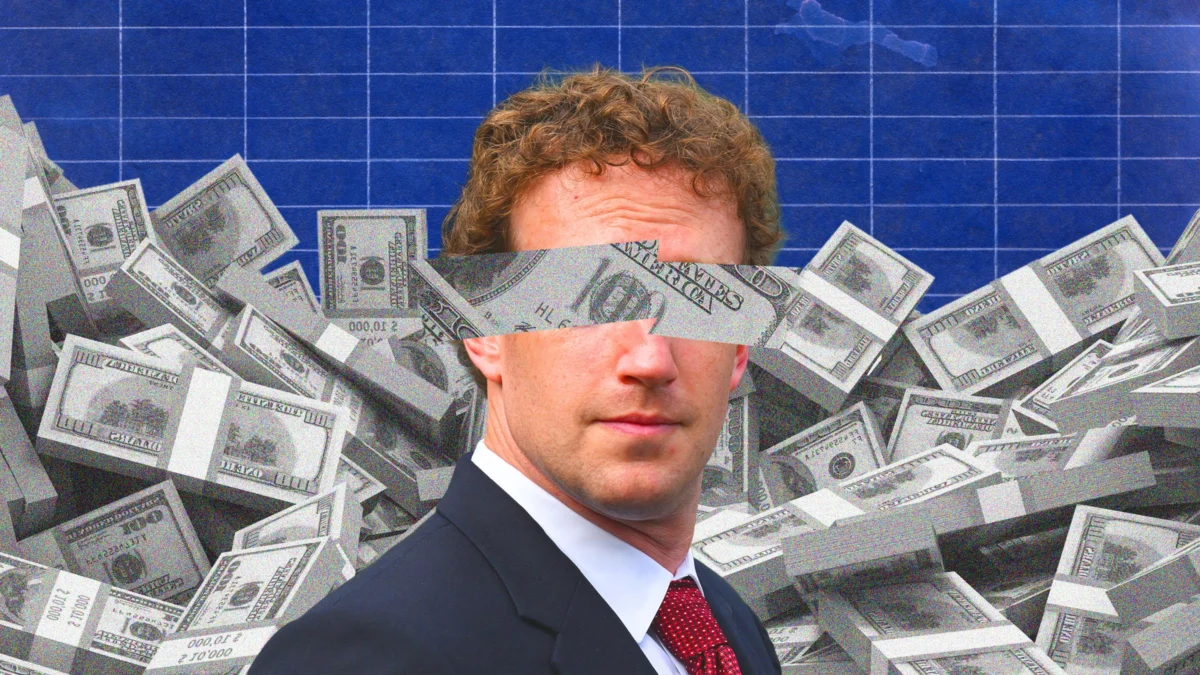
Earlier this week, a significant legal judgment was rendered in New Mexico, with a judge ordering Meta Platforms Inc. to pay a staggering $25 billion fine. This penalty stems from violations of consumer protection laws that date back to the Cambridge Analytica scandal, a watershed moment for data privacy and the social media giant. While the sum represents the largest fine Meta has ever faced, it prompts a critical examination: will this substantial penalty truly impact the tech behemoth’s operations and future conduct, or will it remain merely a cost of doing business?
The legal proceedings were initiated in 2021, with the core allegation being that Meta violated New Mexico’s Unfair Practices Act. The state contended that the company misled its users regarding its data handling practices. This initial complaint later expanded to include claims concerning Meta’s content moderation policies, as articulated by the state’s attorney general. In September, a jury found Meta liable, paving the way for the multibillion-dollar penalty.
Meta’s response to the ruling was swift and assertive. C.J. Mahoney, Meta’s chief legal officer, issued a statement expressing strong disagreement with the judgment. "This ruling, and the Attorney General’s approach to enforcement, makes it all but impossible to do business in the state of New Mexico," Mahoney stated. He further characterized the lawsuit’s aim as an attempt to "impose a tax on speech to enforce new rules for what people can say online," and conveyed confidence in Meta’s ability to "prevail on appeal."
This New Mexico judgment is the latest in a series of mounting legal challenges faced by Meta throughout the year. The company has been embroiled in numerous high-profile cases, making it increasingly difficult to track the full scope of its legal entanglements.
A Cascade of Legal Battles
The extent of Meta’s legal troubles became particularly apparent earlier this year in New Mexico itself. In a separate trial, also related to violations of the state’s Unfair Practices Act, a jury initially ordered Meta to pay $375 million. This specific case was centered on issues of child safety. A subsequent phase of that same legal action resulted in an additional order for Meta to pay $567 million.
Beyond New Mexico, Meta’s legal liabilities have expanded significantly. In Los Angeles County, a superior court found Meta, along with Google-owned YouTube, liable for contributing to the mental health harm of a user through the addictive design features of their applications. The plaintiff, a young woman, was awarded $6 million in damages, with Meta bearing the majority of this financial responsibility.
Further compounding these issues, in August, Meta reached a settlement in a landmark federal case. This class-action lawsuit, brought forth by a coalition of a majority of U.S. states, once again focused on the alleged harmful effects of addictive features within Meta’s platforms, particularly on young users. As part of this comprehensive settlement, Meta committed to paying the participating states a sum ranging between $17 billion and $18 billion over a ten-year period.
Financial Scale and Impact Analysis
When these substantial financial penalties are aggregated, the total runs into many billions of dollars. However, a crucial question remains: does this amount represent a genuine financial burden for a company of Meta’s scale, or is it a manageable expense within its vast operational budget?
According to reports from Reuters, the attorneys representing New Mexico in the most recent trial had initially sought an award between $35 billion and $45 billion from Judge Francis Mathew. While an additional $20 billion would have been a significant sum, it is unlikely to have fundamentally destabilized Meta’s financial standing.
Even if Meta were compelled to pay the maximum potential fine in the New Mexico ruling – an astronomical $219 billion, calculated based on $5,000 for each of 43 million alleged violations, and subsequently reduced by the judge to $25 billion – the company would likely experience only a minor financial setback. As of the latest available data, Meta’s market capitalization hovers around $1.7 trillion. The company’s stock experienced a dip on a particular Thursday, but this decline was attributed to a confluence of factors, including Meta’s quarterly earnings report released the preceding Wednesday, significant capital expenditures dedicated to artificial intelligence (AI) development, and a broader downturn in AI-related stocks.
Beyond the Bottom Line: Perception and Accountability
At this juncture, the immediate financial impact of these judgments on Meta appears to be minimal. Legal experts suggest that a fundamental shift in the company’s conduct would require a more significant accumulation of events, rather than a single monetary penalty. Meta is currently grappling with a considerable perception problem. Juries are consistently ruling against the company, public protests have been a recurring feature of its public presence, and even its own employees have become increasingly vocal about internal policies and the company’s direction.
Corban Rhodes, a partner at DiCello Levitt, the external law firm representing New Mexico in this case, emphasized the long-term implications of Meta not settling cases. "Every time Meta doesn’t settle a case, the evidence presented during trial can be scrutinized by the public and used in future cases against Meta," Rhodes explained to WIRED. "This trial included more than 100 exhibits that we were able to put into public record, things that had been kept secret for more than a decade since Cambridge Analytica."
One particularly revealing document that emerged from the trial was a 2018 email sent by then-COO Sheryl Sandberg to colleagues just days after the Cambridge Analytica scandal broke. In the email, Sandberg expressed grave concern: "The single biggest issue we face—and I really need everyone to know this—is that there were a MILLION developers with access to the data. We are going to have many, many, many more moments like this in the next month and year." This internal communication highlights a long-standing awareness within Meta’s leadership about the vulnerabilities and potential repercussions of its data practices.
Shifting Insurance Landscapes and Shareholder Scrutiny
An emerging trend that could exert greater pressure on tech companies like Meta involves private insurers. There are indications that private insurers may begin to resist covering the escalating costs associated with a tech company’s legal defenses. Some industry analysts propose that insurance companies could, in effect, become a form of de facto governance for AI and other emerging technologies. This could manifest as insurers "injecting responsibility into how AI is designed, developed, and deployed as a condition for obtaining insurance."
Meta has already experienced the initial impact of this shift. In March, a Delaware judge ruled that insurers are not obligated to defend Meta against the thousands of lawsuits it is currently facing. This decision suggests a potential recalibration of risk assessment and coverage within the insurance industry concerning large-scale tech litigation.
The Threshold for Vulnerability
There is no clearly defined monetary threshold at which Meta would become financially vulnerable or forced to cease operations solely due to legal penalties. However, problems could arise if shareholders or board members begin to perceive the company not as an abstract entity, but as a collection of individuals making demonstrably poor decisions. Brian Quinn, a law professor at Boston College Law School specializing in corporate law, M&A, and transaction law, suggests that this shift in focus could lead to greater accountability.
"The way that indemnification law is written right now, the fact that a person in a company was found to have violated a law doesn’t necessarily make them liable," Quinn explained. "It can be believed that they were acting in good faith, or in the best interest of their company. But problems start to arise if shareholders say, wait a minute, there’s not only evidence that this director or operator is violating the law, but it has appeared in the same set of facts seven times now."
Quinn posits that a significant accumulation of such adverse findings could prompt shareholders to demand that the corporation cease indemnifying those directors. This, in turn, could lead to substantial changes within Meta’s executive structure, as its leaders would no longer enjoy the same level of legal protection.
The Looming Shadow of AI Litigation
The current wave of litigation against Meta largely addresses issues related to "social media 1.0 and 2.0." However, as the company, and indeed the entire tech industry, delves deeper into the realm of artificial intelligence, a new frontier of legal challenges is emerging. Rhodes anticipates a significant shift in the nature of legal disputes. "Regulators and courts have for a long time been focused on the impact of social media 1.0 and 2.0, and I think we’re moving on from that era," Rhodes stated. "I expect the next wave of litigation will be focused on AI."
This outlook suggests that Meta’s legal troubles are far from over. As AI technologies become more integrated into platforms and services, new questions surrounding data usage, algorithmic bias, user safety, and intellectual property will undoubtedly lead to further legal battles. The $25 billion fine, while substantial, may ultimately be viewed as an early indicator of the evolving legal landscape that Meta and its peers will have to navigate in the coming years.
This article is an edition of Steven Levy’s and Lauren Goode’s Backchannel newsletter. Read previous newsletters here.
