

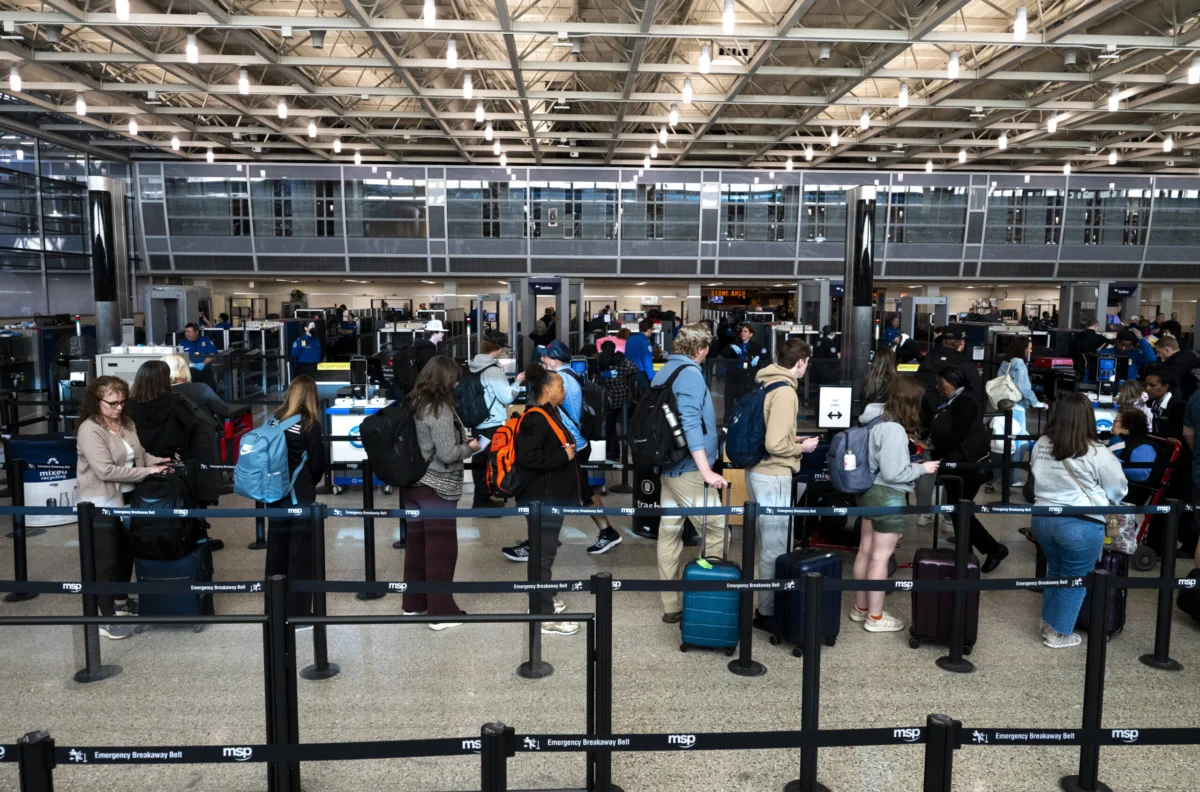
Minneapolis, Minnesota – The bustling security lines at Minneapolis-St. Paul International Airport Terminal 1 on March 23, 2026, offered a snapshot of an industry in paradox: fewer travelers overall, yet robust profits for airlines leveraging unprecedented pricing power. In a significant shift in strategy, major U.S. air carriers are openly declaring their preference for higher yields per passenger over the traditional metric of fully loaded planes, marking the first projected annual decline in U.S. airport checkpoint screenings since 2020. This recalibration comes as airfares continue their steep ascent, driven primarily by soaring jet fuel costs and strong demand for premium travel experiences.
The year 2026 has witnessed a pivotal moment in airline economics, where the number of individuals passing through U.S. airport security checkpoints is on track for its first annual contraction since the tumultuous year of 2020. This decline, while modest at under 2% compared to the previous year, is notable given the preceding years of post-pandemic recovery and growth. However, rather than signaling distress, this trend is being embraced by airline executives who are strategically prioritizing profitability per passenger – known as yield – over the sheer volume of travelers or the percentage of seats filled, referred to as load factor.
"We’re actively prioritizing yield versus load factor and really happy as we see it. It fits right in with the premium investments that we’re making," stated Nat Pieper, Chief Commercial Officer at American Airlines, during the company’s recent earnings call. His remarks encapsulate a sentiment echoing across the industry: the pursuit of higher revenue per available seat mile (RASM) is now paramount. For American Airlines, this strategy translated into a load factor decrease to 83.4% in the third quarter of 2026, down from 86% in the same period of 2025. Despite fewer seats being filled, the financial outcomes suggest this approach is paying dividends.
The Unrelenting Ascent of Airfares: A Costly Journey for Consumers
The primary driver behind this strategic shift is the dramatic surge in air ticket prices. Consumers across the United States are contending with significantly higher costs for air travel, a direct consequence of airlines grappling with a substantial spike in jet fuel expenses. Jet fuel, second only to labor as an airline’s largest operational cost, has seen its price more than double year-over-year. U.S. Gulf Coast spot prices for jet fuel, for instance, were reported at $4.63 a gallon, a stark increase from year-ago levels. Airlines, facing these elevated input costs, have been effectively passing a larger portion of these burdens onto their customers.
According to the latest inflation data, airfares in September 2026 were up more than 22% compared to the same month a year prior. This robust increase underscores the extent to which airlines have managed to implement price hikes without collapsing demand, especially within certain market segments. Travel analytics firm Hopper projected that the 2026 holiday season would feature the most expensive ticket prices seen in years, setting new benchmarks for seasonal travel expenses. This forecast suggests that the current pricing trends are not transient but rather indicative of a more sustained, elevated cost environment for air travel.
Southwest Airlines provides a tangible example of this trend. The average fare for a Southwest flight in the third quarter of 2026 reached $231.69, an increase of nearly $50 from the previous year. This figure does not even account for Southwest’s recently introduced ancillary fees, such as charges for checked bags or preferred seating closer to the front of the aircraft, which further inflate the total cost for travelers. Concurrently, Southwest reported a 3.2% decline in revenue passengers year-over-year, transporting approximately 33.5 million people. Despite the dip in passenger volume, both fares and passenger counts ultimately exceeded Southwest’s internal expectations. "Passenger fares came in about $3 above what our forecast was and the more important thing is that passenger volumes also exceeded our expectations," affirmed Southwest CEO Bob Jordan, highlighting the unexpected resilience of demand even at higher price points.
Fueling the Price Hike: A Major Cost Driver and Strategic Response
The escalating cost of jet fuel has been a dominant theme in airline executive discussions since April 2026, when major carriers first began issuing earnest warnings about the impending hit to their profit margins. The period from April through Thursday saw a cumulative 9.3 million fewer people screened at airport checkpoints compared to the same timeframe in 2025, according to the Transportation Security Administration (TSA). While this represents a less than 2% decrease from the previous year, its significance lies in breaking a multi-year pattern of consistent growth in passenger traffic. This deceleration, coupled with rising fuel costs, has solidified airlines’ resolve to prioritize revenue recovery through pricing.
Airlines have focused intensely on recovering as much of the jet fuel spike as possible. Despite some minor fluctuations, executives consistently reported strong overall travel demand during their earnings calls, with particular strength noted in the highly profitable premium cabins, such as business and first class. This segment of the market, typically less price-sensitive, has proven crucial for maintaining revenue streams amidst rising operational costs.
Not all carriers, however, have experienced a decline in passenger numbers. United Airlines stood out, reporting a 2.4% increase in passengers flown in the third quarter of 2026 compared to a year ago. Furthermore, United announced a remarkable 16% rise in unit revenue – the biggest increase since the pandemic. United CEO Scott Kirby expressed pleasant surprise at the industry’s collective ability to raise yields and pass through much of the fuel price increases. "It’s possible that airlines will continue to focus on yields at the expense of load factor and that alone could get us to double-digit margins next year," Kirby stated during United’s earnings call, underscoring the potential for sustained high profitability through this strategy. This indicates a broader industry-wide re-evaluation of how success is measured, shifting from maximizing passenger volume to optimizing revenue per passenger.
Disparate Fortunes: Carrier-Specific Performance and Future Outlook
The third quarter earnings season of 2026 presented a mixed but generally optimistic picture for the major U.S. airlines, albeit with revised expectations reflecting the persistent challenge of fuel costs. American Airlines, United Airlines, Delta Air Lines, and Southwest Airlines all adjusted their profit forecasts for the full year 2026. Among these four giants, American Airlines is the only one anticipating a net loss for the year, highlighting its unique operational and financial pressures.
United, despite its positive passenger and revenue growth, also anticipates continued fuel cost headwinds. The airline projects an average fuel price of $4.80 a gallon for the fourth quarter, a notable increase from the $3.90 average paid in the third quarter. This forward-looking estimate underscores the expectation that fuel price volatility will remain a significant factor impacting airline profitability and pricing strategies in the immediate future.
Beyond managing fuel costs, airlines have also taken steps to control capacity. American and other carriers have either reduced their growth plans or signaled a potential pullback on industry-wide goals for expanding capacity. This strategic move is critical: by limiting the number of available seats, airlines can create scarcity, which, if demand remains robust, inherently drives up prices. This capacity discipline is a powerful lever in maintaining elevated fares and bolstering yields, reinforcing the shift away from volume-centric growth.
Capacity Management and Premium Focus: The New Business Model
The emphasis on capacity management and premium travel segments represents a significant evolution in the airline business model. Historically, airlines often competed fiercely on price, particularly for economy class seats, to fill planes. However, the current environment, characterized by high input costs and a recovering yet discerning customer base, has encouraged a different approach. Carriers are now keenly focused on attracting and retaining high-value customers – those traveling for business or affluent leisure travelers willing to pay hundreds, if not thousands, of dollars more for premium cabin experiences.
These "premium investments" mentioned by American Airlines’ Nat Pieper are manifest in various forms: upgrades to lie-flat seats in business class, enhanced lounge facilities, improved in-flight entertainment, gourmet dining options, and personalized service. Such offerings are designed to justify higher price points and cultivate loyalty among big spenders, ensuring a more resilient revenue stream less susceptible to fluctuations in budget leisure travel. The industry’s collective ability to command these premium prices, even as overall passenger numbers soften, speaks to the strength of this strategic pivot.
The Consumer’s Dilemma and Market Dynamics
While major carriers celebrate improved yields, the implications for the average consumer are less favorable. The sustained high cost of air travel could lead to shifts in consumer behavior. Price-sensitive travelers, who form a significant portion of the market, may reduce their frequency of flights, opt for shorter-haul destinations accessible by car, or forgo travel altogether. This dynamic is particularly relevant for smaller airlines like Frontier Airlines and Allegiant Air, which traditionally cater to more budget-conscious customers. Their upcoming earnings reports will provide crucial insights into whether these price-sensitive segments are beginning to pull back from air travel, offering a contrasting perspective to the premium-focused strategies of the legacy carriers.
The competitive landscape for budget travelers has also undergone a significant alteration with the demise of Spirit Airlines in early May 2026. Spirit, a prominent ultra-low-cost carrier (ULCC) known for its aggressive pricing, ceased operations, removing a key competitor from the market. Bank of America, in a research note, suggested that "Some of its customers have likely stopped flying," indicating that the vacuum left by Spirit might not be immediately filled by other carriers, or that the remaining options are simply too expensive for Spirit’s former clientele. This reduction in ultra-low-cost capacity could further contribute to elevated fares across the board, particularly on routes where Spirit previously offered competitive pricing. The absence of such a disruptive force could allow remaining carriers, even those with lower-cost models, to incrementally raise their own prices without fear of immediate undercutting.
The Spirit Airlines Conundrum: A Shifting Competitive Landscape
The cessation of Spirit Airlines’ operations is a significant event, reshaping the competitive dynamics of the U.S. airline industry. Spirit, for years, served as a crucial check on pricing, often forcing larger carriers to offer more competitive fares on overlapping routes. Its business model, focused on unbundling services to offer incredibly low base fares, appealed to a vast segment of the traveling public. The reasons for its demise, though not explicitly detailed in the initial reports, can be inferred to be a combination of factors including sustained operational losses, an inability to adapt to the high-cost environment, and potentially the failure to find a suitable merger partner amidst regulatory scrutiny.
The direct implication is a reduction in capacity, particularly for budget-conscious travelers. While some former Spirit passengers might migrate to other ULCCs or even full-service carriers, many might simply find air travel beyond their current budget. This could lead to a contraction in overall leisure travel demand at the lower end of the market, even as premium demand remains robust. From the perspective of the remaining airlines, Spirit’s exit could alleviate pricing pressure, enabling them to maintain higher fare structures without the immediate threat of a low-cost competitor undercutting them. This further solidifies the current trend of prioritizing yield, as the competitive imperative to fill every seat at the lowest possible price diminishes.
Looking Ahead: Industry Outlook and Potential Headwinds
As 2026 progresses, the airline industry appears to be navigating a complex economic environment with a clear strategy: leverage strong demand for premium services and implement disciplined capacity management to offset high operational costs. While the overall number of passengers might dip, the focus on higher-yielding traffic segments promises to maintain, and potentially grow, profitability for many carriers.
However, potential headwinds remain. Sustained high inflation, if it continues to erode consumer purchasing power, could eventually dampen even premium travel demand. Geopolitical events could further destabilize fuel prices. Moreover, the industry’s consolidated nature and the current high-fare environment could attract increased scrutiny from regulators concerned about consumer welfare and market competition. The strategic shift towards yield over load factor, while beneficial for airline balance sheets in the short to medium term, will undoubtedly reshape the future of air travel for passengers across all income brackets. The full impact of these changes, particularly on the broader economy and the accessibility of air travel, will unfold in the coming months and years.
