

In an era defined by the "side hustle" and a growing desire for professional autonomy, part-time franchises have emerged as a pivotal entry point for aspiring entrepreneurs seeking to balance income generation with personal commitments. These business models, often characterized by low startup costs—sometimes dipping below the $5,000 threshold—offer a structured alternative to the volatility of independent startups. By providing established brand recognition, proven operational systems, and ongoing corporate support, part-time franchises allow individuals ranging from retirees to full-time corporate employees to scale their involvement according to their lifestyle and financial goals.
The shift toward part-time franchise ownership reflects a broader transformation in the American labor market. As the traditional 9-to-5 career path becomes less certain, many professionals are turning to semi-absentee and home-based franchise models to diversify their revenue streams. Industry data suggests that the demand for flexible business ownership has surged, particularly in sectors such as commercial cleaning, specialized youth education, and home maintenance services.

A Chronology of the Part-Time Franchise Evolution
The evolution of franchising from a full-time, capital-intensive endeavor to a flexible, accessible model has occurred over several decades, shaped by economic shifts and technological advancements.
In the mid-20th century, franchising was synonymous with high-overhead brick-and-mortar establishments, primarily in the fast-food and hospitality sectors. The 1980s and 1990s saw the emergence of service-based franchises, but these still largely required full-time management. The turning point arrived with the 2008 financial crisis, which forced a significant portion of the workforce into "necessity entrepreneurship." This period birthed a new wave of low-cost, home-based models that did not require expensive real estate.
By 2015, the proliferation of cloud-based management software and mobile technology allowed franchisees to manage operations remotely. This technological leap paved the way for the "semi-absentee" model, where an owner could oversee a business with as little as 10 to 15 hours of work per week. The COVID-19 pandemic further accelerated this trend, as the transition to remote work proved that professional services and administrative tasks could be handled effectively from home, leading to a record-breaking number of new business applications in 2021 and 2022.

High-Growth Sectors in the Part-Time Market
The current landscape of part-time franchising is dominated by several key sectors, each offering unique advantages regarding investment levels and operational requirements.
Commercial and Residential Cleaning Services
Cleaning franchises like JAN-PRO Cleaning & Disinfecting have long been a staple of the low-cost entry market. With initial investments starting as low as $2,000 and reaching up to $38,000, these models are designed for scalability. According to market research, the global contract cleaning services market is expected to grow at a compound annual growth rate (CAGR) of 6.5% through 2030.
The JAN-PRO model is particularly attractive to part-time owners because it utilizes a "unit franchise" structure. In this arrangement, the regional master franchisee handles the marketing and sales, providing the unit franchisee with a steady stream of clients. This removes the most time-consuming aspect of business ownership—customer acquisition—allowing the part-time owner to focus on service delivery and staff management.

Home Maintenance and Power Washing
Rolling Suds represents the growing "blue-collar" franchise sector, where specialized services meet high consumer demand. With an investment range of $50,000 to $100,000, it sits at a slightly higher entry point but offers significant margins. The power washing industry benefits from a recurring need; both residential and commercial properties require regular maintenance to preserve value. For a part-time owner, this business can be operated seasonally or on weekends, providing a high-impact revenue stream without requiring a daily physical presence.
The Experience Economy: Travel and Leisure
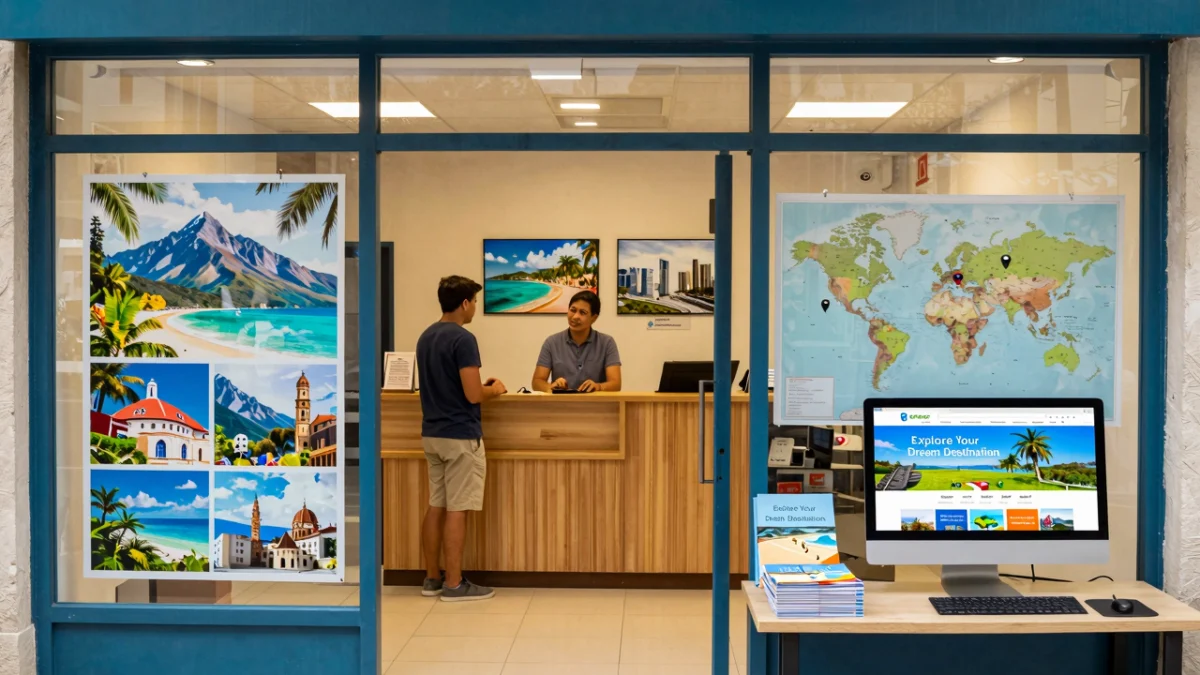
Dream Vacations exemplifies the home-based, lifestyle-centric franchise. As the travel industry rebounded following the pandemic, travel agencies saw a resurgence as consumers sought professional expertise to navigate complex international requirements. With an initial investment of $3,000 to $22,000, Dream Vacations allows owners to tap into a multi-billion dollar industry. The financial structure—low royalty fees and high commission splits—is tailored for individuals who want to work from a laptop while traveling or managing other obligations.
Youth Development and Sports
Soccer Shots addresses the increasing investment parents are making in early childhood development. Engaging children aged 2 to 8, this franchise has expanded to over 300 territories. The business model is inherently flexible; sessions are often held at parks, schools, or community centers, eliminating the need for dedicated facility costs. In 2023, Soccer Shots reported over 560,000 enrollments, signaling a robust market for structured youth physical activity.

Financial Analysis and Investment Realities
Prospective franchisees must navigate a complex financial landscape. While the "low-cost" label is a major draw, the total cost of ownership extends beyond the initial franchise fee.
Data from franchise disclosure documents (FDDs) indicates that a "part-time" designation does not always equate to "low effort." For example, a Chick-fil-A franchise requires only a $10,000 initial fee, but the selection process is among the most rigorous in the world, with an acceptance rate of less than 1%. Furthermore, Chick-fil-A is not a part-time opportunity; it requires hands-on, daily involvement.
In contrast, true part-time models like Healthier 4U Vending or Goosehead Insurance rely on passive or semi-passive structures. Goosehead Insurance allows owners to act as agents with access to dozens of carriers, leveraging a centralized corporate back-office to handle policy servicing. This allows the franchisee to focus solely on sales during their available hours.

Royalty structures also vary significantly. While some franchises charge a flat monthly fee, others, like JAN-PRO, take a percentage of gross revenue (typically around 10%). Dream Vacations utilizes a commission-sharing model (1.5% to 3%), which aligns the franchisor’s success directly with the franchisee’s sales performance.
Expert Perspectives and Industry Responses
Industry analysts suggest that the rise of part-time franchising is a response to the "burnout culture" of the modern workplace. "We are seeing a shift where people want to own their time as much as they want to own their business," says a leading consultant for the International Franchise Association (IFA). "The semi-absentee model is no longer a niche; it is becoming a standard offering for franchisors who want to attract high-quality talent that isn’t ready to quit their day job."
Franchisors have responded by "productizing" their support systems. Training programs that once required weeks of in-person attendance at a corporate headquarters have been replaced by modular, online learning management systems (LMS). This allows a part-time owner to complete their training during evenings or weekends, lowering the barrier to entry even further.

Broader Economic Impact and Implications
The growth of part-time franchising has significant implications for the broader economy. It facilitates "micro-entrepreneurship," allowing wealth creation in communities that might lack the capital for large-scale industrial or retail developments.
Furthermore, these franchises often serve as a "bridge" to full-time entrepreneurship. Many owners start with one unit or one territory on a part-time basis and, upon reaching a certain revenue milestone, transition to full-time ownership or expand into multi-unit ownership. This "crawl-walk-run" approach significantly mitigates the risk of business failure, as the owner does not have to abandon their primary income source until the franchise is proven profitable.
However, the model is not without risks. The "low-cost" entry can sometimes lead to undercapitalization. Experts warn that even a $5,000 franchise requires a "rainy day" fund for marketing and unforeseen operational costs. Additionally, the reliance on a franchisor’s system means that if the parent company suffers a brand crisis or financial instability, the individual franchisee—regardless of their local performance—may suffer.

Future Outlook: Technology and Personalization
As we look toward the end of the decade, the part-time franchise sector is expected to integrate more advanced artificial intelligence (AI) to further reduce the time commitment required from owners. AI-driven customer service bots, automated scheduling for service businesses, and predictive analytics for inventory management in vending franchises will likely become standard.
For the aspiring entrepreneur, the current market represents a unique window of opportunity. The diversity of options—from the high-tech simulators of The Back Nine to the community-focused fields of Soccer Shots—ensures that there is a model to fit almost any skill set. By conducting thorough due diligence, evaluating personal availability, and selecting a brand with a robust support structure, individuals can successfully navigate the transition from employee to business owner without sacrificing their existing lifestyle or financial security.
In conclusion, part-time franchises are not merely a compromise for those unable to commit to full-time business ownership; they are a strategic tool for modern wealth building, offering a path to autonomy that is both accessible and scalable in an increasingly flexible global economy.
