

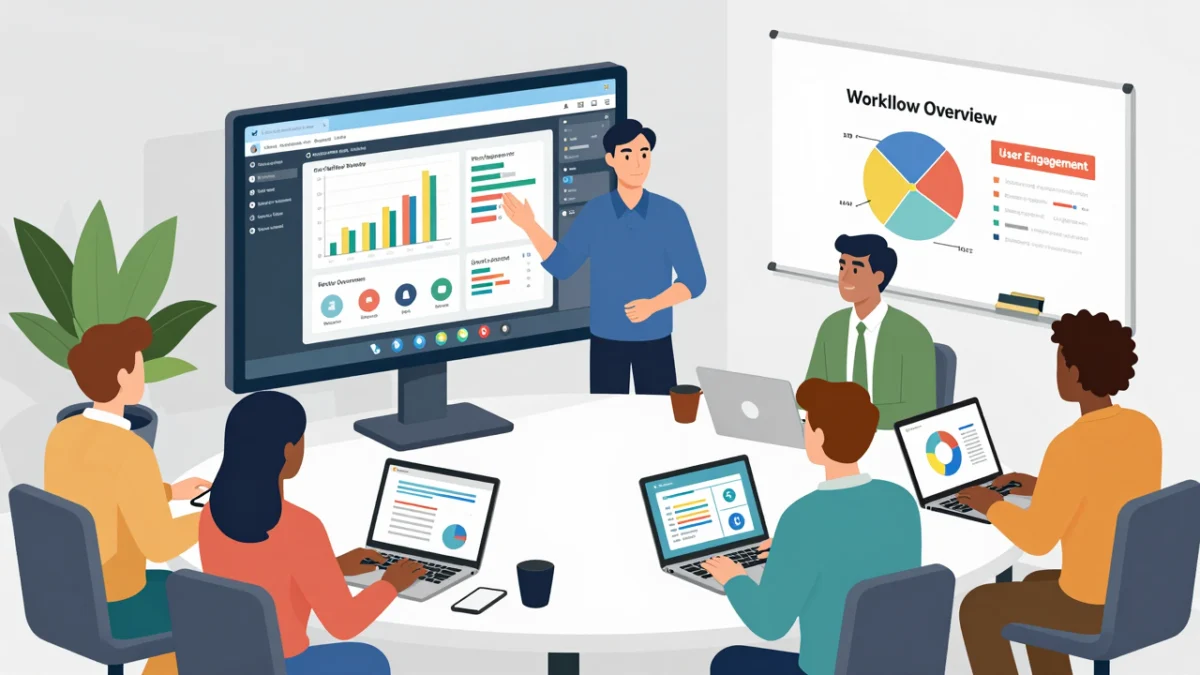
Strategies for Enhancing Software Demos and Driving User Conversion in the Evolving Digital Marketplace. In an era where the global Software-as-a-Service (SaaS) market is projected to exceed $232 billion by the end of 2024, the methods by which companies demonstrate their products have become a primary differentiator between market leaders and struggling startups. Industry data reveals that the traditional, static presentation is no longer sufficient to capture the attention of increasingly sophisticated B2B buyers. Instead, a multifaceted approach involving interactive elements, narrative-driven content, and rigorous follow-up protocols has emerged as the new standard for software sales and marketing.

The shift toward more engaging software demonstrations is driven by a fundamental change in buyer psychology. According to recent market research, approximately 63% of prospects indicate a preference for stories over feature-heavy presentations. This suggests that the "feature-dump" era of software sales—where a presenter simply lists technical specifications—is effectively over. Today’s successful demos are built on a foundation of relatability and practical application, with 94% of buyers reporting they are more likely to commit to a purchase after seeing software applied to real-world scenarios that mirror their own professional challenges.
The Evolution of the Software Demonstration Landscape
The historical trajectory of software demonstrations has moved from physical on-site installations to screen-sharing sessions, and finally to the current state of "interactive experiences." This evolution reflects broader trends in digital consumption, where users expect high-speed, high-engagement interactions. Analysts note that the integration of interactive elements such as live Q&As, real-time polling, and hands-on walkthroughs can increase audience engagement by as much as 70%.

For many organizations, the demo is the first "hands-on" touchpoint in the customer journey. Consequently, the effectiveness of this presentation directly impacts conversion rates. Data indicates that tailoring content to specific buyer personas—rather than using a generic script—can result in a 20% increase in overall demo effectiveness. This personalization requires sales teams to conduct extensive pre-demo research to identify the specific "pain points" of their audience, ensuring that every feature shown serves a direct purpose in solving a documented problem.
Chronology of a High-Impact Software Demo Cycle
To achieve maximum conversion, industry experts recommend a structured chronology that extends far beyond the actual presentation time. This cycle begins with the "Discovery Phase" and concludes with "Long-term Nurturing."

Phase 1: The Pre-Demo Discovery and Customization
Before the first slide is shown or the software is opened, sales engineers and account executives must define the objective. This involves identifying the decision-makers in the room and understanding their technical literacy. During this phase, teams develop the "narrative arc," which moves from the identification of a problem to the implementation of the software solution, and finally to the measurable outcome.
Phase 2: The Live Presentation and Real-Time Interaction
During the demo itself, the focus shifts to maintaining attention. Statistics show that visuals are processed by the human brain 60,000 times faster than text. Therefore, successful presenters minimize text-heavy slides and maximize live screen-sharing and infographics. The inclusion of live polls allows the presenter to gauge the audience’s interest in real-time and pivot the presentation toward the features that generate the most curiosity.

Phase 3: Immediate Technical Support and Q&A
A critical component of the live demo is the real-time Q&A session. This serves as an immediate problem-solving forum where technical hurdles can be cleared on the spot. By addressing concerns as they arise, companies build trust and demonstrate the reliability of their support teams.
Phase 4: The 24-Hour Follow-Up
The window for conversion closes rapidly after the demo ends. Standard industry practice now dictates a personalized follow-up within 24 hours. This follow-up usually includes a recording of the demo, additional resources tailored to the questions asked during the session, and clear next steps for the prospect.

Supporting Data: The Power of Visual and Social Proof
The efficacy of modern software demos is heavily supported by data regarding consumer behavior and cognitive processing. One of the most significant statistics in recent years is the impact of video testimonials. Industry reports suggest that video testimonials are 1,200% more shareable than text or images alone. When these are integrated into a software demo or a post-demo blog post, they provide "social proof" that acts as a powerful psychological trigger for buyers.
Furthermore, the importance of "visual learning" cannot be overstated. With 65% of the population identifying as visual learners, the use of infographics to simplify complex data structures is essential. Research shows that content featuring relevant visuals is 94% more likely to be viewed than text-only content. In the context of a software demo, this means using flowcharts to explain API integrations or interactive diagrams to show data migration paths.

Testimonials and case studies also play a vital role in establishing credibility. Since 79% of consumers trust online reviews as much as personal recommendations, featuring endorsements from recognizable brands within a demo can increase conversion rates by up to 34%. This "halo effect" from existing successful clients helps to mitigate the perceived risk for new buyers.
Official Responses and Industry Analysis
Market analysts from leading technology research firms suggest that the industry is moving toward a "Product-Led Growth" (PLG) model. In this model, the software itself serves as the primary driver of customer acquisition and expansion. Under PLG, the "demo" often takes the form of an interactive walkthrough or a "freemium" trial where the user learns by doing.

"The modern buyer wants to get into the product as quickly as possible," says one senior analyst at a major tech consultancy. "They don’t want to be talked at for an hour; they want to see how the software fits into their specific workflow. The companies that are winning today are those that treat the demo as a collaborative workshop rather than a lecture."
This sentiment is echoed by software developers who are increasingly building "demo modes" directly into their products. These modes allow sales teams to showcase the software with pre-loaded, realistic data sets that prevent the "empty state" problem—where a software looks useless because it hasn’t been populated with user data yet.

Broader Impact and Market Implications
The refinement of software demo strategies has broader implications for the tech industry at large, particularly regarding Customer Acquisition Cost (CAC) and Lifetime Value (LTV). By increasing the conversion rate at the demo stage, companies can significantly lower their CAC, allowing them to reinvest those funds into product development or broader marketing efforts.
Additionally, the rise of "gamified demos" is beginning to influence how training and onboarding are handled. By incorporating elements such as points, badges, and progression systems into the initial demonstration, companies are finding that users are more likely to retain information. This leads to higher user adoption rates post-purchase, which is a key metric for reducing "churn" (customer loss).

However, these advancements also bring challenges. As demos become more complex and interactive, the technical requirements for presenting them also increase. Issues such as internet latency during live screen-shares or security concerns regarding the use of real-world data in demos are ongoing topics of discussion among IT professionals. To combat this, many firms are turning to "cloned" environments or "synthetic data" to ensure a smooth, secure presentation.
Future Trends: AI and Virtual Reality in Demos
Looking ahead, the next frontier for software demonstrations appears to be the integration of Artificial Intelligence (AI) and Augmented Reality (AR). AI-driven "demo bots" are already being used to provide basic walkthroughs on websites, allowing human sales teams to focus on high-value prospects. Meanwhile, in sectors like industrial software or medical technology, AR is being used to overlay software interfaces onto physical equipment, providing a level of immersion that was previously impossible.

The trend toward "on-demand" demos is also accelerating. As buyers prefer to conduct their own research before ever speaking to a salesperson, providing high-quality, self-guided video tutorials and interactive sandboxes has become a necessity. These assets must be well-structured, ideally lasting between 5 to 10 minutes to maintain viewer attention and improve completion rates.
In conclusion, the transformation of the software demo from a simple presentation to a complex, interactive, and data-backed experience is a reflection of the competitive nature of the modern SaaS landscape. By prioritizing engagement, storytelling, and rigorous follow-up, software providers can not only capture the interest of potential clients but also build the trust necessary for long-term business partnerships. As technology continues to evolve, the ability to effectively demonstrate value through these various formats will remain a cornerstone of successful software commercialization.
