

Seventy years ago, in the summer of 1956, a seminal gathering took place at Dartmouth College. A group of pioneering scientists convened with a bold, almost audacious, proposition: that machines might one day possess cognitive abilities mirroring human thought processes. It was within this intellectual crucible that John McCarthy, a visionary mathematician and computer scientist, proposed a name for this nascent field of inquiry: "artificial intelligence" (AI). This term, intended to delineate a new frontier of technological endeavor, has since become deeply embedded in our lexicon, its ubiquity evidenced by the staggering approximately 7.42 million results generated by a simple search on Google Scholar. AI is no longer a niche academic pursuit; it is a pervasive force, understood, debated, and even decried by a global populace. Even those who express profound reservations about its implications rarely question the nomenclature itself.
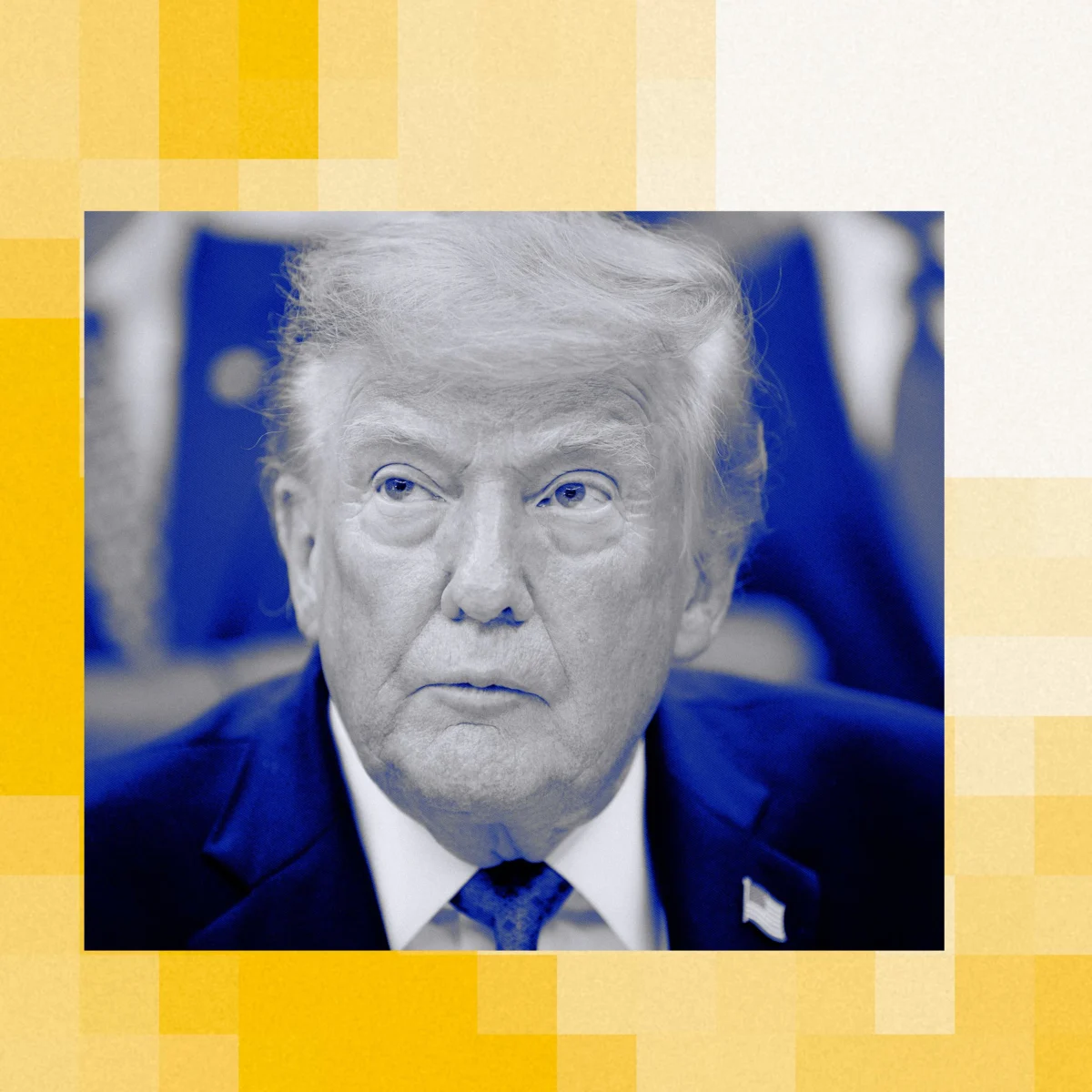
However, in a move that has sent ripples through the technology sector and beyond, former President Donald J. Trump has expressed a distinct aversion to the term "artificial intelligence." Known for his decisive pronouncements and penchant for rebranding, President Trump signaled his intention to alter the established terminology during a speech at the United Nations on September 23rd. Initially perceived by many as rhetorical flourish, this sentiment was solidified into official policy on a subsequent date, through an executive order issued from the White House. This directive, dated September 2026, declared that the term "artificial intelligence" was to be officially replaced within governmental discourse by "Super Intelligence." The implication was clear: the private sector, particularly the burgeoning AI industry, was expected to follow suit.
The immediate aftermath of this decree saw a remarkable, and for many, disconcerting, acquiescence from the leading figures in the artificial intelligence landscape. The titans of AI, individuals who command vast financial resources and intellectual capital, reportedly offered no public dissent when presented with the president’s mandate during a White House lunch. From this point forward, the industry leaders, who once proudly identified as pioneers of AI, were expected to embrace the designation of "lords of Super Intelligence."
This capitulation has been widely interpreted as a stark demonstration of presidential authority, a symbolic assertion of dominance over even the most powerful economic and technological forces in the nation. While the renaming of a field of study might appear superficial when contrasted with the profound ethical and societal challenges posed by advanced AI, for those deeply invested in its development, the term "artificial intelligence" represents more than just a label. It is the bedrock of their professional identity, the spark that ignited childhood fascinations with science fiction, and the driving force behind decades of innovation and corporate strategy. Their companies, their research, and their public discourse have, for years, been centered around the pursuit and promotion of AI.
The White House lunch, intended as a collaborative discussion on the future of AI, became instead a stage for what some observers have characterized as a loyalty test. Notably, prominent figures such as Jeff Bezos, Jensen Huang, Dario Amodei, Mark Zuckerberg, Sundar Pichai, Greg Brockman, Alex Karp, and Elon Musk were reportedly present. The absence of any voiced opposition to the president’s proposal has drawn sharp criticism, particularly from commentators like Jacob Weisberg, author of "Profiles in Cowardice: A Study of Collaboration in the Trump Era." Weisberg posits that such instances represent a classic Trumpian maneuver, designed to gauge the willingness of influential individuals to compromise their principles and public stance to appease the president and avoid his displeasure. He argues that collective resistance, even on a seemingly minor issue like terminology, could have presented a united front and potentially altered the outcome.
In the absence of such collective action, the president was able to publicly assert that these esteemed leaders had, in essence, endorsed his rebranding initiative. Following the lunch, during a press briefing, he remarked that the term had been "changed by the biggest, the, smartest, the greatest people anywhere in the world." This claim, however, stands in stark contrast to any prior public discourse from these industry leaders regarding a desire to abandon the term "artificial intelligence."
Investigative efforts, including inquiries directed at major AI stakeholders such as Google, Microsoft, Anthropic, Meta, Amazon, OpenAI, and xAI, seeking clarification on their adherence to the new nomenclature and potential changes to their corporate identities and product branding, have thus far yielded no public responses. While some executives, like Microsoft CEO Satya Nadella, have previously expressed a preference for alternative terminology, such as "different intelligence," this has not prevented them from continuing to utilize the established term "AI" in their ongoing work and communications. Similarly, Mark Zuckerberg’s establishment of a "Superintelligence Lab" does not negate Meta’s continued promotion of its "Meta AI" products and "AI glasses."
It is a prevailing sentiment that these companies will likely implement the minimum necessary changes to comply with the presidential directive, while simultaneously hoping that the political landscape shifts to render the mandate obsolete. Some have suggested that a rebranding might even be welcomed by executives, viewing it as an opportunity to distance themselves from the increasingly negative connotations associated with the term "AI." However, this interpretation is met with skepticism, particularly given that the president’s proposed replacement, "Super Intelligence," carries a far more potent and potentially alarming connotation than the original term.
From a purely scientific and philosophical standpoint, the proposed nomenclature shift is problematic. Nick Bostrom, a philosopher renowned for popularizing the term "superintelligence" in his eponymous book, has expressed bewilderment at the presidential decree. Bostrom clarifies that "Superintelligence" historically refers to systems that vastly exceed the cognitive capabilities of the most advanced human intellects. He emphasizes that "AI," in contrast, encompasses a much broader spectrum of systems, including rudimentary applications like spam filters, spell checkers, and early chess programs, which do not necessarily exhibit superintelligent traits. Applying the term "superintelligent" to these less advanced systems, he notes, would be incongruous.
The president’s rationale for demanding this change, beyond the assertion of presidential prerogative, appears to stem from a personal interpretation of the word "artificial." In his UN address, he stated that "the word ‘artificial’ makes intelligence fake. And it is not fake." This sentiment was reiterated after the White House lunch, where he described "artificial intelligence" as "a fake word, it’s not good, an inappropriate term." This equation of "artificial" with "fake" resonates with a broader pattern observed in his administration’s approach to information, particularly concerning news organizations perceived as critical.
However, this linguistic leap fails to align with the historical context of the term. John McCarthy, in 1956, employed "artificial" precisely to draw a distinction between human-generated intelligence and the emergent capabilities of machines. The challenge with AI today is not that its output is perceived as inherently fake, but rather that its sophistication has reached a point where distinguishing it from human intelligence can be exceedingly difficult. This raises the critical need for regulatory frameworks that mandate clear labeling and watermarking of AI-generated content, a measure that the current administration has appeared reluctant to embrace.
As Weisberg observes, President Trump’s issuance of such an unconventional edict is consistent with his established modus operandi. What is more concerning, however, is the apparent lack of principled opposition from the industry leaders who were directly impacted. While they may have secured concessions on the broader issue of AI regulation, their acquiescence on the renaming initiative has been seen as a significant erosion of their public and professional integrity.
The failure to defend the fundamental right to accurately describe a field of study as "artificial intelligence" is particularly troubling. This is especially true in light of actions such as those taken by California Governor Gavin Newsom, who, in a move seen as a direct counter to Trump’s directive, issued his own executive order affirming the continued use of the term "artificial intelligence." The efficacy of voluntary standards in AI regulation, which the industry leaders reportedly favored over stricter oversight, hinges on a willingness to prioritize safety and ethical considerations, even when they conflict with financial incentives and competitive pressures. Entrusting the development of robust self-regulatory frameworks to a cohort of technologically unschooled executives who readily abandoned a foundational term central to their work and livelihoods, solely to avoid presidential censure, casts significant doubt on their capacity for independent and responsible governance. The term "artificial intelligence" is not fake; the abdication of principle in its defense is what is truly concerning.
This article is an edition of Steven Levy’s and Lauren Goode’s Backchannel newsletter. Read previous newsletters here.
