

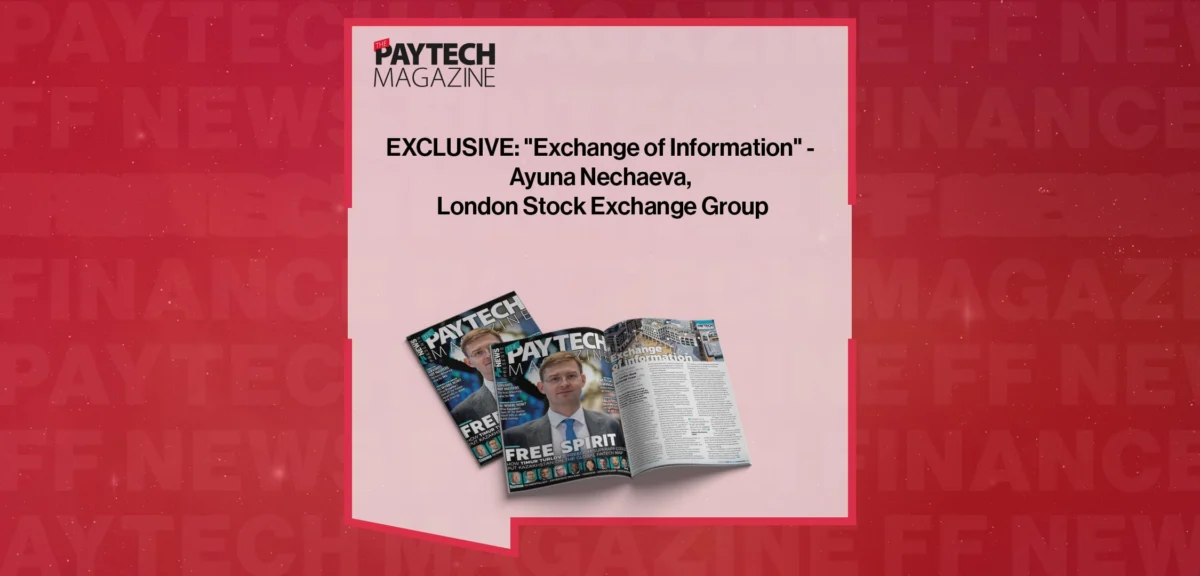
The London Stock Exchange Group (LSEG) is strategically positioning itself at the nexus of traditional capital markets and the burgeoning digital economy, identifying data as its most invaluable commodity. This fundamental shift is complemented by an innovative approach to engaging founders, particularly through the recently launched Private Securities Market (PSM), designed to nurture future public listings while simultaneously leveraging artificial intelligence (AI) to expand its vast data services empire. This dual strategy underscores LSEG’s ambition to solidify London’s position as a global financial hub and a leader in financial technology.
The Genesis of the Private Securities Market (PSM)
March marked a significant milestone for LSEG with the commencement of trading on its new Private Securities Market (PSM). This innovative platform, however, does not facilitate direct trading of private company shares. Instead, it introduces an intermediary vehicle: the Tradable Private Equity Investment Company (TPEIC), colloquially known as a "T-pick." The inaugural transaction on the PSM saw a TPEIC offering secondary shares in Oxford Science Enterprises, a prominent entity dedicated to identifying, funding, and scaling technology spin-offs from Oxford University.
This new market operates within the framework of the Private Intermittent Securities and Capital Exchange System (PISCES), an initiative launched by the Financial Conduct Authority (FCA) in the preceding year. PISCES was conceived to inject liquidity into the private markets, offering a regulated and transparent environment for investors – specifically founders, employees, and certain institutional investors, but not the general public – to buy and sell holdings in companies that are not publicly listed. The auctions on platforms like the PSM are meticulously regulated, ensuring transparency and occurring within predefined, limited trading windows.
Strategic Imperatives Behind PSM
At first glance, it might appear counterintuitive for a primary exchange like the LSE to involve itself in a system that could, theoretically, offer founders a profitable exit route without the need for a full Initial Public Offering (IPO). However, Ayuna Nechaeva, Head of Europe, Primary Markets for the London Stock Exchange Group, articulates a compelling strategic rationale. In the fiercely competitive global landscape for capital market listings, early engagement with burgeoning companies is paramount.
Nechaeva emphasizes that the LSE’s involvement in the private market ecosystem is a proactive measure to cultivate relationships with founders and company boards long before they contemplate an IPO. "We go proactively to founders and CEOs because we have read about them in the press, or investment banks have mentioned them to us," Nechaeva explains. "The reason they come to us is because they want to understand in simple terms what’s involved [in an IPO]." This early interaction extends beyond mere technicalities, delving into crucial aspects such as corporate governance, the fundamental shift in mindset required to transition from a private to a public setting, and the evolving role of a CEO in a publicly listed entity.
This pre-IPO mentorship is critical in demystifying the listing process and building trust. Nechaeva also addresses a common misconception: "There is a misconception that private equity is easier than an IPO. But it’s worth remembering that private equity can take months to pay down, whereas, with an IPO, liquidity is much faster – within three days from deposit to paying." This highlights a significant advantage of public markets that LSEG aims to communicate effectively to potential issuers. By providing a clear pathway and demonstrating the benefits of public liquidity, LSEG aims to ensure that when these companies are ready to list, London is their preferred destination.
The design of the PSM, by exclusively trading secondary shares, is a deliberate strategy to avoid cannibalizing the LSE’s primary listing flow. This distinction is crucial, particularly in a period where London has faced challenges in attracting new IPOs, with listing numbers trending downwards for several years. However, recent data has shown promising signs, with the last quarter of 2025 witnessing a positive updraft in London IPOs. This resurgence was so pronounced that the LSE reportedly ran out of celebration confetti, a tangible indicator of renewed activity. Furthermore, the FTSE 100 has demonstrated robust performance, outperforming the S&P 500 in 2026, and the metrics look even more favorable when excluding the dominant US big-tech companies. This suggests a broader strengthening of confidence in the London market, which the PSM aims to further reinforce by creating a robust pipeline.
LSEG’s Data Dominance and AI-Driven Expansion
Beyond cultivating future listings, LSEG’s long-term growth story is inextricably linked to its position as a global leader in financial market data and analytics, a sector undergoing rapid transformation driven by artificial intelligence. Following a strong set of 2025 results, LSEG CEO David Schwimmer reiterated in February that the LSE remains a core component of the Group’s future, primarily due to its pivotal role in delivering the "LSEG Everywhere" data strategy.
The "LSEG Everywhere" strategy is an ambitious initiative focused on making the company’s extensive proprietary and historical data not merely accessible, but seamlessly integrated directly into client workflows. This involves strategic partnerships with leading data platforms and AI innovators. For instance, LSEG’s collaboration with Snowflake allows customers direct access to its market data and analytics, a partnership that commenced in October of the preceding year. This integration facilitates more efficient data warehousing and analysis for financial institutions.
Around the same period, LSEG announced a significant partnership with Microsoft. This collaboration enables the creation of sophisticated agents within Microsoft Copilot Studio, which can then be deployed across Microsoft 365 applications, enriched with LSEG data. This development signifies a move towards embedding real-time, comprehensive financial intelligence directly into daily productivity tools, enhancing decision-making for a vast user base.
The impact of AI on LSEG’s data services division is profound. Partnerships with leading AI research companies such as Anthropic and OpenAI are driving a significant uptick in subscribers to LSEG’s data services. This division, boasting revenues of £4 billion, constitutes by far the largest share of the Group’s income, underscoring the criticality of its data strategy. Schwimmer highlighted the burgeoning demand, stating, "We are seeing very strong demand for our data through new AI distribution channels… channels for which you have to have a direct licence with LSEG. We see the AI capabilities and partnerships as an expansion of our addressable market." This indicates not just an enhancement of existing services but a genuine expansion into new customer segments and use cases.
Oli Bage, Head of Architecture, Data and Analytics at LSEG, anticipates further partnerships in 2026 as the Group continues to identify and develop new use cases for its proprietary market intelligence. LSEG’s internal AI research team plays a crucial role in this innovation, collaborating closely with startups to pinpoint technologies that can better serve customers and their end-users. Bage notes, "we enjoy onboarding those new products and innovations to the market," emphasizing a dynamic, forward-looking approach to technological integration.
A key technological focus for LSEG is the development of natural language processing (NLP) capabilities. The company is investing significantly in a "natural language experience," intentionally using voice-only interfaces. This is being piloted in customer services for its vast client base of 45,000 customers, which represents a substantial portion of the UK financial services sector. This innovation aims to streamline interactions, improve efficiency, and enhance the user experience by making complex financial data and services more accessible through intuitive voice commands.
Broader Impact and Strategic Implications
LSEG’s dual strategy carries significant implications for London’s financial ecosystem and the broader global financial markets. The PSM, under the PISCES framework, is a direct response to a global trend where companies are staying private for longer, delaying or even foregoing traditional IPOs. By offering a regulated secondary market, London aims to provide a competitive alternative to other major financial centers that are also exploring ways to support private capital formation and liquidity. This initiative could help retain high-growth companies and talent within the UK, providing early investors and employees with liquidity options without forcing a premature public listing. It positions London as a more holistic capital market, catering to companies at various stages of their growth trajectory.
From a regulatory perspective, the FCA’s introduction of PISCES reflects a concerted effort to adapt to evolving market structures and support innovation while maintaining market integrity and investor protection. The framework’s emphasis on regulated auctions and limited trading windows aims to balance liquidity provision with the inherent risks associated with private market transactions.
The aggressive expansion of LSEG’s data and analytics capabilities through AI partnerships reinforces its role as a critical infrastructure provider for the global financial industry. As financial institutions increasingly rely on sophisticated algorithms for trading, risk management, compliance, and personalized client services, access to high-quality, reliable, and integrated data becomes paramount. LSEG’s strategy to embed its data directly into client workflows via platforms like Snowflake and Microsoft, and to power advanced AI models through collaborations with Anthropic and OpenAI, ensures its continued relevance and competitive edge. This positions LSEG not just as an exchange, but as a crucial data intelligence hub, driving innovation across the financial sector.
The financial performance of LSEG, particularly the robust growth in its data services division, validates this strategic focus. With £4 billion in revenue, this segment is a powerhouse, providing the capital and impetus for further investment in technology and partnerships. The company’s proactive stance on AI is not merely about adopting new technologies but about fundamentally expanding its market reach and creating new revenue streams in a rapidly evolving digital landscape.
In conclusion, the London Stock Exchange Group is executing a sophisticated, multi-pronged strategy to secure its future relevance and growth. By innovatively engaging with founders through the Private Securities Market to cultivate a pipeline for future IPOs, and by aggressively expanding its data services through cutting-edge AI partnerships, LSEG is demonstrating a profound understanding of the evolving dynamics of global capital markets. This proactive approach, blending traditional exchange functions with advanced technological integration, positions LSEG at the forefront of financial innovation, reinforcing London’s enduring role as a pivotal financial center in the 21st century.
