

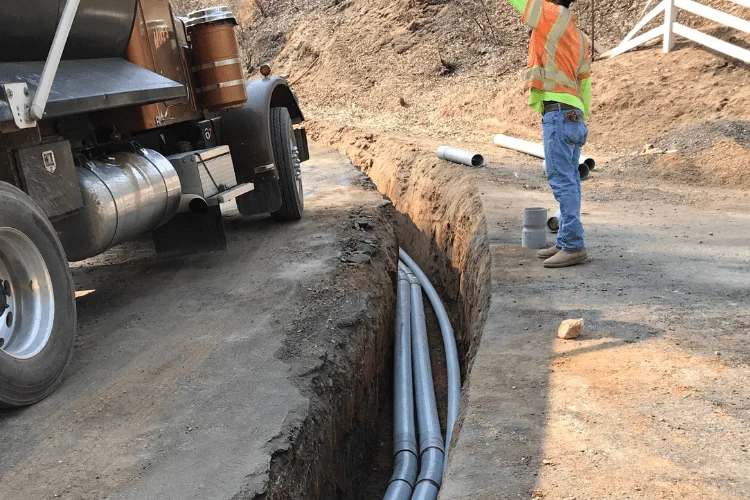
As the Atlantic hurricane season draws to a close and the threat of catastrophic wildfires remains a year-round concern in the West, a fundamental question persists among residents and policymakers alike: Why are power lines still suspended in the air? The visual of sagging wires, snapped poles, and spark-induced blazes has become a hallmark of extreme weather events, leading to a national debate over the feasibility of burying the electrical grid. While the benefits of undergrounding—ranging from storm resilience to wildfire prevention—are scientifically and operationally significant, the transition remains a complex balancing act between public safety and the economic burden placed on ratepayers.
Undergrounding high-voltage lines offers a suite of advantages that address the primary vulnerabilities of the traditional overhead grid. By placing distribution and transmission lines beneath the surface, utilities can effectively eliminate the risk posed by trees and vegetation, which are responsible for the vast majority of overhead disruptions. Furthermore, underground assets are shielded from the direct impacts of severe weather, including high-velocity winds, lightning strikes, and ice accumulation. In arid regions, the shift is even more critical; undergrounding is considered a definitive method for preventing wildfires caused by equipment failure or "line slap" during high-wind events. However, despite these clear advantages, the logistical and financial hurdles remain steep, forcing a nuanced discussion on the future of American energy infrastructure.
Strategic Shifts in Utility Management: The PG&E 10-Year Plan
In early October 2023, the Pacific Gas and Electric Company (PG&E) signaled a massive strategic shift by filing a proposed 10-Year Electrical Undergrounding Plan (EUP) with the California Office of Energy Infrastructure Safety. This plan represents one of the most ambitious infrastructure overhauls in the history of American utilities, outlining a risk-based strategy to enhance safety across Northern and Central California—regions that have been ravaged by wildfires over the past decade.
The PG&E proposal aims to bury approximately 5,000 miles of electric distribution lines between 2028 and 2037. The utility’s data suggests that in high-fire-threat districts, undergrounding can reduce ignition risk by nearly 98% and improve overall reliability by reducing outages by 90%. PG&E estimates that the $11.4 billion investment will yield $117 billion in long-term societal benefits, including a $6 billion reduction in costs related to vegetation management, operations, and maintenance over the lifespan of the assets.

"Placing powerlines underground provides the most effective way to reduce wildfire risk and enhance reliability for customers within High Fire-Threat Districts," stated Peter Kenny, PG&E’s Chief Delivery Officer. The utility has already made strides in efficiency, reporting a 25% reduction in undergrounding costs per mile over the last few years through the use of advanced data analytics and refined construction techniques. By targeting areas where the risk-to-benefit ratio is highest, PG&E hopes to provide a blueprint for large-scale grid hardening.
Resilience in the Gulf: CenterPoint Energy’s Houston Initiative
While California focuses on wildfire mitigation, the Gulf Coast is prioritizing storm resilience. CenterPoint Energy recently reached a significant milestone in its Greater Houston Resiliency Initiative (GHRI). Following a series of devastating storms, the utility has hardened more than 500 miles of power lines across the Greater Houston area and remains on track to reach a goal of 750 miles by the end of 2026.
The GHRI is a multifaceted approach to grid stability. In addition to undergrounding over 850 miles of lines, the initiative includes the installation of 75,000 high-strength poles and 750 automation devices designed to isolate outages and restore power more quickly. CenterPoint’s efforts reflect a growing trend among coastal utilities to move beyond reactive repairs toward proactive "hardening," which involves upgrading transformers, wires, and poles to withstand hurricane-force winds. The financial impact on customers is designed to be gradual, with an estimated $1 monthly increase this year, potentially rising to $4 per month by 2028 to cover the $2.9 billion project cost.
The Economic Barrier: Analyzing the Cost Per Mile
The primary deterrent to universal undergrounding is the staggering cost, which varies dramatically based on geography, population density, and the type of line being buried. According to a recent report from the U.S. Department of Energy (DOE), undergrounding transmission lines—the high-voltage arteries of the grid—is significantly more expensive than undergrounding distribution lines—the smaller wires that deliver power to homes.
New construction for underground transmission is estimated to be three to ten times more expensive than overhead alternatives. For existing lines, the conversion process can cost between 1.5 and five times as much as maintaining overhead infrastructure. The data provided by various utilities illustrates this disparity:

- PG&E: Averages $2.97 million per mile for distribution undergrounding in a mix of urban and rural settings.
- CenterPoint Energy: Estimates approximately $7 million per mile for its specific Houston-area resiliency projects.
- Wisconsin Public Service Corporation: Managed to bury rural distribution lines for as little as $160,000 per mile, highlighting the cost efficiency of working in soft soil without urban obstacles.
- California Major Utilities (PG&E, SCE, SDG&E): Report that converting existing overhead transmission to underground can range from $6 million to a staggering $100 million per mile.
The California Public Utilities Commission (CPUC) provided a sobering look at the cost of total conversion. To bury all 147,000 miles of overhead distribution lines in the state, ratepayers would need to shoulder a bill of approximately $559 billion. Adding the state’s 34,000 miles of overhead transmission lines would require an additional $204 billion. These figures demonstrate why utilities must be selective, using risk-modeling software to identify "high-value" miles where the threat of disaster justifies the capital expenditure.
Ratepayer Sentiment and the "Willingness to Pay"
The success of any undergrounding initiative depends heavily on public and regulatory support, as the costs are almost exclusively recovered through customer bill increases. Research indicates that a ratepayer’s willingness to pay is often tied to their proximity to recent trauma. A 2024 study published in Energy Policy found that support for climate adaptation costs, such as burying power lines, increases significantly if the customer has experienced frequent outages in the prior 12 months or if property damage occurred within a 200-mile radius.
However, the framing of these projects is critical. Interestingly, the same study found that when undergrounding is framed as a necessary component of "decarbonization" or "electrification," public support actually declines. Customers tend to view undergrounding as a reliability and safety issue rather than a climate policy tool.
Historical data from the Edison Electric Institute (EEI) suggests a ceiling for this support. A 2012 poll found that 60% of customers were willing to pay up to 10% more on their monthly bills for undergrounding. That support dropped sharply as the price increased; only 11% were willing to pay a 20% premium, and fewer than 10% would support a 100% increase. This sentiment was validated by a North Carolina Utilities Commission study, which found that burying every line in the state would increase bills by 125%, a move deemed "economically unfeasible" by state regulators.
Alternative Models: The Anaheim Approach
One potential solution to the cost-shock of undergrounding is the "slow and steady" model adopted by the city of Anaheim, California. Since the 1990s, the city has been engaged in a 50-year plan to bury every overhead line in its system. The project is funded by a consistent 4% surcharge on customer bills, generating roughly $15 million per year.

By spreading the project over half a century, Anaheim has avoided the "PR catastrophe" of sudden, massive rate hikes. However, this approach highlights a different dilemma: the trade-off between affordability and urgency. While Anaheim’s ratepayers are protected from price spikes, they must wait decades for the full benefits of a resilient, underground grid. In an era where extreme weather events are increasing in frequency and intensity, many communities may not have the luxury of a 50-year timeline.
Broader Implications and Technical Challenges
Beyond the financial and social hurdles, undergrounding presents unique technical challenges that utilities must manage. While underground lines are protected from the elements, they are more difficult and time-consuming to repair when a failure does occur. Locating a fault in a buried cable requires specialized equipment, and repairing it often involves excavation, which is significantly slower than sending a bucket truck to fix an overhead wire.
Furthermore, heat dissipation is a concern for underground cables. Soil acts as an insulator, and high-voltage lines can overheat if not properly managed, potentially leading to a shorter lifespan for the equipment. Advocacy groups like Underground Arizona argue that these concerns are overblown, suggesting that underground assets can actually last two to three times longer than overhead lines and are three to seven times cheaper to maintain over their lifecycle because they are not exposed to the corrosive effects of wind, rain, and UV radiation.
Conclusion: A Data-Driven Future
The transition toward an underground grid is no longer a question of "if," but "where" and "how fast." As utilities like PG&E and CenterPoint move forward with multi-billion dollar plans, the focus has shifted toward precision. Advanced risk modeling, satellite imagery, and machine learning are now used to identify the specific miles of conductor that pose the greatest risk to human life and grid stability.
For the average consumer, the reality remains that a more resilient grid will come at a higher monthly cost. The challenge for regulators in the coming decade will be to ensure that utilities are operating efficiently and that the burden of these essential upgrades is distributed fairly across the population. As the climate continues to shift, the cost of doing nothing—measured in wildfire liabilities and prolonged storm outages—may eventually surpass the high price of putting the grid where it arguably belongs: safely beneath the earth.
