

The Swedish marine energy developer Minesto has officially entered into a Memorandum of Understanding (MOU) with Morteza Capital, a prominent investment manager and project developer, to explore and establish commercial tidal energy operations across the Maldives. This strategic alliance marks a significant milestone in the Indian Ocean nation’s pursuit of energy independence, aiming to integrate Minesto’s proprietary "Dragon Class" tidal kite technology into the local grid. By combining Minesto’s advanced subsea flight technology with Morteza Capital’s deep-seated regional expertise and investment capabilities, the partnership seeks to address the unique geographical and economic challenges faced by the archipelago. The collaboration is designed to provide a continuous, predictable source of renewable power that complements the country’s existing solar initiatives while significantly reducing its heavy reliance on imported fossil fuels.
The Technological Vanguard: Minesto’s Dragon Class Kites
At the heart of this agreement is Minesto’s unique approach to ocean energy. Unlike traditional tidal turbines, which resemble underwater wind turbines and require high-velocity currents to be commercially viable, Minesto’s Dragon Class technology utilizes a wing-based system. These subsea kites are tethered to the seafloor and "fly" in an 8-shaped pattern within the water column. This motion accelerates the water flow through a turbine attached to the kite, allowing the system to generate electricity from low-velocity tidal streams and ocean currents that other technologies cannot efficiently harness.
The Dragon Class kites are designed for modularity and scalability. The "Dragon 4" model, for instance, features a 4-meter wingspan and a rated power of 100kW, making it ideal for smaller island grids or remote coastal communities. For larger utility-scale applications, the "Dragon 12" offers a 12-meter wingspan and a 1.2MW capacity. In the context of the Maldives, where islands are small and dispersed, the ability to deploy smaller, modular units that do not interfere with the aesthetic beauty of the horizon is a critical advantage. Because the infrastructure is entirely submerged, it preserves the scenic vistas that are essential to the Maldives’ multi-billion-dollar tourism industry.
The Maldives Energy Landscape: A Case for Transition
The Maldives, an archipelago of nearly 1,200 islands, currently faces one of the most complex energy transitions in the world. For decades, the nation has relied almost exclusively on imported diesel to power its generators. This dependency has created a dual crisis: economic and environmental. Economically, the cost of electricity in the Maldives is among the highest in the region, largely due to the logistical expenses of transporting fuel to remote atolls and the volatility of global oil prices. Environmentally, the carbon footprint of diesel generation is at odds with the nation’s status as one of the most climate-vulnerable countries on Earth.
The Maldivian government has set an ambitious target to achieve Net Zero emissions by 2030. While solar energy has seen significant uptake, it faces limitations due to the scarcity of available land and the intermittent nature of sunlight. Tidal energy offers a compelling solution to these constraints. Unlike wind or solar, tides are 100% predictable, providing a stable "baseload" of energy that can be integrated into the grid with greater precision. Furthermore, the deep channels between the Maldivian atolls provide a consistent flow of water, creating an ideal environment for Minesto’s low-flow technology.
Strategic Synergy: The Roles of Minesto and Morteza Capital
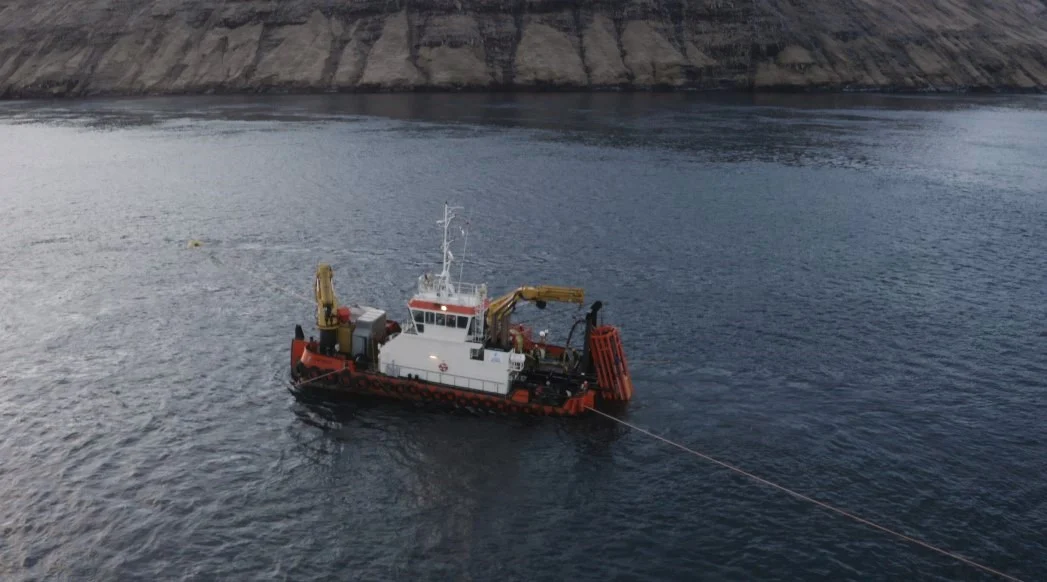
The partnership is structured to leverage the specific strengths of both entities. Minesto provides the technical "know-how," including the hardware, subsea engineering, and data analytics required to monitor and optimize kite performance. The company’s experience in the Faroe Islands, where it has successfully delivered power to the national grid, provides a proven blueprint for island-based tidal deployments.
Morteza Capital, conversely, serves as the regional anchor. As a specialist investment and project development firm with a focus on hospitality and infrastructure in the Maldives, Morteza brings a sophisticated understanding of the local regulatory environment, stakeholder management, and project financing. Their involvement is crucial for navigating the complexities of Maldivian land (and sea) rights, environmental impact assessments, and the structuring of Power Purchase Agreements (PPAs) with local utilities.
Ghaly Murthala, Managing Director of Morteza Capital, emphasized that the collaboration is about more than just technology; it is about creating a commercially viable pathway for a new asset class in the region. By combining proven Swedish engineering with local investment expertise, the partnership aims to de-risk tidal projects for institutional investors, thereby accelerating the deployment of renewable infrastructure.
Chronology of Development and Funding Support
The move into the Maldives is not an isolated event but the result of several years of strategic planning and technical validation.
- 2020-2022: Minesto successfully demonstrated its Dragon Class technology in the Faroe Islands, proving that subsea kites could survive harsh North Atlantic conditions and provide steady power to a commercial grid.
- Early 2023: Minesto began identifying global markets with low-flow current profiles and high electricity costs, identifying the Maldives as a primary target for expansion.
- Late 2023: The Nordic Project Fund (Nopef), an organization managed by the Nordic Environment Finance Corporation (NEFCO), awarded funding to Minesto to support market development activities in the Maldives. This grant was instrumental in facilitating the feasibility studies and stakeholder engagements that led to the MOU.
- Current Phase: With the MOU signed, the partners are now transitioning into the site-selection phase. This involves mapping the bathymetry and current speeds of various channels within the Maldives to identify the most productive locations for a pilot installation.
Environmental Stewardship and the Blue Economy
One of the primary concerns for any infrastructure project in the Maldives is the protection of its fragile coral reef ecosystems. Traditional offshore construction can be invasive, potentially damaging the very natural resources that sustain the local economy. Minesto’s technology is touted as "low-impact" because the kites operate deep enough to avoid surface traffic and do not require large-scale concrete foundations that disrupt the seabed.
The partnership aligns with the broader concept of the "Blue Economy"—the sustainable use of ocean resources for economic growth while preserving the health of the ocean ecosystem. For the Maldives, transitioning to tidal energy is an act of survival. As sea levels rise, the country’s commitment to renewable energy serves as a global call to action. By adopting tidal power, the Maldives can demonstrate that even the most geographically challenged nations can lead the way in carbon reduction.
Economic Implications and Energy Security
The economic impact of a successful tidal energy rollout in the Maldives could be transformative. Currently, a significant portion of the national budget is diverted toward fuel subsidies to keep electricity affordable for citizens and the tourism sector. By shifting to a domestic, renewable source of power, the government can reclaim these funds for public services and climate adaptation projects.
Furthermore, tidal energy provides a level of energy security that diesel cannot. As a domestic resource, tidal power is immune to the geopolitical shocks that often disrupt global oil supplies. For a nation located in the middle of the Indian Ocean, the ability to generate power from the surrounding waters provides a strategic advantage that enhances national resilience.
Analysis of Broader Impacts and Global Scalability
The collaboration between Minesto and Morteza Capital is being closely watched by other Small Island Developing States (SIDS). From the Caribbean to the Pacific, island nations share similar challenges: high energy costs, limited land, and a desperate need to decarbonize. If the Minesto-Morteza model succeeds in the Maldives, it could serve as a global benchmark for how subsea kite technology can be financed and deployed in island environments.
Industry analysts suggest that the success of this venture will depend on two main factors: the "Levelized Cost of Energy" (LCOE) and the durability of the equipment in tropical waters. While Minesto has proven its technology in the cold, dense waters of the North Atlantic, the Maldives presents a different set of challenges, including biofouling (the growth of marine organisms on the kites) and different salinity levels. However, the modular nature of the Dragon Class system allows for easier maintenance and recovery, which may mitigate these operational risks.
Conclusion and Future Outlook
The signing of the MOU between Minesto and Morteza Capital represents a bold step toward a sustainable future for the Maldives. It moves the conversation beyond theoretical possibilities into the realm of commercial application. As the partners move forward with site assessments and environmental permitting, the goal remains clear: to harness the relentless power of the ocean to light up the islands without tarnish to their natural splendor.
The support from the Nordic Project Fund underscores the international significance of this project, highlighting a growing trend of "green diplomacy" where Nordic technology helps vulnerable nations meet their climate goals. For Minesto, the Maldives is a gateway to the Indian Ocean market; for Morteza Capital, it is an opportunity to lead a new era of sustainable investment; and for the Maldives, it is a vital lifeline in the race against climate change. The coming years will be decisive as the first "dragons" take flight beneath the turquoise waters of the atolls, potentially changing the face of island energy forever.
