

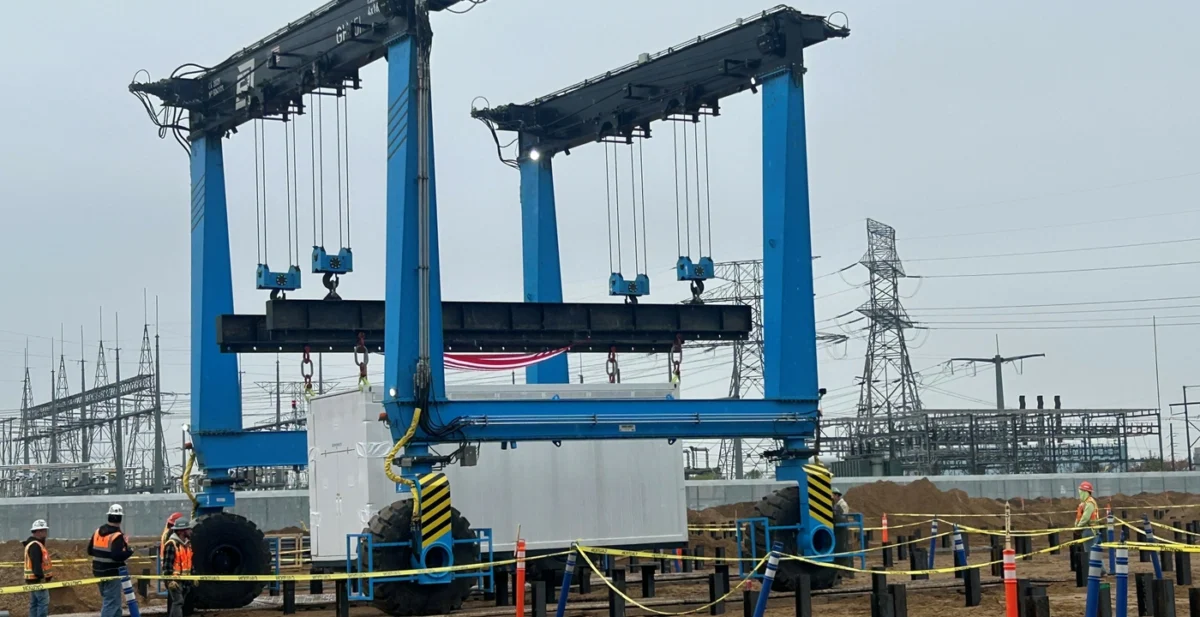
The landscape of the Upper Midwest energy grid marked a significant milestone this week as Xcel Energy announced the arrival of the first battery units at its Blue Lake battery storage site in Shakopee, Minnesota. This delivery represents a tangible step forward in the utility’s ambitious strategy to construct the largest battery energy storage portfolio in the region, a move designed to stabilize the power grid as the state transitions toward a carbon-free future. The Blue Lake project is the vanguard of a broader initiative that will see Xcel Energy operating more than 735 megawatts (MW) of battery storage capacity in Minnesota by the end of 2027.
The arrival of these units signals the transition from the planning and permitting phases to the active construction of a facility that will fundamentally alter how electricity is managed in the region. For decades, the electrical grid operated on a "just-in-time" delivery model, where generation had to perfectly match consumption in real-time. The introduction of large-scale Battery Energy Storage Systems (BESS) allows for the decoupling of generation and consumption, providing a buffer that enhances reliability and integrates intermittent renewable sources like wind and solar more effectively.
Project Specifications and Technical Infrastructure
The Blue Lake Battery Energy Storage System is designed as a 135.5 MW facility. Upon completion, the site will house 132 individual battery units, each engineered to store electricity generated from a diverse array of resources across Xcel Energy’s Upper Midwest system. This includes energy harvested from wind farms, solar arrays, nuclear plants, and natural gas facilities.
A critical technical feature of the Blue Lake project is its four-hour discharge duration. This means the facility can deliver its full capacity of electricity to the grid for up to four consecutive hours during periods of peak demand or when renewable generation is low. This four-hour window is often cited by grid operators as the "sweet spot" for managing evening peaks, which typically occur when solar production drops off as the sun sets while residential energy demand spikes as people return home.
By utilizing existing infrastructure at the Blue Lake site—a location that has long served as a hub for energy generation—Xcel Energy is able to minimize the environmental footprint of the new installation. Leveraging existing transmission lines and substations not only reduces capital costs but also accelerates the timeline for bringing the storage capacity online, as it avoids the lengthy process of permitting new transmission corridors.
Chronology of Xcel Energy’s Storage Expansion
The path to the Blue Lake delivery began several years ago as Xcel Energy sought to align its resource planning with Minnesota’s evolving energy mandates. The timeline for the utility’s storage rollout reflects a rapid acceleration of technology adoption:
- 2021–2022: Xcel Energy identifies the need for significant storage capacity in its Integrated Resource Plan (IRP) to compensate for the scheduled retirement of several coal-fired units.
- 2023: The Minnesota Public Utilities Commission (PUC) provides the necessary approvals for the Blue Lake project and the larger 735 MW portfolio. This followed the passage of Minnesota’s landmark legislation requiring 100% carbon-free electricity by 2040.
- Early 2024: Site preparation and foundational work begin at the Shakopee location.
- Late 2024: The first battery units arrive on-site, marking the start of the primary installation phase.
- 2025–2026: Installation of the 132 units at Blue Lake will continue in tandem with the development of two additional large-scale projects in Becker, Minnesota.
- 2027: The Blue Lake facility is expected to be fully commissioned and begin serving customers, contributing to the completed 735 MW regional portfolio.
The Becker projects mentioned in the timeline are located near the Sherburne County (Sherco) coal plant. One of these projects is particularly noteworthy for its partnership with Form Energy to deploy a multi-day iron-air battery system, which complements the shorter-duration lithium-ion units being installed at Blue Lake.
Leadership and Operational Perspectives
The shift toward storage is viewed by utility leadership as a historical turning point for the industry. Bria Shea, president of Xcel Energy for Minnesota, North Dakota, and South Dakota, emphasized that the technology fundamentally redefines the utility-customer relationship.
“For more than a century, energy companies have generated electricity when customers need it and delivered it almost immediately,” Shea stated. “Battery storage changes what’s possible. It allows us to store energy and dispatch it when it’s needed most, giving us a powerful new tool to maintain reliability, support growing energy needs and make the most of the diverse resources that power our system.”

From an operational standpoint, the BESS provides a level of agility that traditional thermal power plants cannot match. Justin Meagher, Xcel Energy’s battery storage project manager, highlighted the speed and flexibility of these systems. He noted that the Blue Lake project demonstrates how storage is becoming an essential component of modern grid operations, capable of responding almost instantaneously to frequency fluctuations and sudden changes in demand. This flexibility is vital for maintaining the 60Hz frequency of the North American power grid, preventing equipment damage and blackouts.
Supporting Data: The Surge in Energy Storage Deployment
The Blue Lake project arrives amidst a global and domestic explosion in energy storage capacity. According to the latest outlook from BloombergNEF (BNEF), the year 2026 is projected to be a record-breaking year for the industry.
BNEF forecasts that 188 gigawatts (GW), or 535 gigawatt-hours (GWh), of energy storage projects will be installed globally in 2026. This represents a massive increase in scale, with the United States, China, and Australia accounting for approximately 62% of these installations. In the United States specifically, the outlook for storage has become significantly more bullish. Domestic capacity projections for the next decade have been revised upward by 30% compared to forecasts made just six months ago.
Market analysts predict that the U.S. will reach a cumulative deployment of 213.9 GW by 2030, climbing to 434.4 GW by 2036. On a global scale, the trajectory is even more steep, with deployments expected to eclipse 3,098 GW by 2036—roughly ten times the current global capacity. This growth is driven by falling battery costs, favorable tax incentives under the Inflation Reduction Act (IRA), and the urgent need to balance grids as coal and gas plants are retired in favor of renewables.
Strategic Implications for the Upper Midwest
The development of the Blue Lake facility has several long-term implications for the regional economy and grid stability. First, it serves as a "black start" resource or a reliability buffer for the Midcontinent Independent System Operator (MISO), the organization that manages the high-voltage electricity grid across 15 U.S. states and the Canadian province of Manitoba. As MISO faces tightening reserve margins, large-scale batteries like those at Blue Lake provide a critical insurance policy against extreme weather events, such as the winter storms that have previously strained the central U.S. grid.
Second, the project supports Minnesota’s economic transition. By building these facilities at existing energy sites, Xcel Energy is helping to preserve the local tax base in communities that have historically relied on traditional power plants. The construction phase of the Blue Lake and Becker projects also creates hundreds of union trade jobs, fostering a workforce skilled in the installation and maintenance of green energy technology.
Furthermore, the integration of 135.5 MW of storage helps to mitigate the issue of "curtailment." Curtailment occurs when wind or solar farms produce more electricity than the grid can handle, forcing operators to shut them down and waste the clean energy. With the Blue Lake batteries, that excess energy can be captured and "shifted" to times of higher value, improving the overall economic efficiency of the renewable energy portfolio.
Future Outlook and Integration
As Xcel Energy moves toward its 2027 goal, the Blue Lake project will serve as a blueprint for future utility-scale storage deployments. The data gathered from the performance of these 132 units will inform how the utility manages its two larger projects in Becker, which are situated near the retiring Sherco coal units.
The transition is not without challenges. Supply chain logistics for battery components remain complex, and the industry continues to monitor the safety and thermal management of lithium-ion systems. However, Xcel Energy’s use of advanced monitoring technology and its strategic placement of units at existing industrial sites are designed to mitigate these risks.
The arrival of the battery units at Blue Lake is more than a delivery of hardware; it is the physical manifestation of a strategy to modernize the Midwest’s energy backbone. By the time the full 735 MW portfolio is operational in 2027, Minnesota will host one of the most sophisticated and resilient energy storage networks in the country, providing a model for how legacy utilities can pivot to meet the demands of a decarbonized 21st-century economy. Through the combination of wind, solar, nuclear, and high-capacity storage, Xcel Energy is positioning the region to maintain its energy independence while achieving some of the most stringent environmental targets in the United States.
