

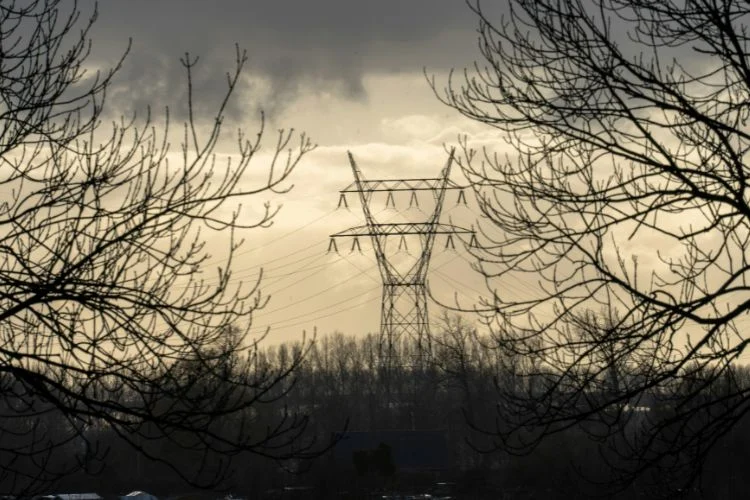
The global transition toward a low-carbon economy has reached a paradoxical crossroads where the primary obstacle to progress is no longer the availability of technology or the cost of hardware, but the physical infrastructure required to transport electricity. Renewable energy developers, once primarily concerned with equipment supply chains and energy-price volatility, are now facing a daunting administrative and physical barrier known simply as "the queue." Currently, a staggering 1,700-gigawatt (GW) backlog of renewable energy projects sits in a state of limbo, waiting for a connection to national grids. This capacity constraint has evolved into a decisive financial factor, determining the viability of multi-billion-euro projects and dictating where global capital can be safely deployed.
As Europe’s electricity grids struggle to modernize at a pace commensurate with the rapid build-out of wind and solar capacity, grid access has emerged as a primary economic constraint. This bottleneck is not merely an administrative delay; it is fundamentally altering development timelines, restructuring financing models, and forcing a strategic re-evaluation of investment decisions across the continent.
A Continental Crisis: Identifying the Bottlenecks
The severity of grid congestion varies significantly across European borders, creating a fragmented landscape where geography often dictates project success more than resource quality. The United Kingdom currently holds the dubious distinction of having the longest wait times in Europe, with some projects facing delays of 10 to 15 years to secure a connection. In Ireland, the situation is compounded by limited interconnection with mainland Europe, pushing connection timelines toward the decade mark.
In Southern Europe, the nature of the bottleneck is more administrative and speculative. In Italy and Spain, the pipeline is clogged by thousands of "zombie" applications—speculative permits for projects that are unlikely to ever reach the construction phase but nevertheless occupy valuable space in the connection queue. These speculative bids effectively block viable, shovel-ready developments from moving forward.
Conversely, in the Nordic regions, the challenge is one of distance and transmission. While Northern Sweden and Norway possess immense wind potential, the primary demand centers are located in the south and in neighboring Denmark. The existing transmission infrastructure is currently unable to handle the massive volumes of offshore wind power required to satisfy these southern industrial hubs.
A Timeline of Recent Setbacks and Policy Failures
The consequences of these grid constraints have manifested in a series of high-profile setbacks between 2024 and early 2026. These events serve as a warning of the potential for a total stagnation of the energy transition if infrastructure investment does not accelerate.
In late 2024, Denmark—long considered a pioneer in wind energy—suffered a significant blow when a major tender for six new wind farms, aimed at generating 6 GW of power, failed to attract a single bid. Developers cited untenable commercial risks, specifically highlighting the exorbitant costs associated with grid connection and the uncertainty of delivery.
This trend continued into early 2026. In January, the German government took the unprecedented step of suspending auctions for offshore wind sites indefinitely. Officials cited rising costs and deep-seated concerns regarding grid-connection capacity. These failures highlight a growing realization among developers: a project that cannot deliver its power to the market is not an asset, but a liability.
The Economic Toll: Financing in a High-Risk Environment
The financial implications of grid congestion are profound, affecting every stage of a project’s lifecycle. Because renewable energy projects are capital-intensive, with the vast majority of costs incurred upfront during the construction phase, any delay in commissioning is financially catastrophic.
Industry estimates suggest that for a standard 50-megawatt (MW) wind or solar project, a 12-month delay in grid connection results in approximately €2 million in additional costs and lost revenue. These costs stem from the need to service project debt while the asset remains idle, as well as the loss of potential sales during peak price windows.
Furthermore, the uncertainty surrounding connection timelines has fundamentally changed how lenders perceive renewable energy. Historically, wind and solar projects were viewed as low-risk, long-term infrastructure investments. In the current climate, however, lenders are demanding higher interest rates to compensate for "connection risk." Loan tenors are being shortened, and financial institutions are performing much more rigorous scrutiny of "merchant exposure"—the risk that a project will have to sell electricity at volatile market prices if long-term contracts are voided by delivery delays.
Operational risks also persist after a connection is finally made. In Germany, the phenomenon of "curtailment" has become a major financial drain. When the transmission network becomes congested, grid operators must manually disconnect renewable plants to prevent system failure. In 2024 alone, Europe saw €7.2 billion in lost electricity sales due to curtailment, with nearly 50% of those losses occurring in Germany. These interruptions must now be factored into Power Purchase Agreements (PPAs), often resulting in lower prices for developers.
Shifting Strategies: Adaptation and Mitigation
As grid access becomes the "new oil," developers and financiers are adapting their strategies to survive in a constrained environment. This has led to several significant shifts in how renewable projects are designed and located.
One of the most prominent responses is the integration of Battery Energy Storage Systems (BESS). While adding batteries increases the initial capital expenditure, co-located storage allows a project to "buffer" its output. Instead of being forced to curtail generation during peak production, a project can store energy and release it when grid capacity becomes available. Many corporate off-takers now mandate the inclusion of storage in PPAs to ensure a more stable and reliable supply of green energy.
Siting strategy has also undergone a radical transformation. Previously, developers sought out the sunniest or windiest locations to maximize "yield." Today, the priority has shifted toward "proximity to infrastructure." A site with mediocre wind resources but an immediate connection to a high-voltage substation is now considered more valuable than a high-yield site that requires a ten-year wait for a connection.
Furthermore, a trend toward "industrial clustering" is emerging. Developers are increasingly looking to build projects in close proximity to large-scale electricity consumers, such as data centers, green hydrogen plants, or heavy industrial facilities. By creating dedicated "behind-the-meter" transmission infrastructure, developers can bypass the national grid queue entirely, delivering power directly to the end-user.
De-Risking the Queue: Regulatory and Institutional Responses
Recognizing that the "gridlock" threatens to derail the European Green Deal, regulators and international financial institutions are beginning to take aggressive action. These efforts are focused on two fronts: massive capital injection and regulatory reform.
The European Commission has launched the "Energy Highways" initiative, a strategic framework designed to fast-track eight critical cross-border transmission projects. The EU’s budget for grid upgrades is set to increase fivefold, reaching nearly €30 billion for the 2028–2034 period. The Commission has also proposed a radical reduction in permitting times, aiming to cap the process at two years for essential projects and granting the power to override local authorities that cause undue delays.
Institutional lenders are also pivoting. The European Investment Bank (EIB) reported a record €11.6 billion in lending for grid and storage projects in 2025, nearly tripling its 2023 levels. The EIB’s focus is not only on physical wires but also on "digital resilience," including cybersecurity and advanced grid management systems that can react in real-time to fluctuations in renewable generation.
On a national level, several countries are reforming their application processes. Poland has moved away from the traditional "first-come, first-served" model, which rewarded speculative bidders. It has instead adopted a "first-ready, first-connected" approach, requiring developers to meet strict milestones to remain in the queue. Additionally, Poland has begun publishing detailed grid availability maps, warning developers that projects in congested "red zones" are unlikely to receive approval.
In the UK, Ofgem has unlocked £10.3 billion for the largest expansion of the high-voltage network since the 1960s. Meanwhile, the long-delayed undersea cable between France and Spain—expected to be operational by 2028—is set to double the interconnection capacity between the Iberian Peninsula and the rest of the EU, finally ending Spain and Portugal’s status as an "energy island."
Analysis: Can Investment Keep Pace with Ambition?
While the momentum for grid modernization is undeniable, a critical question remains: is it enough? Most of Europe’s transmission network was constructed over 40 years ago and was designed for a centralized system of coal and nuclear plants, not a decentralized network of millions of solar panels and wind turbines.
Analysis from Allianz suggests that the scale of the challenge may still be underestimated. The insurer estimates that the distribution network alone requires an investment of €220 billion by 2030. To truly optimize the European grid and achieve climate targets, interconnector and storage capacity must double within the next six years, requiring a consistent investment of at least €10 billion annually.
Furthermore, technical solutions like "reconductoring"—installing advanced conductors on existing towers to increase capacity without building new lines—are being deployed in Belgium and the Netherlands. While these methods provide a quicker fix than building new corridors, they are incremental rather than transformative.
The "queue" has fundamentally changed the nature of the renewable energy industry. It has introduced a new layer of complexity that favors large, well-capitalized developers who can afford to wait or invest in their own infrastructure. For the energy transition to succeed, the grid can no longer be treated as a secondary administrative hurdle; it must be recognized as the backbone of the entire economic shift. Without a rapid, coordinated, and massive expansion of Europe’s electrical arteries, the continent’s green ambitions may remain stalled in the waiting room of history.
