

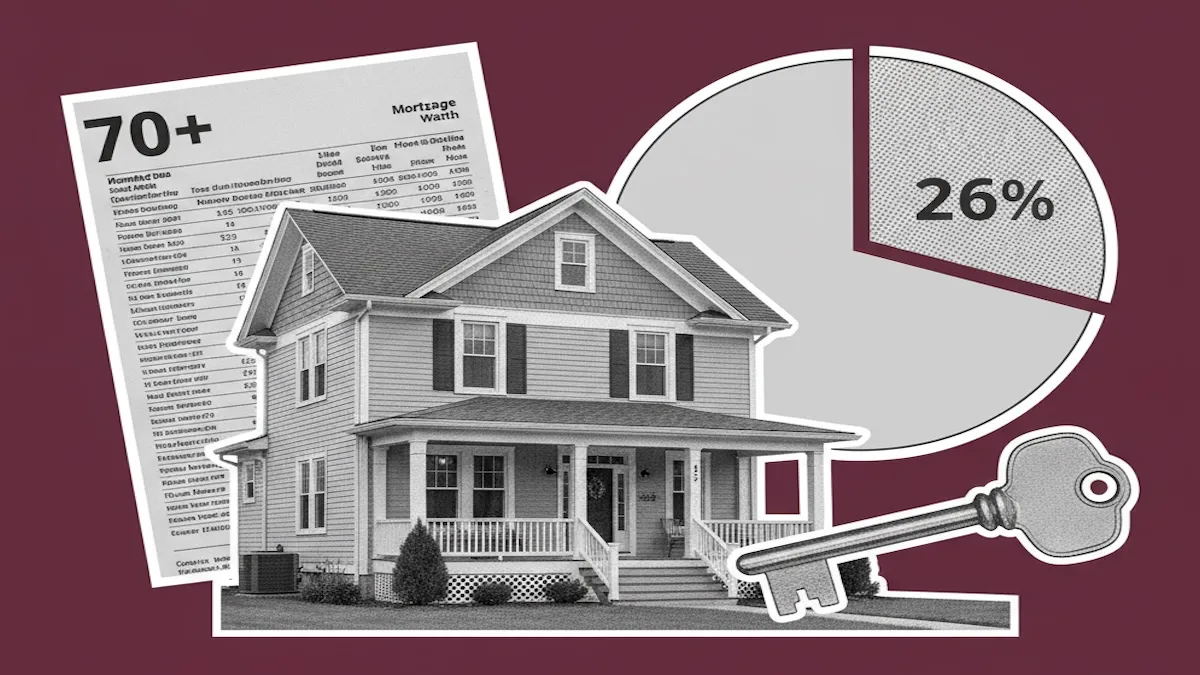
For the first time in modern economic history, Americans aged 70 and older now control as much real estate wealth as those in the 40-to-54 age bracket, marking a significant milestone in the shifting landscape of American household equity. According to a comprehensive analysis by Redfin, which utilized the latest data from the Federal Reserve Board, the 70-and-older demographic held approximately 26% of the nation’s $48 trillion in total real estate wealth during the third quarter of 2025. This achievement of parity between seniors and middle-aged homeowners highlights a widening generational divide fueled by decades of home price appreciation, varying entry points into the housing market, and the long-term benefits of declining mortgage rates that favored older generations.
The convergence of these two groups represents a historic pivot in the distribution of residential assets. For decades, the 40-to-54 age group—traditionally the cohort in their peak earning years and most active in the housing market—held a dominant lead over their older counterparts. However, the third quarter of 2025 saw these groups reach an identical share, following a brief period in the second quarter of 2025 when the 70-plus demographic actually surpassed the middle-aged group for the first time on record. This shift underscores the immense equity accumulation of the "Silent Generation" and older "Baby Boomers," many of whom have remained in their homes for decades, benefiting from a compounding effect of asset growth that has outpaced the wealth-building opportunities available to younger cohorts.
A Two-Decade Chronology of Wealth Accumulation
The rise of senior housing wealth is not a sudden phenomenon but the culmination of a steady, multi-decade trend. In 2005, Americans aged 70 and older held just 16.6% of the nation’s real estate wealth. At that time, the housing market was nearing the peak of the mid-2000s bubble, and younger Gen Xers and older Millennials were entering the market in large numbers. By 2015, the share held by the 70-plus group had climbed to 21.6%, as the cohort aged and remained in their primary residences while younger generations struggled to recover from the Great Recession.
By the third quarter of 2025, this figure reached its current high of 26%, representing roughly $13 trillion in total housing wealth. In stark contrast, the share held by the 40-to-54 age group has seen a consistent decline. Ten years ago, this middle-aged demographic controlled 29.3% of the nation’s real estate wealth. That share has since contracted to the current 26%. While these individuals still hold a significant portion of the market, the erosion of their lead suggests that middle-aged Americans are finding it more difficult to upgrade or expand their real estate portfolios compared to previous generations at the same stage of life.
Meanwhile, the demographic between these two groups—those aged 55 to 69—continues to hold the largest overall share of real estate wealth at 35.3%. However, even this dominant group has seen its influence wane slightly from 37.2% a decade ago. The most concerning data point for long-term market health remains the stagnation of wealth among younger Americans. Those under the age of 40 held only 12.6% of real estate wealth in the third quarter of 2025, a negligible increase from the 11.9% share they held in 2015. This suggests that despite the aging of the Millennial generation into their prime homebuying years, the barriers to entry remain historically high.
Economic Drivers and the Role of Interest Rates
The divergence in wealth outcomes can be largely attributed to the timing of market entry and the trajectory of mortgage rates over the last forty years. Redfin Chief Economist Daryl Fairweather noted that while older generations, particularly Baby Boomers, faced significant economic headwinds early in their homeownership journeys—including the high inflation and double-digit interest rates of the late 1970s and early 1980s—the subsequent decades provided a tailwind that is largely absent today.
Following the peak interest rates of the Volcker era, mortgage rates entered a decades-long decline. This downward trend allowed homeowners who purchased in the 1980s and 1990s to refinance repeatedly, lowering their monthly costs while their property values surged. For those in the 70-and-older category, the result was a massive buildup of home equity, often on properties that are now owned free and clear of any mortgage debt.
Conversely, today’s younger buyers are facing a "perfect storm" of economic pressures. The rebound in mortgage rates over the last three years, which saw rates climb from historic lows near 3% to peaks above 7%, has significantly reduced purchasing power. When combined with the rapid home price growth seen during the pandemic-era housing boom, many prospective buyers under 50 have been priced out of the market entirely or forced to delay their first purchase until much later in life.
Market Dynamics and the "Lock-In Effect"
The concentration of wealth among older Americans is also being sustained by the "lock-in effect." Many seniors currently reside in homes with extremely low fixed-rate mortgages or no mortgage at all. With current market rates still significantly higher than the 2.5% to 4% range seen in the 2010s, there is little financial incentive for older homeowners to downsize or move. Selling a primary residence to move into a smaller, potentially more expensive property with a higher interest rate is an unattractive proposition for many, leading to a "stay-in-place" mentality.
This lack of inventory from the senior demographic has a ripple effect throughout the housing ladder. When older homeowners do not move, it limits the supply of "move-up" homes for middle-aged families, which in turn limits the availability of starter homes for younger buyers. This gridlock has contributed to the sustained high prices seen in many metropolitan areas, further cementing the wealth gap between those who already own property and those trying to enter the market.
Projections for Affordability and Wealth Transfer
Despite the current disparity, there are emerging signs that the housing market may be entering a period of gradual adjustment. Redfin’s analysis suggests that the frenetic home price growth seen during the 2020-2022 period has slowed. Furthermore, mortgage rates have shown signs of stabilization, with the average 30-year fixed rate recently moving closer to the 6% mark—the lowest levels seen in over three years.
Economists project that if income growth continues to outpace home price increases, as is forecasted for 2026, the affordability gap may begin to narrow. This would provide a critical window for younger buyers to begin building their own real estate equity. However, the sheer volume of wealth held by the 70-plus demographic also points toward an impending "Great Wealth Transfer." Over the next two decades, trillions of dollars in real estate assets are expected to be passed down to Gen X and Millennial heirs. While this will eventually redistribute housing wealth, it may also exacerbate inequality between those who receive an inheritance and those who do not, potentially creating a "landed class" of homeowners.
Broader Implications for the American Economy
The parity in housing wealth between seniors and the middle-aged carries significant implications for consumer spending and social mobility. Real estate has long been the primary vehicle for middle-class wealth building in the United States. When a large portion of that wealth is concentrated in the hands of a demographic that is typically past its peak spending years, it can lead to different economic outcomes than when that wealth is held by younger families who are more likely to reinvest in home improvements, local services, and education.
Furthermore, the delay in homeownership for younger Americans has long-term consequences for retirement security. Homeownership serves as a form of forced savings; without it, younger generations may reach their senior years without the safety net of a paid-off home, potentially increasing their reliance on social services.
As the market moves toward 2026, the industry remains focused on whether the current trends of slowing price growth and stabilizing rates will be enough to break the generational gridlock. For now, the data remains clear: the traditional trajectory of American wealth, where each generation surpasses the previous one in asset accumulation by mid-life, has been disrupted. The $13 trillion held by those 70 and older stands as a testament to the enduring power of long-term real estate investment, even as it highlights the formidable challenges facing the next generation of American homeowners.
