

In 2010, amid the burgeoning tech boom and the lingering shadow of a global financial crisis, billionaires Warren Buffett and Bill Gates unveiled a seemingly straightforward yet profoundly ambitious initiative: the Giving Pledge. This campaign invited the world’s wealthiest individuals to publicly commit to donating more than half their fortunes, either during their lifetimes or upon their death. The timing felt prescient; technology was minting billionaires at an unprecedented rate, and the societal implications of these vast, rapidly accumulated fortunes were just beginning to crystallize. Buffett, reflecting on the potential scale, famously remarked to Charlie Rose that year, "We’re talking trillions over time." Indeed, the trillions materialized, but the expected corresponding surge in public philanthropy has, in many respects, failed to keep pace. A little over a decade later, the initial fervor around the Giving Pledge appears to be waning, casting a spotlight on a deepening ideological rift within the ultra-wealthy and raising critical questions about the efficacy of voluntary commitments in addressing systemic wealth inequality.
The Genesis of a Grand Vision: Hope and Public Commitment
The Giving Pledge launched with considerable optimism, rooted in a tradition of American philanthropic ambition, albeit one updated for the digital age. The idea was disarmingly simple: leverage the moral authority and peer influence of some of the world’s most successful individuals to encourage a new standard of giving. It was a call to action designed to channel unprecedented private wealth toward public good, fostering a culture of generosity among the world’s new titans of industry. Early signatories included not only Buffett and Gates but also Mark Zuckerberg and Priscilla Chan, Elon Musk, and other prominent figures who represented the vanguard of global innovation and finance. The campaign sought to create a powerful, public demonstration of commitment, aiming to inspire broader philanthropic engagement and direct significant capital toward pressing global challenges, from poverty alleviation to scientific research and healthcare. The initial success was notable, with 113 families signing the Pledge in its first five years, signaling a collective embrace of this new philanthropic ethos.
A Pledge Under Pressure: Declining Participation and Shifting Sentiments
However, the trajectory of the Giving Pledge has since traced a steady decline, as revealed by recent reports, including an in-depth analysis by the New York Times. After its robust inaugural period, the rate of new commitments slowed significantly: 72 families joined in the subsequent five years, followed by just 43 in the five years after that. Alarmingly, a mere four individuals signed the Pledge in all of 2024, indicating a substantial loss of momentum. This marked deceleration suggests a fundamental shift in how the ultra-wealthy perceive and approach public philanthropic commitments.
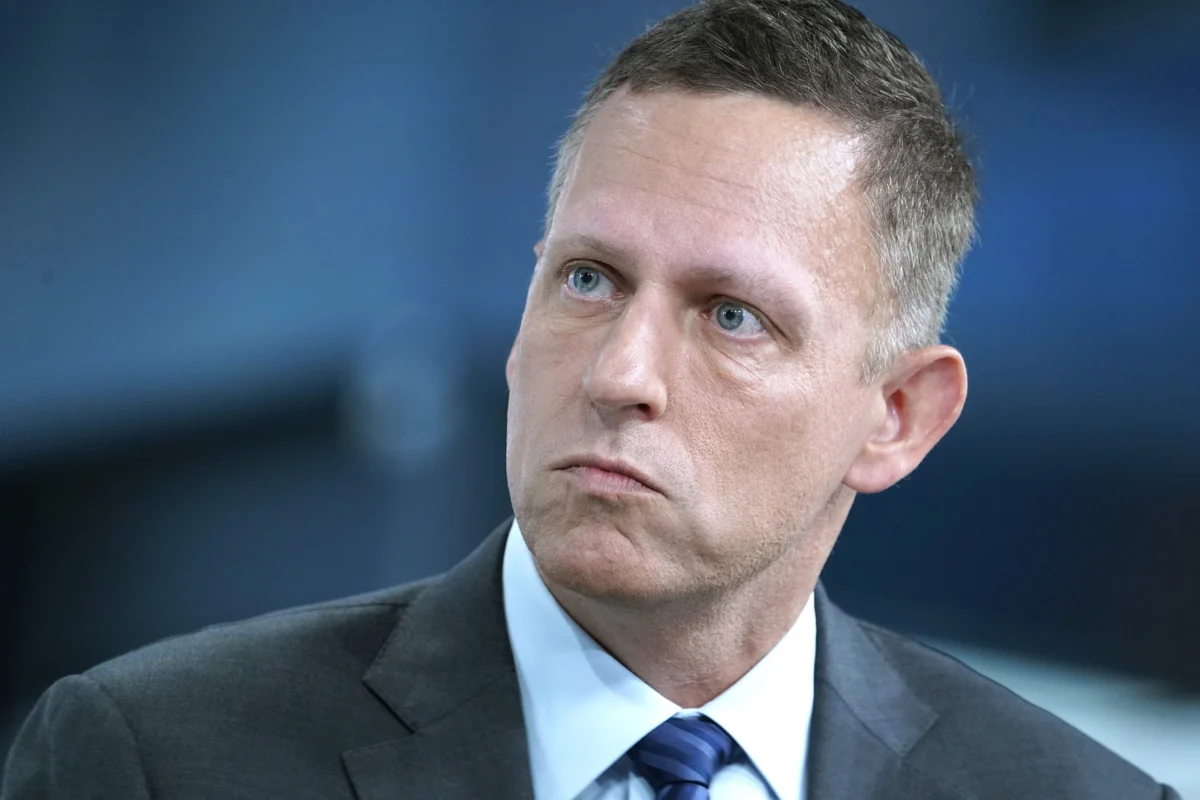
The roster of current and past signatories includes some of the most influential figures globally, yet the "club," as described by tech investor Peter Thiel to the Times, has "really run out of energy." Thiel’s observation that he doesn’t know "if the branding is outright negative, but it feels way less important for people to join," underscores a growing disillusionment or perhaps a strategic re-evaluation among the elite. This trend coincides with a period of intensifying global wealth concentration, where the top 1% of American households now command roughly as much wealth as the bottom 90% combined—the highest concentration recorded by the Federal Reserve since it began tracking wealth distribution in 1989. Globally, billionaire wealth has surged by an astounding 81% since 2020, reaching an estimated $18.3 trillion, starkly contrasting with the grim reality that one in four people worldwide lack consistent access to adequate food.
The Ideological Fault Lines of Silicon Valley: From Altruism to Self-Interest
The decline in the Giving Pledge’s appeal is not an isolated phenomenon but rather reflects a broader ideological transformation within Silicon Valley and the wider tech industry. For years, the rhetoric of "making the world a better place" served as a powerful, almost ubiquitous, mantra for tech companies, often used to justify ambitious ventures and burgeoning valuations. However, this idealism has faced increasing scrutiny and satire. The HBO series "Silicon Valley," which premiered in 2016, mercilessly mocked this corporate platitude, portraying characters who relentlessly pursued profit while cloaking their ambitions in altruistic language. The show’s impact was so profound that, according to writer Clay Tarver, corporate PR departments at major tech firms reportedly instructed employees to cease using the phrase "making the world a better place," a testament to the effectiveness of the satire.
This comedic critique, however, highlighted a deeper ideological struggle. Veteran tech investor Roger McNamee, reflecting on the show’s underlying message, recounted creator Mike Judge’s assessment: "Silicon Valley is immersed in a titanic battle between the hippie value system of the Steve Jobs generation and the Ayn Randian libertarian values of the Peter Thiel generation." McNamee himself offered a less diplomatic, more poignant analysis: "Some of us actually, as naive as it sounds, came here to make the world a better place. And we did not succeed. We made some things better, we made some things worse, and in the meantime the libertarians took over, and they do not give a damn about right or wrong. They are here to make money." This shift from a perceived collective good to an unapologetic pursuit of individual wealth and power has become a defining characteristic of the modern tech landscape, extending its influence far beyond the confines of Silicon Valley itself, even reaching the highest echelons of government.
Peter Thiel’s Scathing Critique and Active Discouragement
Few figures embody this prevailing mood as distinctly as Peter Thiel. A prominent venture capitalist, co-founder of PayPal, and influential libertarian thinker, Thiel notably never signed the Giving Pledge himself. His disdain for the initiative, and for figures like Bill Gates whom he has reportedly called an "awful, awful person," is well-documented. Thiel has actively worked to undermine the Pledge, admitting to the Times that he has privately encouraged approximately a dozen signatories to reconsider their commitments. He has even gently nudged those already wavering to formally withdraw their names. "Most of the ones I’ve talked to have at least expressed regret about signing it," Thiel stated, famously dismissing the Giving Pledge as an "Epstein-adjacent, fake Boomer club."
Thiel’s influence is evident in specific instances. He reportedly urged Elon Musk to withdraw his commitment, arguing that Musk’s wealth would otherwise be channeled "to left-wing nonprofits that will be chosen by" Gates. When Coinbase CEO Brian Armstrong quietly removed his letter from the Pledge website in mid-2024 without public explanation, Thiel sent him a congratulatory note, signaling approval for such a move.
Intriguingly, Thiel also claimed that those who remain on the Pledge’s public roster feel "sort of blackmailed"—too exposed to public opinion to formally renounce a non-binding promise to donate significant wealth. This claim, however, is difficult to reconcile with the public personas of some individuals he might be referencing. Figures like Elon Musk, for instance, have consistently demonstrated a profound disinterest in managing public perception, with a majority of Americans now viewing him unfavorably. Mark Zuckerberg endured nearly a decade of sustained regulatory and public hostility regarding Meta (formerly Facebook) yet emerged seemingly more resolute, not less. This suggests that for many, the decision to remain on or depart from the Pledge might be less about public blackmail and more about evolving personal philosophies, strategic philanthropic recalibrations, or simply a re-evaluation of the Pledge’s original intent and perceived value.
The Reality on the Ground: Soaring Needs Amidst Philanthropic Shifts
While debates over philanthropic commitments unfold among the ultra-wealthy, a starkly different reality is taking shape for millions globally. The sheer scale of wealth concentration contrasts sharply with the growing economic precarity experienced by ordinary citizens. GoFundMe, the popular crowdfunding platform, reported a 17% surge last year in fundraisers for basic necessities such as rent, groceries, housing, and fuel. Keywords like "work," "home," "food," "bill," and "care" dominated these campaigns. During a 43-day federal shutdown that disrupted food stamp distribution, related campaigns on the platform spiked sixfold. As GoFundMe’s CEO told CBS News, "Life is getting more expensive and folks are struggling, so they are reaching out to friends and family to see if they can help them through."
Whether these grassroots struggles are directly linked to decisions made in elite philanthropy boardrooms remains a matter of ongoing debate. However, the synchronous timing of these trends—the decline of a major philanthropic initiative alongside a dramatic increase in crowdfunding for basic needs—presents a challenging narrative that is difficult to ignore. It highlights the widening chasm between extraordinary wealth accumulation and widespread economic vulnerability, questioning the effectiveness of voluntary, private philanthropy as a primary mechanism for addressing systemic societal needs.
Philanthropy’s Evolving Landscape: Redefining "Giving Back"
It is crucial to differentiate the fate of the Giving Pledge from the broader landscape of philanthropy. Many of the wealthiest individuals in tech continue to engage in significant charitable giving, albeit increasingly on their own terms, through their own vehicles, and toward their own chosen objectives. This marks a shift from a public, collective commitment to a more individualized, often privately directed, approach.
A notable example is the Chan Zuckerberg Initiative (CZI), founded by Mark Zuckerberg and Priscilla Chan. At the start of 2026, CZI announced cuts of approximately 70 jobs, representing 8% of its workforce. This restructuring was part of a strategic pivot away from broader education and social justice causes towards its Biohub network, a series of nonprofit, biology-focused research institutes operating across several cities. Zuckerberg stated last November that "Biohub is going to be the main focus of our philanthropy going forward." While these cuts might appear to signal a retraction, they are more accurately described as a recalibration of philanthropic strategy. The Zuckerbergs have, after all, publicly committed through the Pledge to donate 99% of their lifetime wealth, suggesting a change in focus rather than an abandonment of philanthropic intent.
Not all philanthropists are redefining their terms, however. Bill Gates, co-founder of the Giving Pledge, announced last year his intention to donate virtually all his remaining wealth through the Gates Foundation over the next two decades, totaling more than $200 billion. He stipulated that the foundation would permanently close on December 31, 2045. Echoing Andrew Carnegie’s famous dictum that "the man who dies thus rich dies disgraced," Gates explicitly stated his determination not to die rich, reinforcing a commitment to comprehensive wealth distribution. His accelerated giving plan underscores that while the public pledge might be faltering, the impulse for significant philanthropy remains strong for some of its original proponents.
Echoes of the Gilded Age: A Historical Perspective
The current standoff between concentrated wealth and broader societal needs is not without historical precedent. The last period of wealth concentration comparable to today’s levels occurred during the original Gilded Age, roughly from the 1890s through the early 1900s. During that era, the ultimate correction to extreme inequality did not emanate primarily from the voluntary actions of philanthropists, no matter how generous. Instead, it emerged from powerful policy interventions: trust-busting legislation to curb corporate monopolies, the introduction of the federal income tax, the implementation of the estate tax, and eventually the comprehensive social safety net programs of the New Deal. These policies were driven by political pressure that became too potent for the political establishment to ignore.
However, the institutional landscape that facilitated those historical corrections looks considerably different today. A functional Congress capable of bipartisan action, a robust and unfettered free press, and an empowered regulatory state were crucial elements then. Their contemporary counterparts face unprecedented challenges, from deep political polarization to fragmented media ecosystems and diminished regulatory authority, raising questions about society’s capacity to implement similar systemic adjustments.
The Unmet Promise and Future Outlook
What remains undisputed is the astonishing pace of wealth accumulation in the modern era. Fortunes are now built in years, not generations, often at the very moment when social safety nets are being eroded or stretched thin. Oxfam’s 2026 global inequality report starkly illustrated this imbalance, calculating that the wealth gained by the world’s billionaires in 2025 alone would have been sufficient to give every person on Earth $250, while still leaving the billionaires more than $500 billion richer.
The Giving Pledge was always, as Warren Buffett candidly acknowledged from its inception, merely a "moral pledge"—devoid of enforcement mechanisms, consequences, or external accountability. That such a voluntary, non-binding commitment once carried significant weight speaks volumes about the era in which it was conceived, an era perhaps characterized by greater optimism about the inherent altruism of the wealthy and the power of public commitment. That Peter Thiel now frames remaining on the Pledge’s list as a form of coercion, and that a prominent publication like the New York Times finds this argument worthy of extensive reporting, speaks volumes about the profound shifts in values, trust, and expectations that define the current age. The fading vision of the Giving Pledge underscores a critical pivot in the discourse surrounding wealth, responsibility, and the role of the ultra-rich in shaping society’s future, leaving open the question of whether voluntary commitments can ever truly bridge the growing chasm of global inequality.
