

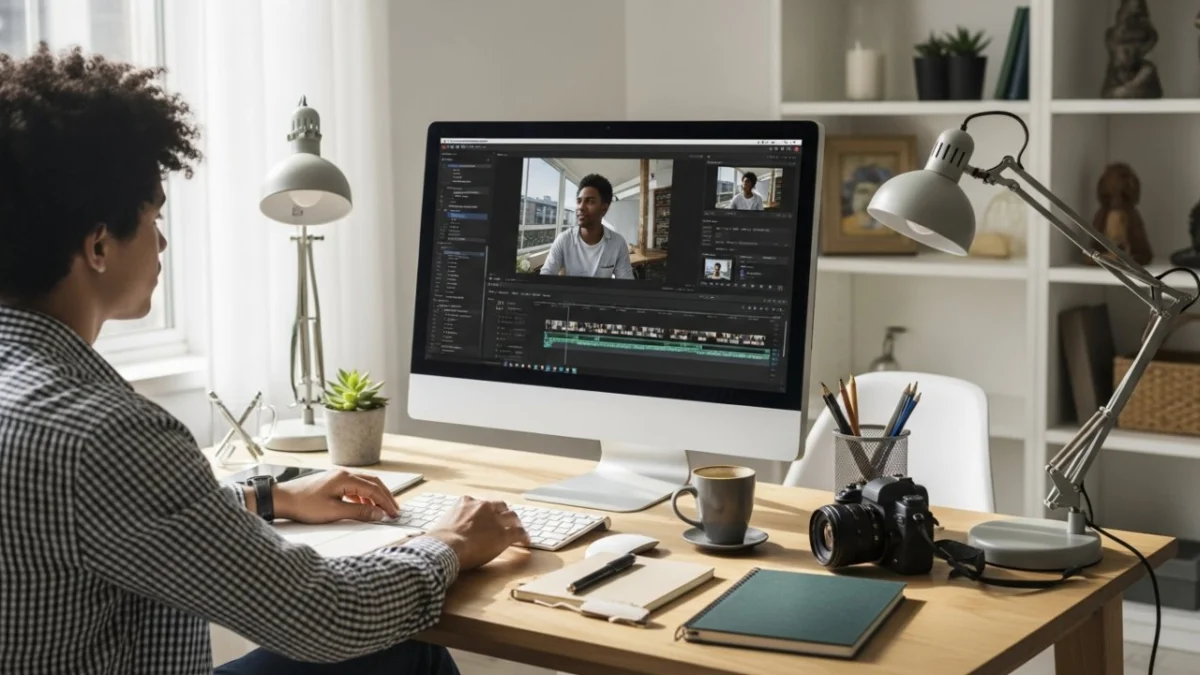
The digital landscape has undergone a seismic shift over the last decade, transitioning from a world where professional video production required five-figure investments in hardware and software to an era where Hollywood-caliber tools are available to anyone with a standard computer and an internet connection. As the creator economy continues to expand—now valued at over $250 billion according to industry analysts—the demand for sophisticated yet accessible video editing software has never been higher. For YouTubers, independent filmmakers, and social media influencers, the choice of editing platform is no longer merely a matter of convenience; it is a strategic decision that dictates the workflow efficiency, visual quality, and overall scalability of their digital presence.

The current market for free video editing software is bifurcated into several distinct categories: professional-grade desktop applications, user-friendly beginner tools, browser-based editors, and mobile-first applications. Each segment serves a specific demographic, yet the lines between "amateur" and "professional" tools are increasingly blurred as free versions of high-end software offer features that were once locked behind expensive proprietary licenses.
The Rise of the Professional-Grade Free Desktop Tier
The most significant development in the software industry has been the emergence of "freemium" or "loss-leader" professional suites. Leading this charge is DaVinci Resolve, developed by Blackmagic Design. Originally a high-end color grading system used in major motion pictures, Blackmagic transformed the industry by offering a robust free version of the software. Unlike many competitors, the free version of DaVinci Resolve does not include watermarks and provides a nearly complete suite of tools for editing, color correction, audio post-production (via Fairlight), and visual effects (via Fusion).

The strategic logic behind this move is clear: by providing the software for free, Blackmagic Design builds a loyal user base that is more likely to purchase their specialized hardware, such as color grading panels, cinema cameras, and high-end capture cards. Industry data suggests that this democratization has led to a surge in skilled editors entering the workforce, as the barrier to learning "industry-standard" software has been effectively removed.
Similarly, HitFilm Express (now integrated into the broader FXhome ecosystem) carved out a niche by blending traditional non-linear editing with advanced visual effects compositing. For years, HitFilm was the go-to for aspiring filmmakers who wanted to replicate big-budget "Star Wars" or superhero-style effects without the steep cost of Adobe After Effects. While the software has moved toward a subscription model for some advanced features, its legacy as a gateway for VFX enthusiasts remains a cornerstone of the free editing community.

A Chronology of Video Editing Accessibility
To understand the current state of the market, one must look at the timeline of video editing evolution:
- The Professional Era (1990s–Early 2000s): Video editing was dominated by Avid Media Composer and early versions of Adobe Premiere. These required specialized hardware and cost thousands of dollars, limiting production to film studios and newsrooms.
- The Consumer Boom (2001–2010): Apple introduced iMovie (1999) and Microsoft launched Windows Movie Maker (2000). These tools brought basic "drag-and-drop" editing to the masses, coinciding with the rise of the first digital camcorders and the launch of YouTube in 2005.
- The Democratization Phase (2011–2018): Blackmagic Design acquired DaVinci Resolve and began offering the free version. At the same time, mobile editing apps began to surface as smartphone processing power increased.
- The Cloud and AI Era (2019–Present): Browser-based editors like Clipchamp and Adobe Express emerged, leveraging cloud rendering. Most recently, Artificial Intelligence (AI) has been integrated into free tools to automate tasks like captioning, background removal, and color matching.
The Specialized Needs of YouTubers and Social Media Creators
For the modern YouTuber, the criteria for software selection often revolve around "speed-to-publish." While DaVinci Resolve offers unparalleled power, it also requires a steep learning curve and a powerful GPU. Consequently, many creators opt for tools like Lightworks or Shotcut. Lightworks has a storied history in cinema—having been used to edit films like Pulp Fiction and The Wolf of Wall Street—but its free version is strategically limited to a 720p export resolution. This forces a compromise: users get professional-grade trimming and timeline tools but must sacrifice high-definition output unless they upgrade.

In the mobile sphere, the influence of TikTok and Instagram Reels has led to the dominance of CapCut. Developed by ByteDance (the parent company of TikTok), CapCut has redefined mobile editing by providing advanced features like keyframe animation, auto-captions, and a massive library of trending music and effects for free. The software’s seamless integration with social platforms has made it the primary tool for the "vertical video" revolution.
Technical Analysis: Hardware Requirements and Limitations
A critical factor often overlooked by beginners is the relationship between software and hardware. Free software does not mean "lightweight" software. For instance, running DaVinci Resolve effectively typically requires at least 16GB of RAM and a dedicated graphics card with several gigabytes of VRAM. Without these, users frequently experience "playback lag," where the video stutters during the editing process, making precise cuts nearly impossible.

In contrast, browser-based solutions like Microsoft’s Clipchamp or Adobe Express offload much of the processing to the cloud or use highly optimized web-standard technologies. This makes them ideal for users with lower-end laptops or Chromebooks. However, these tools are often reliant on high-speed internet connections and may lack advanced "multi-track" capabilities, where an editor needs to layer ten or twenty different video and audio sources simultaneously.
The Role of Open-Source Software in the Linux Community
For advocates of digital privacy and software freedom, the open-source movement provides essential alternatives. Linux users, in particular, rely on tools like Kdenlive and Shotcut. These programs are developed by communities rather than corporations, ensuring that they remain free of cost and free of corporate data-tracking.

Kdenlive is often cited as the most powerful open-source editor, offering a multi-track interface that rivals older versions of Adobe Premiere. Blender, while primarily known as a 3D modeling and animation powerhouse, includes a built-in Video Sequence Editor (VSE) that is surprisingly capable. Because it is open-source, Blender is one of the few free tools that allows for truly unlimited customization, though its interface is notoriously difficult for beginners to navigate.
Industry Implications and the Shift in Educational Standards
The availability of these tools has significant implications for media education. Historically, film schools were defined by their access to "the lab"—the room containing the expensive editing bays. Today, the "lab" is the student’s own laptop. Educational institutions are increasingly shifting their curricula away from teaching a specific brand of software and toward teaching the "grammar of film."

"The tool is no longer the bottleneck," says industry analyst Marcus Thorne. "When you can download the same software used to edit Deadpool for free, the only thing separating a high school student from a professional editor is their understanding of pacing, story, and color theory. This has forced the professional industry to raise its standards, as the ‘baseline’ of amateur content has improved dramatically."
Future Outlook: AI and Automation in Free Suites
Looking ahead, the next frontier for free video editing software is the integration of Generative AI. We are already seeing "text-to-video" editing features where a user can edit a video by simply modifying a generated transcript. Tools like Adobe Premiere Rush and Clipchamp are beginning to implement "smart-cropping," which automatically identifies the subject of a video and adjusts the frame for different aspect ratios (e.g., turning a horizontal YouTube video into a vertical TikTok).

As these AI features become standard, the "skill floor" for video production will continue to lower. This will likely lead to an even greater saturation of content, placing an even higher premium on original storytelling and creative vision rather than technical proficiency alone.
Summary of Key Recommendations for Users
To navigate this dense market, users should align their software choice with their specific hardware and goals:

- For Aspiring Professionals: DaVinci Resolve is the undisputed leader, provided the user has a powerful PC or Mac.
- For Visual Effects Enthusiasts: HitFilm remains a strong choice for those wanting to experiment with compositing.
- For Quick Social Media Content: CapCut (mobile) and Clipchamp (web) offer the fastest paths from raw footage to a finished post.
- For Mac Users on a Budget: iMovie remains the gold standard for stability and ease of use within the Apple ecosystem.
- For Privacy-Conscious Users: Kdenlive and Shotcut provide professional power without the corporate overhead.
In conclusion, the current era of video editing is defined by choice. The financial barriers that once guarded the gates of the media industry have largely crumbled, replaced by a meritocracy where the quality of one’s content is limited only by their dedication to learning the craft. As software continues to evolve, the distinction between "free" and "paid" tools will likely continue to diminish, further empowering the next generation of global storytellers.
