

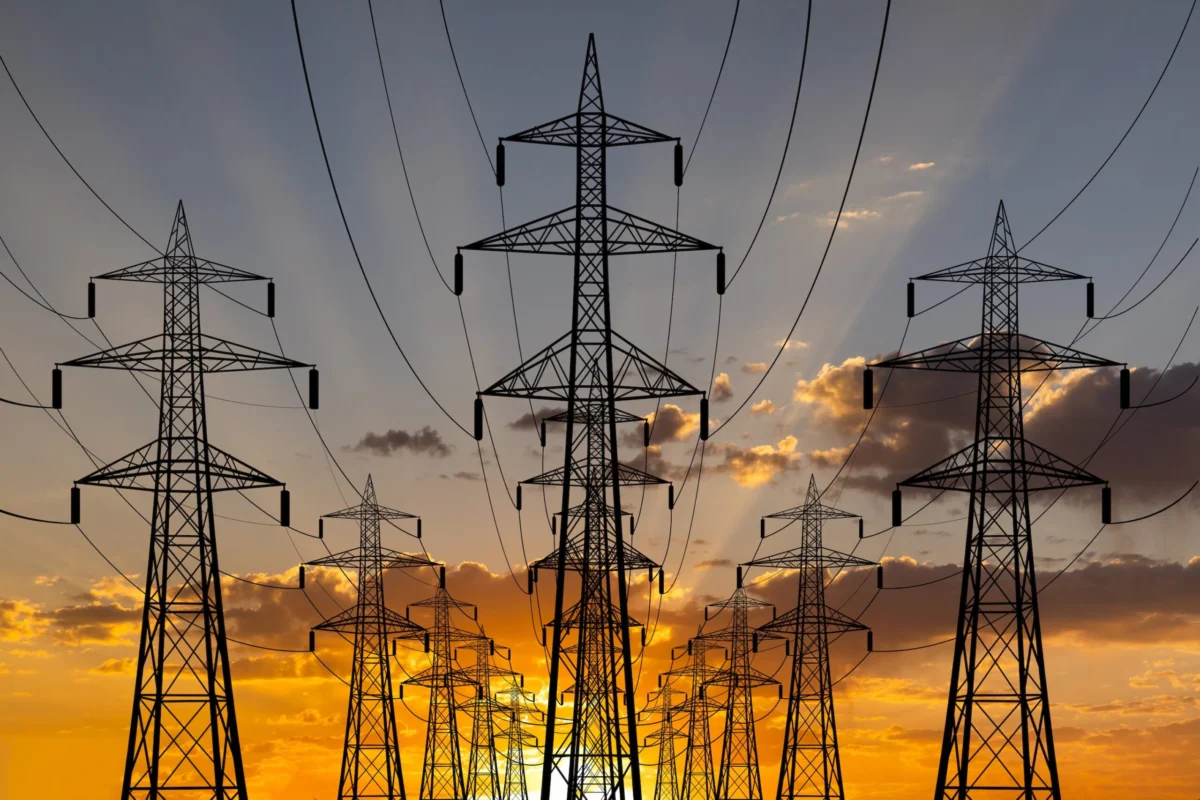
Venture capitalists have poured over half a trillion dollars into artificial intelligence (AI) startups over the past five years, fueling an unprecedented technological boom. However, this fervent pursuit of AI innovation is encountering a critical bottleneck: energy. A recent report by Sightline Climate indicates that the smartest investment in the AI sector today might not be in algorithms or specialized hardware, but rather in the foundational energy infrastructure required to power the insatiable demands of AI. The report suggests that up to 50% of announced data center projects face potential delays, primarily due to insufficient access to reliable power. This emerging "AI energy paradox" underscores a fundamental challenge for the burgeoning industry and presents a significant opportunity for investors in energy solutions.
The Unprecedented Demand for Data Center Power
The rapid evolution and widespread adoption of artificial intelligence, particularly large language models (LLMs) and complex machine learning applications, have driven an exponential surge in demand for computational power. Data centers, the physical engines of the digital economy, are at the forefront of this consumption. While venture capital funds have enthusiastically backed AI ventures, investing over $500 billion into the sector in the last half-decade alone, the physical infrastructure necessary to support these innovations has not kept pace.
Sightline Climate’s analysis highlights the stark disparity between planned and actual data center development. Out of a staggering 190 gigawatts (GW) worth of data center capacity currently being tracked by the firm, a mere 5 GW are actively under construction. Last year, only about 6 GW of new data center projects in Sightline’s extensive database actually came online. Critically, approximately 36% of projects scheduled for completion in 2025 experienced timeline slippages, a concerning indicator of systemic issues. These delays are not isolated incidents; they represent a growing impediment that could eventually impact large enterprises and countless other companies reliant on AI for their operations, ranging from cloud services to advanced analytics and autonomous systems.
The underlying cause of this slowdown is fundamentally about power. Modern AI workloads, especially the training and inference phases of advanced models, are extraordinarily energy-intensive. Running a single AI model can consume as much electricity as hundreds of homes, and with models growing exponentially in size and complexity, their collective energy footprint is becoming immense. Goldman Sachs projects that AI alone will drive data center power consumption up by a staggering 175% by 2030. This forecast translates into an additional 85 terawatt-hours (TWh) of electricity demand annually by the end of the decade, equivalent to the current power consumption of a country like the Netherlands.
A Grid Under Strain: The Historical Context of the Energy Crunch
The current power deficit for data centers is not merely a recent phenomenon but the culmination of several overlapping trends. For decades, electricity grids in many developed nations have seen incremental upgrades rather than transformative overhauls. This aging infrastructure, designed for a more predictable, centralized energy landscape, is struggling to adapt to the decentralized, variable nature of renewable energy sources and the sudden, massive spikes in demand from energy-hungry technologies like AI data centers.
- Early 2020s: The initial acceleration of AI development, marked by breakthroughs in generative AI, began to hint at future energy demands. However, the sheer scale was often underestimated.
- 2023-2024: Reports from grid operators and utilities started to surface, indicating unprecedented interconnection queues for new power generation and transmission projects. Data center developers, accustomed to readily available grid connections, began encountering significant delays and even outright rejections of their power requests in critical regions such as Northern Virginia, Ireland, and parts of the United States Southwest.
- Late 2025-Early 2026: The problem reached a critical mass, with major industry reports, including Sightline Climate’s, unequivocally highlighting power access as the primary constraint on data center expansion. This period saw a noticeable shift in rhetoric from tech executives and investors, moving from purely computational challenges to fundamental energy infrastructure issues. Compounding the problem has been a global shortage of essential power generation equipment, such as gas turbines, further hindering efforts to rapidly expand traditional energy capacity.
This supply-demand squeeze has had tangible consequences, driving up electricity prices across various regions. For instance, in areas with high data center concentration, local utilities have been forced to invest heavily in grid upgrades or new generation, costs that are often passed on to consumers and businesses.
Strategic Responses: Tech Giants Leading the Charge
Recognizing the gravity of the situation, major technology companies, whose core business models are increasingly intertwined with AI, have begun to allocate substantial resources to address the power crisis. Companies like Google, Meta, Amazon, and Oracle are not merely waiting for utilities to catch up; they are actively shaping the future of their energy supply through direct investments and strategic partnerships.
These tech behemoths are dedicating significant portions of their balance sheets to develop new solar, wind, and even nuclear energy projects. Their strategies often involve:
- Direct Renewable Energy Investments: Acquiring vast tracts of land for solar farms, investing in wind power projects, and entering into long-term Power Purchase Agreements (PPAs) to secure clean energy directly from developers.
- Supporting Emerging Energy Technologies: Providing capital and strategic partnerships to startups developing innovative solutions. A prime example is Google’s reported $1 billion investment in Form Energy, a company pioneering 100-hour iron-air batteries designed for long-duration grid storage. This investment underscores a commitment to overcoming the intermittency challenges of renewable energy sources.
- Collaborating with Utilities: Working closely with established utility providers to accelerate the adoption of new technologies and to devise flexible rate structures that can incentivize grid modernization and the integration of sustainable power sources. Google’s recent deal to power a new 1.9 GW data center in Minnesota exemplifies this, blending wind and solar power with a massive 30 gigawatt-hour battery system from Form Energy, developed in conjunction with Xcel Energy to create a new, innovative rate structure.
The shift towards greater energy self-sufficiency is evident in data center planning. While less than a quarter of all data center projects that have identified a power source currently plan to use on-site generation or a hybrid approach, these projects collectively represent 44% of the total planned capacity. This indicates that the largest, most strategically important data centers are spearheading the transition away from full grid dependence. This trend is further motivated by the current administration’s stance, with the White House reportedly urging AI companies to either build their own power sources, pay higher rates for electricity, or both, recognizing the potential for a looming political and economic crisis if power shortages persist.
The Rise of Energy Innovation Startups
The unprecedented demand and strategic shifts by tech giants have created a fertile ground for innovation in the energy sector, attracting a new wave of startups and significant investor interest. These companies are tackling various facets of the power problem, from generation and storage to distribution and management.
- Advanced Energy Storage: Beyond Form Energy, dozens of companies are developing grid-scale battery solutions. The U.S. Energy Information Administration (EIA) predicts that the U.S. will have nearly 65 gigawatts of battery storage capacity by the end of the current year, a dramatic increase driven by both renewable integration and demand from large consumers like data centers. Form Energy, for instance, is reportedly seeking a $500 million funding round in anticipation of an eventual IPO, signaling strong investor confidence in its long-duration storage technology.
- Power Conversion and Management: The efficient delivery and utilization of power within data centers and across the grid are equally critical. Traditional transformers, based on 140-year-old technology using massive iron blocks and copper wire, are becoming increasingly bulky and inefficient for the escalating power densities of modern server racks. Experts note that power equipment for a 1-megawatt server rack can occupy twice the physical space of the rack itself. This has led to a surge of investor interest in startups developing solid-state transformers (SSTs). Companies like Amperesand, DG Matrix, and Heron Power are at the forefront of this movement, leveraging silicon-based power electronics to create more compact, efficient, and flexible power conversion systems. While currently more expensive, SSTs offer the potential to replace multiple pieces of traditional equipment, making them cost-competitive in the long run.
- Grid Management Software: The complexity of managing dynamic energy flows from diverse sources – including intermittent renewables and on-site generation – necessitates sophisticated software solutions. Companies such as Camus, GridBeyond, and Texture are developing advanced software platforms to optimize the flow of electrons, enhance grid stability, and enable more intelligent energy distribution. These solutions are crucial for integrating distributed energy resources and ensuring reliable power delivery to critical infrastructure.
Investment Opportunities and Broader Implications
While the blockbuster funding rounds for AI software and chip companies often grab headlines, the investments in energy infrastructure, battery storage, and advanced power conversion technologies, though smaller in individual deal size, represent a more "tractable" and potentially more resilient investment thesis. These investments are fundamental to the enablement of not just AI, but the broader electrification of the global economy, from transportation to heavy industry.
The appeal for investors is multifaceted:
- Enabling Technology: Without sufficient, reliable, and affordable power, the continued growth of the AI industry is unsustainable. Investments in energy infrastructure are thus foundational, acting as an essential enabler for future AI advancements.
- Long-Term Demand: The demand for energy, particularly clean and resilient energy, is a secular trend independent of any specific technological boom. While AI might experience market fluctuations, the underlying need for power will only grow as the world electrifies more sectors. This provides a substantial hedge against a potential "AI bust."
- Critical Infrastructure: Energy infrastructure is a critical national asset, often supported by government incentives and long-term contracts, providing a level of stability and predictability that might not always be present in rapidly evolving software markets.
- Sustainability Imperative: The increasing focus on climate change and decarbonization further boosts the attractiveness of clean energy investments, aligning financial returns with environmental goals.
The implications of this energy-centric shift extend far beyond the balance sheets of venture capitalists and tech companies. They touch upon national economic competitiveness, environmental sustainability, and the very pace of technological progress. Delays in data center deployment can slow innovation, increase the cost of AI services, and potentially shift technological leadership to regions with more robust energy infrastructure.
As the world continues its journey towards a data-driven, AI-powered future, the critical lesson emerging is clear: the most profound innovations require an equally robust and sustainable power foundation. The smartest investments today are recognizing this symbiotic relationship, placing bets not just on the brilliance of algorithms, but on the fundamental force that brings them to life – energy. The TechCrunch event, scheduled for October 13-15, 2026, in San Francisco, CA, will undoubtedly serve as a crucial forum for industry leaders and innovators to further discuss and strategize around these pivotal challenges and opportunities in the evolving landscape of AI and energy.
