

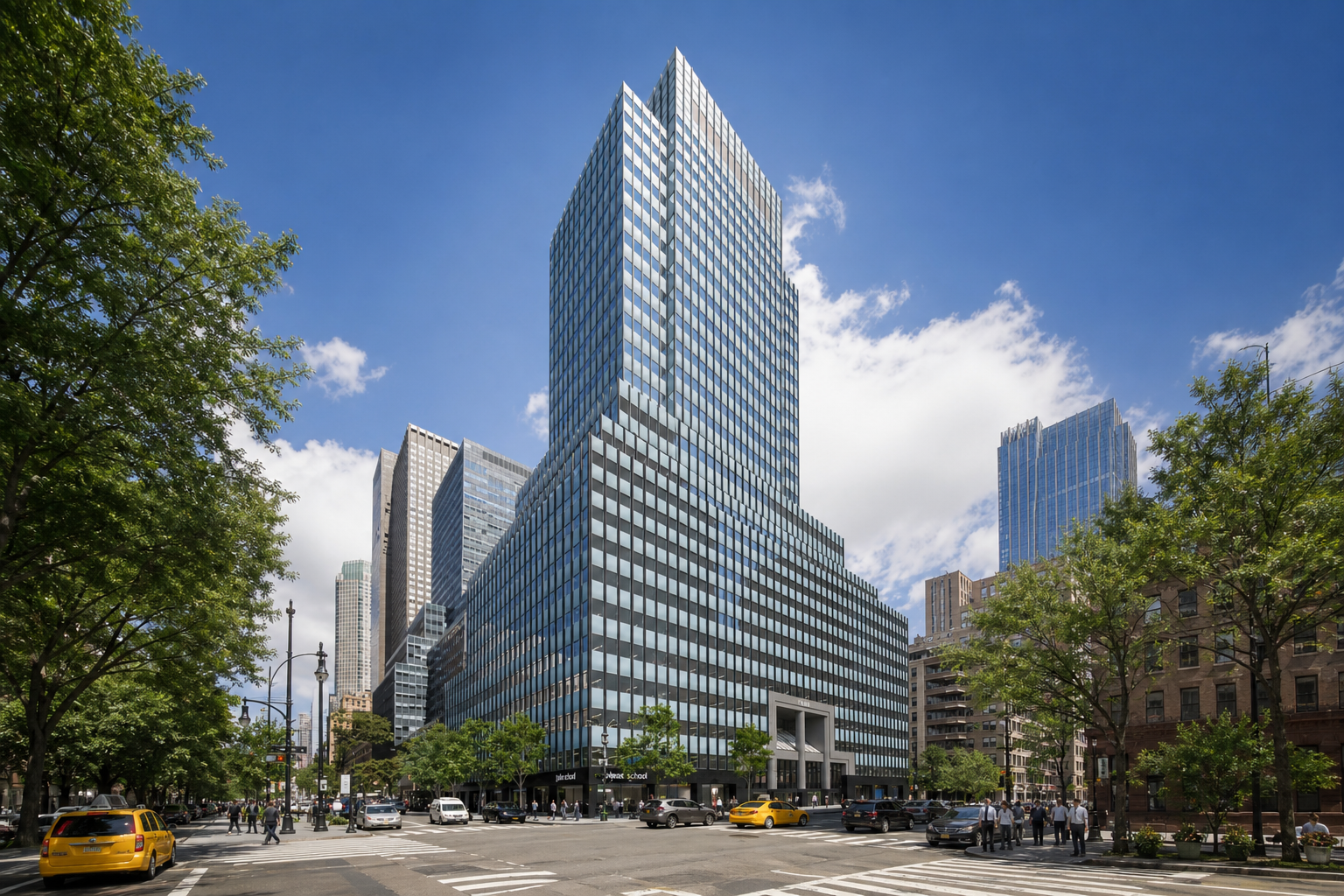
The ambitious initiative to transform New York City’s aging office stock into much-needed residential housing has encountered a significant regulatory headwind. In recent weeks, a series of high-profile work stoppages has signaled a shift in the city’s oversight posture, moving from enthusiastic promotion of adaptive reuse to a more cautious, safety-first approach. This intensification of regulatory concern follows a string of jobsite issues that have raised questions about the structural integrity of mid-century office towers when subjected to the radical alterations required for residential living.
The most recent disruptions occurred at two major Manhattan sites: 222 Broadway in the Financial District and 750 Third Avenue in Midtown. These incidents are not isolated events but are part of an expanding pattern of heightened scrutiny by the New York City Department of Buildings (DOB). While the DOB routinely issues thousands of stop-work orders across the five boroughs every year, the current focus on office-to-residential conversions reflects a growing anxiety among city officials regarding the hidden complexities of "re-skinning" and "re-coring" massive steel-and-concrete structures.
The Catalyst: The Pfizer Conversion Scare
To understand the current regulatory climate, one must look back at the incident that shook the industry’s confidence earlier this year. The conversion of the former Pfizer headquarters, a massive project led by developer MetroLoft, was intended to be the crown jewel of the city’s conversion strategy. The project aimed to deliver 1,600 units to a market starved for inventory. However, the project became a cautionary tale when several structural columns partially collapsed during the construction process.
The "Pfizer scare," as it has come to be known in real estate circles, prompted an immediate and thorough review of similar projects citywide. Although the DOB recently announced via social media that subsequent reviews of the MetroLoft building’s stabilization and façade enclosure work revealed "no significant structural issues which would endanger public safety," the damage to the narrative of "easy conversions" was done. A partial stop-work order remains in place at the Pfizer site as inspectors continue to monitor the stabilization efforts. This event served as a wake-up call for both developers and regulators, proving that even with experienced teams, the structural secrets of older buildings can pose existential risks to a project.
Escalating Stoppages at 222 Broadway
The ripple effects of the Pfizer incident are most visible at 222 Broadway. This 1962-era building, which once served as the prestigious headquarters for Western Electric, is currently being converted by GFP Real Estate into a 300-unit apartment complex. The project has been hit with three separate stop-work orders in just a few weeks, signaling a breakdown in communication between the developers and the city.
The most severe of these orders came after inspectors discovered cracked concrete beams on the 32nd floor. According to departmental records, these defects went unreported to city officials for several weeks, a lapse that triggered an immediate full work stoppage. In the high-stakes world of New York City construction, the failure to report structural anomalies is a cardinal sin that often leads to prolonged delays and punitive oversight.
Beyond the cracked beams, the DOB database reveals a pattern of non-compliance at the Broadway site. Earlier stoppages were issued because the work being performed did not conform to the approved construction documents filed with the city. Furthermore, the project was cited for failing to provide required professional engineer drawings, which are essential for ensuring that the residential load—often distributed differently than office loads—is safely supported by the existing frame. As of the latest reports, the engineering firm DeSimone has submitted the requested repair documentation, but the city’s full stop-work order remains active pending a rigorous departmental review.
Discrepancies at 750 Third Avenue
Midtown Manhattan has not been immune to these regulatory interventions. At 750 Third Avenue, a 1957 building being converted into 639 apartments by SL Green, a partial work stoppage was issued following an inspection of the upper floors. In this instance, the developer took a proactive stance, telling the New York Times that it self-identified a discrepancy between the existing steel welding and the filed building plans.
While officials reported no immediate structural distress at 750 Third Avenue, the mismatch between reality and documentation was enough to trigger a halt. A spokesman for SL Green noted that the firm discovered the problem with the existing columns only after initial preparation work had stripped away decades of partitions and fireproofing. This highlights a recurring theme in the conversion sector: the "as-built" reality of a 70-year-old building rarely matches the blueprints stored in the city’s archives.
The Political Stakes of the Conversion Strategy
The timing of these work stoppages is particularly sensitive for the city’s political leadership. New York City Mayor Zohran Mamdani and various housing advocates have framed office-to-residential conversions as the "strategic linchpin" to solving the city’s chronic housing shortage. The logic is compelling: converting existing structures is theoretically faster and more environmentally sustainable than ground-up development, which requires years of excavation and foundation work.
To accelerate this pipeline, the city has leveraged significant tax incentives introduced in 2024. These incentives were designed to make the financially thin margins of conversions more attractive to institutional investors. By lowering the barrier to entry, the city successfully set in motion a heftier conversion pipeline than at any point in the last three decades. However, the rapid influx of projects has seemingly outpaced the ability of some firms to manage the technical risks, leading to the current friction with the DOB.
Analyzing the "Unknown Unknowns" of Adaptive Reuse
The challenges faced by GFP Real Estate and SL Green underscore a fundamental truth of adaptive reuse: you cannot know what is behind a wall until you tear it down. Experts in the field emphasize that office buildings from the mid-20th century were designed with specific load-bearing requirements and utility layouts that are often diametrically opposed to residential needs.
Andy O’Brien, a partner at the insurance and risk advisory firm The Baldwin Group, notes that the "discovery phase" of a conversion is the most dangerous period for a developer’s budget and timeline. "You just never know until you get into the older buildings and start taking down walls and exposing some of the structural elements," O’Brien stated. He suggests that the most successful developers are those who enter these projects with significant "contingency funding" specifically set aside for late-stage defects.
This sentiment is echoed by John Edwards, a partner at McClennan+Partners Architects. Speaking at a Harvard Joint Center for Housing Studies webinar, Edwards pointed out that for every successful conversion, his firm conducts dozens of feasibility studies that ultimately recommend against the project. "We’ve done far, far more feasibility and due diligence studies for conversions than we’ve actually done conversions," Edwards said. He argues that understanding a building’s structural DNA and regulatory characteristics is just as vital as the architectural design. If the bones of the building cannot support the new use without prohibitively expensive reinforcement, the project is a non-starter.
Broader Implications for the National Model
As the leader in the conversion movement, New York City serves as a laboratory for other metropolitan areas like Chicago, San Francisco, and Washington D.C., which are all grappling with "languishing" office real estate. If New York’s strategy is seen as unsafe or bogged down by perpetual stop-work orders, it could chill investment in similar projects nationwide.
The current wave of stoppages suggests that the "easy" conversions—those involving newer buildings with modern records—may have already been accounted for. The industry is now moving into more challenging territory: the aging Class B and Class C office blocks of the 1950s and 60s. These buildings often contain asbestos, lead, and structural steel that has been modified over decades without proper documentation.
Conclusion: A New Standard for Oversight
The New York City Department of Buildings appears to be setting a new standard for how these projects must proceed. The days of "moving fast and breaking things" in the real estate sector are being replaced by a requirement for meticulous documentation and immediate transparency. For developers, this means that the cost of doing business will likely rise as they are forced to hire more robust engineering teams and conduct more invasive pre-construction inspections.
While the work stoppages at 222 Broadway and 750 Third Avenue are setbacks, they also represent the regulatory system working as intended. By catching cracked beams and welding discrepancies before they lead to catastrophic failure, the DOB is attempting to protect the long-term viability of the conversion strategy. The goal remains the same—to turn empty offices into vibrant homes—but the path to achieving that goal is proving to be more structurally complex and regulatorily demanding than many had anticipated. As the city navigates this "pipeline of the unknown," the focus will remain squarely on whether the ambitious housing targets can be met without compromising the safety of the workers on site or the future residents who will eventually call these former office towers home.
