

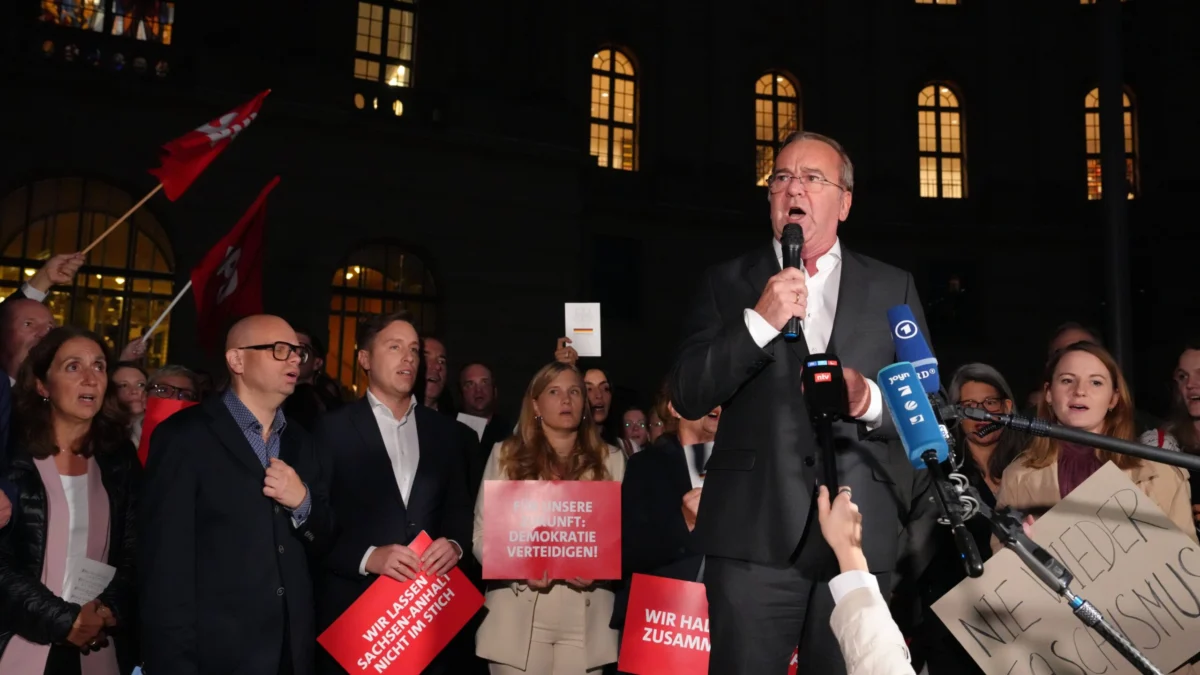
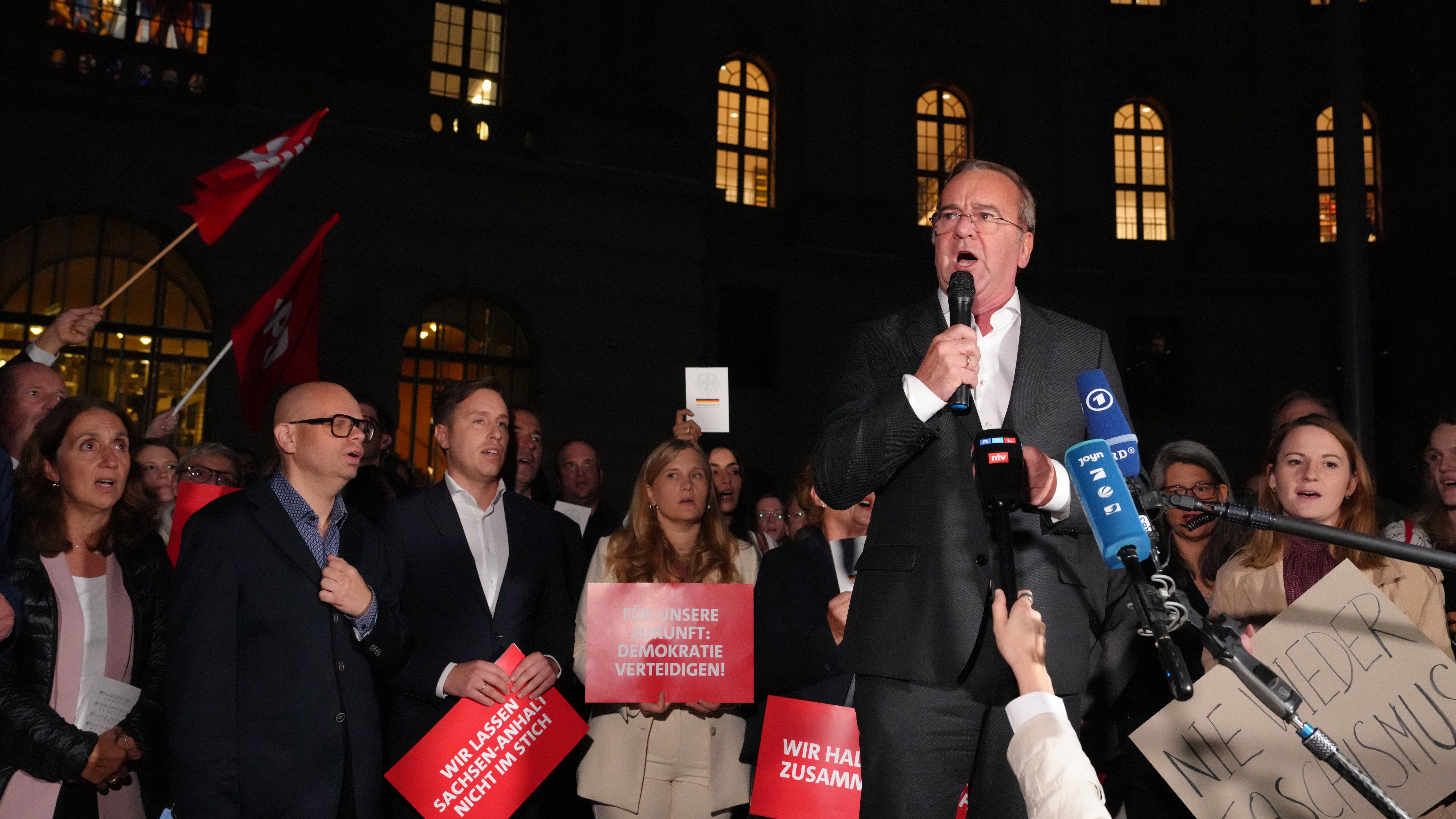
Following the election of the first AfD (Alternative for Germany) state parliament president, the SPD parliamentary group spontaneously organized a protest march through the heart of Berlin. The deputies walked from the Bundestag, through the Brandenburg Gate, to Bebelplatz, a location steeped in historical significance as the site of the Nazi book burnings in 1933. Many parliamentarians carried copies of the German Basic Law (Grundgesetz) during the procession. The demonstration culminated with Defense Minister Boris Pistorius delivering a passionate speech, after which he led the assembly in singing the German national anthem.
Background and Immediate Reaction
The election of Tobias Rausch, an AfD politician, as the state parliament president in Magdeburg marked a significant and controversial moment in German politics. Rausch secured victory with four more votes than the combined strength of the AfD and the BSW (BSW – Bündnis Sahra Wagenknecht) in the state parliament, indicating that votes from other parties had contributed to his election. This outcome has been widely interpreted as a breach of a political consensus that had previously excluded the AfD from holding such key positions, particularly those involving the presidency of a legislative body.
The SPD parliamentary group’s immediate reaction was swift and symbolic. The decision to organize a protest march, rather than a formal statement or press conference, underscored the depth of their opposition and their desire to publicly demonstrate their stance against what they perceive as a dangerous development for German democracy. The chosen route, traversing iconic landmarks of German history, was deliberately selected to evoke historical parallels and underscore the gravity of the situation.

Chronology of the Protest
The protest began shortly after the election results in Magdeburg were announced. SPD deputies convened at the Reichstag building, the seat of the German federal parliament, where they were addressed by their parliamentary group leader, Matthias Miersch. Miersch articulated the party’s concerns, emphasizing the symbolic weight of the protest.
The deputies then proceeded on foot, forming a visible procession as they moved towards the Brandenburg Gate. The march through this iconic symbol of German unity and division was intended to highlight the potential threat to democratic cohesion posed by the AfD’s rise to power in parliamentary presidencies.
Continuing their route, the group reached Bebelplatz. This historic square, on May 10, 1933, became a chilling symbol of the Nazi regime’s assault on intellectual freedom when students burned thousands of books deemed "un-German." The SPD’s choice to gather at this site was a powerful evocation of historical memory, drawing a stark comparison between the current political climate and the dark chapters of Germany’s past. The act of carrying the Basic Law, Germany’s constitution, served as a visual affirmation of their commitment to democratic principles and the rule of law.
The demonstration concluded with an address by Defense Minister Boris Pistorius. His speech, described as "passionate" and "engaging," likely focused on the threats to democratic values and the importance of defending the constitutional order. The unexpected decision to lead the singing of the national anthem added a solemn and patriotic dimension to the protest, framing their opposition not just as a political statement but as a defense of fundamental German values.

Statements and Interpretations
Matthias Miersch, the leader of the SPD parliamentary group, articulated the party’s rationale: "This is not a normal day," he stated, emphasizing the collective sense of duty felt by the SPD to "show their colors when democracy is under pressure." He highlighted the unprecedented nature of the situation, noting that for the first time since the founding of the Federal Republic, far-right extremists had been elected to a state parliament presidency. "This must alarm us all," he urged, signaling a call to action for all democratic forces.
Defense Minister Boris Pistorius, in his address, expressed strong condemnation of the election outcome. He criticized the fact that Rausch had received more votes than the combined number of seats held by the AfD and BSW in the state parliament, suggesting a broader cross-party acceptance of the AfD candidate than many had anticipated. Pistorius declared, "This is a day of anger, a day of disappointment that democrats have apparently learned nothing from history and are allowing history to repeat itself." He concluded with a forceful statement: "Whoever has allowed this has violated the democracy of our great country." His words underscored the SPD’s belief that this election represented not just a procedural win for the AfD but a fundamental betrayal of democratic principles.

The AfD, while not directly quoted in the provided text regarding this specific protest, has consistently defended its right to participate in all parliamentary functions and to hold positions based on electoral success. Their narrative often frames such opposition as politically motivated attempts to marginalize their party and silence their voters.
Broader Implications and Analysis
The SPD’s protest march and their strong rhetoric highlight a deepening political polarization in Germany. The election of an AfD official to a parliamentary presidency, even at the state level, is a development that has generated significant concern among established political parties and civil society organizations.

Electoral Trends: The AfD has seen a surge in support in recent years, particularly in eastern Germany. This rise is often attributed to a complex mix of factors, including dissatisfaction with current government policies, concerns about immigration, and a perception that established parties are out of touch with ordinary citizens’ needs. The party’s platform, which often includes nationalist rhetoric and criticism of mainstream political institutions, resonates with a segment of the electorate.
Constitutional Safeguards and Norms: For decades, a political norm existed in Germany to exclude the AfD from positions of significant responsibility, such as parliamentary presidencies, in an effort to contain their influence and protect democratic institutions. The election of Tobias Rausch in Magdeburg challenges this norm, raising questions about the future of such unwritten political agreements. The SPD’s protest signifies their commitment to upholding these norms and their belief that allowing the AfD into such positions would legitimize their political agenda.

Historical Parallels: The deliberate choice of Bebelplatz as the protest site was a potent reminder of Germany’s history of extremism and the fragility of democratic institutions. The SPD’s messaging aimed to draw a direct line between the book burnings of the Nazi era and what they perceive as a contemporary threat to intellectual freedom and democratic discourse posed by the AfD. This framing seeks to mobilize public opinion against the party by invoking historical lessons.
Political Strategy: The SPD’s actions can be seen as a strategic move to energize their base and to position themselves as staunch defenders of democracy. By organizing a visible and symbolically charged protest, they aim to differentiate themselves from other parties and to appeal to voters concerned about the rise of the far-right. The participation of a federal minister like Boris Pistorius lends significant weight to their message.

Potential for Escalation: This event could signal a new phase in the political confrontation with the AfD. Other parties may feel pressured to adopt stronger stances against the AfD, potentially leading to increased political tension and a more fractured parliamentary landscape. The debate over how to deal with the AfD, whether through isolation or engagement, is likely to intensify.
The protest march by the SPD parliamentary group serves as a stark illustration of the current political climate in Germany. It underscores the deep divisions and anxieties surrounding the rise of the AfD and the ongoing debate about the future of democratic norms and institutions in the face of evolving political landscapes. The symbolic resonance of their chosen route and the powerful rhetoric employed by their leaders indicate a determination to actively counter what they perceive as an existential threat to the Federal Republic’s democratic foundations.
