

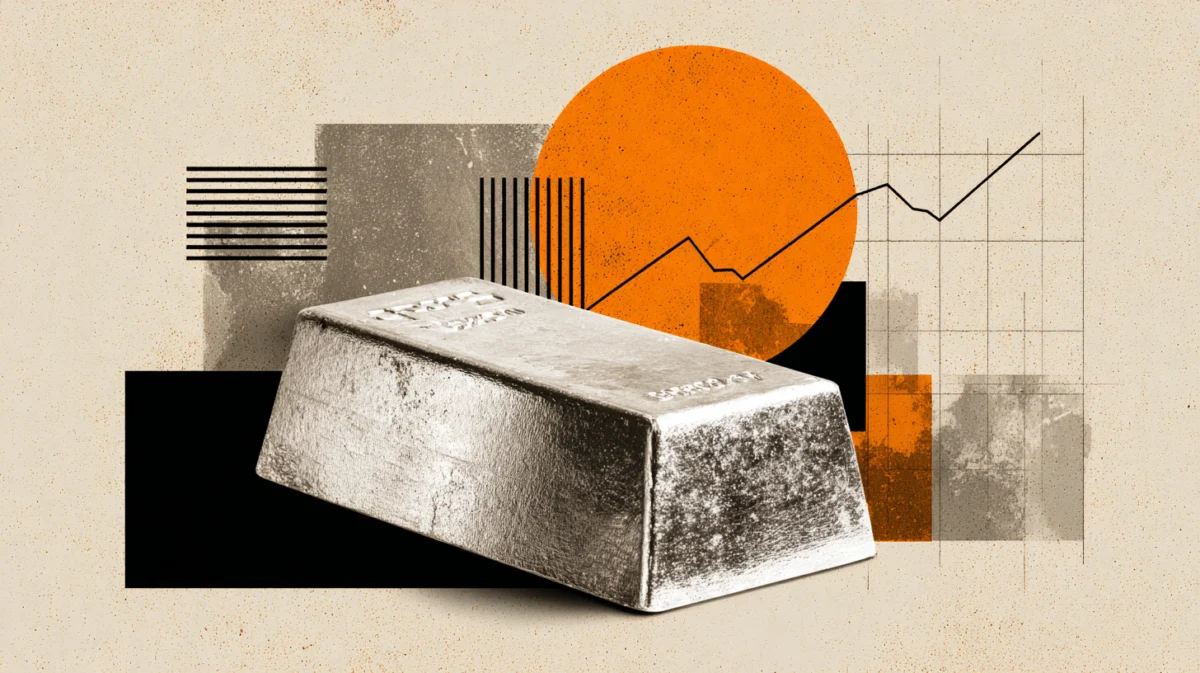
Silver (XAG/USD) price demonstrated robust performance on Thursday, extending its upward trajectory with a significant gain of over 1.70%, even as the dynamics of US Treasury yields presented a complex backdrop. The white metal’s advance occurred despite an initial recovery in US yields, which subsequently resumed their ascent following a pivotal US Treasury bond buyback announcement. At the time of reporting, XAG/USD was trading at $68.18, signaling continued investor interest in precious metals. This move highlights silver’s resilience and its nuanced response to broader macroeconomic signals, particularly those emanating from the fixed-income market and monetary policy cues. The ongoing market narrative for silver is shaped by a confluence of factors, including its safe-haven appeal, industrial demand, and its inverse relationship with the US Dollar and real interest rates.
Immediate Market Reaction and Technical Outlook
The recent surge in silver prices has solidified a short-term uptrend, bringing the precious metal tantalizingly close to a significant technical hurdle: the 100-day Simple Moving Average (SMA) at $68.51. This level is widely watched by traders as a potential inflection point, where a decisive break could signal further bullish momentum. Momentum indicators corroborate this positive sentiment, with the Relative Strength Index (RSI) firmly positioned above its 50-neutral level and gradually approaching the overbought threshold. An RSI nearing or entering overbought territory often indicates strong buying pressure, although it can also signal a potential for a short-term correction if not sustained by fundamental drivers.
For the bullish bias to be unequivocally cemented, XAG/USD must not only reclaim but also hold above the 100-day SMA. A successful breach of this level would likely clear the path towards the psychologically significant $70.00 milestone, an area that could attract both profit-taking and fresh buying interest. Beyond $70.00, the next substantial resistance lies at the 200-day SMA, currently situated at $71.97. This long-term moving average is often considered a stronger ceiling level, and a decisive breakthrough here would be a powerful indicator of a sustained reversal in the metal’s fortunes, potentially targeting the $75.00 level as the next area of interest for market participants.
Conversely, should buying pressure wane, the first line of defense for XAG/USD is the low of the day (LOD) at $65.64. A drop below this immediate support could expose further downside risks, with the August 19 swing low of $62.19 acting as the next critical support level. Following this, the 50-day SMA at $61.35 represents a key dynamic support, the breach of which would raise concerns about the sustainability of the current uptrend and potentially invite further selling pressure. The technical picture, therefore, presents a clear roadmap for traders, with key levels dictating the immediate future direction of silver.
Driving Factors: The Interplay of Yields, Dollar, and Monetary Policy
Silver’s performance is intricately linked to the broader macroeconomic environment, particularly the dynamics of US Treasury yields and the strength of the US Dollar. As a yieldless asset, silver typically benefits from lower interest rates, as the opportunity cost of holding non-yielding assets decreases. The observed recovery and subsequent rise in US yields on Thursday presented a potential headwind for silver. Typically, rising yields, especially real yields (adjusted for inflation), tend to make safe-haven assets like silver and gold less attractive compared to fixed-income investments that offer a guaranteed return.
However, the context of the US Treasury bond buyback announcement adds a layer of complexity. The US Treasury conducts buybacks primarily to manage its debt portfolio, improve market liquidity, and smooth out financing operations. While a buyback can initially put downward pressure on yields by reducing the supply of outstanding bonds, the market’s reaction can be multifaceted. In this instance, the resumption of rising yields after the buyback announcement suggests that other factors or market interpretations might have overridden the immediate impact. This could include renewed concerns about inflation, anticipation of higher future government borrowing, or a general strengthening of the economic outlook that prompts investors to shed safe-haven assets in favor of riskier, higher-yielding alternatives. Conversely, some investors might interpret increased government spending or debt management as a signal for potential future inflation, thereby increasing demand for inflation-hedging assets like silver.
The US Dollar’s behavior is another critical determinant for XAG/USD. Since silver is priced in dollars on international markets, a stronger Dollar generally makes silver more expensive for holders of other currencies, thereby dampening demand. Conversely, a weaker Dollar tends to propel silver prices upwards. The recent movements suggest a delicate balance, where silver’s intrinsic appeal as a store of value and an industrial metal is currently outweighing some of the traditional pressures from rising yields and a potentially strengthening Dollar.
The Broader Economic Landscape: Inflation and Safe-Haven Appeal
Silver, much like its more celebrated counterpart gold, holds a significant status as a safe-haven asset, albeit to a lesser extent. During periods of geopolitical instability, economic uncertainty, or fears of a deep recession, investors often flock to precious metals to preserve capital. The current global economic environment, characterized by persistent inflation concerns, supply chain disruptions, and geopolitical tensions, provides a fertile ground for silver’s safe-haven appeal. While central banks globally, particularly the US Federal Reserve, have embarked on aggressive monetary tightening cycles to combat inflation, the effectiveness and potential long-term economic consequences of these policies remain subjects of intense debate. Should inflation prove more persistent than anticipated, or if the tightening measures lead to a significant economic slowdown, silver’s role as an inflation hedge and a sanctuary asset could become even more prominent.
Historical data consistently shows precious metals performing well during inflationary periods. The current inflationary pressures, driven by factors ranging from energy price surges to robust consumer demand and supply-side constraints, continue to underpin investor interest in silver. Furthermore, the sheer scale of global debt and the potential for currency debasement in the long run also contribute to the appeal of tangible assets like silver, which are perceived to retain intrinsic value irrespective of fiat currency fluctuations.
Industrial Demand: A Key Undercurrent
Beyond its role as a monetary and safe-haven asset, silver boasts substantial industrial demand, which accounts for a significant portion of its overall consumption. Silver possesses the highest electrical conductivity and thermal conductivity among all metals, making it indispensable in various high-tech industries. Key sectors that heavily rely on silver include electronics, solar energy, and automotive applications.
In the electronics industry, silver is crucial for connectors, switches, and conductive inks due to its superior conductivity. The global push towards renewable energy sources, particularly solar power, has created a burgeoning demand for silver in photovoltaic cells. Each solar panel requires a certain amount of silver paste to conduct electricity, and as solar energy adoption accelerates worldwide, so does the demand for silver. Similarly, the automotive sector uses silver in various electrical components, switches, and sensors, especially with the ongoing transition to electric vehicles (EVs), which often contain more silver per unit than traditional internal combustion engine vehicles.
The health of the global economy, particularly the industrial output of major economies like the United States, China, and India, directly influences silver’s industrial demand. China, as the world’s largest industrial powerhouse, uses vast quantities of silver in its manufacturing sectors. Any fluctuations in Chinese industrial activity can therefore have a noticeable impact on global silver demand and prices. India, on the other hand, contributes significantly through consumer demand, particularly for jewelry and silverware, driven by cultural traditions and festive occasions. A surge in demand from these industrial and consumer hubs can exert upward pressure on prices, while a slowdown in these economies tends to have the opposite effect. This dual nature – as both a safe-haven asset and an industrial commodity – makes silver’s price dynamics particularly complex and fascinating.
Silver’s Relationship with Gold: The Gold/Silver Ratio
Silver prices often tend to follow the trajectory of gold, albeit with higher volatility. When gold prices ascend, silver typically follows suit, given their shared status as safe-haven assets and their historical use as monetary metals. However, silver’s industrial demand component can sometimes cause it to diverge from gold’s movements, particularly during periods of strong economic growth or recession.
A key metric used by investors to gauge the relative valuation between the two metals is the Gold/Silver ratio. This ratio indicates the number of ounces of silver required to equal the value of one ounce of gold. A high Gold/Silver ratio (meaning it takes many ounces of silver to buy one ounce of gold) is often interpreted by some investors as an indicator that silver is undervalued relative to gold, or conversely, that gold is overvalued. This can prompt investors to buy silver, anticipating a "catch-up" trade. Conversely, a low ratio might suggest that gold is undervalued relative to silver, potentially encouraging investment in gold. Understanding this ratio provides crucial insights into the broader precious metals market and helps investors make informed allocation decisions. Recent movements in the ratio have been closely watched, with some analysts suggesting that silver’s industrial demand could give it an edge over gold in certain economic recovery scenarios.
Historical Context and Market Volatility
Historically, silver has been known for its higher volatility compared to gold. This "beta" characteristic means that silver tends to amplify the movements seen in gold, rising more sharply in bull markets and falling more steeply in bear markets. This volatility can be attributed to several factors, including its smaller market size compared to gold, its dual role as an investment and industrial commodity, and the speculative interest it often attracts.
Over the past few years, silver has experienced significant price swings, influenced by global economic crises, central bank policies, and shifts in industrial demand. For instance, during periods of quantitative easing and ultra-low interest rates, silver, like gold, saw substantial gains as investors sought refuge from currency debasement and low returns on traditional assets. Conversely, periods of aggressive monetary tightening or strong economic recovery, which might shift capital towards riskier assets, have sometimes seen silver retreat. The current environment, with its mix of inflation concerns, potential economic slowdowns, and ongoing technological advancements requiring industrial metals, sets the stage for continued volatility and complex price discovery for silver.
Analyst Perspectives and Future Outlook
Market analysts are closely monitoring silver’s ability to sustain its current upward momentum. The ability to decisively clear the 100-day SMA and subsequently the $70.00 and $71.97 resistance levels would be critical in affirming a stronger bullish bias. Many strategists suggest that the underlying demand for silver, both from investment and industrial sectors, remains robust. The global transition towards green energy, particularly solar power, is projected to be a long-term driver of silver demand, providing a fundamental underpinning for its price.
However, the path forward is not without potential headwinds. Any significant strengthening of the US Dollar, a more aggressive stance from central banks on interest rate hikes, or a deeper-than-expected global economic recession could dampen demand for both industrial metals and safe-haven assets. Conversely, a pivot by central banks towards more accommodative monetary policies, or a re-escalation of geopolitical tensions, could provide further impetus for silver’s ascent. The ongoing tug-of-war between inflationary pressures and the potential for economic slowdowns will likely dictate silver’s short-to-medium-term trajectory.
Investor Considerations and Diversification
For investors, silver represents a compelling asset for diversification. Its correlation with gold offers a hedge against economic uncertainty and inflation, while its industrial applications provide exposure to global economic growth and technological advancements. As part of a well-diversified portfolio, silver can help mitigate risks associated with traditional assets like stocks and bonds, particularly during periods of market volatility or currency devaluation.
Investors can gain exposure to silver through various avenues, including physical silver (coins and bars), Exchange Traded Funds (ETFs) that track silver prices, and futures contracts. Each method carries its own set of risks and benefits, and investors should carefully consider their investment objectives, risk tolerance, and liquidity needs before making a decision. The current market conditions suggest that silver remains a relevant asset for those seeking to navigate the complexities of the modern financial landscape, offering both speculative potential and a degree of portfolio protection.
Conclusion
Silver’s recent price action, characterized by a notable gain despite fluctuating US yields and a strategic Treasury buyback, underscores its complex and dynamic market drivers. While technical indicators suggest a strengthening bullish bias, with key resistance levels ahead, the broader economic context—including inflation concerns, industrial demand, and the interplay with the US Dollar—will continue to shape its trajectory. As global economies navigate uncertain waters, silver’s dual role as a safe-haven asset and an indispensable industrial metal positions it as a critical asset to watch, offering both challenges and opportunities for investors in the coming months.
