

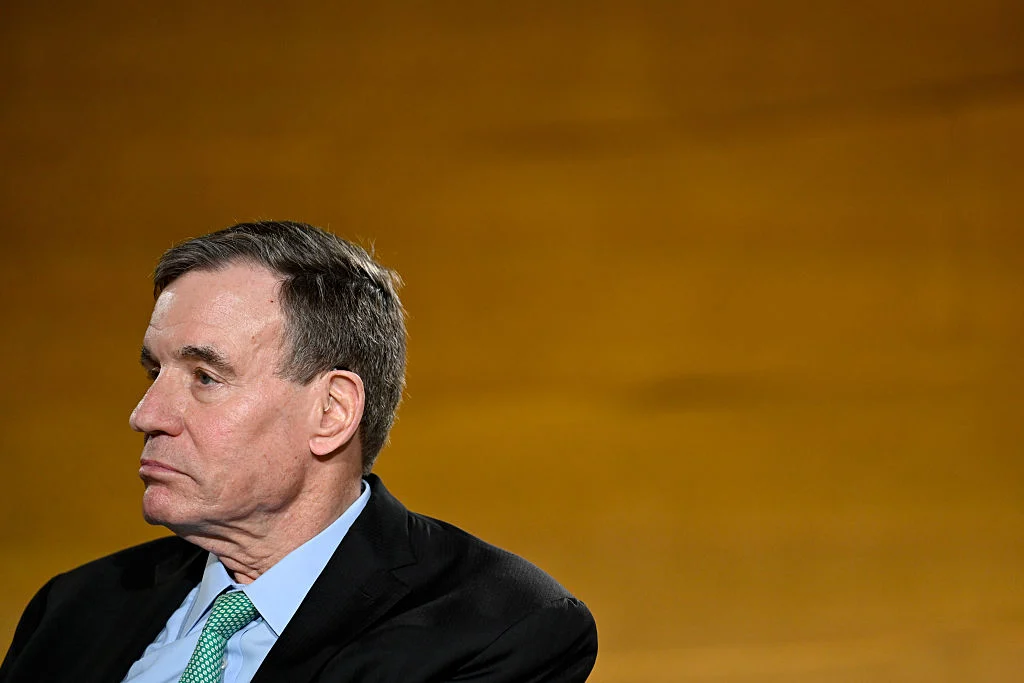
The economic landscape is undergoing a profound transformation, with the advent of artificial intelligence (AI) increasingly signaling a future of mass job displacement. Evidence of this shift is already accumulating: entry-level job postings in the U.S. have plummeted by 35% since 2023, major technology firms have initiated widespread layoffs often attributed to AI-driven efficiencies, and even prominent leaders within the AI industry itself are issuing stark warnings about the impending disruption. In response to this palpable anxiety, Senator Mark Warner (D-VA) has unveiled a significant policy proposal: a tax on the burgeoning data centers that power the AI boom, with the generated revenue earmarked to assist workers through what he describes as an "unusually painful" economic transition.
Senator Warner articulated his proposal and the urgency behind it during a recent appearance at the Axios AI Summit in Washington. Speaking backstage at the high-profile event, he recounted chilling anecdotes that underscored the immediate impact of AI. A venture capitalist, he noted, recently informed him of plans to write down software investments to zero, largely due to the rapid advancements made by large language models like Anthropic’s Claude. Even more tellingly, a major law firm confided in Warner that it was no longer hiring first-year associates, as AI tools are now capable of handling a substantial portion of the foundational legal work traditionally assigned to junior lawyers. These instances, though anecdotal, paint a vivid picture of AI’s encroaching presence in professional sectors, challenging long-held assumptions about job security and career pathways.
The Growing Shadow of AI on the Workforce
The 35% decline in entry-level job postings since 2023, as reported by Revelio Labs, serves as a stark statistical indicator of AI’s early impact. This trend is particularly alarming as entry-level positions often serve as crucial gateways for young professionals and recent graduates into the workforce, offering foundational experience and upward mobility. The contraction in this segment suggests a bottleneck forming at the very start of many career paths, potentially creating a cohort of underemployed or unemployed individuals despite overall economic growth.
Beyond entry-level roles, the tech industry, a historical engine of job creation, has itself been swept by waves of layoffs. While some of these reductions are undoubtedly tied to broader market corrections or post-pandemic recalibrations, a significant portion is increasingly linked to what some analysts term "AI-washing," where companies leverage AI capabilities to justify workforce reductions, citing enhanced productivity and automation. This phenomenon extends beyond Silicon Valley, with economists projecting that various sectors, from customer service and administrative support to logistics and even creative fields, could see substantial restructuring due to AI’s growing capabilities. Prominent AI figures, such as Dario Amodei, CEO of Anthropic, have publicly warned of the potential for "unusually painful disruption" to the job market, adding weight to the concerns emanating from policy circles and the general public.
Despite these mounting fears, some data points offer a contrasting view. Reports from certain AI companies suggest that the technology has not yet begun to demonstrably take jobs on a net basis, and instead, is creating new roles or augmenting existing ones. However, Senator Warner emphasizes that the fear of AI-related job loss is undeniably "palpable," a sentiment that is increasingly shaping public discourse and policy debates. This disconnect between current aggregate data and widespread public anxiety highlights the psychological and social dimensions of technological change, where the anticipation of future impacts can be as influential as present realities.
Senator Warner’s Proposed Solution: Taxing the Data Center Ecosystem
Against this backdrop of growing concern, Senator Warner’s proposal to tax data centers emerges as a pragmatic attempt to address the societal costs of AI innovation. His rationale is straightforward: if AI’s core infrastructure – the massive data centers that consume vast amounts of energy and resources – is a primary driver of economic disruption, then it should also contribute to mitigating its adverse effects. The revenue generated from such a tax, he argues, could be channeled into vital programs designed to support workers through the transition, such as retraining initiatives, upskilling programs in new and emerging fields, or even direct aid for communities most affected by job displacement.
The idea gains urgency as public anger towards AI and its physical manifestation, data centers, continues to escalate. Warner’s proposal represents a distinct approach to the increasingly heated debate over "who should foot the bill" for AI’s societal impact. He considered various potential targets for taxation, including chip makers like Nvidia (led by CEO Jensen Huang), the large language model companies themselves, or even the end-user corporations like Goldman Sachs that are leveraging AI to reduce their workforce. Ultimately, Warner concluded that the "easiest place to extract the pound of flesh is probably going to be from the data centers." This determination likely stems from their tangible presence, significant resource consumption, and the fact that they represent a critical, centralized component of the AI infrastructure.
The Data Center Dilemma: Local Backlash Meets National Imperative
The public backlash against data centers is not new, but it has intensified with the accelerating pace of AI development. Across the U.S., communities are pushing back against the proliferation of these facilities, citing a range of concerns that extend beyond purely economic considerations. The loudest complaints revolve around noise pollution, significant water and electricity consumption, and the associated environmental impact, including carbon emissions. Many residents also express frustration over rising electricity costs, which they perceive as being exacerbated by the enormous energy demands of nearby data centers.
This growing resentment has fueled legislative action. Just recently, Senator Bernie Sanders (I-VT) and Representative Alexandria Ocasio-Cortez (D-NY) introduced a bill calling for a nationwide data center moratorium. Their proposal reflects a broader movement to halt the unchecked expansion of AI infrastructure until its environmental and social impacts can be more thoroughly assessed and managed. The underlying sentiment is a resistance to bearing the potential ill effects – both environmental and socio-economic – of hosting facilities that power a technology some fear will ultimately replace their jobs.
However, Senator Warner explicitly stated he does not support the moratorium bill. His reasoning is rooted in geopolitical competition: "A data center moratorium simply means China is gonna move quicker, and this is one where we can’t lose." Warner argues that attempting to "stuff the genie back into the bottle" by halting data center development would be counterproductive, ceding crucial ground in the global race for AI dominance. Instead, he advocates for a balanced approach that acknowledges the inevitability of AI’s advancement while simultaneously imposing strict requirements on data centers to prevent them from offloading their water and power costs onto residents. He believes that communities can "extract their pound of flesh" through a taxation mechanism that directly addresses the underlying job loss fears, rather than through an outright ban.
Crafting a Fair Transition: Economic and Social Implications
The proposed data center tax, as envisioned by Warner, could fund a variety of initiatives aimed at smoothing the AI-driven economic transition. Examples include robust training programs for new nurses, who are increasingly in demand in an aging society, or advanced upskilling programs in AI-related fields for workers displaced from traditional industries. The core principle, according to Warner, is ensuring a "tangible benefit to communities" as they navigate the economic shifts "foisted on them" by AI companies. This approach seeks to balance the need for technological advancement with a societal obligation to those most vulnerable to its disruptive forces.
The idea of linking data center revenue to community benefits is not without precedent. Warner points to Henrico County, Virginia, which has successfully utilized tax revenue from local data centers to kickstart an affordable housing project. This example demonstrates a model where the economic activity generated by tech infrastructure can be directly reinvested into addressing critical local needs. Such tangible benefits are crucial, Warner emphasizes, because without them, "the pitchforks are coming out." This vivid imagery underscores the urgency of finding equitable solutions to prevent public discontent from boiling over into outright opposition.
Public Sentiment and the Political Landscape
The public mood suggests that Warner’s concerns are well-founded. A recent NBC News poll revealed a striking level of public skepticism towards AI, with 46% of registered voters viewing the technology negatively, compared to only 26% viewing it positively. Intriguingly, AI’s public approval rating in this poll was even lower than that of Immigration and Customs Enforcement (ICE), a federal agency often at the center of contentious political debates. This statistic highlights the deep-seated apprehension many Americans feel about AI’s potential societal ramifications, extending far beyond the typical partisan divides.
In Virginia, a state that has become one of the world’s largest data center markets, this public sentiment is already translating into policy action. There is a proposal under consideration to repeal the state’s generous tax breaks for data center buildouts, which currently cost the state and its localities nearly $2 billion a year in lost tax revenue. Such a move would significantly alter the economic calculus for data center operators and could set a precedent for other states grappling with similar issues. Warner warns that other states might indeed follow suit, indicating a broader political trend of re-evaluating the costs and benefits of hosting such infrastructure.
The challenge, as Warner succinctly puts it, is that "AI and data centers are easy to demonize." Their abstract nature for many, coupled with their significant environmental footprint and perceived threat to jobs, makes them convenient targets for public frustration. Navigating this complex landscape requires nuanced policy solutions that acknowledge the legitimate concerns of communities and workers while also fostering responsible innovation. Warner’s proposal represents an attempt to find that balance, offering a mechanism for the industry to contribute to the societal well-being of the very communities that host its essential infrastructure, thereby building a bridge between technological progress and social equity. The debate over who pays for the future of AI is only just beginning, and Senator Warner’s intervention marks a significant step towards shaping its outcome.
