

Major retailers across the United States are navigating a complex financial landscape, as billions of dollars in tariff refunds, stemming from a landmark Supreme Court decision, have begun to flow into their coffers during the second quarter of 2026. While these unexpected windfalls have provided a significant uplift to corporate profits and, in many cases, helped to mitigate persistent cost inflation and rising operational expenses, they have simultaneously introduced a new layer of ambiguity into earnings reports, making it challenging for Wall Street analysts to accurately gauge underlying business performance and future outlooks. The varying approaches retailers have adopted in reporting and utilizing these funds—from direct price reductions for consumers to bolstering gross margins for shareholders—underscore a fundamental strategic divergence that has left investors and consumers alike grappling with the true impact of these financial adjustments.
The Genesis of the Tariff Refund Dilemma
The convoluted situation has its roots in trade policies initiated years prior. In 2018, then-President Donald Trump utilized the International Emergency Economic Powers Act (IEEPA) to impose tariffs on a wide range of imported goods, primarily from China, citing national security concerns and unfair trade practices. These tariffs, which varied in percentage, significantly increased the cost of goods for American importers, including many of the nation’s largest retailers. For years, these additional costs were either absorbed by companies, passed on to consumers through higher prices, or mitigated through supply chain diversification efforts.
The legal battle against the tariffs spanned several years, culminating in a pivotal Supreme Court ruling on February 20, 2026. The high court determined that the IEEPA did not, in fact, grant the President the authority to impose such tariffs, thereby invalidating their legality from inception. This landmark decision immediately opened the door for companies that had paid these duties to apply for refunds, an unprecedented opportunity for retroactive financial relief.
A Flood of Applications and Q2 Windfalls
Following the Supreme Court’s ruling, a vast majority of major retailers wasted no time in initiating claims for reimbursement. By May 22, 2026, many had formally applied for these refunds, setting the stage for a substantial injection of capital into the retail sector. The money began to materialize during the second fiscal quarter of 2026, transforming what might have been ordinary earnings reports into intricate puzzles for financial analysts.
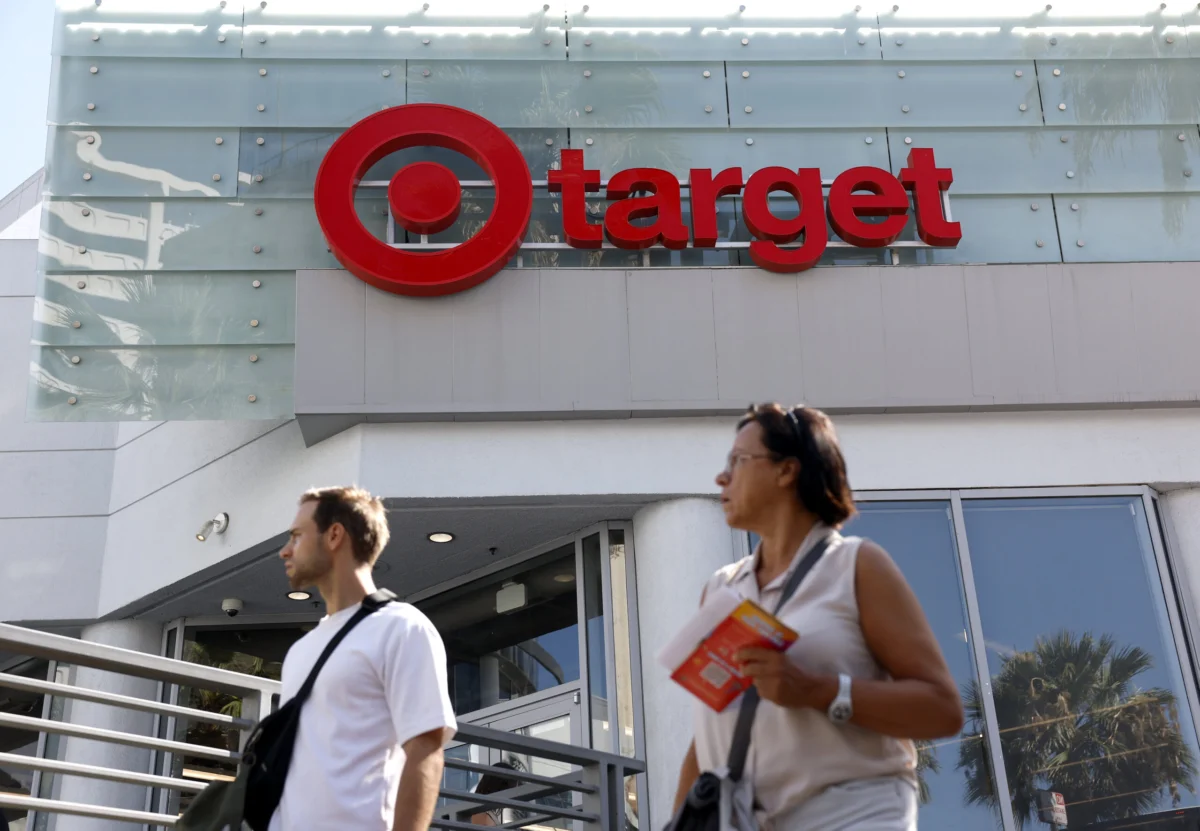
The scale of these refunds is staggering. Walmart, the world’s largest retailer, for instance, reported eligibility for approximately $2.9 billion in tariff refunds, with the bulk of this amount received by late August. Home Depot, a leading home improvement retailer, disclosed receiving $730 million, while TJX Cos., the parent company of T.J. Maxx and Marshalls, reported $331 million. Target, another retail giant, saw a $752 million boost to its net earnings, translating to $1.65 per share, and a pre-tax benefit of $994 million to its gross margin and operating income. Lowe’s received roughly $80 million, and Kohl’s reported a $100 million injection into its gross margin from these repayments. These figures represent substantial one-time boosts, capable of significantly altering a quarter’s financial performance.
Divergent Strategies: Price Cuts vs. Margin Enhancement
The arrival of these tariff refunds presented retailers with a critical strategic choice: should the funds be used to alleviate consumer prices, or should they be leveraged to enhance profitability and shareholder returns? The industry has responded with a clear bifurcation in approach, largely influenced by market positioning, competitive landscape, and overall corporate philosophy.
Prioritizing the Consumer: Price Reductions
Several retailers, particularly those operating in the value-driven segment, explicitly committed to channeling a significant portion of their refunds directly into price reductions for consumers. This strategy is seen as a way to reinforce their commitment to affordability, especially in an environment where consumers continue to grapple with persistent inflationary pressures.
Home Depot exemplified this approach. The company announced that it utilized approximately $685 million of its $730 million refund to reduce the cost of goods sold during its fiscal second quarter. Chief Financial Officer Richard McPhail confirmed that these funds largely represented the company’s expected total repayment. This move directly contributed to a 0.3% increase in its gross margin compared to the prior year, signaling an intent to pass savings to its professional and DIY customers.
Walmart adopted a similar consumer-centric stance. CFO John David Rainey communicated the company’s plan to deploy its substantial tariff refunds to lower prices for shoppers. This decision aligns with Walmart’s foundational "Everyday Low Prices" strategy, aiming to strengthen its competitive position and attract price-sensitive consumers. The company’s gross profit for Walmart U.S. grew by 1.6%, partially attributable to this tariff boost, with the full impact on consumer prices expected to manifest in the current fiscal third quarter.
TJX Cos. also reported using its $331 million in tariff refunds to benefit its second-quarter cost of sales, a move consistent with its off-price model that thrives on offering significant value to customers. Bryan Eshelman, a managing director in the retail practice at consulting firm AlixPartners, observed that low-price operators often have a "strategic reason" to apply refunds to prices, using it as a marketing tool to "proclaim that to the marketplace." He added, "At the end of the day, a product is worth what somebody’s willing to pay for it, and there is a lot of choice in this marketplace." This highlights the competitive imperative for value retailers to actively demonstrate their commitment to affordability.
Fortifying Margins: Shareholder Focus
In contrast, other major players opted to prioritize strengthening their financial performance, using the refunds to boost earnings per share and gross margins, thereby rewarding shareholders. This strategy often reflects a focus on maximizing profitability and maintaining financial stability.
Lowe’s explicitly stated its intention to leverage the tariff refund for profitability rather than price cuts. CEO Marvin Ellison told CNBC that the company received approximately $80 million in repayments, which contributed an 11-cent boost to its earnings per share for the second quarter. Ellison articulated a clear distinction from competitors, stating, "We feel strongly that we want to deliver strong profitability for our shareholders and make sure that we don’t follow any aggressive pricing action." He further emphasized the company’s commitment to "the right planned steps to drive profitability" with its windfall.
Target, while simultaneously announcing price reductions on over 10,000 items in the second quarter, did not explicitly link these cuts to the tariff refunds. Instead, the company highlighted the significant financial uplift from the refunds, which contributed a $752 million boost to net earnings and a $994 million pre-tax benefit to its gross margin and operating income. CFO Jim Lee reiterated Target’s ongoing commitment to price investment, stating, "We have, and will continue, to invest in price to ensure our guests are getting tremendous value each and every time they visit us at Target," suggesting that price investments are an ongoing strategic priority separate from the one-time tariff benefits.
Kohl’s also directed its refunds towards profitability and strategic investment. CEO Michael Bender confirmed that $100 million of the refunds had been integrated into the gross margin in the second quarter. The remaining funds are earmarked for investing in deeper inventory, a strategic move aimed at improving product availability and customer satisfaction. Bender underscored a disciplined approach: "All of [the uses of the repayments] have to have a return, so we’re not just going to be throwing money out and saying, ‘I hope this works,’ but we’re very disciplined about it." This highlights a strategic use of the funds beyond immediate financial reporting.
The Operational and Accounting Quandary
Beyond the strategic choices, the practical implementation of these refunds has presented significant operational and accounting complexities for retailers. As Eshelman from AlixPartners pointed out, "These trails aren’t always clean in terms of finding the right way to apply, in a fair sense, the rebate to prices."
One primary complication lies in determining the "importer of record." The refunds are disbursed to the entity that formally paid the tariffs. This isn’t always the retailer itself, especially in complex global supply chains. Many products sold in stores are not directly imported by the retailer; rather, they might be sourced from domestic manufacturers who, in turn, imported raw materials or components subject to tariffs. In such scenarios, the rebates flow to the manufacturer, not the retailer, creating an indirect and sometimes untraceable benefit. For retailers, identifying which specific products were affected by tariffs, and to what extent, has proven to be an arduous task.
Furthermore, internal record-keeping systems within large retail organizations are often not designed to easily attribute a retroactive rebate directly back to a specific product that was sold years ago. "There’s also just the reality of record-keeping internal to retailers and whether or not they easily have a way to attribute the rebate directly back to a product that was already sold," Eshelman elaborated. "It’s not a simple task." This operational challenge means that even retailers intending to pass on savings might struggle with the logistical precision required to do so in a transparent and measurable way for every affected item. This inherent difficulty contributes to the "muddied" nature of how these refunds are reported and perceived.
Wall Street’s Analytical Challenge
For investors and financial analysts, the tariff refunds have introduced a considerable layer of complexity when dissecting retail earnings reports. The significant, one-time nature of these boosts skews year-over-year comparisons, making it difficult to ascertain the true underlying health and growth trajectory of a company.
Analysts are now faced with the unenviable task of "normalizing" earnings by stripping out these extraordinary gains to arrive at a more accurate picture of operational performance. This often involves detailed financial modeling and careful scrutiny of management’s commentary. As Eshelman noted, "It’s an unfair positive comparison to last year’s quarter, and it’s going to be an unfair negative comparison to next year’s quarter." This implies that the inflated numbers of Q2 2026 will set a higher, potentially unsustainable, bar for comparisons in future quarters, which could lead to perceived underperformance even if the core business remains robust.
The market’s reaction to these earnings reports has been mixed, with some companies seeing share price boosts due to stronger-than-expected headline numbers, while others face questions about the sustainability of their profitability once these one-time benefits are exhausted. Investors are increasingly seeking clarity on how these funds are allocated and what long-term impact, if any, they will have on a company’s competitive positioning and strategic investments. The uncertainty surrounding future tariff policies, particularly given the dynamic political landscape and former President Trump’s ongoing influence on trade discussions, further complicates long-term forecasting.
Impact on Consumers and Future Outlook
For the average consumer, the tangible benefits of these tariff refunds remain largely elusive. While some retailers like Walmart and Home Depot have explicitly stated intentions to lower prices, discerning the exact impact on specific product costs is challenging. Inflationary pressures, such as rising fuel prices, supply chain disruptions, and labor costs, continue to influence retail pricing strategies, often overshadowing any tariff-related reductions.
"How does a consumer know what percentage of a price increase was tariff-related versus diesel or fuel related?" Eshelman queried. "How does a consumer know that the price went down commensurate with the level of rebate?" This highlights the difficulty consumers face in quantifying the direct benefit, leading to a perception gap between corporate announcements and everyday shopping experiences. Ultimately, a significant portion of the "price perception" for consumers remains a sophisticated marketing exercise by retailers, where the messaging around value can be as important as the actual price adjustments.
Looking beyond the immediate financial impact, the tariff situation has underscored the critical importance of supply chain resilience and diversification. The years of tariffs prompted many retailers to re-evaluate their reliance on single-country sourcing, particularly China, and accelerate efforts to build more agile and geographically diverse supply chains. While the refunds offer temporary relief, the underlying lesson of vulnerability to geopolitical trade policies remains. Retailers are likely to continue investing in robust supply chain strategies that mitigate future risks, regardless of who occupies the White House or what future trade policies emerge.
In conclusion, the influx of tariff refunds has created a fascinating, albeit complicated, chapter in retail finance. It has provided a much-needed boost to earnings for many companies, enabling strategic investments or direct consumer price relief. However, it has also shone a spotlight on the intricacies of corporate accounting, the strategic choices dictated by market positioning, and the challenges faced by both Wall Street and Main Street in deciphering the true meaning of these financial windfalls amidst an ever-evolving economic and political backdrop. The reverberations of this landmark ruling will likely continue to shape retail strategies and financial reporting for quarters to come, influencing how companies manage their profitability, interact with consumers, and prepare for future global trade uncertainties.
