

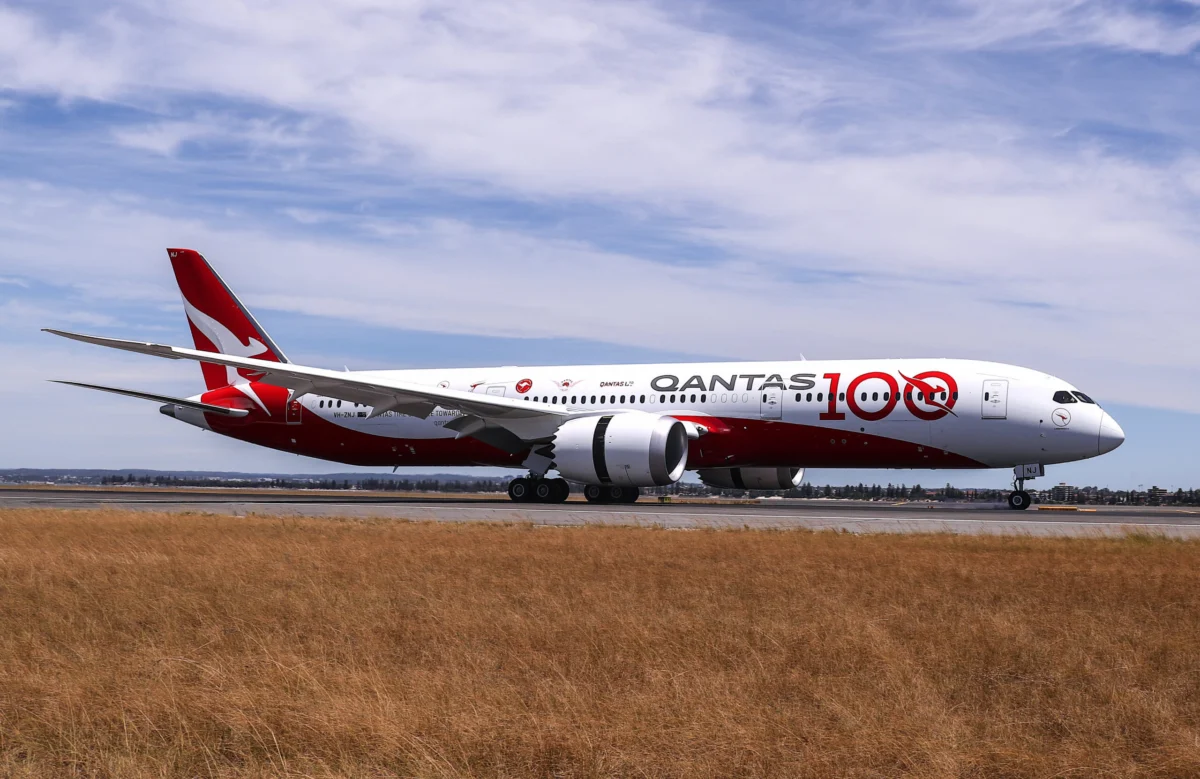
Qantas Airways has announced plans to commence ticket sales next August for its highly anticipated nonstop service between New York and Sydney, with flights slated to launch in 2028. This ambitious new route, a cornerstone of the airline’s "Project Sunrise" initiative, is set to further solidify Qantas’s position at the forefront of ultra-long-haul aviation, connecting two of the world’s most vibrant cities with an estimated flight time of approximately 18 hours. The move underscores a strategic pivot by the Australian carrier towards direct, convenience-driven travel, catering to a growing segment of passengers willing to pay a premium for seamless journeys across vast distances.
The Dawn of a New Era: Project Sunrise Unveiled
Project Sunrise, a concept first envisioned by Qantas over two decades ago, represents the airline’s long-held ambition to operate nonstop flights from Australia’s east coast to major global hubs like London and New York. Named after the legendary "double sunrise" flights during World War II, when Qantas pilots flew secret missions over the Indian Ocean for up to 33 hours, experiencing two sunrises, the modern iteration of Project Sunrise aims to conquer the tyranny of distance with state-of-the-art aircraft technology and a meticulous focus on passenger well-being.
The announcement of the New York-Sydney route, following the confirmation of the London Heathrow-Sydney nonstop service set to debut next fall, marks the culmination of years of intensive planning, technical evaluation, and market analysis. These routes are designed to bypass the traditional stopovers in Asian or Middle Eastern hubs, significantly reducing overall travel time and enhancing the passenger experience. Qantas CEO Vanessa Hudson emphasized the strategic importance of these routes, stating in a recent interview, "What we have been able to learn from [our existing ultra-long-haul routes] is that there is absolutely a customer who wants this and is prepared to pay a premium for it." She further highlighted that travelers are increasingly seeking to avoid the inconvenience and time expenditure associated with connecting flights.
The airline’s confidence in this strategy is largely built upon the success of its Perth, Australia, to London service, launched in 2018. This route, flown on a Boeing 787 Dreamliner, spans over 17 hours and has consistently demonstrated strong demand, proving the viability of ultra-long-haul direct flights even before the advent of the purpose-built Airbus A350-1000 ULR aircraft.
Bridging Continents: The New York-Sydney Connection
The forthcoming New York-Sydney service will operate from John F. Kennedy International Airport (JFK) to Sydney Kingsford Smith Airport (SYD), connecting two major global financial and cultural centers. The projected 18-hour flight time will place it among the longest commercial flights in the world, marginally shorter than what is currently the longest, Singapore Airlines’ nonstop service from New York’s JFK to Singapore, which can exceed 19 hours. However, Qantas is poised to claim the overall title of the world’s longest commercial flight when its London Heathrow-Sydney route, estimated at approximately 20 hours, launches in late 2024. Flight durations can vary based on factors such as prevailing winds, air traffic control routing, and time of year.
For the New York-Sydney route, Qantas will deploy a specially configured Airbus A350-1000 ULR (Ultra-Long Range) aircraft. This variant of the A350-1000 is designed with an additional fuel tank and optimized systems to achieve the necessary range for such extreme distances. The cabin configuration will feature a comprehensive four-class layout: first class, business class, premium economy, and standard economy cabins. This contrasts with some competitors, such as Singapore Airlines, which operates its New York-Singapore flight with only business class and premium economy seats, reflecting Qantas’s commitment to offering a full spectrum of service options across its ultra-long-haul network. The inclusion of a first-class cabin underscores the airline’s targeting of high-yield business and luxury travelers for whom convenience and exclusivity are paramount.
Redefining Global Connectivity: Qantas’s Ultra-Long-Haul Dominance
Qantas’s aggressive pursuit of ultra-long-haul routes is not merely about setting records; it represents a fundamental shift in how the airline approaches global connectivity. By eliminating layovers, Qantas offers a compelling proposition to travelers, particularly those on demanding business schedules, who prioritize time savings and reduced travel fatigue. The airline estimates that a direct flight from New York to Sydney could save passengers several hours compared to journeys involving a stopover, which typically extend to 22-24 hours or more.
The competitive landscape for ultra-long-haul flights is intense, with several carriers vying for market share. Currently, Singapore Airlines’ routes from New York (JFK) and Newark (EWR) to Singapore, both utilizing the Airbus A350-900 ULR, hold the distinction of being among the world’s longest. Qantas’s entry into the London-Sydney and New York-Sydney nonstop markets will undoubtedly intensify this competition, pushing other airlines to re-evaluate their long-haul strategies and potentially invest in similar aircraft capabilities.
Historically, Qantas has a rich legacy of pioneering long-distance routes. The "Kangaroo Route" from Australia to the UK, which began with multiple stops in the 1940s and gradually reduced over decades, epitomizes the airline’s continuous quest for efficiency and speed. Project Sunrise is the modern evolution of this pioneering spirit, leveraging cutting-edge aerospace technology to achieve what was once considered impossible for commercial aviation.
Elevating the Journey: Prioritizing Passenger Comfort and Well-being
Recognizing the inherent challenges of spending upwards of 18-20 hours in the air, Qantas has invested significantly in research and development focused on mitigating the effects of ultra-long-haul travel, particularly jet lag. As part of Project Sunrise, the airline has collaborated with sleep scientists and university researchers for years to study the physiological and psychological impacts of extended flight times. This research has informed various aspects of the passenger experience, from cabin design to in-flight service protocols.
One key area of focus is the implementation of dynamic lighting schemes within the aircraft cabins. These intelligent lighting systems are designed to gradually adjust over the course of the flight, mimicking the natural sunrise and sunset patterns of the destination time zone. The aim is to help passengers recalibrate their circadian rhythms more effectively, making it easier to adapt upon arrival. Furthermore, Qantas has explored tailored meal services, hydration recommendations, and even specific stretching exercises to be performed in-flight, all geared towards promoting passenger well-being and reducing post-flight fatigue.
The interior design of the Airbus A350-1000 ULR is also being optimized for comfort. While specific details on the cabin layout for the New York-Sydney route will be revealed closer to the launch, Qantas has indicated that it aims to create more spacious environments, even within the economy cabin, relative to standard long-haul configurations. This could include slightly wider seats, increased legroom, and enhanced personal entertainment systems, all contributing to a more tolerable and even enjoyable ultra-long-haul experience. The premium cabins, particularly first and business class, are expected to feature fully lie-flat beds, private spaces, and elevated dining experiences, catering to the expectations of a discerning clientele.
The Business Case for Endurance: Economic Drivers and Strategic Vision
The decision by Qantas to commit substantial resources to Project Sunrise is underpinned by a robust business case. The airline has identified a clear market demand for direct connectivity between Australia and key global hubs, especially from corporate travelers and affluent leisure tourists. The "premium" pricing strategy, as noted by CEO Hudson, indicates that the airline expects to command higher fares for the convenience and enhanced experience offered by these nonstop services. Industry analysis suggests that passengers can save up to 4-5 hours in total travel time by avoiding a stopover, a significant factor for business executives whose time is valuable.
The global aviation market has seen a strong rebound post-pandemic, with a renewed emphasis on efficiency and direct routes. While the initial capital expenditure for the Airbus A350-1000 ULR aircraft is substantial – Qantas placed an order for 12 of these specialized jets in 2022 – the long-term operational efficiencies and revenue potential are expected to justify the investment. The A350 family of aircraft is known for its fuel efficiency, consuming significantly less fuel per passenger than older generation long-haul aircraft. This not only contributes to lower operating costs but also aligns with increasing industry pressures for more sustainable aviation practices.
Beyond direct revenue, these routes are expected to have broader economic implications. Increased direct connectivity can boost tourism, facilitate trade, and strengthen business ties between Australia and major global economies like the United States and the United Kingdom. Sydney, as a major international gateway, stands to benefit significantly from enhanced direct links to these crucial markets.
Engineering Marvels: The Airbus A350-1000 ULR at the Forefront
The selection of the Airbus A350-1000 ULR as the backbone for Project Sunrise is a testament to the aircraft’s advanced capabilities. The A350-1000 is the largest variant of Airbus’s A350 XWB (Extra Wide Body) family, renowned for its composite airframe, which contributes to its lighter weight and superior fuel efficiency. The ULR version is specifically modified for extended range operations, primarily through an increased maximum takeoff weight (MTOW) and the incorporation of an additional fuel tank in the cargo hold, expanding its fuel capacity by approximately 24,000 liters. This allows the aircraft to cover distances up to 18,000 kilometers (9,700 nautical miles) without requiring refueling, making it perfectly suited for routes like New York-Sydney and London-Sydney.
The aircraft’s Rolls-Royce Trent XWB engines are highly efficient and provide the necessary thrust while maintaining a relatively quiet cabin environment, crucial for ultra-long flights. The advanced aerodynamics, including its distinctive winglets, further enhance its performance. From a passenger perspective, the A350 also boasts a quieter cabin, higher humidity levels, and optimized cabin pressure (equivalent to an altitude of 6,000 feet instead of the typical 8,000 feet), all designed to reduce passenger fatigue and improve comfort on extended journeys. The large panoramic windows, advanced air filtration systems, and mood lighting capabilities further contribute to a more pleasant flying experience.
A Legacy of Innovation: Qantas’s Pioneering Spirit in Aviation
Qantas’s pursuit of Project Sunrise is deeply rooted in its history as a trailblazer in long-distance aviation. Founded in 1920, Qantas (Queensland and Northern Territory Aerial Services) quickly established itself as a key player in connecting remote Australian communities and, subsequently, Australia with the rest of the world. The challenges of linking a geographically isolated continent with Europe and North America have always driven the airline to push the boundaries of aircraft technology and operational logistics.
From the early days of propeller-driven aircraft that required numerous stops to the jet age that gradually reduced travel times, Qantas has consistently sought to shorten the journey. The introduction of the Boeing 747 in the 1970s marked a significant leap, enabling fewer stops on the Kangaroo Route. The subsequent evolution of twin-engine aircraft like the Boeing 787 and now the Airbus A350-1000 ULR has opened up new possibilities for direct point-to-point travel, making ultra-long-haul economically viable and comfortable for passengers. Project Sunrise is not just a new chapter but a continuation of this century-long legacy of innovation and ambition.
Navigating the Future: Challenges and Opportunities in Ultra-Long-Haul Travel
While the prospects for Qantas’s New York-Sydney route are promising, the operation of ultra-long-haul flights presents unique challenges. Crew management, for instance, requires careful planning to ensure compliance with strict flight duty limitations and rest periods. Qantas has been working closely with aviation regulators and pilot unions to develop appropriate protocols for these extended flights, often involving multiple pilot and cabin crew rotations during the journey.
Fuel price volatility remains a significant operational risk for any airline, but particularly for routes that consume vast quantities of fuel. While the A350-1000 ULR is highly fuel-efficient, the sheer volume required for an 18-hour flight means that even minor fluctuations in global oil prices can have a substantial impact on profitability. Qantas will likely employ sophisticated fuel hedging strategies to mitigate this risk.
Environmental considerations also play an increasingly important role. Despite the A350’s efficiency, a nonstop flight of this duration generates a substantial carbon footprint. Qantas, like other major airlines, is under pressure to demonstrate its commitment to sustainability. This includes investments in sustainable aviation fuels (SAF), carbon offset programs, and ongoing research into more environmentally friendly propulsion technologies, though widespread adoption of these solutions for ultra-long-haul flights is still some years away.
Looking ahead, the success of Project Sunrise could pave the way for even more ultra-long-haul routes, potentially connecting Australia to other underserved markets directly. As aircraft technology continues to evolve and passenger demand for convenience grows, the era of seamless, nonstop global travel is truly dawning, with Qantas leading the charge from the Southern Hemisphere. The 2028 launch of the New York-Sydney service will not just be a new flight route; it will be a milestone in the ongoing quest to shrink our interconnected world.
