

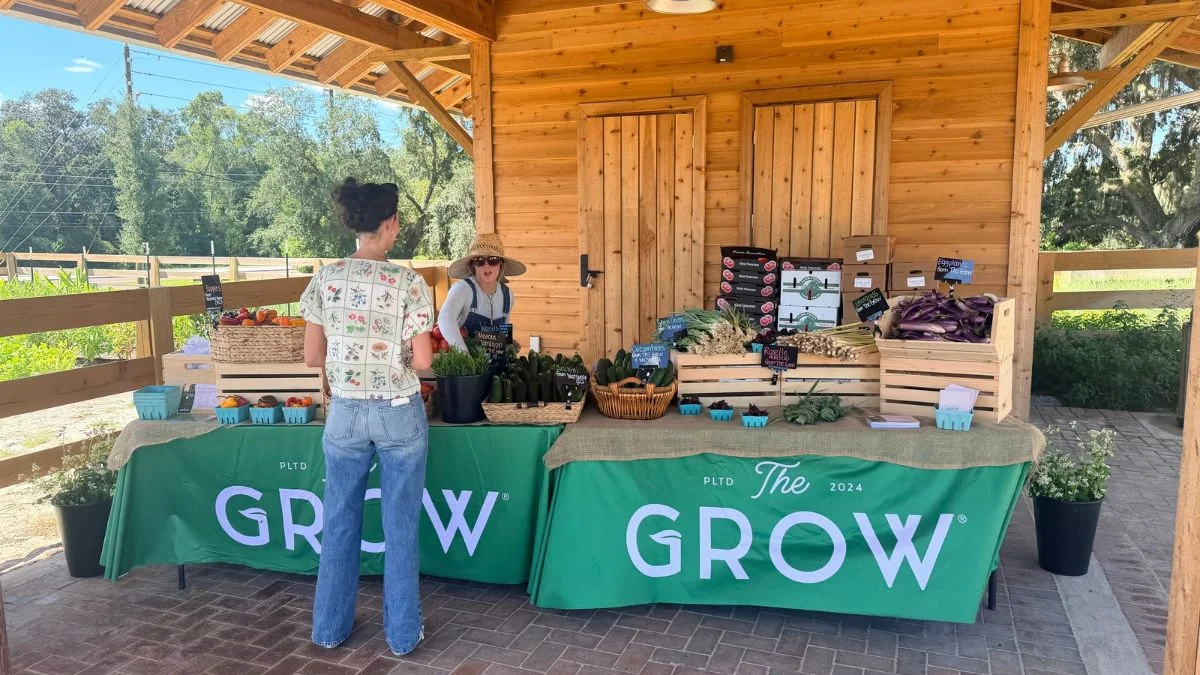
For decades, the narrative of Central Florida has been one of relentless expansion. As the Orlando metropolitan area surged toward the horizon, the region’s iconic landscape—defined by ancient oak hammocks, sprawling citrus groves, and untamed wetlands—frequently fell victim to the bulldozer. However, a new 1,200-acre development on the eastern fringe of Orlando is attempting to rewrite the script for suburban growth. PulteGroup’s latest venture, a massive community known as The Grow, seeks to harmonize the demand for high-end housing with a deep-seated need for environmental preservation. By centering a 2,200-home master-planned community around a working nine-acre farm, PulteGroup is introducing the "agrihood" concept to a region grappling with the consequences of its own popularity.
The development represents a significant departure from traditional Florida residential planning. While most subdivisions in the Sunshine State follow a blueprint of maximizing lot counts and clearing every acre of native vegetation, The Grow has committed to preserving more than half of its total acreage. Of the 1,200 acres, over 600 will remain undeveloped, encompassing protected wetlands, conservation areas, and shared green spaces. This strategy is not merely an environmental gesture; it is a calculated response to a shifting market where buyers increasingly value access to nature and sustainable living over larger private lots and homogenized suburban aesthetics.
The Context of Explosive Growth and the Loss of Old Florida
To understand the significance of The Grow, one must look at the demographic tidal wave that has reshaped Central Florida over the last quarter-century. Between 2000 and 2025, the Orlando metropolitan area witnessed a population explosion of nearly 80%, climbing from 1.64 million residents to an estimated 2.95 million. This rapid influx of new residents, driven by a robust tourism sector, a growing technology corridor, and a favorable climate, has placed immense pressure on the region’s infrastructure and natural resources.
As the population grew, the "Old Florida" that long-time residents cherished began to vanish. Historically, the outskirts of Orlando were a patchwork of working ranches and orange groves. Today, much of that land has been converted into high-density subdivisions, apartment complexes, and strip malls. This transformation has sparked a growing tension between the economic necessity of housing development and the cultural and environmental desire to protect the region’s remaining green space. The Grow emerges as a potential case study for other high-growth Sun Belt markets—such as Phoenix, Austin, and Charlotte—that are facing similar dilemmas regarding land use and urban sprawl.
Chronology of Development: From Rural Land to Modern Agrihood
The evolution of The Grow has been a multi-year journey, reflecting the complexities of large-scale sustainable development. The property, situated on the eastern edge of Orange County, remained largely undeveloped and rural while the surrounding areas succumbed to conventional sprawl.
In 2023, PulteGroup, one of the nation’s largest homebuilders, solidified its role as the sole developer and builder for the community’s residential lots. The purchase marked a strategic pivot for the company, moving toward a more specialized, amenity-driven model of community building. By early 2024, PulteGroup initiated pre-sales for the community, tapping into a backlog of local interest that had been building for years as the project moved through the entitlement and permitting phases.

In late September 2024, the developer held a formal grand opening, unveiling the first phase of homes and providing a glimpse into the agricultural infrastructure that defines the neighborhood. The project is expected to be built out over several phases, with the residential components, the working farm, and the commercial "Main Street" corridor coming online in a staggered timeline to ensure the community’s infrastructure keeps pace with its population.
The Mechanics of the Agrihood: A Working Farm as a Modern Amenity
The centerpiece of The Grow is its nine-acre working farm, a feature that distinguishes it from the thousands of other developments in the Florida market. Unlike many communities that use "farmhouse" aesthetics as a superficial marketing tool, The Grow is designed to integrate agriculture into the daily lives of its residents.
The farm will be managed by a professional third-party agricultural firm, ensuring that the land remains productive and sustainable. However, the model encourages active resident participation. Through various programs, homeowners can volunteer their time, allowing families to gain hands-on experience with seasonal crop cycles. The produce grown on-site—which will likely include Florida staples such as citrus, peppers, and leafy greens—will be sold at a resident-only general store. This store is envisioned as an anchor for the community’s commercial district, creating a closed-loop system where food is grown, harvested, and consumed within a few miles.
In addition to the primary nine-acre farm, the development includes two smaller agricultural sites:
- A Demonstration Farm: A smaller, eighth-of-an-acre plot designed for educational purposes, where children and adults can learn the basics of horticulture.
- A Community Farm: A dedicated space where residents can apply what they have learned by tending to their own plots, fostering a sense of ownership and community engagement.
A key component of this lifestyle is the "Seed the Table" program. This initiative allows residents to follow the lifecycle of their food from planting to harvest, culminating in chef-led cooking classes held at a communal "gathering barn." These activities are designed to foster social cohesion, a commodity that is often missing in traditional, car-centric suburban developments.
Market Positioning and Economic Realities
The launch of The Grow comes at a challenging time for the American housing market. With mortgage rates remaining volatile and home prices at historic highs, builders have had to become increasingly creative to attract buyers. Homes at The Grow are priced from the low $400,000s to the high $800,000s, targeting a demographic that ranges from first-time professional buyers to affluent retirees.
Patrick McNamara, a Sales Manager at Pulte, acknowledged that the community is not immune to broader economic pressures. To maintain sales momentum, the developer has utilized aggressive incentives, including mortgage rate buydowns, to help buyers manage monthly payments. Despite these headwinds, the "agrihood" concept has proven to be a powerful draw. Since opening pre-sales approximately six months ago, Pulte has already sold more than 100 homes.

McNamara noted that while the farm is the initial "hook" that attracts prospective buyers, the long-term selling point is the preservation of nature. "One of our biggest selling features is the openness of the community and how much greenery we left," McNamara stated. He highlighted that unlike most new construction projects where land is cleared and saplings are planted, The Grow features hundreds of 100-year-old oak trees that were intentionally preserved during the planning phase. These mature trees provide immediate shade and a sense of established history that typically takes decades to achieve in new developments.
Infrastructure and Lifestyle Integration
Beyond its agricultural and environmental focus, The Grow is designed as a self-contained lifestyle hub. The development plan includes approximately 170,000 square feet of retail and commercial space. This "Main Street" corridor is intended to attract high-end dining and boutique retail, serving both the residents of The Grow and visitors from the wider Orlando area.
Other planned amenities include:
- An indoor event and social space for community gatherings.
- An outdoor green space equipped with a community pizza oven.
- Extensive nature trails and walking paths that wind through the conserved wetlands.
- A dedicated dog park, playgrounds, a fitness center, and a resort-style pool.
This blend of "resort-style" amenities with a rural, agricultural soul is what PulteGroup believes will provide a competitive edge. By offering the convenience of a modern suburban development alongside the aesthetic and psychological benefits of a rural retreat, the project aims to appeal to a "post-pandemic" buyer profile that prioritizes health, wellness, and outdoor access.
Broader Implications for Sustainable Development
The success of The Grow could have significant implications for future land use in Florida and beyond. As municipal governments face increasing pressure from environmental groups to limit sprawl, the "conservation development" model provides a potential middle ground. By clustering homes more densely on a portion of the land and leaving the remainder as open space or working farmland, developers can meet housing quotas while satisfying conservation requirements.
Furthermore, the agrihood model addresses growing concerns regarding food security and the carbon footprint of the modern food supply chain. While a nine-acre farm cannot feed 2,200 households entirely, it provides a localized source of fresh produce and educates the public on the importance of sustainable agriculture.
As Central Florida continues to evolve, projects like The Grow suggest that the future of the "Sunshine State" may not lie in the total erasure of its past, but in a more thoughtful integration of the natural world into the built environment. For PulteGroup, the project is a high-stakes bet that the modern homebuyer is looking for more than just a house—they are looking for a connection to the land that once defined the region. Whether this model can be scaled to meet the massive demand for affordable housing remains to be seen, but for now, The Grow stands as a verdant outlier in a landscape of concrete expansion.
