

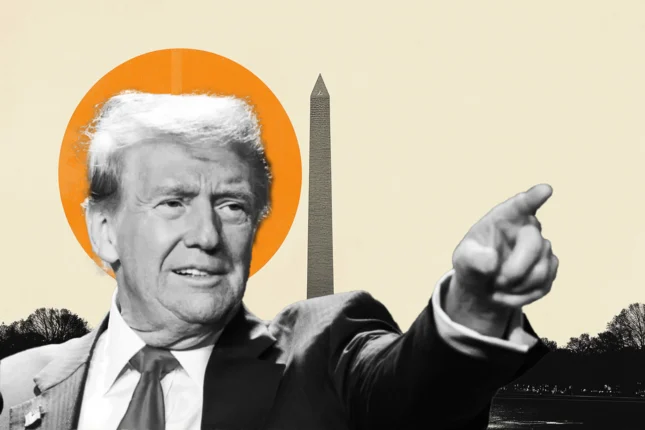
United States President Donald Trump engaged with multiple media outlets on Monday, offering insights into a range of critical issues spanning international relations, military strategy, and domestic policy. Among the most striking remarks were his comments on the potential seizure of Iranian oil, the status of a potential conflict with Iran, and the stalled progress of a bill aimed at tightening voting requirements. These statements underscore the intricate challenges facing the administration, both on the global stage and within the American political landscape, drawing immediate attention from observers and stakeholders worldwide.
The Deliberation Over Iranian Oil Seizure and Its Far-Reaching Implications
During an interview with NBC News, President Trump addressed the contentious notion of the United States seizing Iranian oil, a move that would represent a dramatic escalation of economic pressure beyond existing sanctions. When pressed on the matter, Trump stated he did not wish to discuss whether he would personally favor such an action, emphasizing, "Certainly people have talked about it," but ultimately concluding, "It is too soon to talk about seizing Iran’s oil." This calculated ambiguity, while deferring a direct commitment, highlighted that the option, however extreme, remains within the realm of discussion in Washington.
The concept of seizing a sovereign nation’s oil assets is fraught with legal, diplomatic, and economic complexities. Under international law, such an action would be widely regarded as an act of aggression, potentially violating principles of national sovereignty and the United Nations Charter. Historical precedents for such actions are rare and typically occur in the context of UN-mandated sanctions or post-conflict reparations, neither of which fully align with the current US posture towards Iran. The immediate legal challenges would be immense, as Iran would undoubtedly contest any seizure in international courts, potentially leading to protracted disputes and further isolating the United States on the global stage.
Economically, the implications would be catastrophic for global oil markets. Iran, despite stringent US sanctions that have drastically curtailed its exports, remains a significant oil producer, holding the world’s fourth-largest proven crude oil reserves. Any action to physically seize its oil, or even the credible threat of it, would send shockwaves through the market, likely driving crude oil prices to unprecedented levels. This would have a ripple effect on global inflation, energy security, and the economic stability of nations heavily reliant on oil imports. Major economies like China, India, and European nations, already grappling with existing supply chain disruptions and inflationary pressures, would face severe economic headwinds.
Furthermore, the diplomatic fallout would be severe. Key US allies in Europe have consistently advocated for de-escalation with Iran and adherence to the Joint Comprehensive Plan of Action (JCPOA), the 2015 nuclear deal from which the US unilaterally withdrew. A move to seize Iranian oil would be seen as an aggressive unilateral act, further straining transatlantic relations and undermining international efforts to maintain regional stability. Adversaries like Russia and China would likely condemn such an action as a blatant violation of international law, potentially using it to rally support against US hegemony and deepen their strategic alliances with Iran. China, in particular, has been a major purchaser of Iranian oil, often through clandestine means, and such an action could directly interfere with its energy supply lines, adding another layer of tension to an already fraught US-China relationship.
Assessing the State of the Iran Conflict: "War Over Soon" Claim
Shifting to the broader military context, President Trump also conveyed an optimistic, albeit contentious, outlook on the state of a potential conflict with Iran. In a phone interview with CBS, he declared, "I think the war is very complete, pretty much. They have no navy, no communications, they’ve got no Air Force." This assessment, suggesting a swift and decisive end to any potential hostilities due to Iran’s perceived military weaknesses, stands in stark contrast to the views of many defense analysts and intelligence officials who warn of Iran’s formidable asymmetric warfare capabilities.
While Iran’s conventional military forces, particularly its air force and navy, may indeed be outmatched by the technologically superior United States military, Trump’s characterization overlooks Iran’s significant strengths in other areas. Iran has developed a robust ballistic missile program, a sophisticated network of proxy forces across the Middle East (including Hezbollah in Lebanon, various militias in Iraq and Syria, and the Houthis in Yemen), and considerable capabilities in cyber warfare and naval mine deployment. These asymmetric tools are designed to inflict significant costs on adversaries, disrupt regional shipping lanes, and bog down larger conventional forces in protracted, unconventional conflicts.
A timeline of recent US-Iran tensions illustrates the volatile nature of the relationship. Following the US withdrawal from the JCPOA in May 2018 and the subsequent re-imposition of crippling sanctions, Iran has progressively reduced its commitments under the nuclear deal. This period has been punctuated by several flashpoints:
- May-June 2019: Attacks on oil tankers in the Gulf of Oman, widely attributed to Iran, and the downing of a US surveillance drone by Iran’s Islamic Revolutionary Guard Corps (IRGC).
- September 2019: Drone and missile attacks on Saudi Aramco oil facilities, severely disrupting global oil supplies, which the US and Saudi Arabia blamed on Iran.
- January 2020: A US drone strike killed Major General Qasem Soleimani, commander of the IRGC’s Quds Force, at Baghdad International Airport. Iran retaliated with ballistic missile strikes on US military bases in Iraq, causing traumatic brain injuries to dozens of US service members.
These incidents demonstrate Iran’s capacity for strategic retaliation and its willingness to escalate tensions. Trump’s assertion that a "war is very complete" suggests a fundamental misunderstanding of Iran’s military doctrine, which prioritizes deterring larger powers through unconventional means rather than engaging in direct, conventional conflict. The implications of such an optimistic assessment could be dangerous, potentially leading to miscalculations if it fosters a belief that Iran can be easily subdued.
The Question of Succession: Mojtaba Khamenei and US Policy
Further delving into Iranian leadership, Trump offered a succinct but telling response regarding Iran’s new Supreme Leader, Mojtaba Khamenei, telling CBS News, "I have no message for him." This statement, while brief, carries significant weight in the highly symbolic and religiously charged political landscape of Iran. Mojtaba Khamenei, the son of the current Supreme Leader Ayatollah Ali Khamenei, is widely considered a potential successor, though the process is opaque and involves complex power dynamics within the clerical establishment.
Mojtaba Khamenei has maintained a relatively low public profile but is known to wield considerable influence behind the scenes, particularly within the IRGC and intelligence apparatus. His potential ascendance would likely signal a continuation of the hardline policies that have characterized his father’s reign, including a staunch opposition to US influence and a commitment to Iran’s nuclear and regional ambitions. Trump’s "no message" comment can be interpreted in several ways: a dismissal of Mojtaba’s current or future authority, a refusal to engage with a regime the US deems illegitimate, or a strategic silence aimed at avoiding any perceived validation or provocation. Regardless of the intent, it underscores the deep chasm in communication and trust between Washington and Tehran.
US-China Relations and the Iranian Oil Nexus
Adding another layer of complexity to the international dimension, President Trump also told Al Arabiya that "controlling Iran’s oil could strain US relations with China." This acknowledgment highlights a critical geopolitical intersection. China is the world’s largest importer of crude oil and a significant consumer of Iranian oil, often circumventing US sanctions through various mechanisms. Its energy security is paramount to its economic stability and continued growth.
For China, the prospect of the US directly controlling or dictating the flow of Iranian oil represents a profound challenge to its energy supply lines and broader geopolitical interests. China has consistently opposed unilateral sanctions against Iran, viewing them as an infringement on national sovereignty and international trade norms. A direct US intervention in Iranian oil production or exports would not only disrupt China’s access to a vital energy source but would also be perceived as an aggressive assertion of US dominance in a region critical to China’s Belt and Road Initiative and its broader strategic ambitions.
The existing US-China relationship is already fraught with tensions over trade imbalances, intellectual property theft, human rights issues, and geopolitical competition in the South China Sea and beyond. Any action concerning Iranian oil that directly impacts China’s interests would undoubtedly exacerbate these tensions, potentially leading to further retaliatory measures in the ongoing trade disputes or increased friction in other strategic domains. This recognition by Trump underscores the delicate balance the US must maintain, even when pursuing its objectives regarding Iran, to avoid inadvertently escalating conflicts with other major global powers.
Domestic Legislative Hurdles: The Voting Requirements Bill
Beyond foreign policy, President Trump also touched upon domestic political matters, specifically a bill aimed at tightening voting requirements. He noted that "Nobody is doing much on it," and added, "And until they do, I’m not doing anything." This statement reveals the ongoing partisan gridlock in the US Congress over election integrity legislation, an issue that has become increasingly contentious in American politics.
Proponents of tightening voting requirements, often Republicans, argue that such measures are necessary to prevent voter fraud, enhance election security, and ensure the integrity of the democratic process. These proposals frequently include stricter voter ID laws, limitations on absentee voting, and more aggressive voter roll purges. They contend that while some measures might make voting marginally more difficult for some, the paramount importance of secure elections outweighs these concerns.
Conversely, opponents, largely Democrats and civil rights organizations, argue that many of these measures are thinly veiled attempts at voter suppression, disproportionately affecting minority voters, low-income individuals, the elderly, and students who may face greater hurdles in obtaining specific forms of identification or navigating complex registration processes. They contend that widespread voter fraud is a myth, unsupported by evidence, and that the focus should be on expanding access to the ballot box rather than restricting it.
The legislative process for such a bill is inherently challenging. Given the deeply entrenched partisan divisions, any significant changes to federal voting laws would require substantial bipartisan consensus, which currently appears elusive. State legislatures largely control election administration, but Congress retains the authority to set certain federal standards. Trump’s comment suggests a lack of executive initiative on the matter until Congress makes tangible progress, effectively leaving the contentious issue in legislative limbo and reflecting the broader challenges of bipartisan cooperation in contemporary American politics.
Currency Market Reactions Amid Global Uncertainties
Against this backdrop of complex geopolitical and domestic discussions, global financial markets often react to perceived shifts in risk and policy. The US Dollar (USD) is a bellwether currency, frequently influenced by investor sentiment regarding global stability, economic outlooks, and safe-haven flows.
On the day of these statements, the US Dollar exhibited varied performance against a basket of major currencies. The data indicates that the US Dollar was the strongest against the Swiss Franc (CHF), showing a 0.35% increase. This particular movement often signals a flight to safety within safe-haven assets. Both the USD and CHF are considered safe-haven currencies; however, in times of heightened global uncertainty, investors may favor the US Dollar due to the liquidity and depth of US financial markets, as well as the relative strength of the US economy compared to smaller, export-dependent economies. A stronger USD against CHF could suggest that global investors are prioritizing the larger, more liquid safe-haven asset amidst perceived geopolitical risks or broader market volatility.
Conversely, the US Dollar showed weakness against the Australian Dollar (AUD) and New Zealand Dollar (NZD), declining by 0.45% and 0.29% respectively. These "risk-on" currencies, often correlated with global growth and commodity prices, tend to strengthen when market sentiment is positive or when investors are seeking higher yields. The mixed performance of the USD – strengthening against one safe-haven but weakening against risk-on currencies – suggests a nuanced market reaction, possibly reflecting a combination of underlying economic data, interest rate differentials, and specific geopolitical concerns rather than a singular, overwhelming sentiment. The Euro (EUR) saw a slight decline of 0.10% against the USD, while the Japanese Yen (JPY) was down 0.25%, and the British Pound (GBP) was up 0.08%, indicating minor adjustments within the G7 currency complex.
Such daily currency fluctuations are influenced by a multitude of factors, including interest rate expectations, inflation data, trade balances, and geopolitical developments. While President Trump’s statements contribute to the overall geopolitical narrative, the specific currency movements on any given day are a culmination of these various forces, reflecting how investors price in risks and opportunities across the global economic landscape. The continued uncertainty surrounding US-Iran relations, US-China trade tensions, and domestic political processes will undoubtedly remain key drivers of market sentiment and currency valuations going forward.
