

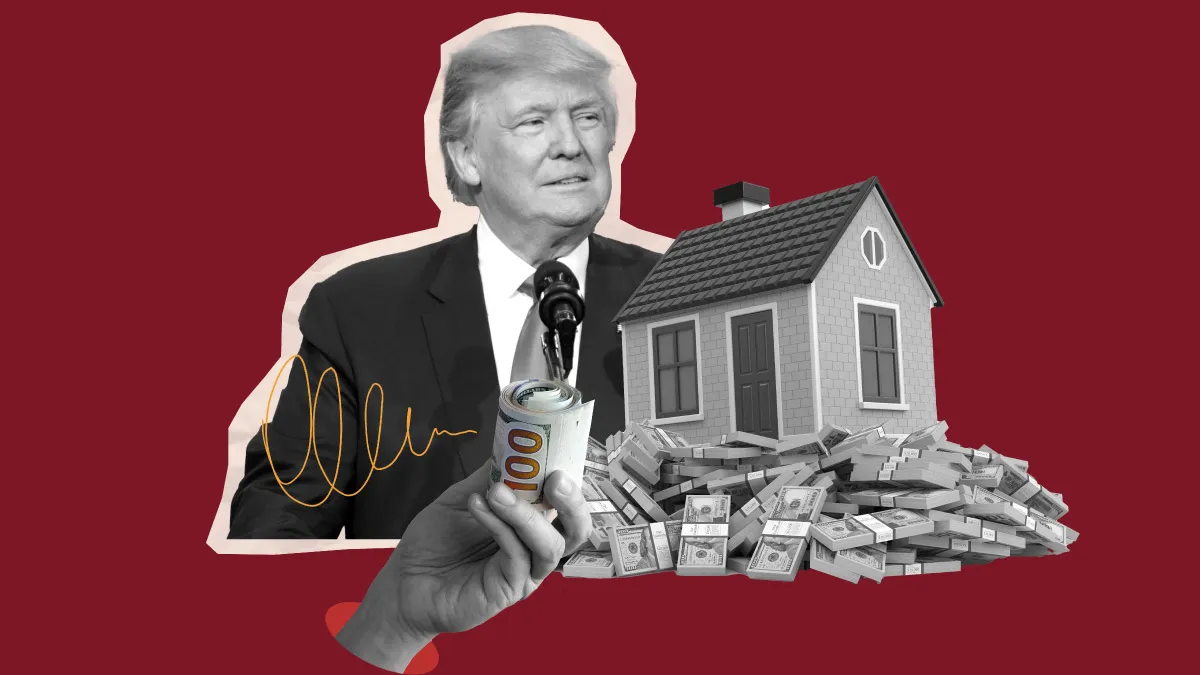
President Donald Trump on Friday signed two far-reaching executive orders designed to reshape the American housing landscape by aggressively increasing the national housing supply and broadening consumer access to mortgage credit. The directives represent a comprehensive attempt by the administration to tackle the persistent housing affordability crisis through a combination of federal deregulation, streamlined permitting, and a fundamental restructuring of lending requirements that have governed the mortgage industry since the 2008 financial crisis. By targeting both the physical production of homes and the financial mechanisms required to purchase them, the orders aim to lower the barriers to entry for first-time homebuyers and revitalize the participation of community banks in the residential lending market.
The first executive order, titled “Removing Regulatory Barriers to Affordable Home Construction,” mandates a multi-agency review of federal regulations that contribute to the rising cost of new developments. The second order, “Promoting Access to Mortgage Credit,” focuses on the financial side of the equation, seeking to ease compliance burdens on lenders and modernize the appraisal process through the integration of artificial intelligence and automated valuation models. Together, these actions signal a significant shift toward supply-side solutions and financial deregulation as the primary levers for addressing the nation’s housing shortage, which economists estimate currently sits at a deficit of between 4 million and 7 million units.
A Strategic Shift in Federal Housing Policy
The announcement comes only weeks after the President’s State of the Union address, where housing affordability was mentioned as a priority but few specific policy details were provided. These executive orders fill that gap, establishing a clear roadmap for federal agencies, including the U.S. Department of Housing and Urban Development (HUD), the Federal Housing Finance Agency (FHFA), and the Consumer Financial Protection Bureau (CFPB).
For years, the U.S. housing market has been characterized by a "locked-in" effect, where low inventory and high construction costs have pushed homeownership out of reach for many low- and middle-income families. According to data from the National Association of Realtors, the median price of an existing home has climbed steadily over the last decade, far outpacing wage growth in many metropolitan areas. The administration’s new directives operate on the premise that the primary drivers of this affordability crisis are "onerous mandates" and "unnecessary regulatory barriers" imposed by various levels of government.
Streamlining Construction and Reducing Regulatory Overheads
The first executive order directs HUD Secretary Scott Turner and FHFA Director Bill Pulte to lead an interagency effort to identify and eliminate rules that impede residential development. A central focus of this order is the scrutiny of environmental protection laws. The administration argues that while environmental safeguards are necessary, duplicative and overly complex reviews often lead to years of delays and significant increases in property tax and insurance burdens for the end consumer.
The order specifically highlights the "Pathways to Removing Obstacles to Housing" (PRO Housing) program, a HUD initiative designed to provide grants to communities that actively work to remove barriers to affordable housing. By emphasizing this program, the administration intends to incentivize state and local governments to adopt "regulatory best practices." Within 60 days, HUD is required to produce a comprehensive list of these practices, which will include:
- Streamlined Permitting: Developing models for local governments to accelerate the approval process for new subdivisions and multi-family units.
- Revised Energy Mandates: Scaling back "green energy" construction requirements that the administration claims add thousands of dollars to the cost of a new home without providing a proportional benefit to the homeowner.
- Support for Alternative Housing: Removing restrictions on manufactured and modular housing. The order stresses that such housing should be judged on "objective standards for building and safety" rather than aesthetic or zoning biases that have historically limited their use in suburban environments.
- Chattel Loan Reform: Directing the FHFA to review regulations regarding chattel loans—loans used to purchase manufactured homes that are not permanently affixed to land—which often carry higher interest rates and less favorable terms than traditional mortgages.
Reforming the Mortgage Lending Landscape
The second executive order, "Promoting Access to Mortgage Credit," seeks to reverse a decade-long trend of banks retreating from the mortgage market. Since the passage of the Dodd-Frank Wall Street Reform and Consumer Protection Act, many traditional banks have reduced their mortgage footprints due to increased compliance costs and the fear of litigation. This has led to the rise of non-bank lenders, also known as Independent Mortgage Banks (IMBs), which now originate the majority of residential loans in the United States.
The Trump administration argues that this shift has concentrated risk outside the traditional banking system and harmed rural and low-income borrowers who rely on local community banks. The order defines community banks as institutions with fewer than $30 billion in assets and calls for "tailored capital requirements" to allow these smaller entities to compete more effectively.
Key components of the financial reform directive include:
- CFPB Regulation Z Amendments: The order calls for the CFPB to amend Regulation Z and the Truth in Lending Act (TILA). Potential changes include creating a "broader safe harbor" for portfolio loans—loans that banks keep on their own books rather than selling to Fannie Mae or Freddie Mac.
- Qualified Mortgage (QM) Expansion: The administration seeks to exempt small-balance mortgages from the current caps on points and fees. This is intended to make it more profitable for banks to issue smaller loans, which are often the only option for buyers in lower-cost rural areas.
- TRID Modernization: The TILA-RESPA Integrated Disclosure (TRID) rules, often referred to as "Know Before You Owe," have been criticized by lenders for being overly rigid. The order suggests replacing certain timing rules to speed up the loan closing process.
- AI and Automated Valuations: In a move toward modernization, the order encourages the use of Automated Valuation Models (AVMs) and artificial intelligence in the appraisal process. This is intended to reduce the time and cost of appraisals, which can be a bottleneck in the homebuying process, especially in areas with a shortage of licensed human appraisers.
Chronology of Action and Deadlines
The administration has set an aggressive timeline for the implementation of these orders. The 60-day deadline for HUD to establish regulatory best practices is the first major milestone. Following this, federal regulators including the Federal Reserve, the Federal Deposit Insurance Corporation (FDIC), and the Office of the Comptroller of the Currency (OCC) are expected to begin the rulemaking process for revised capital regulations.
This timeline suggests the administration wants to see tangible regulatory changes before the end of the current fiscal year. However, some of the proposed changes, particularly those involving TILA and Regulation Z, may face legal challenges or require lengthy public comment periods as mandated by the Administrative Procedure Act.
Industry Reactions and Economic Implications
The response from the housing and banking industries has been largely positive, though some organizations have expressed caution. Bob Broeksmit, President and CEO of the Mortgage Bankers Association (MBA), lauded the focus on reducing costly regulations but emphasized that any benefits should be applied across the board. "We support efforts to increase bank participation… and the goal should be to revise overly burdensome rules for lenders of all sizes," Broeksmit stated, noting that IMBs still play a crucial role in serving FHA and VA borrowers.
David M. Dworkin, President and CEO of the National Housing Conference (NHC), echoed these sentiments, calling the orders an "important step toward making it easier to build the homes our country needs." He highlighted that addressing the supply-side of the equation is the only sustainable way to manage long-term affordability.
The Independent Community Bankers of America (ICBA) offered the strongest support. Rebecca Romero Rainey, President and CEO of the ICBA, stated that the reforms would "help community banks support housing affordability in local communities nationwide" by providing much-needed regulatory relief from Home Mortgage Disclosure Act (HMDA) reporting and stringent capital standards.
Conversely, the Community Home Lenders of America (CHLA) provided a more tempered view. While they acknowledged the executive orders as a positive "first retro rocket" in a broader commitment to solving the housing crisis, they noted that "only time will tell" if these directives translate into transformative action by federal agencies.
Analysis of Potential Impacts
The potential impact of these executive orders is significant but remains subject to market conditions. By easing the path for manufactured housing and reducing permitting times, the administration could theoretically increase the annual completion of new homes. However, construction is also hampered by labor shortages and high material costs—factors that executive orders cannot easily resolve.
On the lending side, the move to integrate AI into appraisals is seen as a double-edged sword. While it promises efficiency, consumer advocacy groups have previously raised concerns about algorithmic bias in AI-driven valuations, which could potentially disadvantage minority neighborhoods if not properly overseen.
Furthermore, the effort to bring banks back into the mortgage market through tailored capital requirements could increase competition, potentially lowering interest rate spreads for consumers. However, critics of deregulation warn that easing "Ability-to-Repay" and QM standards could reintroduce the types of risky lending practices that contributed to the 2008 financial collapse. The administration maintains that the "safe harbor" provisions will be limited to responsible portfolio lending where the bank retains the risk, thus aligning the lender’s interests with the borrower’s success.
Looking Ahead
As HUD, the FHFA, and the CFPB begin the work of reviewing and revising their respective rulebooks, the housing industry will be watching closely for specific language regarding "small-balance mortgages" and "tailored risk weights." These technical adjustments will ultimately determine whether the executive orders result in a marginal shift or a fundamental restructuring of the U.S. housing market.
The success of these initiatives will likely depend on the level of cooperation between federal agencies and local municipalities. While the President can direct federal agencies to reform their own rules, much of the "regulatory thicket" involving zoning and land use remains under the jurisdiction of state and local governments. The administration’s focus on "incentivizing" best practices through grant programs like PRO Housing suggests a strategy of soft power rather than direct federal mandate, a move that respects local governance while pushing for a national standard of efficiency in homebuilding.
